
The Four Loves
C.S. Lewis
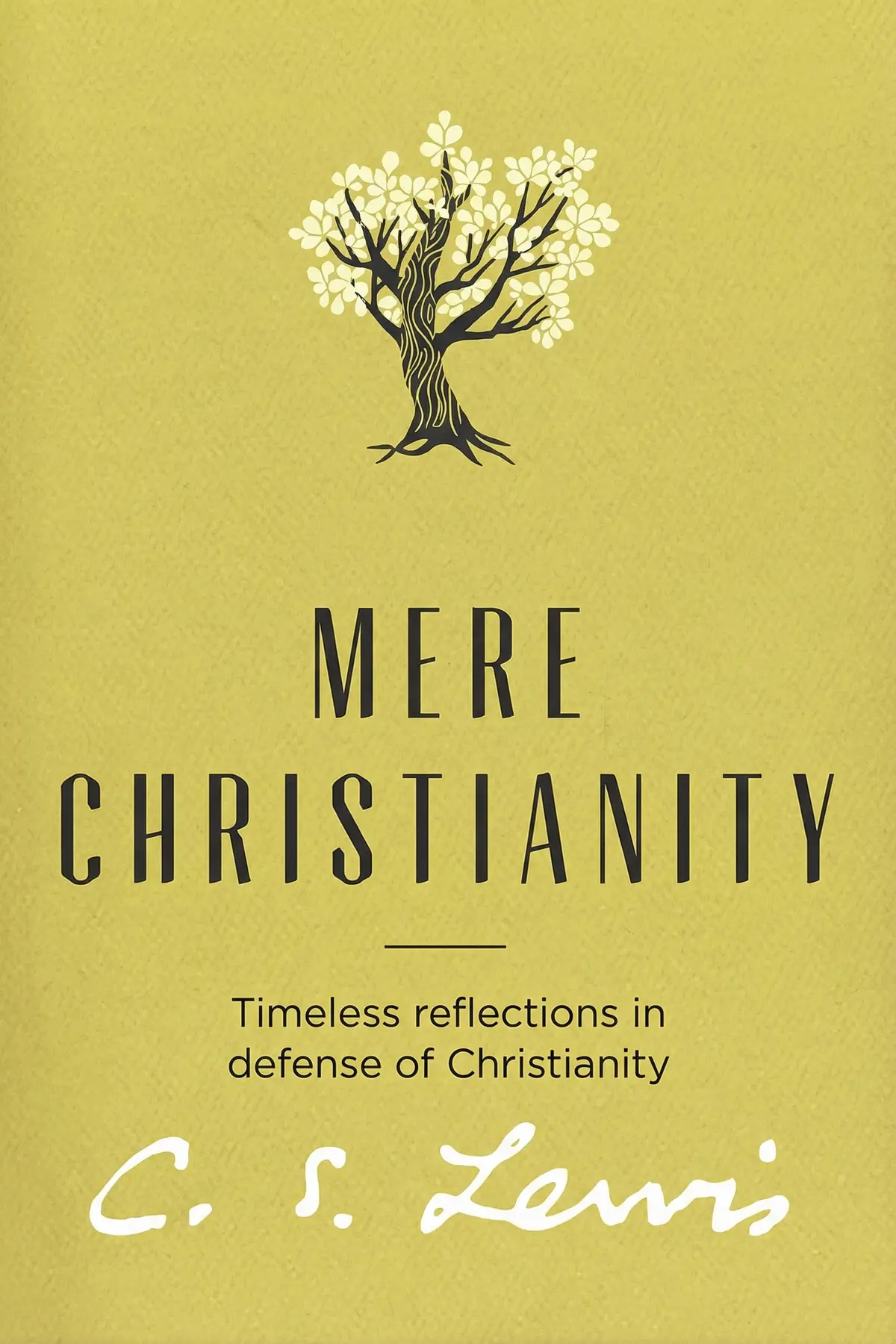
Mere Christianity provides a reasoned defense of the Christian faith, exploring universal morality, the divinity of Jesus, and the transformative power of virtue through a series of logical reflections.
2 min 39 sec
In the year 1942, the world was a place of immense shadow and uncertainty. Great Britain, in particular, was enduring the relentless weight of World War II. For over two years, the threat of invasion had loomed over the island nation, and the population had personally experienced the devastating reality of the Blitz. It was a time when the very fabric of society felt as though it might tear, and public morale had reached a desperate low. It was into this atmosphere of chaos and fear that a voice began to broadcast over the radio—not with military strategy or political rhetoric, but with reflections on faith, morality, and common decency.
That voice belonged to C.S. Lewis. To some, it might have seemed misplaced to discuss the nuances of loving one’s enemy or the nature of the soul while bombs were falling. However, Lewis understood that it was precisely in these moments of crisis that people needed a reminder of the eternal. His broadcasts weren’t just religious lessons; they were a beacon of light for a public searching for spiritual rejuvenation. These talks would eventually be compiled into what we now know as Mere Christianity, a work that has helped millions navigate their own personal wars of the spirit.
While we may not find ourselves in a global military conflict today, the modern human experience is often defined by its own versions of despair, apathy, and nihilism. We live in a skeptical age where the very concept of objective morality is often questioned. This summary invites you to step back from that noise and consider the core, essential ideas that Lewis presented. These ideas are about more than just a single religion; they are about reclaiming our moral sense and understanding the throughline that connects us all.
In the following minutes, we will explore the rational foundations of the Christian faith. We will look at why Lewis believes our sense of ‘fair play’ is a clue to the nature of the universe. We will examine the challenging ‘trilemma’ regarding the identity of Jesus and dive into the difficult questions surrounding the existence of evil in a world supposedly created by a good God. Finally, we will see how Christianity isn’t a rejection of our nature, but perhaps the next step in our development. Whether you approach this as a believer seeking to deepen your foundation or a skeptic curious about the logic of faith, these reflections offer a restorative perspective on what it means to be human and moral in a complex world.
2 min 27 sec
Have you ever wondered why we argue about fairness or feel a sense of ‘ought’? Discover why our everyday quarrels point toward a hidden, universal standard of behavior.
2 min 34 sec
Is right and wrong just a matter of opinion or culture? Explore why the core of human morality remains surprisingly consistent throughout history.
2 min 36 sec
Science explains how the world works, but it struggles with ‘why.’ See how the moral law offers a unique clue to the ultimate reality.
2 min 20 sec
Jesus is often called a ‘great moral teacher,’ but Lewis argues this is the one thing he cannot be. Discover the logic behind this famous challenge.
2 min 33 sec
If God is good, why is the world so full of suffering? Explore the relationship between free will and the existence of ‘corrupted good.’
2 min 21 sec
Is Christianity just a list of ‘thou shalt nots’? Discover why true morality is about changing who you are, not just what you do.
2 min 36 sec
Virtue is often misunderstood as old-fashioned. Explore how these three specific qualities provide a practical map for spiritual growth and resilience.
2 min 23 sec
What if faith isn’t a step backward, but a step forward? Discover how the Christian life represents a new stage in human development.
2 min 24 sec
As we conclude our journey through the core ideas of Mere Christianity, we are reminded that faith is not a retreat from reason, but rather an invitation to use it more deeply. C.S. Lewis began these reflections in a time of great external conflict, yet he showed that the most significant battles are often those fought within the human heart. By examining our intuitive sense of right and wrong, we find a clue that leads us toward a larger reality—one that science can describe but never fully explain.
We have seen that the Christian life is not a series of arbitrary hurdles, but a path toward becoming the people we were always meant to be. It is a process of trading our small, selfish, and temporary desires for a much larger, eternal joy. Whether it is through the logical challenge of the Trilemma or the practical application of the theological virtues, the message remains the same: there is a design to our existence, and aligning ourselves with that design is the most rational thing we can do.
The throughline of these reflections is that morality is a real, objective force, and that our recognition of it is the first step toward a relationship with the Divine. If you are a skeptic, Lewis invites you to follow the evidence of your own conscience to see where it leads. If you are a believer, he encourages you to move beyond a superficial ‘rule-based’ faith and into a total transformation of character.
As a practical takeaway, consider how you might begin this transformation today. You don’t have to wait for a moment of grand crisis. Start by finding a community—whether that is a local study group or a service organization. Faith is best explored and sustained in the company of others. Furthermore, lean into the virtue of charity. Even if you don’t ‘feel’ love for someone today, try acting as if you do. You may find, as Lewis suggested, that the feeling follows the action. By engaging in these small, daily practices of faith and morality, you contribute to your own spiritual growth and to the flourishing of the world around you. Christianity offers a blueprint for a life that is both intellectually grounded and spiritually vibrant. It is a timeless call to look upward and inward, finding the light that remains even when the world seems most dark.
Mere Christianity is a cornerstone of modern religious thought, originally delivered as a series of radio broadcasts during the dark days of World War II. It seeks to strip away sectarian differences to reveal the core, essential beliefs that define the Christian faith. By appealing to human reason rather than blind dogma, C.S. Lewis explores why we feel a pull toward right and wrong and what that implies about the nature of the universe. The book offers a roadmap for understanding the relationship between God, morality, and human free will. It promises to provide a rational framework for those seeking to reconcile spiritual belief with an intellectual worldview. Through its exploration of virtues like faith, hope, and charity, the text outlines how the Christian life is not just about following a set of restrictive rules, but about a radical internal transformation that aligns the human soul with a higher spiritual reality.
C.S. Lewis was a tutor of English literature at Oxford University who rose to become one of the most popular and influential intellectuals in Britain by the mid-twentieth century. He was a prolific writer having written over 30 books spanning multiple genres in fiction and non-fiction. He’s best known for his beloved children’s series The Chronicles of Narnia, fictional stories of Christian allegory, which have sold over 100 million copies worldwide and been made into several blockbuster movies.
C.S. Lewis
Listeners find this work a captivating listen that demystifies Christian principles and stands as a definitive masterpiece. The informal tone makes deep concepts easy to grasp, and listeners value the abundance of insight that explains the fundamental reasons behind existence. The title also fosters spiritual development, helping listeners find internal resilience and a more profound sense of purpose.
Finally got around to this after years of seeing it on every "must-read" list in existence. Lewis has this incredible knack for taking high-level theology and stripping it down until it feels like a casual chat over tea. I was particularly struck by his "Law of Human Nature" argument at the start, which feels just as relevant today as it did decades ago. The book does not feel like a lecture; instead, it feels like an invitation to think more deeply about why we feel the pull of "ought" in our daily lives. Even if you are not religious, the way he deconstructs morality is fascinating and helps you understand the architecture of Western thought. It gave me a lot of inner strength during a rough patch this month, and it is definitely a classic for a very good reason.
Show moreWow is the only word I can think of to describe the impact of this book on my life. I picked this up looking for some intellectual grounding and walked away with something much more profound. The truth is, I expected a dry, dusty treatise on dogma, but Lewis offers a living, breathing perspective on what it means to be a "new man." His chapter on Pride being the "Great Sin" hit me like a ton of bricks; it was uncomfortable but entirely necessary for my own spiritual growth. The writing style is so disarmingly conversational that you do not realize how deep you have waded until you are submerged in his arguments about the "Bad Power." It has genuinely helped me find greater meaning in my daily interactions with others.
Show moreEver wonder why certain moral truths seem universal across different cultures regardless of their geography? Lewis tackles this right out of the gate, using logic that feels almost mathematical in its precision. He does not start with the assumption that the Bible is true, which I really appreciated as a skeptic-leaning reader. Instead, he starts with the common human experience of quarreling and works his way up to the divine. Not gonna lie, the section on the "Shocking Alternative" regarding the identity of Jesus is one of the most compelling pieces of rhetoric I have ever encountered. He manages to make complex ideas accessible without ever talking down to the reader. It is a wealth of knowledge packed into a relatively slim volume for any seeker.
Show moreIn my experience, few books manage to be both intellectually rigorous and deeply comforting at the same time. This is a classic treatise that does not just explain Christianity; it makes sense of the human condition. Lewis avoids the "terminal woolliness" often found in religious writing by using concrete, everyday examples—like a man receiving a letter or a ship in a convoy. This makes the most complex ideas about the Trinity or the nature of time incredibly accessible to the average person. It is a book that encourages you to grow, not just in knowledge, but in character. If you are searching for a way to understand why things are the way they are, start here. It truly is a stellar achievement of thought.
Show moreGotta say, the "wise old buffer in a cardigan" vibe really worked for me throughout the whole reading experience. It is rare to find a book about theology that reads like a letter from a close friend. Lewis does not pretend to be an infallible saint; he admits when he has struggled or when something is a difficult concept to grasp. That humility makes his defense of the "Moral Law" much more persuasive to the modern mind. I loved how he broke down the different types of virtues—prudence, temperance, justice—and showed how they apply to modern life. It is a fascinating read that provides a wealth of knowledge without being preachy in the way many people expect religious books to be.
Show moreAs someone who did not grow up in the church, I found this remarkably easy to follow. Lewis is a master of the analogy—the way he compares the Trinity to a cube or explains Christian growth as a house being rebuilt is just brilliant. However, I have to be fair: some of his social commentary from the 1940s has not aged perfectly. His views on gender roles and marriage feel like a relic of a different era, which might pull some modern readers out of the experience entirely. But if you can look past the stuffy Oxford persona, the core logic is quite robust. It is a stellar achievement of clear thinking, even if I did not agree with every single conclusion he reached throughout the text.
Show moreThe chapter on forgiveness alone makes this worth the price of admission for any serious reader. Lewis captures the struggle of the Christian life with such brutal honesty that it is hard not to feel seen. He does not sugar-coat the demands of the faith, which makes his eventual message of hope feel much more authentic. Personally, I found the early chapters on the "Moral Law" slightly repetitive, but once he gets into the "Christian Behavior" section, the pace really picks up. He has a way of making you feel like you are sitting in his study, listening to him think aloud. While some of the specific examples are definitely dated, the overarching principles provide a solid framework for anyone seeking more inner strength and clarity.
Show moreWhat surprised me most was how Lewis manages to speak across the denominations without causing any friction. He focuses on the "Mere" part of Christianity—the shared core that nearly everyone agrees on—rather than getting bogged down in specifics. This makes the book an excellent resource for anyone, regardless of their specific religious background. Frankly, some of his comments about the duty of a husband or the perversions of his time gave me pause, but they did not ruin the overall value. His ability to explain the "Holy Communion" or the concept of the "Son of God" in simple, conversational terms is unmatched. It is a classic for a reason: it actually helps you find a sense of inner peace.
Show moreLook, I can see why this is a classic, but the leaps in logic occasionally felt like a bridge too far for me. Lewis is a gifted writer, and his tone is wonderfully avuncular, but I struggled with his dismissal of Dualism. He argues that badness is just "spoilt goodness," but his explanation for why people choose cruelty felt a bit dismissive of modern psychological insights. At times, it felt like he was trying to build a beautiful attic before the rest of the house had a solid foundation. I appreciated the conversational style and the historical context of the original BBC broadcasts, yet I found myself more interested in his metaphors than his actual conclusions. It is worth reading for the cultural literacy, but I was not as convinced as I hoped.
Show morePicked this up because everyone calls it the "gold standard" for Christian apologetics, but it left me cold. To be blunt, the logic Lewis employs often feels like a series of rhetorical sleights of hand. He sets up these rigid dichotomies—like the idea that you cannot be bad for the sake of badness—and then knocks them down with a wink. It felt more like self-justification than a rigorous search for objective truth. I found his dismissive attitude toward other belief systems quite off-putting, especially when he treats his own assumptions as objective facts. Maybe it was revolutionary in 1952, but in a world of modern science and evolution, these arguments feel increasingly flimsy and nostalgic for a lost era.
Show more
Daniel Goleman
Eckhart Tolle
Marianne Williamson
Deepak Chopra
Pico Iyer
Alcoholics Anonymous World Services

Beth Moore
Paramahansa Yogananda
AUDIO SUMMARY AVAILABLE
Get the key ideas from Mere Christianity by C.S. Lewis, plus 5,000+ more titles in English and Thai.







