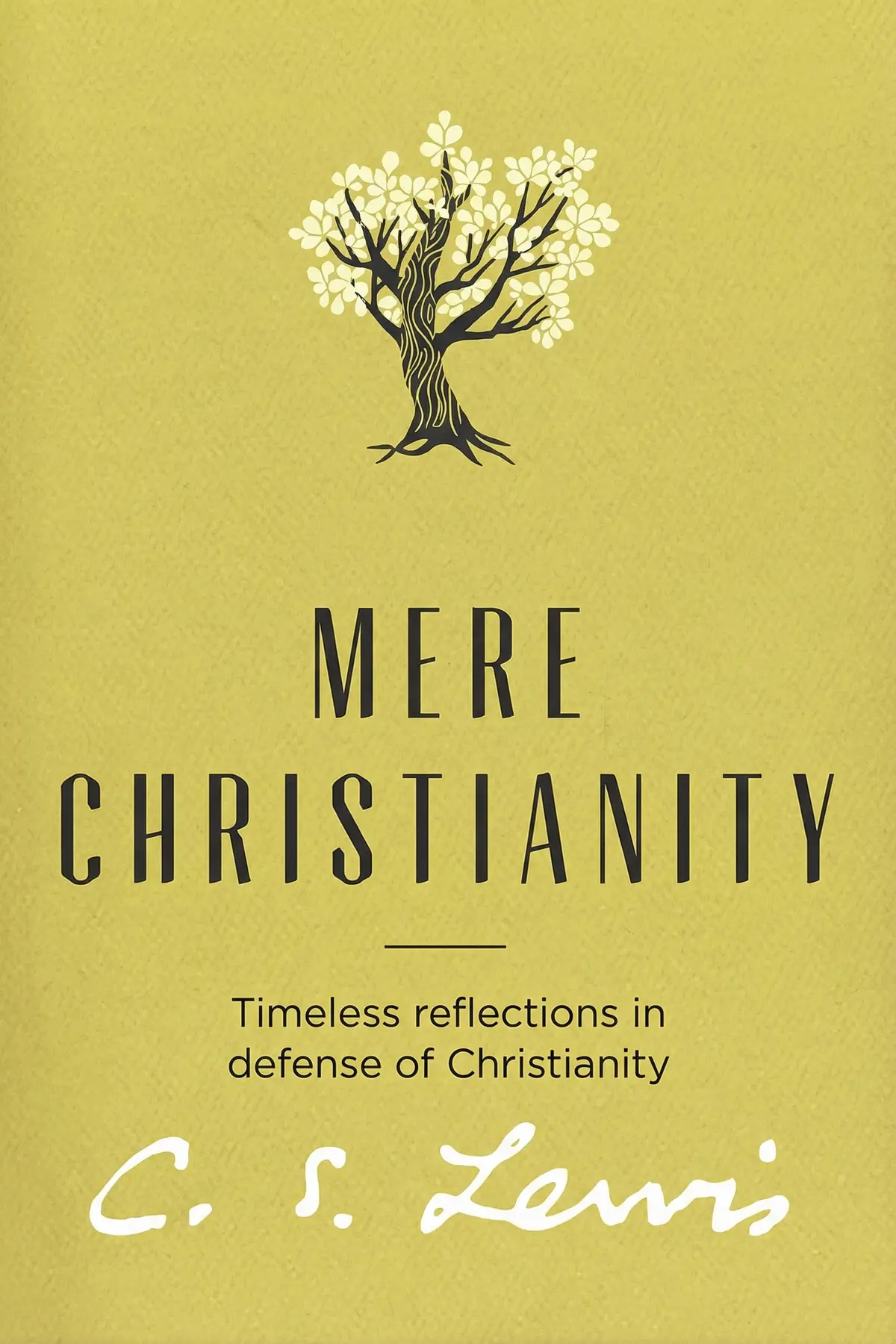
Mere Christianity
C.S. Lewis
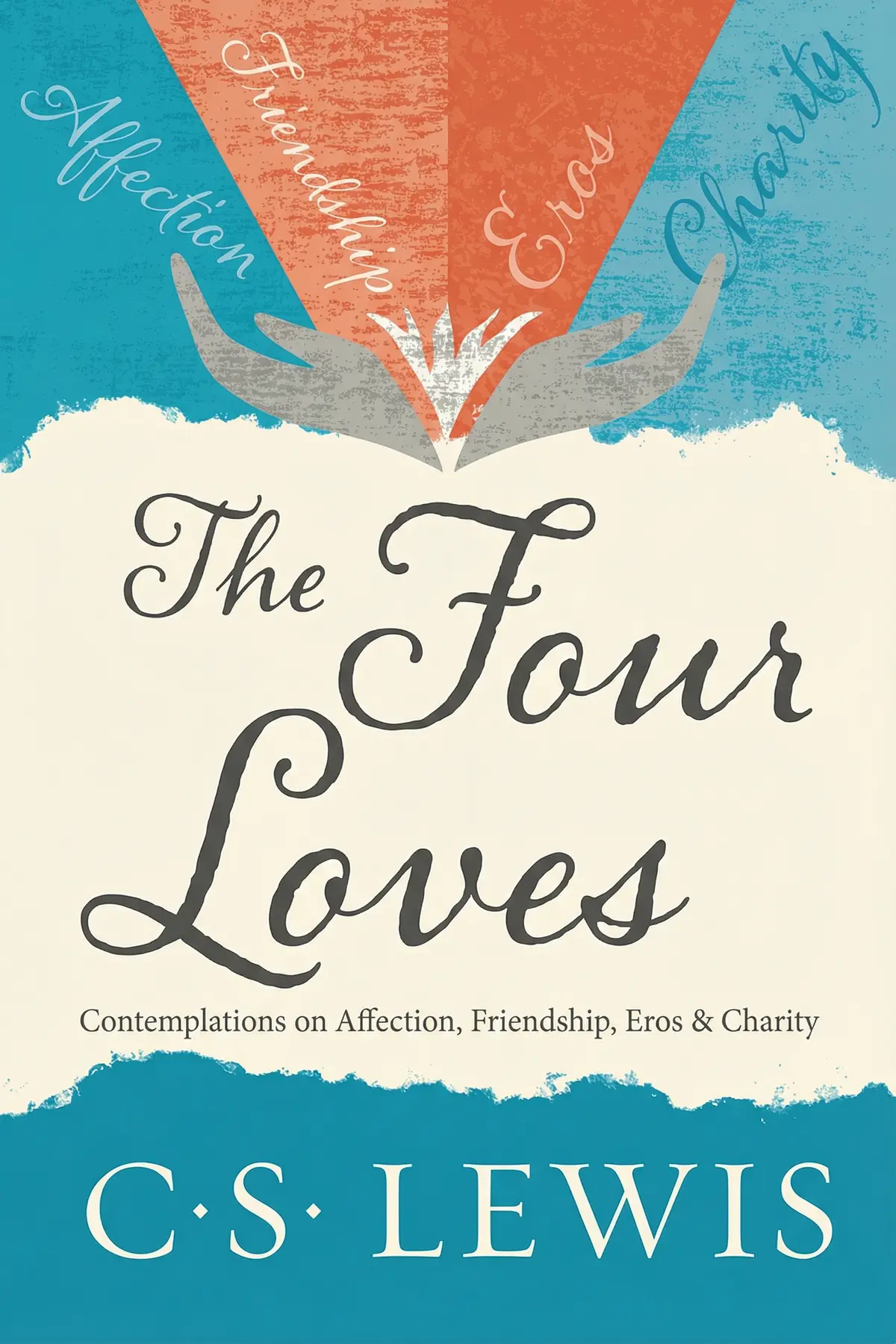
Explore C.S. Lewis’s profound examination of human and divine affection. This summary breaks down the four distinct categories of love, revealing how our earthly attachments can either mirror or distract us from God.
1 min 54 sec
When we speak of love in the modern world, we use a single word to cover a staggering amount of territory. We say we love a particular type of food, we love our favorite sports team, we love our siblings, and we love our spouses. In some languages, the distinction is even more blurred; for instance, in French, the word for liking something and loving someone is often the same. This linguistic overlap suggests that we view all these feelings as different degrees of the same basic emotion. But is that really the case? Are the warm feelings we have for a reliable neighbor truly the same thing as the sacrificial devotion of a martyr or the intoxicating fire of a new romance?
C.S. Lewis, the renowned author of the Chronicles of Narnia and a significant voice in twentieth-century theology, believed that by using one word for everything, we lose sight of the unique nature of our various bonds. In his work, The Four Loves, he sets out to dissect this complex emotion, categorizing it into distinct forms to help us understand our relationships with each other and, ultimately, our relationship with the Divine.
Lewis’s exploration isn’t just a dry academic exercise. It is a deeply personal and philosophical meditation on what it means to be human. He suggests that while love is often called the greatest of virtues, our human versions of it can actually become dangerous if they are allowed to turn into idols. By looking at love through the lens of Christianity and human experience, Lewis provides a framework for understanding how our natural inclinations can be elevated into something truly holy. Throughout this summary, we will follow the throughline that all human loves are meant to be a preparation for, and a reflection of, the ultimate love: the selfless Charity that flows from God. We will look at how we move from basic needs to chosen bonds, and how each level of affection offers a unique opportunity to grow closer to our Creator.
2 min 47 sec
Before diving into specific types of love, we must understand the two primary forces that drive our hearts: our inherent needs and our desire to give.
2 min 46 sec
The most common and perhaps the least celebrated form of love is built on the simple foundation of familiarity and shared life.
3 min 17 sec
Friendship is the most selective and perhaps the most ‘unnecessary’ of loves, yet it provides a profound sense of shared purpose.
3 min 12 sec
Romantic love is often mistaken for mere desire, but its true power lies in its ability to make us completely selfless for the sake of another.
2 min 57 sec
Each of the natural loves—Affection, Friendship, and Eros—possesses a dark side that emerges when we value them above all else.
3 min 05 sec
The fourth and final love is Charity, the supernatural grace that allows us to love as God loves, even when the object of our affection is unlovable.
1 min 51 sec
As we reach the end of C.S. Lewis’s reflections on the four loves, we are left with a vision of human life that is both deeply grounded and transcendently hopeful. We have seen how our most basic needs—our ‘Need-loves’—provide the humble roots for everything else. We’ve explored how Affection builds a home through familiarity, how Friendship enriches our souls through shared truth, and how Eros offers a glimpse of total, passionate devotion. Each of these loves is a vital part of what it means to be human, yet each is also fragile and prone to distortion.
The throughline of Lewis’s work is clear: our human loves are at their best when they serve as a school for Charity. They are the training grounds where we learn to step outside of ourselves and care for another. However, they can never be the final destination. If we try to make any human connection the center of our universe, we will eventually find it lacking. The weight of our ultimate needs can only be borne by the Divine.
The actionable takeaway from Lewis’s insights is to look at your current relationships through the lens of the Gardener. Are your natural loves growing wild? Are you taking your family for granted, or letting your friendships become exclusive cliques? Is your romantic life becoming an idol that demands you sacrifice your values? To move forward, invite the principle of Charity into your daily life. Practice the small acts of selfless giving—the ‘Gift-love’—that don’t require recognition. Forgive the ‘unlovable’ parts of the people you are closest to, remembering that you too are loved in spite of your flaws. By anchoring all your earthly attachments in the steady, unchanging love of God, you ensure that they don’t just survive, but truly flourish. Love is not just a feeling to be experienced, but a virtue to be cultivated, leading us step by step toward the source of all love.
The Four Loves is a classic work of Christian philosophy that investigates the complexities of human emotion and spiritual devotion. C.S. Lewis moves beyond the simple word love to identify four specific Greek-derived categories: Affection, Friendship, Eros, and Charity. He argues that while the first three are natural and essential to the human experience, they are also prone to distortion if they are not governed by the fourth, which is the selfless, divine love of God. Through personal anecdotes, literary references, and theological insights, Lewis explores how our daily interactions—from the comfort of a family pet to the fire of romantic passion—serve as both a training ground and a potential pitfall for our spiritual growth. The book promises to help readers distinguish between healthy and unhealthy attachments, offering a roadmap for transforming ordinary human feelings into a life of deeper charity and divine connection.
C.S. Lewis was a celebrated British scholar, novelist, and lay theologian. He held prestigious academic positions at both Oxford and Cambridge Universities. A prolific writer, Lewis is best known for the beloved Chronicles of Narnia series, which has reached millions of readers worldwide. His nonfiction works, including Mere Christianity and The Problem of Pain, established him as one of the most influential Christian apologists of the twentieth century. He was a central member of the Inklings, a famous literary circle that also included his close friend and fellow author J.R.R. Tolkien.
C.S. Lewis
Listeners find this book provides a profound exploration of love, with one noting its help in strengthening relationships with others and God. Furthermore, the prose is well-received, as one listener describes it as a beautiful work of writing. The text also delivers valuable insights and stimulating ideas, with one listener mentioning its frequent references to scripture. However, listeners differ on the book's readability; while some find it easy to follow, others find it difficult.
Lewis has a way of cutting straight to the marrow of human experience without being overly sentimental. This exploration of the four Greek loves—Storge, Philia, Eros, and Agape—is a masterclass in philosophical observation. Frankly, the section on vulnerability moved me to tears; the idea that we must risk being broken or else end up in the "casket" of our own selfishness is hauntingly beautiful. While his 1940s academic tone can feel a bit stuffy at times, the underlying wisdom is timeless. I found myself pausing after every few pages just to sit with his definitions of Gift-love and Need-love. It’s a short read, yet it demands your full attention to truly grasp the nuances of how we relate to each other and the Divine. If you want to understand why your heart feels both heavy and light when you love someone, this is the book for you. It changed how I view my closest friendships forever.
Show morePicked this up after a friend recommended it for my small group, and it blew me away. Lewis provides a deep look at love that goes far beyond the "mushy" feelings we see in movies. He treats love as a discipline and a reflection of God’s grace. I particularly loved how he distinguished between our "Need-love" for God and God’s "Gift-love" for us. The scripture references are woven in naturally, making it feel like a spiritual retreat in book form. Some might find the language a bit highbrow or "academic," but I think it adds a layer of dignity to the subject matter. It helped me realize how often I put my partner on a pedestal they weren't meant to occupy. By the time I reached the final chapter on Charity, I felt like I had a better roadmap for my spiritual life. Truly a beautiful work of writing that I will return to again.
Show moreWow. This is easily one of the most profound things I have ever read on the nature of human connection. Lewis manages to be both a philosopher and a poet at the same time. The way he describes the dangers of "distorting" natural loves into gods is a warning every person needs to hear. Not gonna lie, I had to keep a dictionary nearby for some of the more archaic phrasing, but the effort was well worth it. He treats the reader with respect, assuming we can handle a complex argument without it being watered down. The imagery of the heart becoming an "unbreakable" stone if we refuse to risk love is something that will stay with me for years. It’s rare to find a book that challenges your brain while simultaneously nourishing your soul. This isn't just about theology; it’s about what it means to be fully human.
Show moreAs a longtime fan of Lewis, I found this to be one of his most "dense" works in terms of sheer intellectual weight. It’s not exactly a practical manual with ten steps to a better marriage, but rather a guide on how to think rightly about affection. Personally, I found his distinction between "liking" and "loving" to be quite helpful for navigating difficult social circles. However, you can definitely tell this was written in the 1940s by a man who lived a very specific, cloistered academic life. Some of his generalizations about human nature felt a bit narrow or based on faulty logic regarding "pagans" and history. Despite these minor gripes, the core message about Agape love being the only unconditional form is powerful. It’s a short volume, but don't let that fool you—it takes a long time to digest and really incorporate into your worldview.
Show moreFinally got around to reading this classic, and I finally understand why it’s so highly regarded. Lewis has this incredible ability to take the most complex spiritual truths and make them feel like common sense. The way he references scripture frequently but applies it to the "ordinary intelligent layman" is just brilliant. I’ve been thinking a lot about his "casket or coffin" metaphor and how much I’ve been protecting myself from the vulnerability of real friendship. It’s a deep look at how our earthly loves are meant to prepare us for the love of God. The writing style is beautiful, even if it is a bit "highbrow" for a casual afternoon. I feel like my understanding of my own heart has expanded significantly after finishing this. This is a book that offers precious wisdom for anyone trying to improve their relationships.
Show moreEver wonder why some relationships feel like a duty while others feel like a spark of the divine? Lewis breaks this down by examining the classical Greek categories of love. Truth is, his categorization of Eros versus simply "sex" was eye-opening, even if he rambles a bit on tangential topics in that third section. I appreciated how he grounded these lofty philosophical concepts in everyday reality, though his Cambridge professor roots definitely show through the dense vocabulary. At times, the logic felt a bit like he was trying to prove a theorem rather than describe a feeling, which might alienate some readers. However, the insights into how "Philia" or friendship is the most "unnatural" yet essential love are worth the price of admission alone. It’s not a light beach read, but it’s incredibly rewarding if you’re willing to put in the mental effort. My copy is now full of highlights.
Show moreThe chapter on Friendship was easily my favorite part of this entire volume. Lewis describes the "inner ring" and the way friends stand side-by-side looking at a common interest, which resonated deeply with my own experiences. Look, he can be a bit of a "pasty white English professor" sometimes, and his logic-heavy approach might feel cold to those who prefer emotional spirituality. I didn't always agree with his stance on patriotism or "sub-human" loves either. Still, his ability to define the invisible threads that connect us is unparalleled. He avoids the typical jargon you find in modern self-help books, opting instead for profound, meaty observations. It’s a book that forces you to think critically about how much love you are actually putting into your relationships. A bit stuffy in parts, yes, but the wisdom here is undeniably precious and thought-provoking.
Show moreTo be fair, this was a much harder climb than I anticipated based on his Narnia books. While the writing style is undeniably eloquent, the book is riddled with sexist anachronisms that reflect the time it was written. Lewis suggests women can't really share in the intellectual world of men, which is frustratingly dated and made it difficult to swallow his broader arguments. I also felt he got bogged down in didacticism, presenting his personal theology as absolute, universal fact. The chapters on Storge and Philia were the highlights, offering some genuine "aha" moments about family dynamics. But once he moved into the more dogmatic territory of Agape, I felt he was mostly preaching to the choir. It’s an interesting intellectual exercise for fans of Christian apologetics, but it lacked the warmth I was looking for. I struggled to finish it despite the short page count.
Show moreNot what I expected at all, especially coming from the author of The Screwtape Letters. I thought this would be a more accessible guide, but it felt more like a transcript of a very intense university lecture. The chapter on Eros was particularly disappointing because it spent so much time talking about what romantic love isn't rather than what it is. In my experience, Lewis is a brilliant writer, and some of his sentences are absolute gems that I had to write down. But the overall flow felt disjointed, and he frequently leaned on "trust me, I'm the expert" logic that didn't always hold up. As someone who isn't particularly religious, the final section on Charity felt like it missed the mark entirely. It’s an okay read if you like philosophy, but it’s definitely not his most engaging work. It requires a lot of patience to get through.
Show moreThis book was a struggle from start to finish. To be honest, I found Lewis’s tone incredibly patronizing and his arguments full of logical fallacies. He makes sweeping, incorrect statements about "pagans" and nature worship just to support his own theological points, which is basically Logic 101 failure. I wanted to like this because of the "Four Loves" concept, but the sexist comments about women being incapable of male thought were the final straw for me. It’s all very "didactic English professor" and doesn't allow for any perspective outside of his own narrow worldview. If you already agree with everything he says, you’ll probably love the "poetic waxing" at the end. But if you’re looking for a fair or scientific debate on the nature of love, look elsewhere. I felt like he was just BS-ing his way through some very complicated topics.
Show more
Nigel Warburton
John Rawls
Eckhart Tolle
Marianne Williamson
Deepak Chopra
Pico Iyer
Alcoholics Anonymous World Services
AUDIO SUMMARY AVAILABLE
Get the key ideas from The Four Loves by C.S. Lewis, plus 5,000+ more titles in English and Thai.