
15 min 14 sec
Messy: The Power of Disorder to Transform Our Lives
By Tim Harford
Messy explores the hidden benefits of disorder, revealing how unpredictability, confusion, and chaos actually drive innovation, resilience, and creative breakthroughs in a world increasingly obsessed with rigid organization and data-driven tidiness.
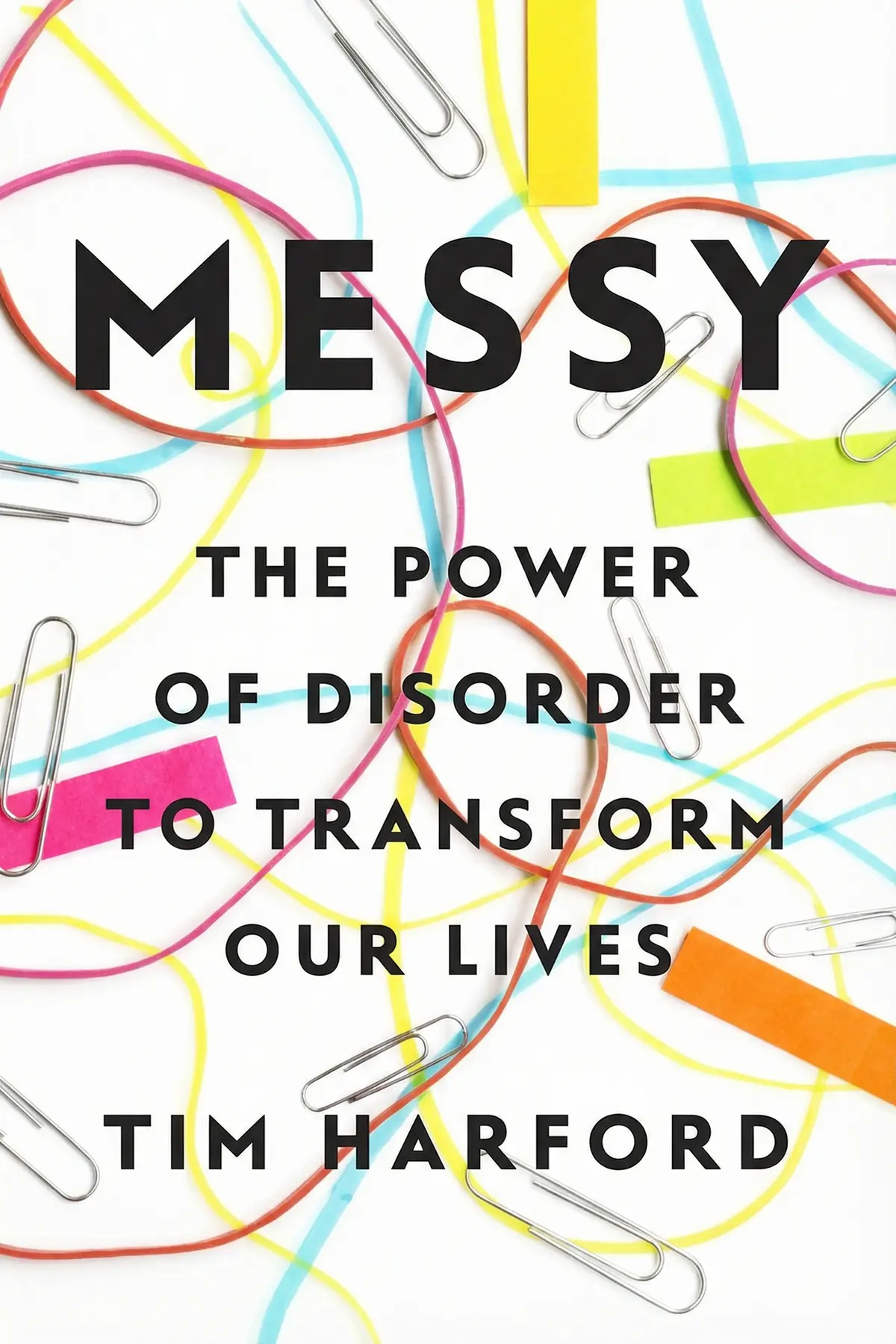
Table of Content
1. Introduction
1 min 14 sec
From a very young age, most of us are taught that a tidy desk reflects a tidy mind. We are encouraged to organize our schedules, categorize our files, and eliminate any source of distraction. The underlying assumption is that order leads to efficiency and success, while messiness is a sign of laziness or failure. But is that really true? In the world of innovation and resilience, the opposite often proves to be the case.
We are about to explore a different perspective: that the friction, confusion, and unpredictability of a messy life are actually the secret ingredients for creative breakthroughs. This journey will take us through the world of improvisational jazz, the history of high-tech hubs, and the psychological benefits of being easily distracted. We’ll see how trying to force the world into neat little boxes often backfires, making us less adaptable and less inventive.
By the end of this summary, you’ll understand why the most successful people and organizations don’t just tolerate messiness—they actively seek it out. You will learn how to turn disruptions into opportunities and why your messy desk might actually be your greatest asset. Let’s dive into how we can find resilience and creativity in an increasingly tidy-minded world.
2. The Dangers of Imposing Artificial Order
2 min 29 sec
Trying to quantify and categorize everything often leads to flawed predictions and rigid systems that fail when things get complicated.
3. How Distractions and Disruptions Fuel Innovation
2 min 28 sec
Unexpected obstacles and a wandering mind can pull us out of stale routines and lead to artistic and intellectual breakthroughs.
4. The Advantage of Diverse Networks and Autonomous Spaces
2 min 24 sec
Creative power comes from weak social ties and the freedom to physically manipulate the environments where we work.
5. Improvisation as a Strategic Tool
2 min 31 sec
Success often depends on the ability to abandon the script and embrace the unpredictable nature of the moment.
6. The High Cost of Over-Reliance on Automation and Order
2 min 34 sec
Over-structuring our lives and relying on automated systems can leave us unskilled and ill-equipped for real-world challenges.
7. Conclusion
1 min 34 sec
In a world that is constantly pushing us toward more data, more organization, and more automation, it is easy to feel like we are failing if our lives aren’t perfectly polished. But as we’ve seen, the most creative, resilient, and successful people are those who know when to embrace the mess. Whether it’s the ‘unplayable’ piano that leads to a masterpiece, the ‘messy’ social network that sparks a new idea, or the ‘unscripted’ speech that changes history, disorder is often the very thing that makes greatness possible.
As a practical way to start applying these ideas, consider how you approach play—either for yourself or for your children. We often buy ‘tidy’ toys with specific rules or sign our kids up for highly structured activities. But the most valuable development happens in ‘informal play.’ When there are no rules and the game is a mess, children have to use their empathy, negotiation skills, and creativity to keep the game going. They have to invent their own fun. This is a perfect training ground for the complexities of adult life.
The next time you look at your cluttered desk, your sprawling inbox, or your interrupted schedule, don’t reach for the organizer right away. Instead, ask yourself if that mess is actually providing you with a hidden opportunity. Resilience isn’t about avoiding chaos; it’s about being the kind of person who can thrive right in the middle of it. Embrace the disorder, stay flexible, and remember that the best parts of life are rarely found in a neat, tidy box.
About this book
What is this book about?
Modern society places a high premium on order. We are taught to file our emails, color-code our calendars, and rely on structured data to make decisions. But what if this obsession with neatness is actually holding us back? This book argues that the messy, unscripted parts of life are not obstacles to overcome, but are actually the primary engines of human creativity and resilience. Through a series of fascinating case studies ranging from jazz performances and military strategy to office design and high-stakes politics, you will discover why disruptions are necessary for progress. The book promises to change how you view your workspace, your social network, and even your daily distractions. By leaning into the ambiguities of the world, you can unlock a higher level of performance that a tidy mind simply cannot reach.
Book Information
About the Author
Tim Harford
Tim Harford is an economist and award-winning journalist who writes for the Financial Times. He has written multiple bestselling books on economics and life, including The Undercover Economist.
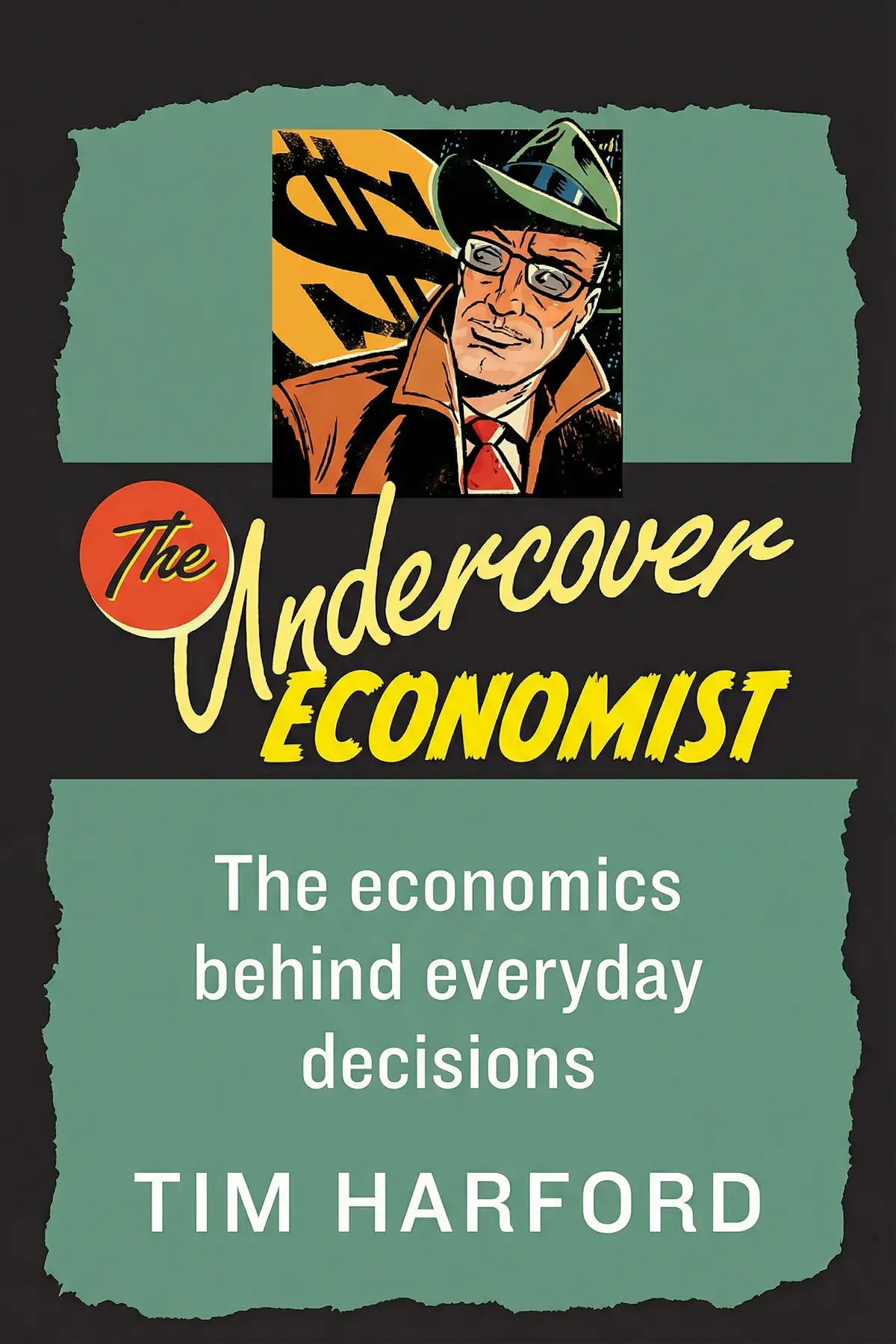
The Undercover Economist
Tim Harford
Ratings & Reviews
Ratings at a glance
What people think
Listeners find the content both engaging and meticulously researched, with one review pointing out how it effectively draws from historical context and research. Furthermore, they enjoy the innovative take on living naturally, while one listener emphasizes its usefulness in enhancing productivity. The prose itself is highly praised, and listeners find great value in the compelling anecdotes and illustrations shared throughout. There is also significant appreciation for the book’s approach to disorder and creativity; one review mentions that it offers the core elements necessary for survival and creativity.
Top reviews
Aurora
Finally got around to reading Tim Harford’s take on the chaos of life, and it is a revelation. The opening story about Keith Jarrett’s Cologne concert—where he was forced to play a tinny, out-of-tune piano—perfectly sets the stage for why rigid planning often kills the soul of creativity. Harford argues that we are too seduced by the blandishments of tidiness, often ignoring how improvisation and disorder can actually lead to more resilient systems. I found the section on the 'paradox of automation' particularly chilling, explaining how over-reliance on tidy algorithms can leave us helpless when a real crisis occurs. His writing is crisp, energetic, and avoids the usual dry economic jargon. It’s a liberating read for anyone who feels smothered by the modern obsession with standardization and micro-management.
Show moreTern
Tim Harford manages to turn the mundane struggle against clutter into a compelling argument for human spontaneity and resilience. The way he weaves together the history of jazz, the evolution of antibiotics, and the mechanics of Jeff Bezos’s business strategy is nothing short of masterful. I was particularly struck by the idea that we find our soulmates or our best ideas when we ignore the questionnaires and the rigid data points. This book isn't just a 'how-to' for being disorganized; it's a philosophical defense of the human qualities that machines can’t replicate. It’s a fast-paced, thought-provoking read that will make you feel much better about your cluttered desk and your unplanned weekends. Truly, Harford's best work since his early economic deep-dives.
Show morePrayoon
Look, if you’re tired of the obsessive 'life-hacking' culture that treats humans like robots, read this immediately. Harford shows that the very things we try to eliminate—distraction, ambiguity, and difficulty—are often the primary drivers of our most significant breakthroughs. I loved the counter-intuitive findings, like how kids playing in 'messy' wastelands actually have fewer accidents than those on padded, safe playgrounds. It's a refreshing perspective that values responsiveness over rigid discipline. The book is filled with excellent stories and examples that stay with you long after you've closed the cover. I finished it feeling much more confident in my own ability to navigate a world that doesn't always fit into a neat little box. Highly recommended for any creative professional.
Show moreCherry
As someone who has always felt guilty about my overflowing inbox, this book felt like a personal vindication. Harford essentially provides the antithesis to the Marie Kondo craze, suggesting that a bit of clutter might actually be the sign of a productive, creative mind. I appreciated the varied examples, ranging from the military tactics of Erwin Rommel to the collaborative genius of the mathematician Paul Erdos. However, to be fair, the book does occasionally feel like a collection of interesting anecdotes rather than a singular, airtight thesis. Some chapters, like the one on digital dating, felt slightly disconnected from the core message. Still, the prose is incredibly engaging and it really makes you question why we prioritize neatness over actual functionality in our offices and schools.
Show moreDream
Ever wonder why the most sterilized, perfectly planned offices feel like such a soul-crushing drag to work in? Harford explores this through the lens of autonomy, showing that when workers can't control their own 'messy' spaces, productivity actually plummets. I loved the examples of 'marginal gains' in British cycling versus the radical, disruptive innovations of Graham Obree. The book is well-researched and challenges the idea that we should all be striving for a frictionless, automated existence. My only real gripe is that the role models presented are overwhelmingly male, which felt like a missed opportunity given the themes of diversity and collaboration. Despite that, the chapter on how 'filter bubbles' in social media are the antithesis of a healthy, messy world was remarkably prescient.
Show moreSombat
This wasn't just another business book; it felt more like a history of how unexpected obstacles lead to genius. I found the section on 'Oblique Strategies' and David Bowie’s creative process to be worth the price of admission alone. Harford’s writing style is accessible and he has a knack for picking out the one detail that makes a story stick in your mind. Truth is, the book makes a very strong case for why we should stop trying to iron out every outlier in our lives. While some of the transitions between chapters felt a little forced, the overall message about the dangers of over-optimization is vital in our data-driven age. It’s an entertaining and deeply researched look at why the best-laid plans often fail because they are too 'neat' to survive reality.
Show moreChatchai
Picked this up on a whim and was surprised by how much the 'paradox of automation' stayed with me. We often think that making things easier and more 'tidy' through technology makes us safer, but Harford proves it can actually make us more fragile. The specific examples of plane crashes caused by pilots losing their manual skills because of automation were genuinely eye-opening. The book is an excellent reminder that being 'messy' is just another word for being adaptable. I enjoyed the anecdotes about Paul Erdos’s chaotic lifestyle and how it catalyzed the mathematical world. Even though some of the 'messiness' definitions felt a bit stretched, the overall entertainment value and the quality of the research make this a solid four-star read for me.
Show moreAmara
The premise is fascinating, but the execution felt a bit like a grab bag of stories without a unifying thread. Harford uses the word 'messy' to describe everything from ethnic diversity and improvisational jazz to political strategy and bacterial growth. When a word means everything, it starts to mean nothing. Look, I enjoyed the individual segments—especially the bit about Brian Eno’s 'Oblique Strategies' cards—but I didn't come away with a clear framework for when disorder is actually helpful versus when it's just a nuisance. It definitely feels like an attempt to capture that Malcolm Gladwell magic, though it lacks the same punchy, world-shifting conclusions. It is a fun read for a weekend, but don't expect it to radically change your life or your filing system.
Show moreNutnicha
While the writing style is undeniably engaging, I couldn't help but notice how few women were featured as role models in these stories of 'messy' success. The book leans heavily on the usual suspects—Steve Jobs, Martin Luther King, and various male scientists and musicians. This bias made some of the arguments about 'diversity' feel a little hollow. Frankly, I also found the chapter on the NHS and ambulance response times to be a bit simplified for such a complex public policy issue. There are certainly some gems of wisdom here, especially regarding the limits of GPS and computer-aided navigation. However, the lack of a tidy summary or concrete 'takeaways'—while perhaps intentional—left me feeling like the book lacked a clear destination. It’s a decent read, but not quite life-changing.
Show moreFah
To be fair, I expected a more rigorous economic analysis from the author of The Undercover Economist. Instead, what we have here is a series of 'no duh' statements wrapped in historical trivia. Harford falls into the 'man with a hammer' syndrome, where every successful event in history is suddenly attributed to some form of messiness. He ignores the countless times where disorder leads to total failure, focusing only on the rare outliers that fit his narrative. The chapter on Donald Trump’s campaign tactics already feels incredibly dated and lacks the nuance required for such a complex topic. It’s not a terrible book, and Harford is a talented storyteller, but the central argument is so loosely defined that it becomes almost impossible to argue against—or learn from.
Show more
Readers also enjoyed
Age of Propaganda: The Everyday Use and Abuse of Persuasion
Anthony Pratkanis
A Room of One’s Own
Virginia Woolf
59 Seconds: Change Your Life in Under a Minute
Richard Wiseman
AUDIO SUMMARY AVAILABLE
Listen to Messy in 15 minutes
Get the key ideas from Messy by Tim Harford, plus 5,000+ more titles in English and Thai.
- 5,000+ titles
- Listen as much as you want
- 7-day free trial
- Cancel anytime







