
19 min 08 sec
Mindful Work: How Meditation is Changing Business from the Inside Out
By David Gelles
Mindful Work explores the intersection of meditation and modern business, demonstrating how staying present can drastically reduce corporate stress, improve focus, and foster a culture of compassion and social responsibility.
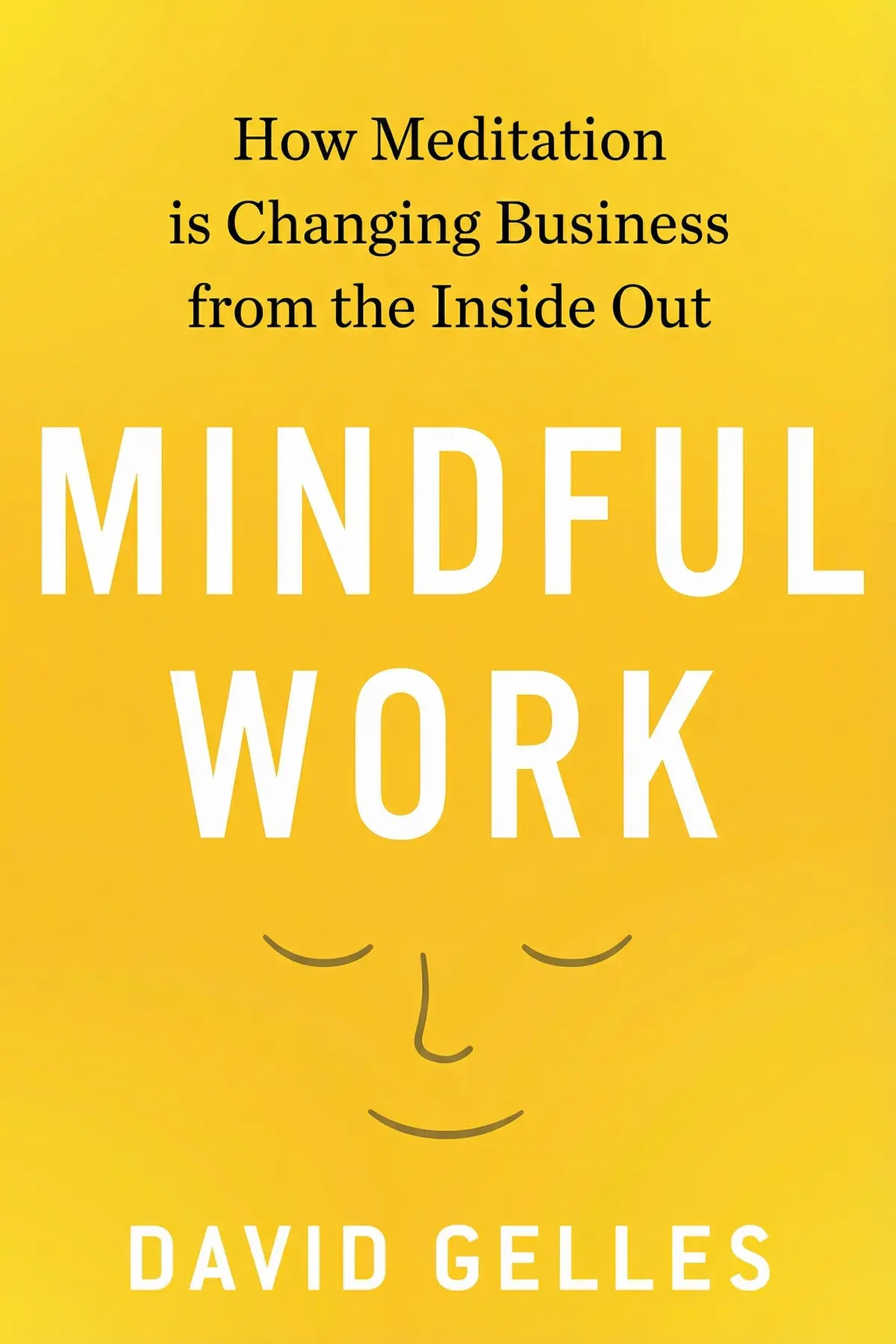
Table of Content
1. Introduction
1 min 40 sec
We have all felt that crushing weight of the modern workweek. It is that relentless pace where the world seems to move faster than we can think, leaving us feeling permanently behind. You know the feeling: your phone buzzes with an email at ten at night, your calendar is a solid block of color with no gaps for air, and your brain feels like it has too many tabs open at once. In those moments of burnout, it is common to fantasize about a total escape—perhaps a one-way ticket to a remote beach where the Wi-Fi doesn’t reach and your boss can’t find you.
But as David Gelles points out, running away isn’t a sustainable business strategy. There is a much more accessible and affordable way to reclaim your focus and your sanity without ever leaving your desk. The answer lies in the ancient practice of mindfulness, which is currently undergoing a massive, secular transformation within the world’s most powerful corporations.
Mindfulness isn’t just about sitting still; it is a mental discipline that is changing how we approach problem-solving, how we relate to our colleagues, and how we lead. In this summary, we are going to look at the throughline of this movement: the idea that a healthier internal world for employees leads to a healthier, more profitable, and more responsible external world for businesses. We will explore the scientific evidence that proves these techniques actually rewire the brain, look at how major global brands are creating meditation rooms for their staff, and understand why the myth of multitasking is actually hurting our productivity. By the end, you’ll see that being mindful isn’t just a nice-to-have perk—it’s becoming a competitive necessity in the modern economy.
2. The High Cost of Stress and the Corporate Pivot
2 min 05 sec
Discover how the blurring lines of modern work are creating a multi-billion dollar stress crisis and why industry giants are turning to mindfulness as a solution.
3. The Biological Reality of a Calm Mind
2 min 09 sec
Explore the fascinating science of neuroplasticity and how meditation actually physically reshapes the brain to improve focus and emotional regulation.
4. A Secular Path to Presence
1 min 52 sec
Learn how the development of Mindfulness Based Stress Reduction moved meditation out of the monastery and into the mainstream Western lifestyle.
5. Dismantling the Multitasking Delusion
2 min 01 sec
Understand why your attempt to do everything at once is actually slowing you down and how mindfulness can help you reclaim your deep focus.
6. The Strength Found in Compassion
2 min 11 sec
Find out why being ‘kind’ at work is actually a sign of emotional strength and how specific meditation techniques can build social connection.
7. The Ripple Effect of Corporate Responsibility
1 min 49 sec
See how a mindful internal culture can lead to major shifts in how companies treat the environment and their global supply chains.
8. The Pillars of Mindful Leadership
1 min 47 sec
Contrast the stressed, reactive manager with the mindful leader who uses presence and empathy to inspire innovation and loyalty.
9. Navigating the Challenges of a Growing Trend
1 min 48 sec
Examine the risks of ‘McMindfulness’ and why true practice requires more than just a quick productivity hack.
10. Conclusion
1 min 46 sec
The journey through the world of mindful work brings us to a clear realization: our inner state is not separate from our professional performance. In fact, our mental clarity and emotional resilience are our most valuable assets. We have seen that the high cost of workplace stress is a problem that can be addressed through the secular application of meditation, and that this shift is backed by hard neuroscience. From the meditation rooms of General Mills to the sustainable supply chains of Eileen Fisher, the evidence is mounting that a more present, compassionate approach to business is not just possible—it’s already happening.
Mindfulness is a tool that anyone can pick up, regardless of their job title or their religious background. It doesn’t require hours of solitude; even a few minutes of focused attention can start the process of rewiring the brain for a better life. As David Gelles shows us, the future of work isn’t about moving faster; it’s about moving more intentionally. It’s about being the person who can stay calm in the storm, who can listen when others are shouting, and who can lead with both a sharp mind and a kind heart.
As a final takeaway, consider how you can start this practice today. The next time you feel that familiar surge of stress—perhaps when a meeting is running late or your inbox is overflowing—don’t reach for another cup of coffee or try to multitask your way out of it. Instead, take five minutes to sit quietly. Close your eyes and focus entirely on the sensation of your breath entering and leaving your body. When your mind inevitably tries to pull you back into your worries, notice the thought, let it go, and return to your breathing. This simple act of reclaiming your attention is the first step toward a more mindful, productive, and meaningful professional life. The Bahamas might be far away, but the calm you’re looking for is as close as your next breath.
About this book
What is this book about?
Mindful Work takes a deep dive into the burgeoning movement of mindfulness within the professional world. In an era where workplace stress costs the American economy hundreds of billions of dollars annually and the lines between our personal and professional lives have all but vanished, David Gelles presents a compelling case for a different way of doing business. The book moves beyond the stereotype of the solitary meditator on a mountaintop, showing how some of the world's largest and most successful companies are integrating secular meditation to boost their bottom lines and the well-being of their employees. The promise of this exploration is a more humane, sustainable, and productive work environment. By looking at scientific research, leadership shifts, and corporate social responsibility, Gelles shows that mindfulness isn't just a personal health trend—it is a foundational tool for changing how organizations operate. Whether you are a CEO looking to improve company culture or an employee trying to survive a demanding schedule, this summary provides the roadmap for bringing clarity and calm to the daily grind.
Book Information
About the Author
David Gelles
David Gelles has been practicing mindfulness for over 15 years since learning about the technique in India. He has also written on mindfulness for the New York Times, Financial Times and Forbes.
Ratings & Reviews
Ratings at a glance
What people think
Listeners find the text both educational and accessible, with one listener describing it as a strong case study of the mindfulness revolution. They value the emphasis on remaining fully present, and one listener mentions that meditation serves to lower stress. The writing is lucid, making the advice easy for listeners to implement immediately. They appreciate the health perks, especially its potential to foster compassion and improve the well-being of employees.
Top reviews
Nongnuch
David Gelles brings a unique perspective as both a veteran New York Times business reporter and a longtime practitioner, making this a highly credible account of the 'mindful revolution.' I was particularly impressed by how he avoids the typical 'woo-woo' tropes while detailing how giants like Google and General Mills are integrating meditation into their corporate DNA. It is a solid case study of the cultural shift toward employee well-being and compassion in the boardroom. The writing is incredibly clear and moves at a brisk pace, focusing on how being fully present can actually drive success. For anyone interested in the intersection of mental health and profit, this provides a fascinating blueprint. It really demonstrates that meditation isn't just a fringe movement anymore; it's a vital tool for the modern professional seeking to reduce stress and improve focus.
Show moreTang
Finally, a business book that addresses the human element without sounding like a recycled self-help retreat brochure. Gelles manages to show how mindfulness, compassion, and living in the present are integral parts of a thriving company culture. He takes us inside leading organizations and shows us that profit and employee well-being don't have to be mutually exclusive. The research on how meditation can literally rewire the brain for better decision-making is fascinating stuff. It is one of those rare books that is immediately applicable; I found myself breathing differently at my desk the very next day. While some might find it a bit optimistic, the author’s background as a business reporter keeps the narrative grounded in reality. This is a powerful alternative message for a profit-oriented world that often forgets the people behind the numbers.
Show morePear
Ever wonder if the hype around workplace meditation is actually backed by data? This book provides the answer with an emphatic yes, though it takes its time getting there. Gelles explores how companies like Aetna have significantly lowered healthcare costs by encouraging workers to manage their anxiety through mindfulness. In my experience, the anecdotes about Steve Jobs and his Zen roots were the most compelling parts of the narrative. The book serves as a fantastic introduction for corporate leaders who need a nudge to prioritize their team's mental clarity. However, if you are already a regular meditator, you might find some of the introductory concepts a bit elementary. It’s more of a sociological report on the state of business than a tactical manual. Still, it’s a highly readable and informative deep dive into a growing trend.
Show moreMattanee
Picked this up after a colleague mentioned it during a particularly stressful quarter at the office. The chapter on becoming 'More Focused' was the absolute highlight for me, especially the section regarding how professional athletes use these techniques. Gelles explains how basketball players use mindfulness to forget missed shots and find the rhythm of the game, which is a perfect metaphor for recovering from a bad meeting. Not gonna lie, I was skeptical about the 'New Age' vibes, but the science presented here is hard to ignore. It makes a compelling argument for why being fully present is a competitive advantage in today's distraction-heavy world. My only gripe is that it feels a bit like an extended magazine article in certain sections. Despite that, the message about compassion and social responsibility is one that more CEOs need to hear.
Show moreGioia
The chapter on 'More Focused' was the absolute highlight for me. I loved the breakdown of how meditation helps athletes make split-second decisions by letting go of past mistakes and focusing purely on the now. This book really highlights the health benefits of a quiet mind, particularly in high-pressure environments. Gelles writes with a clear, journalistic style that makes the complex neuroscience behind meditation easy to digest for a layperson. I appreciated the skeptical look he occasionally takes at companies that are just using mindfulness as a trendy marketing tool. It’s an insightful look at how meditation is transforming the workplace from a source of chronic stress into a place of potential clarity. It’s definitely worth a read for any professional feeling burnt out. The balance between anecdotes and data is handled quite well.
Show moreSoontorn
Not what I usually read, but the analysis of how Aetna and Patagonia changed their culture was genuinely fascinating. Gelles shows that being fully present isn't just about sitting on a cushion; it's about how we interact with our colleagues and lead our teams. The book is exhausting-researched and covers a wide range of themes from social responsibility to the science of focus. I found the sections on lowering stress levels especially relevant to my own career. It provides a hopeful look at the future of work where compassion is actually valued. While it does get a bit 'preachy' in the middle, the overall message is incredibly positive and necessary. It’s a great introduction for anyone who thinks meditation is just for the 'woo-woo' crowd. The writing is sharp, and the examples are diverse enough to keep you engaged.
Show moreMalee
To be fair, I expected a practical guide with step-by-step instructions on how to actually meditate at my desk, but that isn't what this is. Instead, the book is a series of profiles on companies that have already embraced the movement. While it's interesting to read about Patagonia’s mindful outlook, the book felt a bit like it was preaching to the choir. If you already believe in the benefits of meditation, this is just a long confirmation of your existing views. It didn't really tell me *how* to do it, which was disappointing for an employee looking for personal tools. The truth is, it’s great for bosses who want to change their corporate policy, but for the average person in the cubicle, it’s more of a theory book. It’s informative, sure, but also quite repetitive after the first hundred pages.
Show moreSureerat
As someone who has practiced mindfulness for years, I found much of the material here to be a bit basic and repetitive. Gelles is clearly an evangelist for the cause, but his thesis that business is becoming 'less evil' through prayer and meditation feels a bit naive at times. The book functions well as a beginner's introduction to the concept, but the length seems excessive for the amount of new information provided. I struggled to discern the need for it to be this lengthy when the core message is so simple. If you are looking for a deep dive into the 'how-to,' you’d be better off with Kabat-Zinn’s 'Full Catastrophe Living.' That said, the research on stress reduction in the American workplace is solid. It's an okay read, just don't expect it to change your life if you're already familiar with the subject.
Show moreYaowaluk
Truth is, the book reads more like a defense of corporate interests than a spiritual guide, which might turn some people off. Gelles focuses heavily on the bottom line, showing how meditation saves companies money on insurance and turnover. While that’s a practical way to get CEOs to listen, it makes the practice of mindfulness feel a bit commodified. There were moments where it felt like 'New Age' fluff repacked for the suit-and-tie crowd. Personally, I found the stories about Google and Aetna interesting, but I would have liked more focus on the individual experience of the worker. It’s a decent overview of the state of mindfulness in America, but it lacks the soul of other books on the topic. It’s a solid case study, just be prepared for a very corporate-centric perspective.
Show morePop
After hearing several glowing recommendations, I found myself increasingly frustrated with the 'preaching to the choir' tone of the writing. This book feels like it was written strictly for CEOs and HR directors rather than the average person actually doing the work. It spends so much time talking about how great meditation is for the company's profits that it loses sight of the practice's actual purpose. Frankly, it felt like an extended magazine article that had been stretched out to fill a book's length. I was looking for practical ways to reduce my own stress, but instead, I got a history of Steve Jobs and some corporate success stories. If you want to learn how to meditate, look elsewhere. This is more about the business of mindfulness than the act of being mindful itself. It was a chore to finish.
Show moreReaders also enjoyed

A New Earth: Awakening to Your Life’s Purpose
Eckhart Tolle
Aflame: Learning from Silence
Pico Iyer

A Bigger Prize: How We Can Do Better Than the Competition
Margaret Heffernan
AUDIO SUMMARY AVAILABLE
Listen to Mindful Work in 15 minutes
Get the key ideas from Mindful Work by David Gelles, plus 5,000+ more titles in English and Thai.
- 5,000+ titles
- Listen as much as you want
- 7-day free trial
- Cancel anytime







