
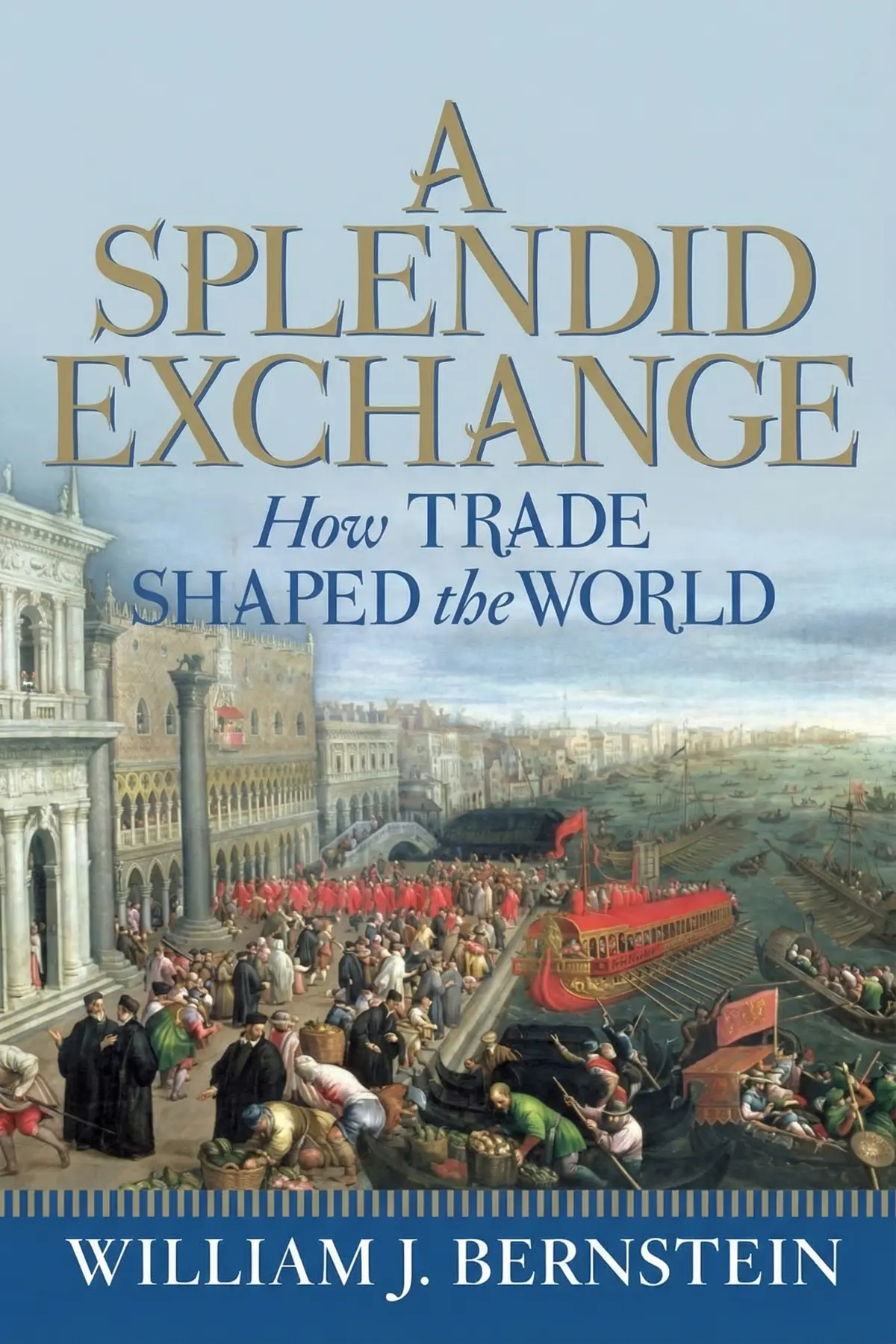
A Splendid Exchange: How Trade Shaped the World
William J. Bernstein
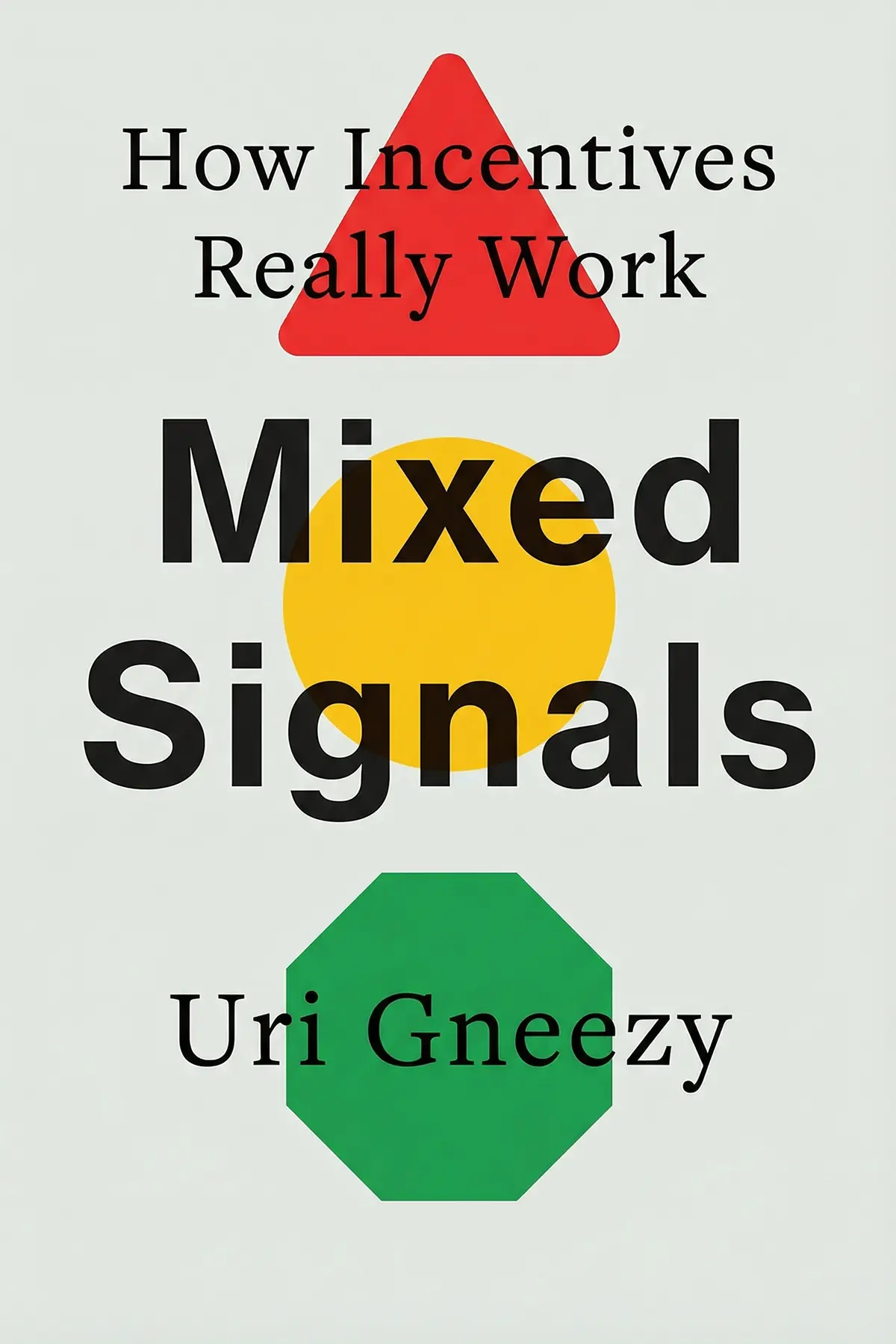
Mixed Signals examines the hidden psychological forces that drive our decisions, revealing why traditional rewards often fail and how to align incentives with our true intentions and social values.
2 min 05 sec
Every day, we are surrounded by a invisible architecture of incentives. From the points you earn on your credit card to the performance reviews at your job, the world is constantly trying to nudge your behavior in specific directions. We like to think of ourselves as rational actors who respond logically to these signals. If a reward is high, we work harder; if a penalty is steep, we avoid the behavior. But if human nature were that simple, our lives would look very different. The reality is that our actions often contradict our stated goals, and the incentives meant to guide us frequently end up leading us astray.
Think about a simple choice: would you rather have one hundred dollars right now, or one hundred and ten dollars if you wait until tomorrow? On paper, waiting is the obvious choice. It is a ten percent return on investment for just twenty-four hours of patience. Yet, when faced with this in real life, a surprising number of people take the money immediately. This gap between the logical choice and the actual choice is where the fascinating study of behavioral economics begins. It is the study of why we do what we do, even when it doesn’t seem to make sense.
In this exploration of the book Mixed Signals, we are going into the heart of human motivation. We are going to look at why money is often a blunt and ineffective tool for changing behavior. We will see how our desire to look good—both to ourselves and to the world—often outweighs the lure of a paycheck. We’ll also examine how large organizations accidentally create cultures of dishonesty by sending conflicting messages to their employees. By the end of this journey, you’ll have a new lens through which to view the world, helping you understand the subtle signals that drive everything from the cars we drive to the way we treat our neighbors. It is time to decode the hidden language of incentives and see how they really work.
3 min 01 sec
Discover why offering more money doesn’t always lead to better results and how psychological biases can make financial incentives completely backfire.
3 min 00 sec
Learn how our desire for status and a positive self-image often trumps financial gain in influencing our daily choices.
3 min 03 sec
Explore why companies often accidentally incentivize the wrong behavior and how to align corporate values with actual rewards.
2 min 56 sec
Master the art of creating rewards that account for human ingenuity and the diverse motivations of your target audience.
1 min 29 sec
As we have seen, the world of incentives is far more than a simple matter of carrots and sticks. It is a complex web of social norms, psychological biases, and human ingenuity. When we understand how these ‘mixed signals’ work, we gain a powerful tool for navigating our lives and our organizations. We learn that money is not a magic wand, and that our desire for status and self-respect is often our strongest motivator.
The most important takeaway is that incentives always send a message. Whether you are a parent trying to encourage your child to read, or a CEO trying to build a multi-billion dollar company, the rewards you offer will define the culture you create. If your signals are clear, consistent, and aligned with your values, you will see the results you desire. But if your signals are mixed, you shouldn’t be surprised when you get unexpected and often undesirable outcomes.
Take a look at the incentives in your own life today. What are you rewarding in yourself? What are you rewarding in others? Are those rewards sending the message you intended? By aligning your signals with your true goals, you can bridge the gap between your intentions and your actions. Start small, be observant, and remember that the best incentives are the ones that speak to the best parts of our nature.
Have you ever wondered why a small fine makes people more likely to be late, or why a cash reward can actually decrease someone's willingness to help? Mixed Signals explores the complex relationship between incentives and human behavior. It moves beyond the simplistic idea that more money equals more motivation, diving into the worlds of behavioral economics and psychology to explain how our choices are shaped by self-perception, social status, and environmental cues. This book provides a roadmap for understanding the subtle messages we send and receive through the reward systems we create. By examining real-world examples from professional sports, corporate scandals, and historical tax laws, it illustrates the frequent disconnect between what we say we want and what we actually incentivize. The promise of this work is a deeper understanding of human motivation, offering practical insights for leaders, parents, and individuals to design incentives that truly work.
Uri Gneezy is a professor of economics and strategy at the University of California, San Diego Rady School of Management. At the institution, he holds the Epstein/Atkinson Endowed Chair in Behavioral Economics. Known for his pioneering research in the field, he previously coauthored the influential book The Why Axis.
Listeners find the book enlightening, especially valuing its fascinating and non-obvious illustrations of how incentives operate. They also give high marks to the writing quality and overall ease of reading.
Uri Gneezy has a real knack for taking complex behavioral economics and making it feel like a casual conversation over coffee. I was particularly fascinated by the discussion of the Toyota Prius and how its unique look served as a massive social signal for environmental consciousness. It wasn’t just about fuel economy; it was about what the car said about the driver. This book is packed with these kinds of counterintuitive examples that make you rethink your own daily choices. The writing is incredibly accessible and avoids the dry, academic tone you might expect from a researcher of this caliber. Personally, I found the breakdown of 'self-signals' to be the most profound part of the entire work. It explains why we do good things even when no one is watching, simply to maintain our own internal narrative. If you want to understand the 'why' behind human irrationality, this is a must-read.
Show moreThe chapter on trulli buildings in Italy was worth the price of admission alone. Imagine peasants knocking the roofs off their houses just to avoid a property tax that only applied to 'finished' homes! It’s a perfect illustration of how people will always find a workaround for poorly designed incentives. Gneezy is a master at finding these historical and modern gems to prove his points about human behavior. I also loved the bit about the Coca-Cola vending machines that would raise prices on hot days. It shows how a technically logical incentive can backfire if it ignores the human element of fairness and social signals. This book changed how I look at my own motivations and the way I try to influence others. It’s rare to find a book that is both intellectually stimulating and genuinely fun to read. Highly recommended for anyone curious about the hidden forces shaping our world.
Show moreWow, I didn't think a book about incentives would keep me turning pages past midnight, but Gneezy’s writing style is just that engaging. He manages to bridge the gap between high-level economic theory and everyday life with remarkable ease and humor. The way he breaks down 'self-signaling'—the stories we tell ourselves about who we are—helped me understand my own habits in a completely new light. Whether he’s talking about NFL player contracts or the design of Dutch canal houses, the examples are always vivid and relevant. I particularly appreciated the final chapters on using these insights for global change. It’s not just a book about business; it’s a book about being human and navigating the complex web of rewards we encounter every day. This is definitely going on my 're-read' list for next year. Truly an insightful and brilliant piece of work.
Show morePicked this up after a recommendation and found the section on 'kill fees' in pharmaceutical R&D to be particularly eye-opening. We often hear about incentives for success, but Gneezy argues that we actually need to reward people for 'failing fast' to save resources. That kind of thinking is rare in corporate America where failure is usually punished regardless of the context. The book is very readable and moves at a brisk pace through various case studies, from blood donation pens to the Wells Fargo account scandal. My only minor gripe is that the middle section felt a bit long-winded with its explanations of social norms. However, the practical applications for managers and business leaders are undeniable and very well-presented. It’s a great toolkit for anyone looking to align their company's stated values with the actual behavior of their employees.
Show moreAs someone who works in corporate HR, the examples of mixed signals in workplace culture hit way too close to home. We often preach teamwork while rewarding individual stats, and Gneezy perfectly explains why that creates such toxic environments. The distinction between quantity and quality in incentives is something every manager needs to understand before they set their next quarterly goals. I found the writing to be sharp and the research to be well-vetted, even if some of the studies felt a bit niche. The book is structurally sound, though I agree with other reviewers that it can become slightly repetitive towards the end. To be fair, the core message is so important that the repetition might be necessary for it to really sink in. This is a practical guide for anyone who wants to stop sending the wrong messages to their team.
Show moreFinally got around to reading this and I’m struck by how often we ignore the 'self-signaling' aspect of our decisions. We focus so much on money, but Gneezy shows that a logo pen can sometimes be more motivating than cash because of what it represents to the donor. The research is solid and the real-world applications, especially regarding the Wells Fargo scandal, are presented with great clarity. It’s a fascinating look at the hidden architecture of our choices and how easily we can be led astray by 'mixed signals' from the institutions around us. While the book’s structure is a bit predictable, the quality of the insights kept me invested until the very last page. It’s a thoughtful exploration of how to design better systems for ourselves and our communities. If you're interested in psychology or marketing, you'll find plenty of actionable takeaways here.
Show moreLook, the core message is simple—incentives tell a story—but the way Gneezy illustrates that story through things like temperature-controlled Coca-Cola machines is brilliant. He highlights the friction that occurs when our stated values don't match the rewards we offer. For example, telling employees to be ethical while only paying for high-volume sales is a recipe for disaster. The book is filled with these 'aha!' moments that make you look at your own workplace and habits differently. The prose is clean and the pacing is generally good, though some of the academic studies felt a bit dry compared to the historical anecdotes. In my experience, this is one of the more accessible books on behavioral science out there. It’s perfect for a weekend read that will actually leave you with something to think about on Monday morning. A very strong four stars for clarity and practical wisdom.
Show moreEver wonder why a $3 fine for picking up your kids late actually makes you more likely to be tardy? This book dives deep into that paradox, explaining how a small fine shifts the social 'wrong' of being late into a simple transaction you can buy your way out of. While the daycare example is a classic in the field, Gneezy adds more layers by discussing how these 'mixed signals' permeate our entire lives. I enjoyed the storytelling, though I did find some chapters to be a bit repetitive after the first few pages. It follows a very predictable structure: question, counter-intuitive solution, and study results. For those of us who have followed this research for years, it feels more like a polished refresher than a groundbreaking new theory. It’s a solid read, just not necessarily a revolutionary one for the seasoned behavioral science fan.
Show moreTo be fair, if you've already read books like Nudge, a lot of the ground covered here will feel very familiar. The anecdotes about blood donation and late fees at daycares are staples of the behavioral economics world at this point. That said, Gneezy is a great writer and he does a fantastic job of organizing these concepts under the umbrella of 'signals.' He makes a compelling case that every incentive we offer sends a message about what we truly value. I liked the discussion on COVID-19 vaccination lotteries versus dinner with the governor, as it provided a very timely application of his theories. Still, the book felt a bit stretched, and I think the same points could have been made in about half the page count. It’s a good introductory text, but seasoned readers might find themselves skimming through the more well-known research summaries.
Show moreNot what I expected, especially given the hype surrounding behavioral science books lately. It started out promising with the discussion of social signaling, but it quickly devolved into a series of anecdotes that didn't seem to go anywhere new. Truth is, many of these concepts, like loss aversion and the failure of monetary incentives for altruistic acts, have been covered more effectively in other titles. The structure is incredibly formulaic, and by the halfway point, I felt like I was reading the same chapter over and over again with just the names of the studies changed. There is some value here for a total beginner, but for me, it felt like common knowledge stretched out into a full-length manuscript. The writing is clear enough, but the lack of original insights made it a real chore to finish. I’d suggest skipping this one if you’ve already read the basics of the field.
Show moreWilliam J. Bernstein
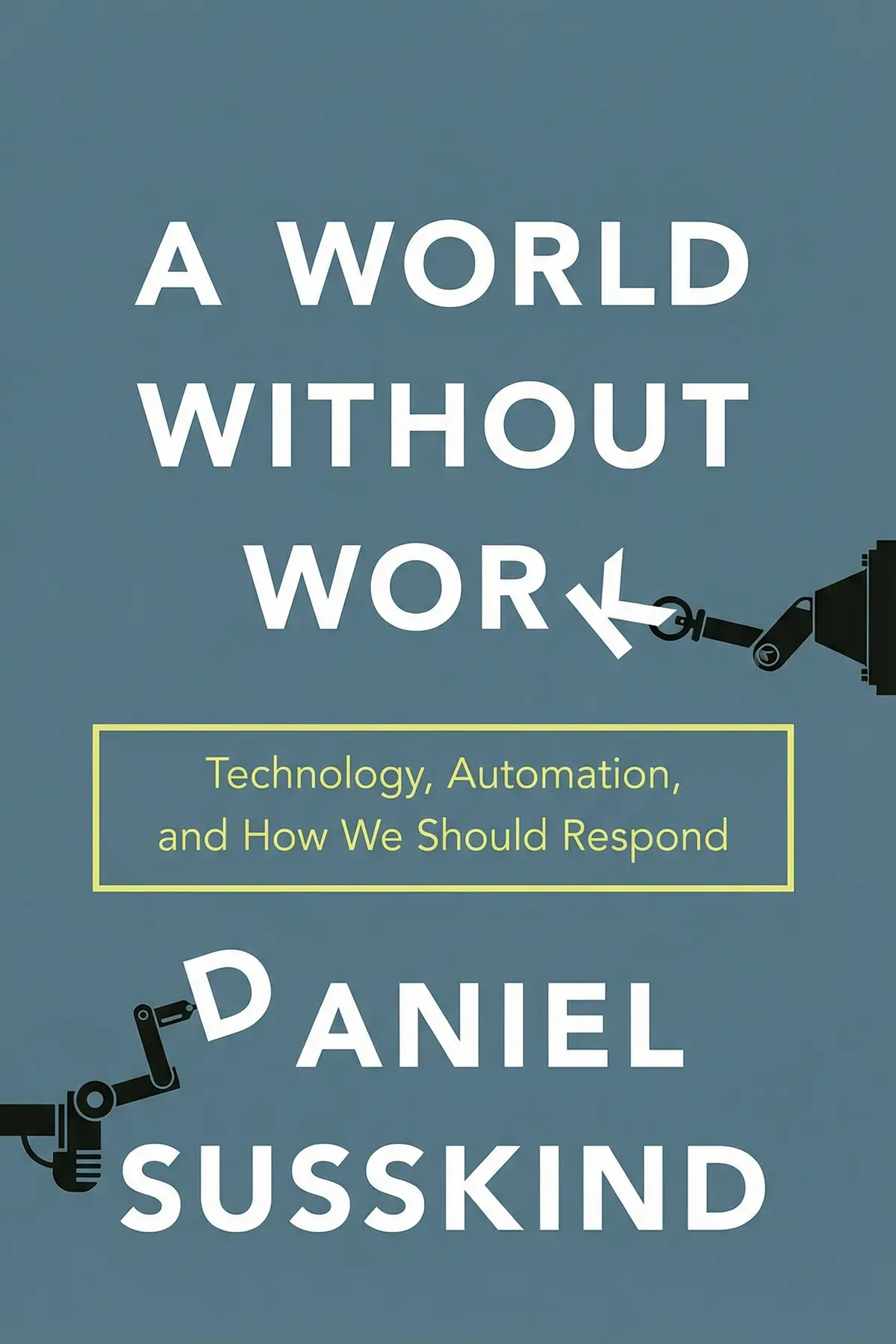

Yanis Varoufakis
Andrew Ross Sorkin
Ha-Joon Chang

Niall Kishtainy
AUDIO SUMMARY AVAILABLE
Get the key ideas from Mixed Signals by Uri Gneezy, plus 5,000+ more titles in English and Thai.







