

A Bigger Prize: How We Can Do Better Than the Competition
Margaret Heffernan
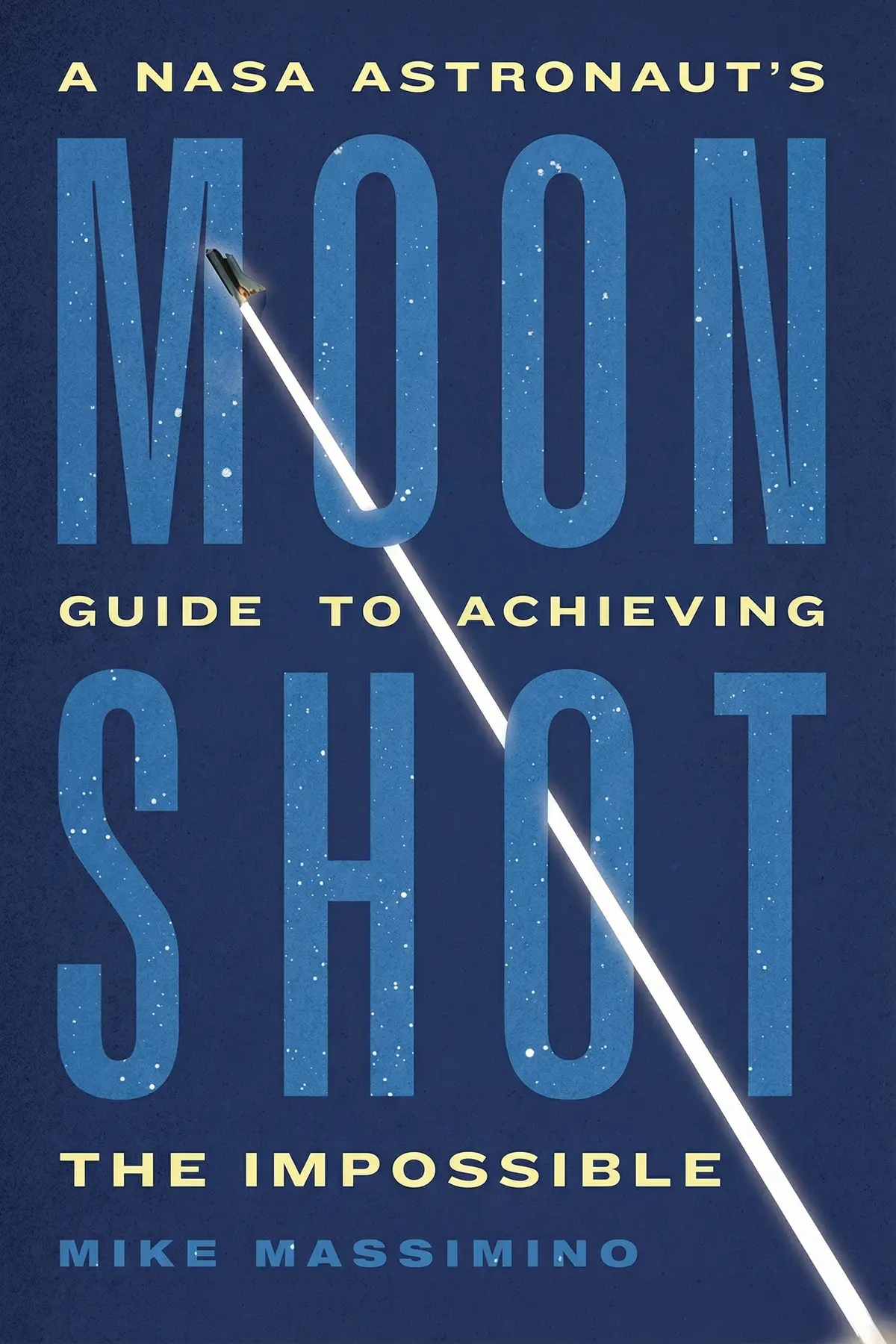
Discover how former astronaut Mike Massimino translates the high-stakes lessons of NASA into actionable strategies for persistence, teamwork, and leadership to help you conquer your own personal and professional missions.
1 min 35 sec
Imagine standing on the edge of the ultimate frontier, looking back at a blue marble hanging in the infinite darkness. For Mike Massimino, this wasn’t a dream—it was his office. As a NASA astronaut, Massimino experienced the pinnacle of human achievement, but the path to those stars was paved with more than just rocket fuel and physics. It was built on a foundation of very human qualities: stubborn persistence, radical collaboration, and the ability to find a way forward when every system says no.
In this summary, we are going to explore the core philosophy of what it takes to pull off a ‘moonshot.’ We often use that word to describe any wildly ambitious goal, but for the men and women at NASA, it is a lived reality. Through Massimino’s journey—from a kid with a seemingly impossible dream to a specialist fixing the Hubble Space Telescope—we will uncover insights that apply just as much to your boardroom or your living room as they do to a space shuttle.
We’ll delve into why rejection isn’t a signal to stop, but a prompt to engineer a new solution. We’ll look at how the highest-performing teams in the world prioritize the group over the individual to ensure everyone crosses the finish line. And we’ll learn the ’30-second rule’ for recovering from mistakes that could otherwise paralyze you. The throughline here is simple: extraordinary feats are rarely the result of individual genius alone. They are the result of a specific mindset—one that views every obstacle as a puzzle and every teammate as an essential part of the mission. Let’s take that first step toward the launchpad and see what it truly means to aim for the impossible.
2 min 26 sec
What do you do when your lifelong dream is blocked by a physical limitation? Discover how treating a biological failure like an engineering problem can turn a ‘no’ into a ‘yes.’
2 min 12 sec
In a world obsessed with individual achievement, NASA teaches a different lesson: the team only succeeds if the last person across the line succeeds.
2 min 10 sec
Hierarchy can be a silent killer in high-pressure environments. Learn why your voice matters most when you feel like you have the least authority.
2 min 10 sec
Mistakes in space can cost billions, but dwelling on them can cost even more. Discover the psychological reset button used by astronauts.
1 min 59 sec
Success isn’t about having a team of clones; it’s about valuing the ‘wacky’ ideas that everyone else wants to ignore.
2 min 07 sec
The hardest part of a journey isn’t the launch—it’s knowing when it’s time to come home and start a new mission.
1 min 27 sec
The journey of an astronaut is often viewed as a sequence of high-tech triumphs, but as Mike Massimino shows us, it is actually a deeply human story of managing failure and embracing collaboration. From the eyes of a young boy who refused to let poor vision stop him, to the hands of a specialist fixing the Hubble telescope, the lessons of ‘Moonshot’ are clear: progress is a team sport, and persistence is the price of entry.
We’ve seen how treating biological setbacks as engineering problems can open doors that seemed permanently locked. We’ve learned that the most effective teams are those that refuse to leave anyone behind, turning individual weaknesses into collective strengths. We’ve explored the necessity of the ’30-second rule’ to keep us moving forward after mistakes, and the vital importance of speaking up, even when hierarchy makes us want to stay silent.
Perhaps most importantly, we’ve seen that leadership is about more than giving orders—it’s about valuing the unique, sometimes ‘wacky’ contributions of every team member and knowing when it’s time to pivot to a new dream.
As you move forward with your own goals, remember that you don’t need a rocket to have a moonshot. You just need the willingness to keep standing in line, the humility to ask your teammates for help, and the resilience to reset your clock 30 seconds after a failure. The stars are closer than they look, but they are only reachable if we choose to climb together. Take these lessons, look at your own seemingly impossible mission, and start your countdown.
Moonshot explores the mindset required to achieve the seemingly impossible, drawing from Mike Massimino’s storied career as a NASA astronaut. The book breaks down the rigorous training and life-altering experiences of space travel into universal lessons on resilience, communication, and the power of a unified team. Readers are promised a behind-the-scenes look at the grit required to overcome repeated failure and the specialized psychological tools used to manage high-pressure environments. From repairing the Hubble Space Telescope to navigating the transition into a new era of commercial spaceflight, Massimino offers a roadmap for anyone looking to reach their own version of the stars.
Mike Massimino is a former NASA astronaut who served from 1996 to 2014. Renowned for his missions to repair the Hubble Space Telescope, he also holds the unique title of being the first person to ever send a tweet from space. Beyond his technical achievements, he is a New York Times best-selling author of books like Spaceman and a prominent public speaker who shares the lessons of space exploration with global audiences.
Listeners find the book’s tone accessible and heartening, often likening the experience to receiving a private pep talk or sitting for a cozy chat with a down-to-earth mentor. Furthermore, they like how the author turns complicated technical feats, like fixing the Hubble telescope, into captivating narratives centered on perseverance and determination. Also, listeners appreciate his humble thoughts on his personal errors, with one listener highlighting that his "everyman" persona makes the intense environment of NASA seem reachable for all. They also point out the real-world value of certain lessons such as "Hoot’s Law" and "The 30-Second Rule" when dealing with daily hurdles.
After listening to the audiobook narrated by the author himself, I can say that Mike Massimino feels less like a distant NASA hero and more like a relatable mentor. His Long Island accent adds a layer of authenticity that makes his stories about the Hubble telescope feel like a fireside chat at the end of a long day. While some might find the relentless optimism a bit much, I found his emphasis on grit and tenacity deeply moving. It is essentially a pep talk in book form. He doesn’t shy away from his failures, which makes the eventually successful missions feel earned rather than inevitable. The '30-Second Rule' is something I’ve already started applying to my own high-stress career to avoid making bad situations worse.
Show moreThe chapter on Hoot’s Law, the idea that you can always make things worse, is worth the price of the book alone. Most leadership books are filled with corporate fluff, but Massimino uses life-or-death stakes in orbit to illustrate why your reaction to a mistake matters more than the initial error. I appreciated how he translated the intense pressure of repairing the Hubble into a toolkit for everyday problems. The tone is incredibly encouraging without being preachy or condescending. It’s rare to find a rocket scientist who speaks with such an everyman persona. I ended up tabbing dozens of pages for future reference during my own work projects. Highly recommended for anyone in a management role or those pursuing a difficult goal.
Show morePicked this up because I’ve always been a space nerd, but I stayed for the practical life lessons and the humility. Mike has a way of describing the 'view from the office' that makes you want to go out and tackle your own million-to-one shots immediately. He doesn't present himself as a genius who had it all figured out from day one. Instead, he highlights his own mistakes and the grit required to overcome them time and again. The narrative feels like a long, engaging trek through his life, punctuated by 'aha!' moments that are actually useful. It’s refreshing to see someone so accomplished remain so humble and self-deprecating throughout the entire narrative.
Show moreWow, what an absolute gem of a book for anyone needing a bit of a perspective shift during a tough time. Massimino writes like your favorite uncle telling stories at a campfire, and his enthusiasm for his work is absolutely infectious. I really appreciated how he linked his struggles in grad school to 'The First Rule of Leadership' and other actionable advice. The book is a perfect blend of behind-the-scenes NASA lore and practical life advice. I found myself annotating the margins constantly, especially during his reflections on the 2003 shuttle tragedy. It’s a testament to his character that he can talk about such heavy topics with both grace and honesty. This is definitely a book I will return to.
Show moreNot what I expected from a guy who has been to space twice! I thought it would be a dry, technical manual, but instead, it’s a warm and inviting pep talk. Massimino has this incredible ability to make repairing the Hubble telescope sound like something you or I could do if we just worked hard enough and stayed focused. His everyman quality is his superpower as an author. Not gonna lie, I teared up a bit when he talked about the importance of family and the deep relationships he built at NASA. It’s an easy read that manages to be profound without being pretentious. A must-read for anyone who loves science or just needs a little bit of inspiration.
Show moreAs someone who enjoyed Massimino's first memoir, Spaceman, I wasn't sure if Moonshot would offer enough new material to justify the purchase. There is definitely some overlap, especially concerning his time at MIT and the Hubble missions, but the framing here is distinct. This feels more like a leadership guide or a manual for navigating life's unexpected hurdles than a straight autobiography. He breaks down technical spacewalking tasks into digestible lessons on teamwork and perseverance. Frankly, his self-deprecating humor remains his best quality as a writer; he makes the high-stakes world of NASA feel surprisingly accessible. I did feel some sections were a bit brief, leaving me wanting more depth on the interpersonal dynamics between the crew members.
Show moreEver wonder how an astronaut actually deals with the fear of failure when the whole world is watching from below? Massimino is incredibly open about his decade-long struggle just to get into the NASA program, and that tenacity is the heartbeat of this book. He writes about technical tasks with a clarity that makes you feel like you're right there in the suit with him. Personally, I loved the 30-Second Rule for processing errors before moving to the next task. My only gripe is that the book is quite short, and I would have loved more behind-the-scenes stories of his post-NASA career as an educator. Still, it's a fantastic, quick read that left me feeling inspired to tackle my own challenges.
Show moreFinally got around to reading this after seeing Massimino on The Big Bang Theory, and he’s just as approachable on the page as he is on screen. The book follows a similar structure to Chris Hadfield’s memoir, mixing personal history with applicable takeaways for the average reader. He makes the vital point that even if you don't reach your ultimate goal, the effort spent improving yourself—like his PhD from MIT—is never a waste. I thought the section on Hoot's Law was particularly timely and relatable for anyone navigating a changing world. It’s a solid 4-star read that offers a nice peek into a world most of us will only ever see in movies.
Show moreTo be fair, this book might be better suited for a younger audience or someone looking for a light, breezy weekend read. Massimino is clearly a good-natured guy, but his writing style is very even-keeled, which sometimes translates to a lack of narrative tension. I occasionally found the insights—work hard, nurture amazement, don't quit—to be a bit generic for a professional memoir. His voice is very similar to his first tweet from space: enthusiastic, positive, and full of 'awesome!!' vibes. If you’re looking for a gritty, deep-dive into the neuroses of being an astronaut, this isn't it. It’s a sweet reminiscence, but it didn't quite satisfy my need for a more complex adult conversation by the final chapter.
Show moreLook, I’m a fan of Mike’s media appearances and his work on the Hubble, but I struggled to stay engaged with this particular book. The stories are great, especially when he’s talking about the mechanical difficulties of space travel, but the tone is just so consistently sunny that it starts to feel a bit flat after a while. NASA clearly selects people who are incredibly stable and positive, which is great for survival in space but can make for a somewhat repetitive reading experience. I didn't feel like I got to see the 'neurotic twitch' or the raw frustration that makes a person truly interesting. It’s a great gift for a high school student, but as an adult reader, I wanted more grit.
Show moreMargaret Heffernan
Joseph A. Maciariello

Deborah Gruenfeld

AUDIO SUMMARY AVAILABLE
Get the key ideas from Moonshot by Mike Massimino, plus 5,000+ more titles in English and Thai.







