
16 min 15 sec
My Age of Anxiety: Fear, Hope, Dread and the Search for Peace of Mind
A candid exploration of clinical anxiety, blending Scott Stossel's personal struggles with an investigation into the history, science, and treatments of a condition that affects millions of people worldwide.
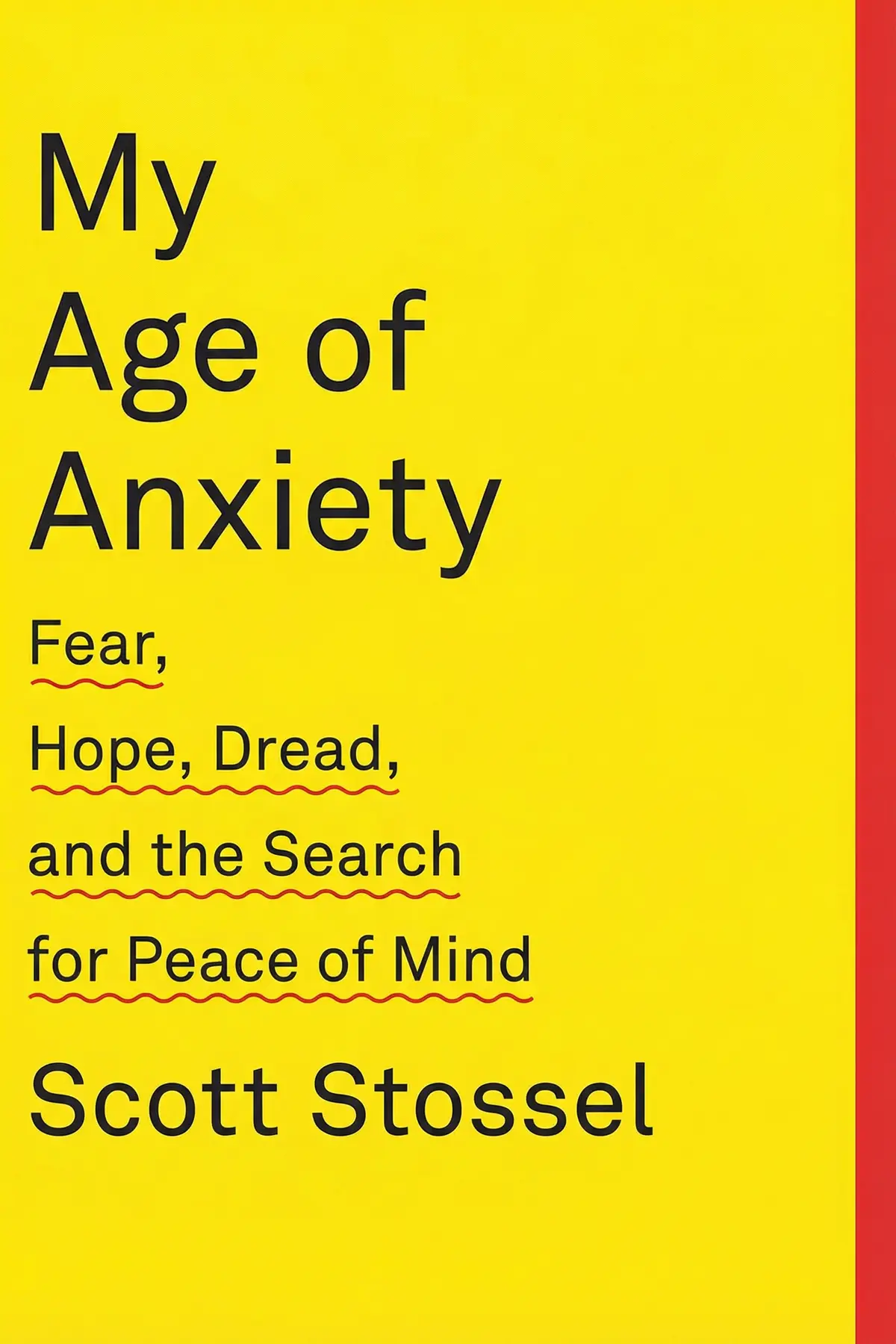
Table of Content
1. Introduction
1 min 26 sec
Imagine the feeling of your heart racing before a major speech or the flutter in your stomach before a first date. For most people, this is a fleeting sensation—a temporary reaction to a stressful event. But for millions of others, this isn’t just a moment; it is a permanent state of being. This is the world of clinical anxiety, a condition that transforms the mundane into the terrifying. In our exploration today, we are looking at the work of Scott Stossel, who provides both a deeply personal account of his own struggles and a wide-ranging investigation into the very nature of human fear.
Stossel doesn’t just describe what it’s like to live with a phobia; he takes us on a journey through history, biology, and psychology to understand why our minds turn against us. We will look at how anxiety has been viewed from the time of the ancient Greeks to the modern era of pharmaceutical intervention. More importantly, we’ll discover how a person can be simultaneously crippled by fear and remarkably successful in their professional and personal life.
By the end of this journey, you will have a better understanding of why anxiety is the most common mental illness of our time, where it comes from, and what science and therapy can—and cannot—do to fix it. This is a story about the search for peace in a mind that refuses to be still, offering a throughline of hope for anyone who has ever felt overwhelmed by the weight of their own thoughts.
2. The Universal Presence of Anxiety
2 min 24 sec
Anxiety is more than just a personal struggle; it is a global phenomenon that has been documented throughout human history and across every culture.
3. The Reality of a Life Constrained by Fear
2 min 11 sec
Living with clinical anxiety is a constant, exhausting battle that requires perpetual vigilance and can lead to deeply embarrassing social situations.
4. The Influence of Childhood and Attachment
2 min 07 sec
Early life experiences and the bond between a child and their primary caregiver may play a significant role in the development of anxiety.
5. The Biological and Evolutionary Roots
2 min 15 sec
Anxiety is not just a psychological state; it is a survival mechanism etched into our genes and our evolutionary history.
6. The Chemistry of the Anxious Brain
2 min 07 sec
Modern science allows us to see anxiety in action within the brain, leading to a boom in pharmaceutical treatments that come with their own risks.
7. Seeking Relief Through Therapy
2 min 06 sec
While there is no single cure, various therapeutic approaches, such as Cognitive Behavioral Therapy, offer a path toward managing the intensity of anxiety.
8. Conclusion
1 min 39 sec
In the end, the story of clinical anxiety is one of both profound suffering and incredible resilience. We have seen that this condition is not a modern anomaly, but a deeply rooted part of human history and biology. It is influenced by the genes we inherit, the way we were held as children, and the very chemistry of our brains. For people like Scott Stossel, anxiety is a lifelong shadow, a constant companion that can make the simplest tasks feel like climbing a mountain.
But the most important takeaway is that having clinical anxiety does not mean a life is ‘broken’ or less valuable. Despite the embarrassing incidents, the physical pain, and the limitations on travel and social life, it is possible to be a successful professional, a loving parent, and a contributing member of society. The search for peace of mind is ongoing, and while medication and therapy offer vital tools, they are not magic wands.
The throughline of this work is the realization that we are not alone in our fears. Whether it’s the ‘kayak angst’ of the Arctic or the stage fright of a world-class performer, anxiety is a thread that connects us all. By understanding its origins and accepting its presence, we can begin to find the hope and the dread are two sides of the same coin. The goal isn’t necessarily to live a life without fear, but to live a full, meaningful life in spite of it. As you move forward, remember that even in the midst of a panic, there is the potential for strength, creativity, and a deep, shared humanity.
About this book
What is this book about?
This book offers a deep dive into the paralyzing world of clinical anxiety, moving beyond simple nerves to explore a condition that can govern every aspect of a person’s life. Author Scott Stossel uses his own lifelong battle with various phobias and panic disorders as a lens to view the broader human experience of dread. He examines why some people are more prone to anxiety than others, looking at everything from childhood upbringing and genetics to the very chemistry of the human brain. The promise of this narrative is not necessarily a complete cure, but a profound sense of understanding. It traces the history of the disorder from ancient philosophy to modern psychiatry, exploring how humanity has tried to medicate or talk its way out of fear. By the end, listeners gain a compassionate perspective on what it means to live a productive, successful life while carrying the heavy weight of chronic apprehension.
Book Information
About the Author
Scott Stossel
Scott Stossel is an esteemed American journalist and the editor of the Atlantic magazine. He has also authored the book Sarge: The Life and Times of Sargent Shriver. In writing about his own experiences, Stossel aims to demystify clinical anxiety and find a sense of relief from the suffering that has shaped much of his life.
Ratings & Reviews
Ratings at a glance
What people think
Listeners find this work to be extensively researched and all-encompassing, highlighting its in-depth exploration of the history behind anxiety disorders. Furthermore, the narrative draws from the author’s individual struggles with anxiety, ensuring it remains accessible to general audiences. They value its informative nature and compelling style, with one listener mentioning that it is intriguing for both those suffering from anxiety and medical professionals. Plus, the writing earns praise for its meticulous detail, wit, and easy-to-read quality.
Top reviews
Hemp
Stossel has managed to weave a tapestry that is equal parts terrifying and enlightening. This isn't just another self-help book; it's a monumental history of human suffering and the medical industry's attempt to fix it. I was captivated by the transition from 'nervousness' in the 19th century to the modern, chemical-heavy landscape we inhabit today. The prose is dense, yet it moves with a surprising rhythm that kept me turning pages late into the night. While some might find the sheer amount of data overwhelming, I thought it provided a necessary weight to a topic often dismissed as 'just in your head' by those who have never experienced an attack. He handles the DSM with the precision of a seasoned journalist. It's a heavy read, certainly, but one that rewards the patient reader with a profound sense of perspective.
Show moreSelin
Finally got around to reading this, and I was pleasantly surprised by how much humor is buried in the darkness. Stossel’s descriptions of his emetophobia are so visceral and strangely funny that they reminded me of Mary Roach’s scientific explorations. He doesn't shy away from the embarrassing details of his life, like the absolute terror of public speaking or his wedding day jitters. This level of honesty is rare from a high-profile editor. I particularly enjoyed the 'feetnotes' at the bottom of the pages, even if they occasionally distracted from the main point. It feels like you’re sitting down with a very smart, very anxious friend who has done a massive amount of homework. If you can handle the scatological humor and the raw honesty, it’s a total gem.
Show moreFon
This is arguably the most important book on mental health I have read in the last decade. As someone who works in the clinical field, I found the historical analysis of 'neurasthenia' and 'melancholy' to be masterfully researched. Stossel manages to bridge the gap between the patient's lived experience and the doctor's detached observation. He captures the physical somatization of anxiety—the racing heart, the sweating, the 'viciously inflamed armpits'—with terrifying accuracy. This isn't a book that promises a cure, but it does offer a deep understanding of the evolutionary purpose of fear. For clinicians and patients alike, this provides a common language to discuss a condition that is often impossible to put into words. It’s a brave and necessary contribution to the field.
Show moreWararat
As someone who has struggled with social phobia for years, reading these pages felt like finally being heard by a stranger. I was particularly moved by Stossel’s vulnerability regarding his own failures and the messy reality of living with a chronic condition. There were moments where I had to pause because his descriptions of panic were so vivid they triggered my own physical symptoms. It is a deeply validating experience to see your internal chaos reflected in such a sophisticated, well-documented narrative. Truth is, the book doesn’t offer a cure or a magical solution, and that might frustrate some people looking for an exit strategy. However, for me, the comfort came from the shared experience of the struggle itself. He reminds us that even high-achieving individuals can be paralyzed by the simplest things.
Show moreSamira
Ever wonder why the medical definition of 'fear' keeps changing every time a new edition of the DSM is released? Stossel explores this question with a journalistic rigor that makes the complex world of psychopharmacology accessible to a layperson. I was gripped by the chapters on the 'Woody Allen gene' and the genetic precursors of nervous disorders. The book successfully balances the cold hard facts of science with the warmth of a personal family history. Look, it’s a dense read that requires a significant time investment, and the formatting of the footnotes is a bit of a nightmare. But the educational value is undeniable for anyone interested in how we became such a medicated society. It’s a brilliant, if slightly overlong, autopsy of the modern American mind.
Show moreWit
The sheer volume of information packed into these three hundred-odd pages is staggering to contemplate. I spent nearly six hours commuting this week and didn't put the book down once, which says a lot about its readability. It functions as both a history of a disorder and a warning about the limits of modern medicine. One thing that struck me was the author's intense reliance on alcohol and medication just to get through basic social functions. It’s a harrowing look at what 'functioning' actually looks like for some people. My only real gripe is the repetitive nature of the middle sections, especially regarding his specific phobias. Still, the prose is elegant and the insights into the Darwinian roots of blushing were worth the price of admission alone.
Show moreSin
Picked this up after seeing the author interviewed on television, and the book is just as engaging as his personality. It’s fascinating to see how someone can be so successful at a major magazine while battling such internal demons. I learned a great deal about the history of 'Panic' and the Greek origins of our psychological terminology. To be honest, I skipped some of the longer footnotes because they became too distracting, but the core narrative remains strong throughout. It’s a bit of a bummer that the author hasn't found much relief after decades of effort, but his resilience is still inspiring in its own way. It’s a solid choice for the curious reader.
Show moreKaen
I found myself feeling more frustrated than inspired by the time I reached the final chapter. While the historical research into the 'Sparks' and 'Soups' of neuroscience is genuinely fascinating, the author’s personal trajectory is discouraging. After twenty-five years of therapy and a pharmacy’s worth of medication, he seems to be in the exact same place he started, which is quite disheartening for anyone seeking a path toward recovery. It's difficult to recommend this to someone currently in the throes of a crisis because the tone is overwhelmingly pessimistic about recovery. He also focuses heavily on Freudian theories that feel a bit dated in a modern clinical context. There is no denying that he is a brilliant writer, but his refusal to acknowledge the success of CBT was a major oversight. It’s a great history lesson, but a fairly depressing memoir.
Show moreAubrey
While I appreciated the deep dive into the history of phobias, I felt that Stossel’s voice was far too dominant throughout the text. He inserts himself into every historical narrative as a case study, which eventually feels self-indulgent rather than helpful. I was specifically irked by the lack of other perspectives; there are no stories of recovery or different cultural views on anxiety. It’s very much a 'white male in academia' view of mental health that misses the broader societal context. Also, the obsession with Freud and psychoanalysis felt a bit like a relic from a different era of psychiatry. Frankly, the book is a bit of a slog, even if the individual facts are interesting. It’s a decent resource, but it lacks empathy.
Show moreJob
To be fair, the research presented here is comprehensive, but the author’s personal biases eventually ruined the experience for me. Stossel comes across as an incredibly privileged individual who is largely unaware of how his status cushions his struggles. His treatment of female colleagues in the book also felt subtly dismissive, which made him a difficult protagonist to root for as the story progressed. Beyond that, the book is incredibly repetitive and could have easily been trimmed by a hundred pages without losing any core information. He spends so much time disparaging various treatments that the reader is left feeling like everything is hopeless. If you are looking for a balanced view of modern psychology, look elsewhere. This is a loud, central voice that drowns out the diverse experiences of others.
Show moreFeatured in
Readers also enjoyed


A Year in the Life of William Shakespeare: 1599
James Shapiro

ADHD an A-Z: Figuring It Out Step by Step
Leanne Maskell

Agent Sonya: The Spy Next Door
Ben Macintyre
AUDIO SUMMARY AVAILABLE
Listen to My Age of Anxiety in 15 minutes
Get the key ideas from My Age of Anxiety by Scott Stossel, plus 5,000+ more titles in English and Thai.
- 5,000+ titles
- Listen as much as you want
- 7-day free trial
- Cancel anytime







