
A River in Darkness: One Man’s Escape from North Korea
Masaji Ishikawa
A neuroanatomist shares the harrowing and transformative story of her own massive stroke, offering a unique scientific and spiritual perspective on brain recovery and the profound peace of the right hemisphere.
1 min 48 sec
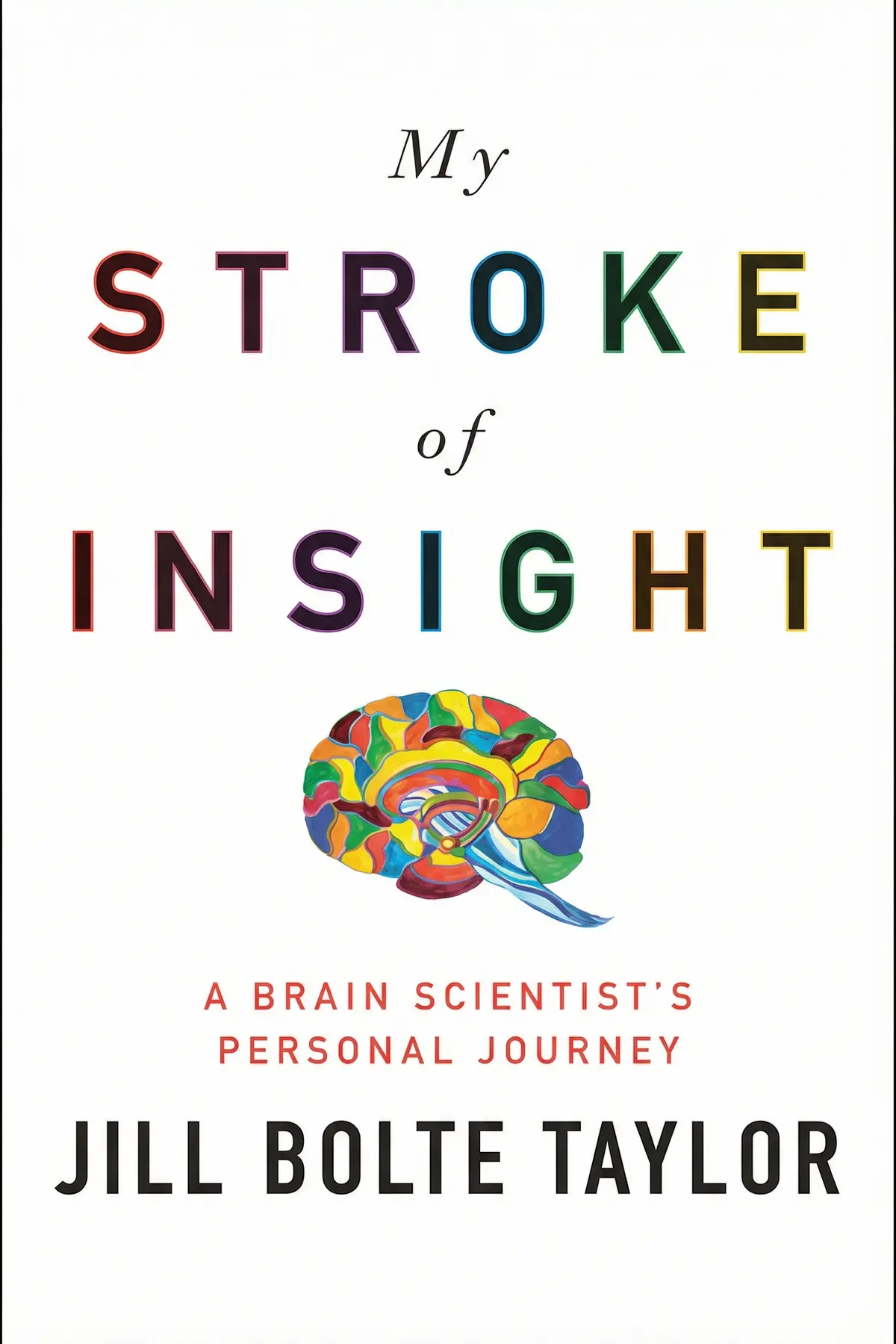
Imagine spending your entire professional life studying the complex architecture of the human brain, only to have that very organ begin to fail you in a spectacular, terrifying fashion. This is the central premise of the journey taken by Dr. Jill Bolte Taylor. As a neuroanatomist, her world was defined by the tangible structures of neurons, synapses, and the biological foundations of mental health. But on a December morning in 1996, her academic knowledge was put to the ultimate personal test when she suffered a massive hemorrhagic stroke.
What makes this story unique is not just the trauma of the event, but the perspective Taylor brought to it. As her brain began to shut down, she didn’t just experience a medical emergency; she observed it with the curiosity of a scientist. She watched as her left hemisphere—the seat of logic, language, and the individual ego—flickered out, leaving her suspended in the expansive, timeless, and peaceful realm of her right hemisphere.
In this summary, we are going to explore the profound throughline of Taylor’s experience: the idea that we are not just victims of our biology, but active participants in our mental states. We will look at how her brother’s struggle with schizophrenia first ignited her passion for the mind, the mechanical differences between various types of strokes, and the distinct personalities of our two cerebral hemispheres. Most importantly, we will follow her arduous eight-year journey back to cognitive wholeness and discover the ‘stroke of insight’ she gained—the realization that a state of deep inner peace is accessible to all of us if we learn how to step away from the constant chatter of the analytical mind. It’s a story of survival, but also a manual for a different way of being in the world.
2 min 14 sec
Discover how a family member’s struggle with mental illness drove a young woman to become a leading expert in the physical structures of the human mind.
2 min 13 sec
Learn the vital differences between the two primary types of strokes and the specific biological vulnerability that led to a neuroscientist’s medical crisis.
2 min 18 sec
Explore the distinct ‘personalities’ of the left and right brain and how they work in tandem to create our everyday experience of reality.
2 min 06 sec
Follow the minute-by-minute account of a brain scientist witnessing her own cognitive functions evaporate as she struggles to seek help.
2 min 01 sec
Witness the grueling and inspiring process of rebuilding a human mind from scratch, one puzzle piece and one word at a time.
2 min 02 sec
Uncover the profound spiritual and psychological transformation that can occur when the analytical mind is silenced, and the ‘silent’ hemisphere speaks.
1 min 35 sec
The journey of Jill Bolte Taylor is a powerful reminder of the fragility and the incredible resilience of the human mind. Through her experience, we see that the brain is not just a tool for thinking, but a filter for how we experience reality itself. When the filter of her left brain was removed, she didn’t disappear; instead, she discovered a part of herself that was deeply connected to the universe and filled with peace.
The throughline of her story is a call to balance. We need our left brains to navigate the complexities of modern life, to manage our time, and to maintain our identities. However, if we live solely in that space, we risk becoming disconnected, stressed, and isolated. The ‘stroke of insight’ is that we have the power to choose which circuitry we want to run. We can practice stepping into our right hemisphere’s perspective, embracing the present moment, and fostering compassion for ourselves and others.
As you move forward from this summary, consider the ‘internal chatter’ of your own mind. When you feel overwhelmed by the demands of your schedule or the weight of your ego, remember that there is another half of your brain waiting to offer you a sense of tranquility. It doesn’t require a medical crisis to access it—only the conscious decision to pause, breathe, and experience the world as it is, right here and right now. Taylor’s recovery proves that even after the most profound loss, we can rebuild ourselves, often with more wisdom and grace than we had before.
This book follows the extraordinary journey of Dr. Jill Bolte Taylor, a brain scientist who experienced a rare form of stroke that shut down the left side of her brain. Because of her professional background, she was able to observe her own cognitive decline in real-time, watching as her sense of self, language, and linear time vanished, replaced by a state of euphoric connection to the universe. Through her recovery, Taylor provides a deep dive into the biological differences between the left and right hemispheres. She explores how the left brain manages our ego and logic, while the right brain offers a gateway to tranquility and presence. The book serves as both a medical memoir and a guide to finding inner peace by consciously choosing which part of our brain we inhabit. It is a story of resilience, the plasticity of the mind, and the power of the human spirit to rebuild itself after total devastation.
Dr. Jill Bolte Taylor is an American neuroanatomist who specializes in mental illnesses. Her TED talk was the first of its kind to go viral and inspired many to buy her book, which subsequently became a New York Times bestseller. For over a decade, Bolte Taylor was the president of NAMI, the National Alliance on Mental Illness, and is now the NAMI president emeritus for Bloomington, Indiana.
Listeners find this work very accessible and informative, offering engaging facts about neurology and assisting them in maintaining a balanced outlook. Furthermore, they characterize it as a compelling account from a brain scientist that is deeply inspiring and aids in personal spiritual growth. Also, the content provides practical advice for rehabilitation and grasping the phases of recuperation, alongside valuable perspectives on how the mind works, especially regarding left and right brain processes.
Few books manage to bridge the gap between hard science and deep spirituality as effectively as this one. Dr. Taylor provides a riveting account of her massive stroke, describing the literal shutdown of her left hemisphere with the precision of the neuroanatomist she is. It is profoundly moving to read how she lost her ability to process language yet gained a sense of universal oneness. Frankly, the practical advice at the end for caregivers is worth the price of the book alone. I especially appreciated the specific tips on how to interact with someone in recovery, such as moving slowly and respecting their limited energy. While some might find the later chapters a bit 'new-agey,' I think it offers a vital perspective on finding inner peace. It really helped me keep my own daily stresses in perspective by understanding how our brain circuits function. This is a must-read for anyone interested in the resilience of the human spirit or the mysteries of the mind.
Show moreAfter hearing Jill's TED talk, I expected something profound, but the book offers so much more practical utility than I anticipated. This isn’t just a survival story; it’s an educational guide to the human brain. I was captivated by her description of the 'silent' right brain and the way she felt connected to the energy of the room once her language centers went offline. Personally, the '90-second rule' for emotional processing has been a total game-changer for my own anxiety management. The truth is, we often feel like victims of our emotions, but Taylor argues we have more agency than we think. Her recovery required her to relearn everything from scratch, including basic concepts like color and three-dimensional depth. It’s a testament to the work of her mother, G.G., and her own relentless spirit. This book is an uplifting masterpiece that provides a unique lens on what it means to be a conscious being.
Show moreThis isn't just a memoir; it's a manual for emotional regulation. Dr. Jill Bolte Taylor uses her own tragedy to teach us that we are the architects of our own experience. I was fascinated by the idea that our emotions are just chemical surges that last only 90 seconds if we don't 'hook' into them. Since reading this, I’ve started talking to my own 'brain chatter' just like she suggests, and it actually helps. The story of her stroke is told with such vivid detail that you feel like you are there in the bathroom with her, losing your grip on reality. Her journey back to health took eight years, which serves as a vital reminder that healing doesn't happen on a doctor's schedule. This book is profoundly uplifting and offers a spiritual journey backed by a neuroanatomist's understanding. It’s a short read, but it carries a weight that stays with you long after the final page.
Show moreImagine watching your own mind slowly disintegrate while having the technical vocabulary to describe the carnage in real-time. That is exactly what Dr. Jill Bolte Taylor does in this fascinating journey through her own brain bleed. The book starts strong with a scientific breakdown of her AVM burst and the terrifying morning she realized she was having a stroke. I found the sections about her eight-year recovery journey to be deeply inspiring, particularly the role her mother played in her rehabilitation. It’s a remarkable story of patience and neural plasticity that shows how much we can actually overcome. My only real gripe is that the tone shifts dramatically from clinical to almost hyper-optimistic 'happy talk' toward the end. Still, the lesson that we can choose which neural circuits to engage is a powerful one. It’s a quick read that genuinely changed how I think about my own internal monologue and my capacity for peace.
Show moreThe way Dr. Taylor describes the silence of her 'storyteller' mind is something I haven't been able to stop thinking about. We are so used to that constant left-brain chatter that the idea of it just stopping is both terrifying and alluring. This book does a great job of explaining how the two hemispheres of our brain create our reality in very different ways. I loved the scientific intro, as it made the later spiritual descriptions feel a bit more grounded. While the narrative flow is a little uneven and some parts feel like they needed a tighter editor, the core message is beautiful. It makes you realize that peace is actually a physiological state we can learn to access. Her insights into how she felt 'fluid' and lacked physical boundaries during the stroke were particularly mind-bending. It’s an educational and profoundly moving account of a woman reclaiming her life one synapse at a time.
Show morePicked this up on a whim after a family member suffered a TIA, and it helped me understand the frustration they were feeling. Dr. Taylor’s perspective as both a patient and a brain expert is truly one-of-a-kind. She articulates the sensory overload and the exhaustion of recovery in a way that most medical literature simply can't capture. It’s eye-opening to hear why she hated the hourly neuro exams even though she knew they were necessary. In my experience, this book is best read as a guide for empathy rather than a strict scientific textbook. The descriptions of using toddler toys like puzzles to rebuild her brain were heart-wrenching and insightful. There is a bit of a shift into metaphysical territory that might not sit well with everyone, but the overall message of resilience is undeniable. It provides a helpful framework for anyone trying to navigate the long, slow road of brain injury rehabilitation.
Show moreDoes our sense of self rely entirely on a functioning left hemisphere? Dr. Taylor’s experience suggests that when the 'chatter' stops, we are left with a profound sense of connection to everything around us. This book is a fascinating exploration of that concept, told by someone who actually knows which parts of the brain were being flooded with blood. I found the section on how she relearned to think and process information to be the most educational part of the journey. It really highlights how much we take for granted, like the ability to recognize a phone number or the concept of 'edges.' Gotta say, the writing can be a bit simplistic at times, and she definitely has a very specific, upbeat worldview that might feel forced to some. However, the core of the story is so unique and her recovery so miraculous that it’s easy to overlook the minor flaws. It’s a great book for keeping life’s little problems in perspective.
Show moreAs a medical professional, I found this to be a bit of a mixed bag. The first-hand account of a hemorrhagic stroke from someone who actually understands brain anatomy is undeniably priceless. Dr. Taylor’s description of her progressive loss of function—like forgetting how to use a telephone—is chilling and expertly told. However, look, her attitude toward the medical staff who saved her life felt incredibly dismissive and even arrogant at times. She complains about doctors asking 'simple' questions like who the president is, failing to realize these are standard neurological benchmarks. To be fair, her frustration with 'energy vampires' in the hospital is understandable, but her personal theories on the right brain being a source of constant bliss felt scientifically shaky. The writing also becomes quite repetitive in the second half, circling the same spiritual themes without adding much new information. It is an interesting memoir, but I would take the medical 'insights' with a significant grain of salt.
Show moreWhile the first half of the book is a riveting play-by-play of a medical emergency, the second half drags significantly. The initial 50 pages are absolutely brilliant, offering a clinical yet terrifying look at a brain failing from the inside out. But as the book progresses into her recovery and her new 'insight,' it becomes incredibly repetitive. She keeps hitting the same notes about right-brain bliss and left-brain judgment without providing much new substance. To be honest, I felt like the book could have been half its length and still conveyed the same message. The blending of hard science and anecdotal spiritualism is a bit sloppy, making it hard to tell where the neuroanatomy ends and her personal belief system begins. It’s an amazing story of survival, for sure, but the writing style is just a bit too saccharine and unpolished for me to give it a higher rating.
Show moreNot what I expected from a scientist at all. I was hoping for a rigorous exploration of neuroplasticity, but instead, I got what felt like a 170-page pamphlet of sappy, one-dimensional 'Pollyanna' philosophy. To be fair, the opening chapters describing the stroke are gripping and well-written. However, once the narrative shifts to her recovery, it devolves into repetitive, new-age jargon about energy and oneness. It felt like she was trying to sell a spiritual awakening rather than explaining a medical recovery. I found her constant criticism of the doctors who were just doing their jobs to be grating and lacked any real-world perspective. If you are looking for hard science, you will be disappointed by the 'fourth-grade happy talk' that dominates the latter half of the book. It’s a unique story, but the execution was far too 'singing scientist' for my taste. I struggled to finish it despite the short length.
Show moreMasaji Ishikawa
Ben Macintyre



James Shapiro

AUDIO SUMMARY AVAILABLE
Get the key ideas from My Stroke of Insight by Jill Bolte Taylor, plus 5,000+ more titles in English and Thai.







