

19 min 06 sec
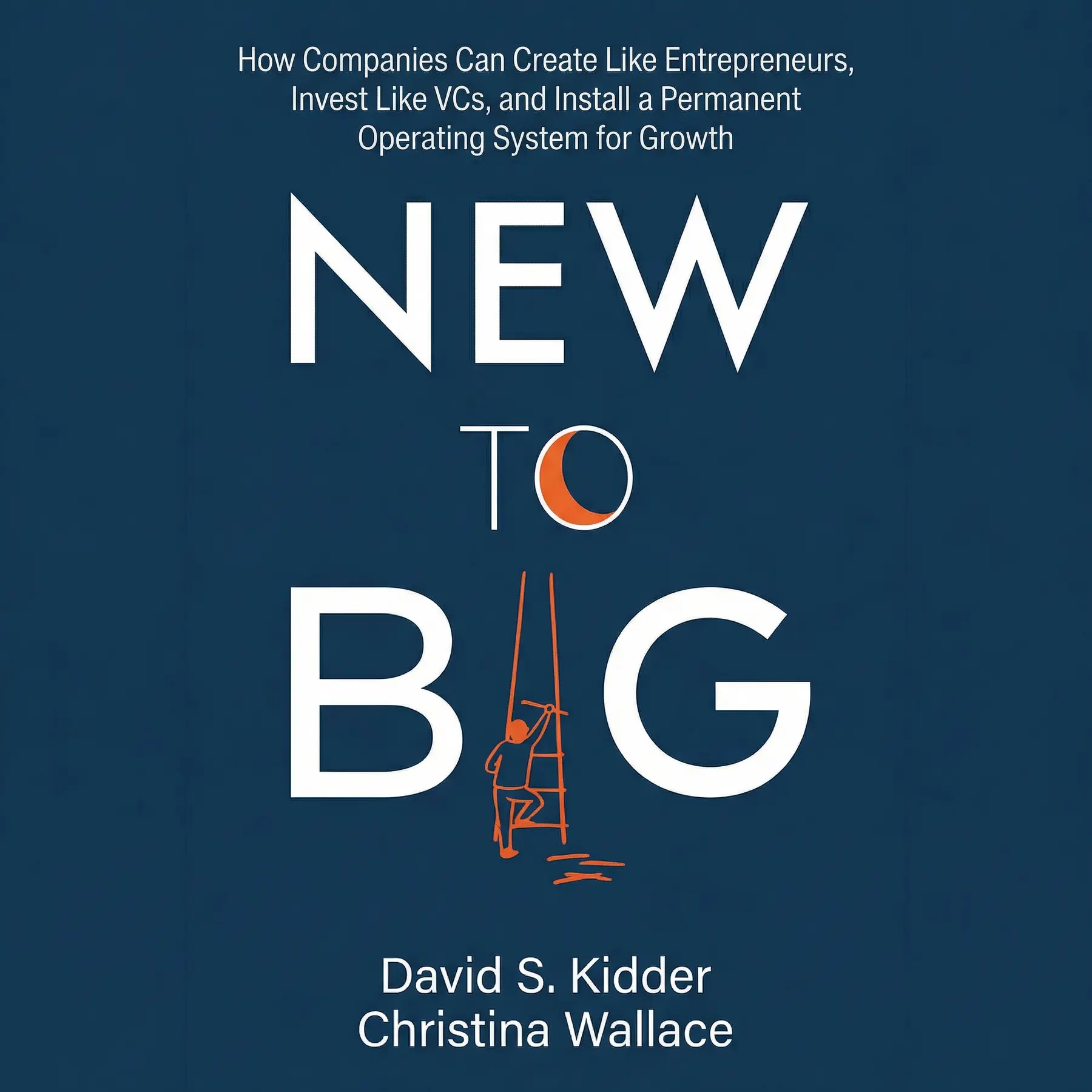
New to Big: How Companies Can Create Like Entrepreneurs, Invest Like VCs, and Install a Permanent Operating System for Growth
A strategic blueprint for corporate leaders, New to Big explores how established enterprises can reclaim their competitive edge by adopting the entrepreneurial mindsets and venture capital investment strategies typical of high-growth startups.
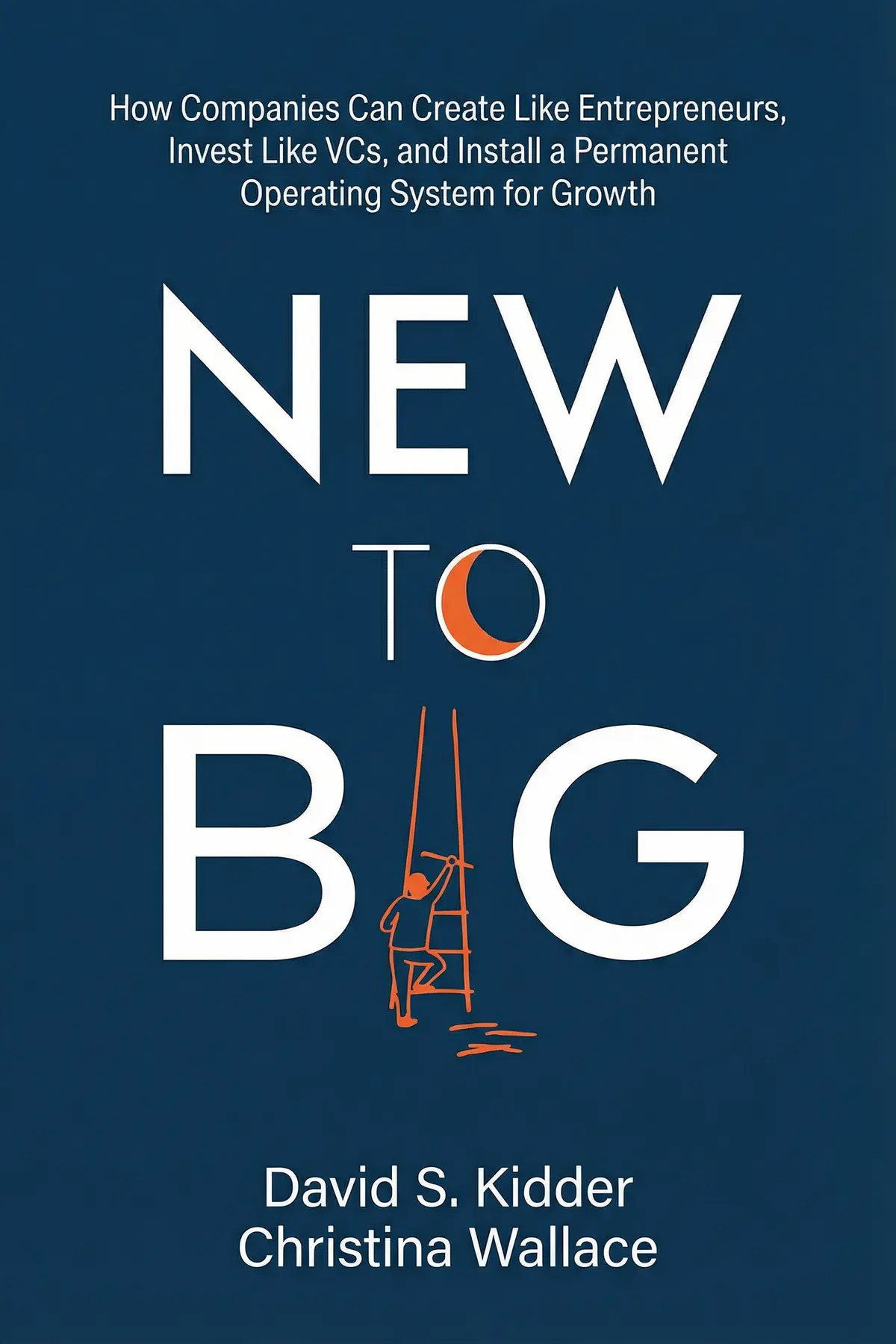
Table of Content
1. Introduction
1 min 42 sec
Imagine you are at the helm of a massive, respected corporation. For decades, your brand has been a household name, your products have defined their category, and your market share seemed untouchable. But recently, the ground has started to shift. Nimble competitors are appearing out of nowhere, offering solutions that make your core business look outdated. You feel the slow creep of stagnation, and the traditional strategies of cutting costs or tweaking existing products are no longer moving the needle. This is the dilemma facing many of the world’s largest companies today.
The throughline of our exploration is the idea that the very systems designed to protect big companies are often the ones that kill them. To survive, these titans must bridge the gap between their current state and the entrepreneurial spirit that started them in the first place. We are moving toward a framework called the New to Big philosophy. This isn’t just about a single innovation lab or a quirky marketing campaign; it is about installing a permanent, growth-oriented operating system into the heart of a legacy business.
In the journey ahead, we will look at how the corporate world lost its way by prioritizing shareholders over customers, and how modern startups have reclaimed that focus to achieve exponential growth. We will examine the dramatic turnaround of a tech giant that found its soul by acting like a startup again. We will also learn why traditional market research often leads companies astray and how a new model, focused on problems rather than markets, can unlock massive opportunities. Finally, we will see how to build the right teams and investment structures to ensure that innovation isn’t just a buzzword, but a measurable, repeatable part of the company’s DNA. It is time to stop acting like a defender of the past and start acting like a creator of the future.
2. The Evolution and Decay of the Corporate Mindset
2 min 09 sec
Explore how the shift from customer-centric values to shareholder obsession in the mid-twentieth century stifled innovation and created a culture of stagnation.
3. Learning from the Startup's Obsession with Pain Points
1 min 58 sec
Discover why modern startups succeed by focusing on solving specific customer problems rather than just chasing existing market shares.
4. The Microsoft Case for Corporate Refounding
2 min 02 sec
Analyze how Microsoft reclaimed its position at the top by adopting a startup mentality and shifting its focus from revenue to customer love.
5. Moving from Market Shares to Problem Solving
1 min 52 sec
Understand the difference between the Total Addressable Market and the Total Addressable Problem, and why the latter is the key to exponential growth.
6. Redefining Research Through Customer Observation
1 min 54 sec
Learn why traditional focus groups often fail and how observing actual behavior can lead to more accurate business insights.
7. The Necessity of Productive Failure
1 min 56 sec
Explore why making ‘new mistakes’ is essential for growth and how legacy companies can create a safe environment for experimentation.
8. Building a Team of Iconoclasts and Misfits
1 min 53 sec
Discover why your most successful traditional employees might not be the right fit for innovation and how to find the rebels who will drive growth.
9. Investing with the Discipline of a Venture Capitalist
1 min 58 sec
Learn how to use Growth Boards and metered funding to de-risk innovation and manage a portfolio of high-potential ideas.
10. Conclusion
1 min 42 sec
As we reach the end of our exploration into the New to Big philosophy, the central message is clear: the size and history of a company are no longer guarantees of its future. In an age of rapid disruption, the only way to stay big is to constantly learn how to be new. This requires a profound shift in mindset, moving away from the defensive posture of protecting market shares and toward an offensive strategy of solving customer problems. It means moving from a culture that fears failure to one that treats it as a necessary step in the learning process.
We have seen that this transformation is possible, even for the most established giants. By refounding the organization with a focus on customer love, building teams of curious iconoclasts, and investing with the discipline of a venture capitalist, any company can reclaim its entrepreneurial edge. The tools are available; what is required is the courage to use them. You must be willing to challenge the internal systems that prioritize quarterly reports over long-term value and be ready to listen to what the market is actually doing rather than what it says it will do.
To put these ideas into practice, start by looking outside your immediate professional circle. If you are an executive, don’t just read business books. Dive into philosophy, art, and science. You will find that the most innovative ideas often come from connecting dots across disparate fields. By expanding your perspective, you can see the patterns and pain points that others miss. The future belongs to those who can combine the power of a global enterprise with the hunger of a first-day startup. It is time to stop waiting on the sidelines and start building what comes next.
About this book
What is this book about?
New to Big addresses the existential threat facing modern corporations: the speed of market disruption. In the past, a large company could rely on its scale and brand legacy to stay safe. Today, those same assets often become anchors that cause stagnation. The book promises a way out of this trap by teaching established firms how to refound themselves for a new era of competition. The authors provide a framework for shifting from a defensive, market-share-obsessed mindset to an offensive, problem-solving one. By integrating entrepreneurial behaviors with corporate resources, businesses can install a permanent system for growth. It is not just about launching a single product; it is about transforming the entire organizational culture to prioritize discovering new customer pain points and investing in them using a venture capital-inspired model. The result is a hybrid organization that possesses the massive resources of a big company but the agility and hunger of a new one, ensuring long-term survival and relevance in an ever-changing economy.
Book Information
About the Author
David S. Kidder
David Kidder is a prominent entrepreneur, speaker, and author who co-founded Clickable, an advertising software firm. He currently leads as the CEO of Bionic, a company dedicated to helping the world’s largest enterprises adopt growth mindsets. Christina Wallace is a serial entrepreneur and serves as the Vice President of Growth at Bionic. She is also the co-host of The Limit Does Not Exist, a popular Forbes podcast that explores the intersection of STEM education and the arts.
Ratings & Reviews
Ratings at a glance
What people think
Listeners find the text highly accessible and rank it among the premier business guides. They value the material, with one listener noting that it provides a roadmap for navigating challenges. The book's mindsets earn positive acclaim; one review draws attention to its structured approach to leveraging best practices, while another highlights its unique approach to invigoration.
Top reviews
Suwit
Finally got around to reading "New to Big" and the timing couldn’t have been better for my current project. Kidder and Wallace have essentially created a survival manual for any legacy enterprise that feels the walls closing in from more agile competitors. Personally, I found the "New to Big" versus "Big to Bigger" distinction to be the most clarifying part of the entire framework. It isn't just about throwing money at an R&D department and hoping for a miracle breakthrough. Instead, they provide a structured approach to leveraging existing talent while adopting a venture capitalist’s aggressive mindset toward growth. The prose is snappy and remarkably free of the dense corporate jargon that usually makes these business books such a chore to get through. While some might say the concepts feel familiar, the execution roadmap provided here is what sets it apart. I finished the last chapter feeling genuinely invigorated to tackle our internal friction points.
Show moreManop
Wow. I didn’t expect a business strategy book to be this engaging, but I ended up devouring the whole thing in two sittings. The authors argue that your best tool for innovation is already sitting in your cubicles: talented, committed people who just need the right system to thrive. To be fair, most CEOs pay lip service to "empowerment," but this book actually gives you the playbook to make it a reality. They focus heavily on identifying customer pain points rather than just chasing quarterly shareholder returns, which is a breath of fresh air. It feels like required reading for anyone in a decision-making role at a traditional company. If you aren't thinking about how to go big by acting small, your organization is likely already on the path to obsolescence. This isn't just theory; it’s a call to action for the modern executive.
Show moreSue
After hearing David Kidder speak on a podcast, I knew I had to pick up this book, and it did not disappoint. The way he and Wallace explain the duality of management—administering the old while building the new—is absolutely brilliant. Most companies die because they can't balance these two modes, but "New to Big" offers a way out of that trap. The focus on "talented and committed people" as the primary tool for growth is exactly what’s missing from most modern business discourse. It’s an invigorating read that actually leaves you with a plan instead of just vague inspiration. Every executive in a "traditional" company should be required to read this before their next board meeting. It’s a game-changer for how we think about scale and innovation.
Show moreJeeranan
The chapter on creating "in-house farm teams" was worth the price of the book alone for me. Kidder and Wallace provide a highly readable playbook for navigating the sticky political issues that always arise when you try to innovate inside a massive corporation. They correctly identify that "New to Big" needs its own management style, separate from the standard MBA-style administration of existing businesses. Frankly, it’s refreshing to see a book that acknowledges how difficult it is to be a "maverick" in a system designed for stability. My only real gripe is that I wish there were more diverse case studies beyond the massive tech-adjacent giants we always hear about. Still, the roadmap for navigating internal hurdles is practical and easy to implement immediately. It’s a very structured approach to what usually feels like chaos.
Show morePooja
Ever wonder why giant companies with billions in the bank get disrupted by three people in a garage? This book answers that question by highlighting the friction between "Big to Bigger" and "New to Big" mindsets. The authors argue that established businesses are often too obsessed with incremental gains to see the massive pain points their customers are actually facing. I appreciated how the text stays away from heavy industry buzzwords, making the concepts accessible to managers at any level. The truth is, most corporate innovation fails because it lacks the dynamism and flexibility of a startup, but Kidder and Wallace show how to bridge that gap. It’s a very open-minded approach to leadership. While I found a few sections a bit repetitive, the core message about venture management is vital for modern survival.
Show moreTern
This book is an exceptional playbook for anyone struggling to move the needle inside a large, stagnant organization. I loved the emphasis on finding "friction points" for consumers instead of just trying to optimize existing products into oblivion. The writing is incredibly clear and free of the usual fluff you find in this genre, which makes the insights feel much more actionable. Kidder and Wallace have a way of making complex organizational theories feel like common sense. I particularly enjoyed the section on how enterprises need both traditional management and venture-style management to truly thrive. It provided me with a clear roadmap for some challenges I’ve been facing with my own team. Not gonna lie, I’ll be keeping this on my desk as a reference for a while.
Show moreNarumon
Picked this up on a whim during a long flight and ended up taking several pages of notes. The authors provide a very structured approach to innovation that feels much more realistic than the "move fast and break things" mantra. I especially liked the discussion on how venture capital models can be applied to internal corporate projects. It’s a fresh perspective that doesn’t rely on industry jargon to make its point. My only criticism is that some of the "playbook" steps felt a bit rushed toward the end of the book. I would have liked more detail on the specific "farm team" selection process. Overall, though, it’s a very thoughtful read that provides a much-needed bridge between two very different worlds of management. It is a highly readable guide for anyone in a leadership position.
Show morePan
As someone who does innovation consulting for a living, I agreed with the central premise almost immediately, but then found myself skimming large sections of the middle. The book sets out a nice, practical approach that would be incredibly helpful for a newcomer to the space. However, for those of us who have lived through these corporate "farm team" cycles, it felt a bit light on new methodology. I tend to prefer more scholarly or data-heavy works, so the breezy, anecdotal style wasn’t exactly my cup of tea. It’s certainly a thoughtful read and the examples like Nike and Uber are well-chosen, even if they are the "usual suspects" in business literature. Look, if you need a clear introduction to corporate venture building, this is a solid choice. Just don't expect a deep academic dive into the mechanics of organizational change.
Show moreKanokwan
To be fair, this isn’t particularly different from other books on the market regarding corporate innovation or the "Lean Startup" methodology. It is structured well, and the authors clearly know their stuff, but I was hoping for something a bit more revolutionary. The examples provided—Amazon, Nike, and TD Ameritrade—are useful for bringing the points to life, though they feel a little safe. I did like the focus on the internal "entrepreneurial mindset" and how to cultivate it without getting crushed by corporate bureaucracy. It’s a decent guide if you’re new to the topic, but seasoned innovators might find themselves nodding along without learning many new tricks. It’s a solid 3-star read that provides a good summary of best practices without breaking much new ground.
Show morePruet
Not what I expected given the high praise I had seen on social media. While the premise is fine, the book felt like a long-form brochure for a consulting service rather than a standalone guide. The authors offer just a few examples of companies that have actually deployed these methods, which makes me wonder if this area is still too new to be proven. I found the tone a bit too optimistic and "maverick-focused" without accounting for the grueling reality of corporate politics. In my experience, you can't just "act like a startup" when you have thousands of stakeholders to answer to. It lacks the scholarly depth I look for in business strategy. If you want a quick, surface-level overview, this might work, but it didn't give me the specific tools I needed for my role.
Show moreReaders also enjoyed
A Year with Peter Drucker: 52 Weeks of Coaching for Leadership Effectiveness
Joseph A. Maciariello

Acting with Power: Why We Are More Powerful Than We Believe
Deborah Gruenfeld
All In: How Great Leaders Build Unstoppable Teams
Mike Michalowicz
AUDIO SUMMARY AVAILABLE
Listen to New to Big in 15 minutes
Get the key ideas from New to Big by David S. Kidder, plus 5,000+ more titles in English and Thai.
- 5,000+ titles
- Listen as much as you want
- 7-day free trial
- Cancel anytime







