
12 min 21 sec
The Startup Playbook: Secrets of the Fastest-Growing Startups from Their Founding Entrepreneurs
The Startup Playbook reveals the foundational strategies used by elite entrepreneurs to build iconic brands. Learn how to navigate early-stage challenges, leverage underutilized resources, and cultivate a vision that outlasts the competition.
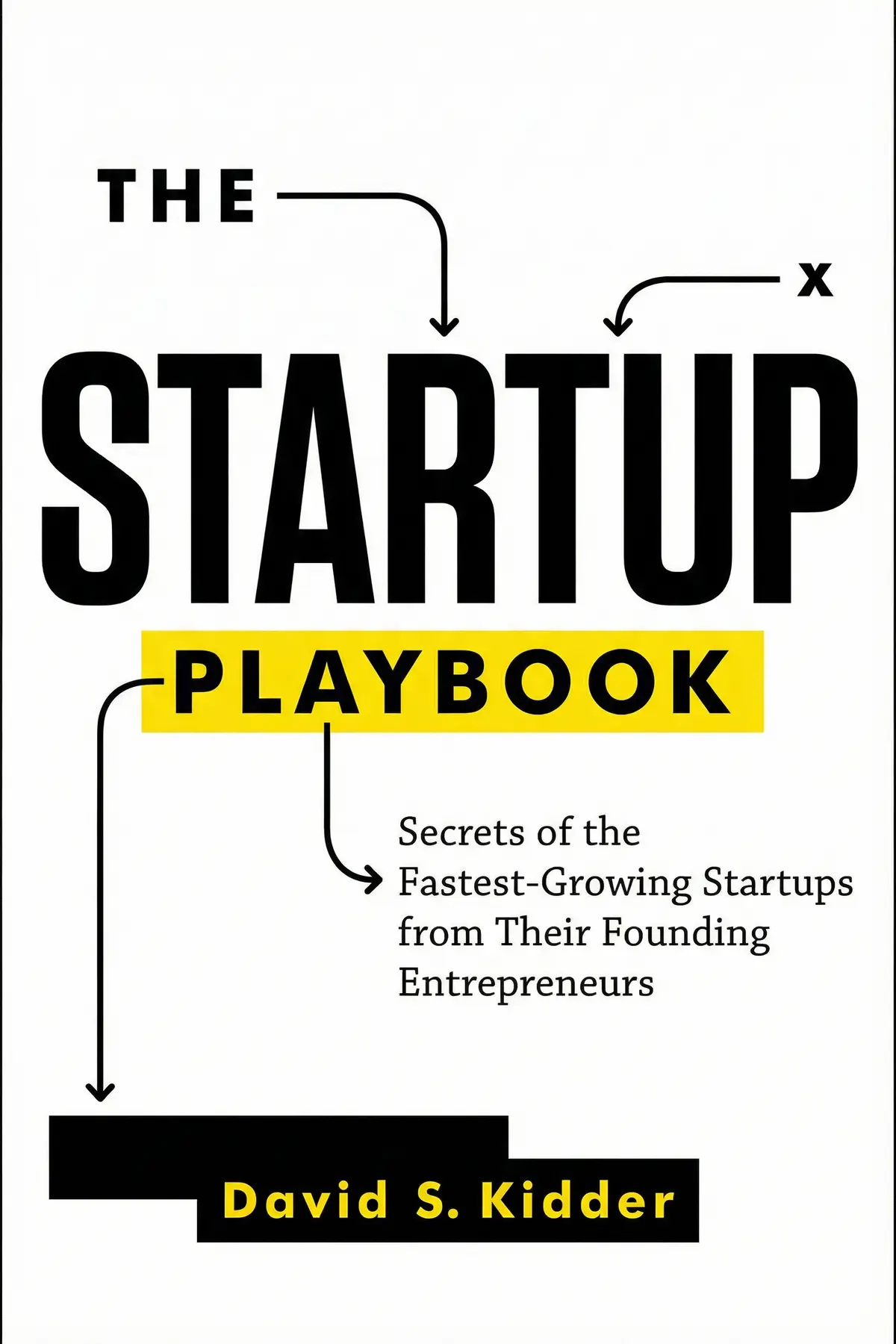
Table of Content
1. Introduction
1 min 30 sec
Every single month, a staggering half a million new businesses take their first steps in the United States. It is an inspiring wave of ambition, but the statistical reality is sobering: the vast majority of these ventures will not survive their first few years. In an environment that is this crowded and competitive, passion and hard work are essentially the baseline requirements. To actually survive—and eventually thrive—you need something more. You need a map of the territory that only those who have already reached the summit can provide.
In this summary of The Startup Playbook, we are going to look at the hard-won wisdom of five founders who didn’t just build companies, but created industry leaders. These are the individuals who looked at the market differently, anticipated problems before they became disasters, and managed to turn tiny ideas into global phenomena.
We will explore the specific strategies that allowed companies like LinkedIn to find their footing when no one understood their value, and how Spanx grew from a simple realization into a retail powerhouse. Throughout this journey, you’ll discover that the common thread among these successes isn’t luck. Instead, it is a combination of early market entry, disciplined focus, and the ability to see potential in resources that everyone else is ignoring. By the end of this narrative, you’ll have a clearer understanding of how to protect your ideas, motivate your team, and stay ahead of a world that never stops changing. Let’s dive into the lessons that define the elite world of high-growth entrepreneurship.
2. Early Entry and Solving the Paradox of the New Network
1 min 58 sec
Entering a market before it becomes obvious is a high-risk move that offers the highest rewards by eliminating early competition.
3. Visionary Snapshots and the Case for Strategic Silence
1 min 48 sec
Using mental snapshots can anchor your long-term goals, while keeping your plans private protects your early momentum.
4. Finding Value in Waste and Navigating Crisis with Candor
1 min 52 sec
Success often comes from seeing utility where others see waste, coupled with the bravery to address revenue issues honestly.
5. Leadership by Example and Building Multi-Generational Loyalty
1 min 54 sec
Sustainable success is built on the well-being of your team and the long-term engagement of your customer base.
6. Beating Complacency through Future-Oriented Design
1 min 50 sec
Complacency is the silent killer of successful startups, making a constant focus on future trends and aesthetics essential.
7. Conclusion
1 min 29 sec
As we have seen through the experiences of these five exceptional founders, the path to building a successful startup is rarely a straight line, but it is one that follows certain predictable principles. Success starts with the courage to enter a market early, identifying trends before they become mainstream. It is sustained by a founder’s ability to hold a clear vision for the future while being disciplined enough to protect that vision from early detractors. We’ve learned that innovation often lies in the efficient use of what already exists, and that honesty is the best policy when navigating the inevitable financial hurdles of a new business.
Furthermore, the long-term viability of a company depends on its human element. By leading with balance and integrity, you ensure your team remains motivated and healthy. By looking toward the next generation and focusing on both function and design, you build a brand that resonates on a deeper level with your customers. The throughline of all these lessons is a relentless focus on the future and a refusal to become complacent.
If you are currently looking for your next big idea, start by paying attention to the world around you. Look for the unmet needs, the services people wish existed but can’t find, and the resources that are currently going to waste. Those gaps in the market are your invitations to innovate. Take these playbooks, adapt them to your own unique vision, and remember that the most successful companies aren’t just built on great ideas—they are built on the persistent application of these fundamental truths. Now, it’s time to take that first step and start building your own future.
About this book
What is this book about?
The Startup Playbook is an essential guide for anyone looking to transform a spark of an idea into a scalable, enduring business. Rather than offering abstract theories, the book draws directly from the experiences of world-class founders who have faced the high-stakes reality of the startup world. It addresses the common pitfalls that cause most new ventures to fail and provides a roadmap for sustainable growth by focusing on timing, resource efficiency, and leadership. The promise of this book is to provide you with the same mental models and tactical approaches used by the creators of household names like LinkedIn, Spanx, and Zipcar. You will learn why entering a market before it feels ready is often the best move and how to protect your vision during its most vulnerable early stages. By the end, you’ll understand that success isn’t just about having a great product—it’s about anticipating market shifts, managing your internal culture, and consistently putting the customer’s evolving needs at the center of your strategy.
Book Information
About the Author
David S. Kidder
David S. Kidder is a seasoned entrepreneur and accomplished writer known for his deep insights into business growth. Most recently, he cofounded Clickable, an innovative online marketing company. In recognition of his leadership and success in the tech industry, Kidder was honored with the prestigious Ernst & Young Entrepreneur of the Year Award in 2008.
Ratings & Reviews
Ratings at a glance
What people think
Listeners find the book quite accessible and consider it a must-read for entrepreneurs. It offers a wealth of great advice, and one listener notes it contains hundreds of vital business lessons. The storytelling style also resonates with listeners, including one who notes it's written from the perspective of a young entrepreneur. Furthermore, listeners find the content motivating.
Top reviews
Sing
Picked this up on a whim after seeing it mentioned on Oprah’s list, and I have to say, the collection of insights here is staggering. David Kidder doesn't just give you dry theories; he presents the living history of entrepreneurs who have actually survived the trenches of Silicon Valley. Each profile feels like a private mentorship session where you learn how to turn failure into a prerequisite for success. The storytelling style kept me engaged throughout the weekend, making complex concepts like venture capital and market inefficiencies feel surprisingly accessible. I especially loved the section on Sarah Blakely—the Spanx story is a masterclass in persistence and branding. It is rare to find a book that manages to be both a motivational spark and a practical manual. If you are serious about scaling, this belongs on your nightstand immediately.
Show morePing
Finally got around to finishing this, and the chapter on leadership alone makes the entire purchase worthwhile for any manager. Kidder captures the essence of what it means to lead with a manifesto rather than just a mission statement pinned to a wall. I was captivated by the idea that a founder should act like a party host, making everyone feel welcome while maintaining the energy of the room. It’s a refreshing take on corporate culture that moves away from sterile HR policies toward genuine human connection. The writing is incredibly clear, and the structure allows you to dip in and out of different profiles without losing the thread. Not gonna lie, I’ve already started implementing the 'strategy session' format for my board meetings with great results. This is essential reading for anyone who wants to produce great people, not just great products.
Show moreNarumon
Wow, the section on treating your company like an oxygen supply—where capital is the lifeblood you must protect—completely shifted my perspective on financial management. This book doesn't just tell you to work hard; it tells you how to work smart by finding market inefficiencies and excess capacities. I loved the raw honesty in the descriptions of jumping off a cliff and trying to build a plane on the way down. It's a terrifying metaphor, but one that every founder recognizes in their gut. The profiles are succinct, powerful, and filled with the kind of grit that you usually only hear about in private conversations between CEOs. This is a must-read for anyone who feels like they are currently in 'midair' and needs to know where to land. Easily one of the most motivating books on my shelf.
Show moreYindee
This book reads like a highlight reel of Silicon Valley’s greatest hits, offering a punchy, fast-paced look at how top-tier founders actually think. Most of the advice is high-level, focusing on the mindset of a young entrepreneur rather than the nitty-gritty of daily operations. Truth is, the breadth of lessons is impressive, covering everything from hiring strategies to the psychology of being a 'cultural anthropologist' within your own company. I found the advice about recruiting yourself into obsolescence particularly striking because it challenges the ego-driven way most people lead. While some of the tech-heavy stories felt a bit detached from my own industry, the overarching themes of customer focus and clear vision are universal. It is a quick read that packs a significant punch if you are looking for big-picture inspiration.
Show moreSook
David Kidder manages to distill hundreds of vital business lessons into a format that is incredibly easy to digest during a commute. I appreciated how the book emphasizes that great business leaders must be like mind-readers, anticipating what the customer needs before they even know it themselves. The specific tactic of 'building backwards from a future state' has already changed how I approach my quarterly goal-setting. Personally, I found the section on hiring people whose judgment you respect to be the most practical advice in the entire volume. It's a solid collection of wisdom that balances the emotional roller coaster of starting a company with tactical advice on execution. While some stories are more engaging than others, the sheer volume of perspectives ensures that every reader will find at least five or six ideas they can use immediately.
Show moreThida
The 'jumping off a cliff' analogy for starting a company resonates deeply with the anxiety I feel every single Monday morning. Kidder does a fantastic job of curating voices that speak to both the terror and the exhilaration of building something from nothing. I particularly liked the advice about ignoring the board of directors in favor of listening to the actual customers who use your product daily. It’s easy to get caught up in the politics of high-level business, but this book brings the focus back to what really matters: solving problems. The writing is punchy and the short chapters make it perfect for a quick burst of motivation before starting the workday. While it’s definitely geared toward the high-growth tech world, the lessons on resilience and team building are worth the price of admission for any leader.
Show moreTakeshi
As someone trying to build a local, homegrown service business from scratch, I found much of the advice here a bit too rarefied. The book is heavily skewed toward tech startups that begin with tens of millions of dollars in venture capital, which simply isn't the reality for most small business owners. Frankly, it was hard to relate to entrepreneurs who talk about 'selling out' to massive corporations as their primary goal. However, I can't deny there are some fantastic tidbits of wisdom hidden between the lines of those high-stakes stories. The concept of building an org chart for twelve months in the future is a clever way to visualize growth. It’s a decent read for the 'big-picture' stuff, but don’t expect a roadmap for a business that isn't aiming for a billion-dollar exit.
Show moreJob
Ever wonder how the giants of the tech world justify their massive pivots and contradictory strategies? This book provides a glimpse into that chaotic world, though it sometimes feels like a collection of vague platitudes rather than a rigorous playbook. To be fair, the diversity of voices is great, but the advice often conflicts—one founder says be early, another says wait for the market to mature. I suppose that is the reality of business, but it makes for a confusing reading experience if you are looking for a definitive 'how-to' guide. The layout is clean and the stories are short, which makes it an easy book to get through during a busy week. It’s a good supplement to other more technical business books, even if it lacks a cohesive, singular methodology.
Show moreSomboon
Look, if you are looking for a step-by-step guide on how to handle the legalities of a startup, you should probably look elsewhere. This book is much more focused on the philosophical and strategic side of entrepreneurship, which is valuable but can feel a bit abstract at times. I enjoyed the stories, but I frequently found myself wishing for more data and fewer anecdotes. For instance, many founders talk about 'paranoia' being a good thing without explaining how to balance that with maintaining a healthy company culture. It’s a bit of a mixed bag; some chapters are brilliant, while others felt like fluff. I’d recommend it for the inspiration, but keep your expectations grounded in terms of actual, actionable 'playbook' steps.
Show moreKwan
To be fair, Kidder has an amazing network, but most of these entries feel like the same recycled advice we’ve all heard a thousand times before. 'Focus on the customer' and 'don't be afraid to fail' are hardly revolutionary concepts in 2024. I struggled to stay interested because so many of the entrepreneurs featured represent a very specific, elite tier of the business world that feels disconnected from the average person's struggles. Most of these people started with huge safety nets and connections that aren't mentioned in their 'pull yourself up by your bootstraps' narratives. It felt more like a promotional piece for venture-backed tech firms than a practical guide for the everyday entrepreneur. If you have read any other major business book in the last decade, you probably won't find anything new here.
Show moreReaders also enjoyed
7 Powers: The Foundations of Business Strategy
Hamilton Helmer
Alibaba: The House That Jack Ma Built
Duncan Clark
Be Obsessed or Be Average
Grant Cardone
Being Boss: Take Control of Your Work and Live Life on Your
Kathleen Shannon
Better and Faster: The Proven Path to Unstoppable Ideas
Jeremy Gutsche
AUDIO SUMMARY AVAILABLE
Listen to The Startup Playbook in 15 minutes
Get the key ideas from The Startup Playbook by David S. Kidder, plus 5,000+ more titles in English and Thai.
- 5,000+ titles
- Listen as much as you want
- 7-day free trial
- Cancel anytime







