

59 Seconds: Change Your Life in Under a Minute
Richard Wiseman
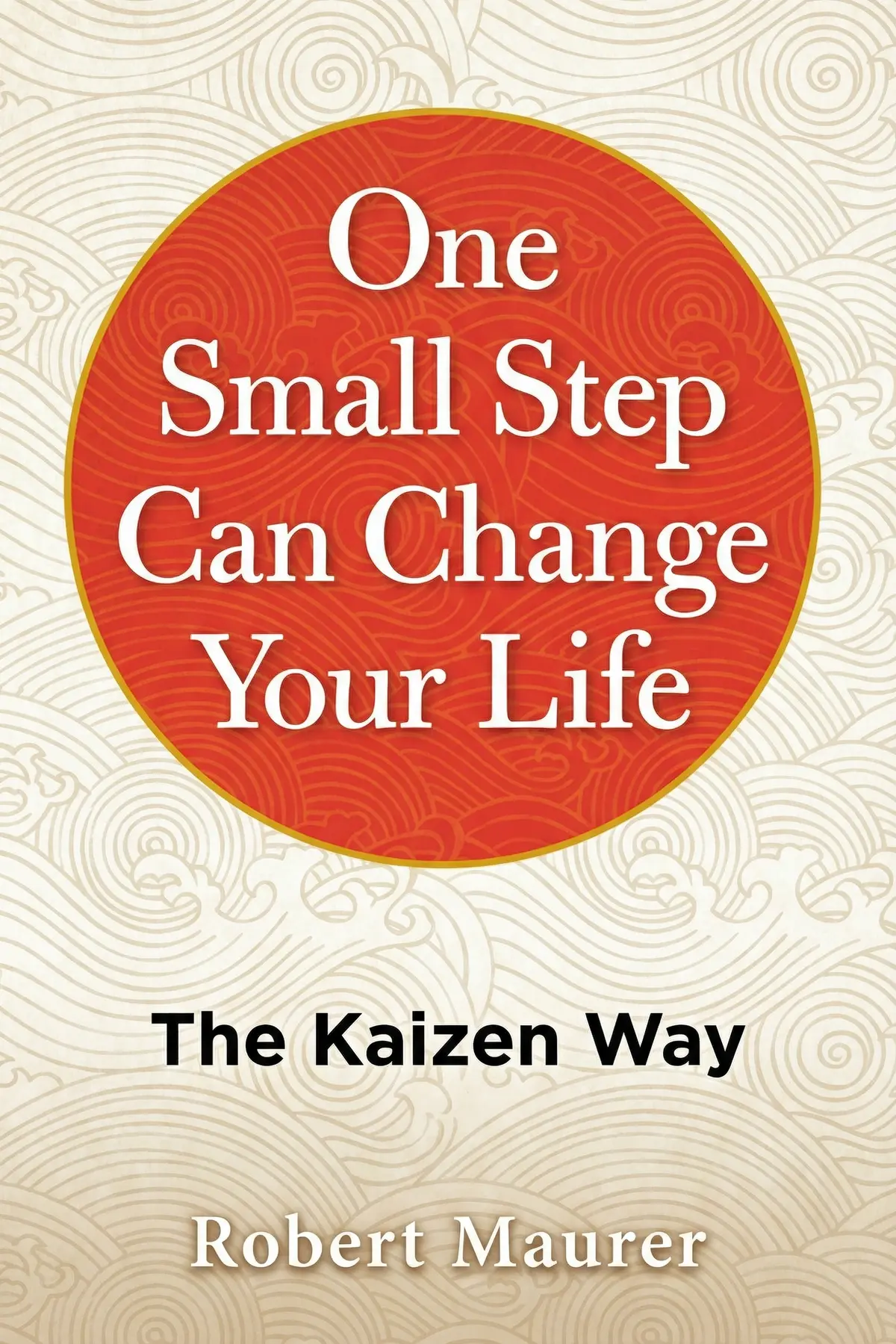
Discover how the Japanese philosophy of Kaizen can transform your life through tiny, manageable steps. Psychologist Robert Maurer explains how to bypass the brain's fear of change to achieve lasting personal and professional growth.
1 min 38 sec
Every year, millions of people set out to transform their lives. They buy expensive gym memberships, clear their pantries of junk food, or commit to writing a novel in a month. Yet, more often than not, these grand ambitions fizzle out before the first few weeks are over. We tend to blame a lack of willpower or a lack of character, but according to psychologist Dr. Robert Maurer, the problem isn’t us—it’s our strategy. When we try to make giant leaps, we inadvertently trigger a biological alarm system in our brains that is designed to keep us safe by keeping us exactly where we are.
In this summary of One Small Step Can Change Your Life, we will explore the Japanese concept of Kaizen. Originally a business philosophy used to rebuild industry, Kaizen is the practice of continuous, incremental improvement. It suggests that if you want to move a mountain, you don’t start by trying to lift the whole thing; you start by moving a single stone.
Throughout this discussion, we will look at how tiny changes can lead to massive results in your physical health, your professional productivity, and even your closest relationships. We will dive into the neurology of why small steps work, how to use the power of your own imagination to prepare for challenges, and why rewarding yourself with a small treat is often more effective than waiting for a huge payout. The throughline here is simple: if a goal feels scary, it is too big. By shrinking our expectations for the first step, we can eventually reach any destination. Let’s explore how the Kaizen way can help you build a life of lasting, meaningful change without the stress of the traditional ‘all-or-nothing’ approach.
1 min 53 sec
Big changes can trigger an ancient fear response that stops us in our tracks. Learn how to sneak past your internal obstacles using tiny improvements.
2 min 04 sec
Your brain is a natural problem-solving machine that loves a challenge. Discover how asking the right small questions can unlock your creativity.
1 min 56 sec
Mental imagery isn’t just for daydreaming; it’s a powerful tool for building skill. Learn how ‘mind sculpture’ can prepare you for any obstacle.
2 min 12 sec
Sometimes the biggest barrier to change is our own ego. Discover why doing ‘too little’ is actually the secret to doing everything.
1 min 58 sec
Big crises rarely happen out of nowhere. Learn how to spot and solve small problems before they escalate into life-altering disasters.
2 min 11 sec
Huge prizes can actually stifle your creativity and increase stress. Discover why a tiny, symbolic reward is often the best way to stay on track.
2 min 04 sec
The quality of our lives is often determined by the small moments we share with others. Learn how tiny acts of attention can transform your relationships.
1 min 42 sec
As we conclude our look into Dr. Robert Maurer’s One Small Step Can Change Your Life, the central message is clear: change is a journey of small, consistent steps, not a single, heroic leap. By understanding how our brains react to fear and novelty, we can use the principles of Kaizen to outsmart our own resistance. Whether you are using small questions to spark creativity, mind sculpture to build confidence, or tiny actions to create new habits, you are honoring the way your biology actually works.
Remember that if you ever feel stuck or overwhelmed, the solution is always to go smaller. There is no step too tiny to be useful. If you are struggling with a mountain of work, ask yourself what you can do in the next sixty seconds. If you are facing a personal crisis, look for the smallest problem you can solve right now. This approach takes the pressure off and allows you to enjoy the process of growth.
As a final piece of actionable advice, try to counter your inner critic with positive, small questions. If you find yourself thinking, ‘Why do I always fail?’ stop and replace it with a Kaizen-style question: ‘What is one thing I did well today?’ or ‘What is one small thing I’m grateful for right now?’ Write these down in a journal every evening. By making this a daily practice, you will slowly but surely reprogram your mind to look for the good and the possible. Over time, these tiny shifts in perspective will lead to a life that is not only more successful but much more peaceful. The Kaizen way is a lifelong commitment to the belief that small steps don’t just lead to change—they are the change. Thank you for listening.
Have you ever wondered why big life changes often feel impossible to sustain? Whether it is a new fitness routine or a career pivot, our brains are biologically wired to resist massive shifts. One Small Step Can Change Your Life introduces the concept of Kaizen—the art of making great changes through small, incremental improvements. This approach is more than just a productivity hack; it is a way to work with your biology rather than against it. By breaking down daunting goals into tiny, almost trivial actions, you can outsmart the part of your brain that triggers fear and resistance. This summary explores specific techniques like asking small questions, practicing mental rehearsal, and noticing minor warning signs before they become crises. The promise of this method is simple: by taking steps so small they seem impossible to fail at, you build the momentum necessary for permanent transformation in your health, relationships, and work.
Robert Maurer is a distinguished clinical psychologist who serves on the faculties of the UCLA School of Medicine and the University of Washington School of Medicine. He is a leading expert on the Kaizen philosophy, regularly conducting seminars and lectures for individuals and organizations. In addition to this work, he has authored The Spirit of Kaizen and Mastering Fear.
Listeners find this work exceptionally clear and perceptive, with one review mentioning its fantastic explanation of the psychological basics. The book is also pragmatic, containing solid examples throughout, and listeners value how it steers people through the process of positive transformation. Additionally, the method is straightforward, partitioning change into tiny actions that listeners find simple to grasp and apply. They also respect its power, observing that small shifts can generate significant outcomes and lead to higher levels of success.
Picked this up during a particularly nasty bout of burnout, hoping for a miracle that didn't involve a total life overhaul. Truth is, Maurer’s explanation of the amygdala and how big changes trigger our brain's fight-or-flight response was a total lightbulb moment for me. By focusing on ridiculously small steps, you essentially sneak past your own internal alarm system. It’s a simple approach, yet the underlying psychology is incredibly sound and well-explained throughout the chapters. I started with just one minute of stretching a day, which felt silly at first. However, that tiny commitment eventually bloomed into a full morning routine without the usual paralyzing dread. My only gripe is that some examples feel a bit dated, but the core philosophy is timeless. It’s highly readable and perfect for anyone who feels stuck in a rut.
Show moreEver wonder why you can never seem to stick to a new gym routine or a diet for more than a week? Look, the secret isn't more willpower; it's bypassing the fear that comes with big, sweeping changes. Maurer explains that when we aim too high, our brains panic. By using laughably small steps—like one minute of exercise—we stay under the radar of the amygdala. I tried his '10 minutes a day' rule for an unfinished writing project that had been haunting me for months. It works. Within a few weeks, I actually started to see real progress and the momentum eventually took over. The book is incredibly practical and filled with good examples that guide you through the journey toward positive change. It is simple, effective, and honestly life-changing if you actually apply it.
Show moreWow, I didn't think a book this thin could actually shift my perspective on long-term achievement so drastically. I used to be the person who would start a massive project with 100% energy and quit by day three because it was just too much to handle. This book taught me that a journey of a thousand miles really does begin with a single, tiny, almost insignificant step. Since reading, I’ve managed to finally start a daily meditation practice and I’m actually sticking to it because I started with just thirty seconds. The simplicity of the approach is its greatest strength. It’s not about being perfect; it’s about being consistent. If you are in a rut and feel like you can’t finish anything, please read this. It’s a quick, easy read that might just save your sanity.
Show moreAfter hearing about Kaizen for years in a business context, seeing it applied to personal mental health and habit formation was eye-opening. The book does a fantastic job of explaining the underlying psychology of fear and why our brains are designed to fight against big, sudden changes. It’s highly practical, with clear guidance on how to break down any goal into manageable pieces that don't trigger that internal panic. I loved the focus on small thoughts and small actions; it makes the path to success feel like a gentle slope rather than a vertical cliff. Even though it's a short book, the impact of the message is huge if you’re willing to actually try the exercises. It’s easily one of the most effective tools for positive change I’ve come across in years. Highly recommended for anyone wanting to improve their life without the stress.
Show moreAs someone who struggles with massive, intimidating goals, Maurer’s approach felt like a breath of fresh air in a genre usually filled with 'hustle' culture nonsense. The book guides readers through the journey of positive change by breaking down huge obstacles into laughably small tasks. I especially appreciated the sections on small rewards and small moments; they make the process feel much more human and less like a chore. In my experience, the effectiveness of the Kaizen method is undeniable once you get past the initial skepticism of how 'easy' it seems. While the writing style is a bit repetitive, the practical examples help ground the theory in real-life scenarios. It is an easy follow for anyone needing a mental reset. I’m already seeing results in my daily reading habits.
Show moreFinally got around to reading this classic on the Kaizen method and I have to say the psychological insights are top-notch. Robert Maurer does an excellent job of explaining how our brain's hardwiring resists change and why 'taking the first step' is often the hardest part of any journey. The book is highly readable and insightful, though I do think it could have been condensed significantly without losing much value. Some of the anecdotes about curing phobias or solving massive corporate problems with tiny questions felt a bit like 'magic bullet' thinking. However, the core message that small steps can yield big results is something I’ve started implementing in my own workflow with great success. It’s a solid, practical guide for anyone looking to achieve higher levels of success without the burnout.
Show moreThe chapter on asking small questions was a total game-changer for my daily productivity levels. Instead of asking 'How can I fix my life?', asking 'What is one small thing I can do today to be healthier?' makes the goal feel achievable rather than overwhelming. Personally, I found the book's approach to be simple and easy to follow, providing a clear roadmap for anyone who feels paralyzed by their own ambitions. There are plenty of good examples throughout the text that show how these techniques apply to everything from weight loss to relationship building. While it lacks some of the heavy scientific citations found in more modern self-help books, the practical application is where it really shines. It’s a quick read that you can finish in an afternoon but reflect on for weeks. Definitely worth the time.
Show moreWhy is this a full-length book and not just a two-page PDF or a quick blog post? To be fair, I don't disagree with the central premise that Kaizen—the art of small, continuous improvement—is effective. It definitely is. But after reading Atomic Habits by James Clear, this felt like a much thinner, less researched version of the same idea. Maurer spends over 200 pages repeating the same 'start small' mantra until it loses its impact. It’s 221 pages of 'just do one minute' over and over again. If you are brand new to the concept of mini-habits, you might find this insightful and practical. For anyone else, it’s a lot of fluff around a very basic concept that could have been summarized in a single sentence. It’s fine, just not revolutionary.
Show moreRobert Maurer writes with a very patient, almost clinical tone that works for some but felt a bit repetitive to me by the halfway mark. Not gonna lie, I was expecting a bit more 'meat' on the bones of this theory, but it really is just the concept of Kaizen applied to personal habits. It’s a great introduction if you’re new to the idea of mini-habits, but if you’ve already read James Clear or BJ Fogg, you might find this a bit redundant. The book is insightful in how it explains the fear response, but the advice to 'stand on the treadmill for one minute' felt a bit like common sense. It’s a decent enough book with a good message, but it didn't quite have the 'mind blown' impact I was hoping for. Good for a library borrow, maybe not a permanent shelf space.
Show moreNot what I expected after seeing all the hype on social media, especially since the entire 'philosophy' boils down to doing the absolute bare minimum and hoping for the best. Frankly, the tone of the book reminded me way too much of the over-patient, almost condescending voice of Dr. Leo Marvin from the movie What About Bob? giving advice to a neurotic patient. While the Japanese concept of Kaizen is fascinating in a corporate setting, here it feels stretched thin to fill up pages. I found myself rolling my eyes at the suggestion that folding one piece of laundry or standing on a treadmill for thirty seconds is a 'step' toward success. It is a very easy read, sure, but it lacks the depth of research found in books like The Body Keeps the Score. If you want a book that tells you it's okay to be lazy as long as you're 'starting,' this is for you.
Show moreRichard Wiseman

William B. Irvine
Andrew D. Thompson
Deepak Chopra
AUDIO SUMMARY AVAILABLE
Get the key ideas from One Small Step Can Change Your Life by Robert Maurer, plus 5,000+ more titles in English and Thai.







