
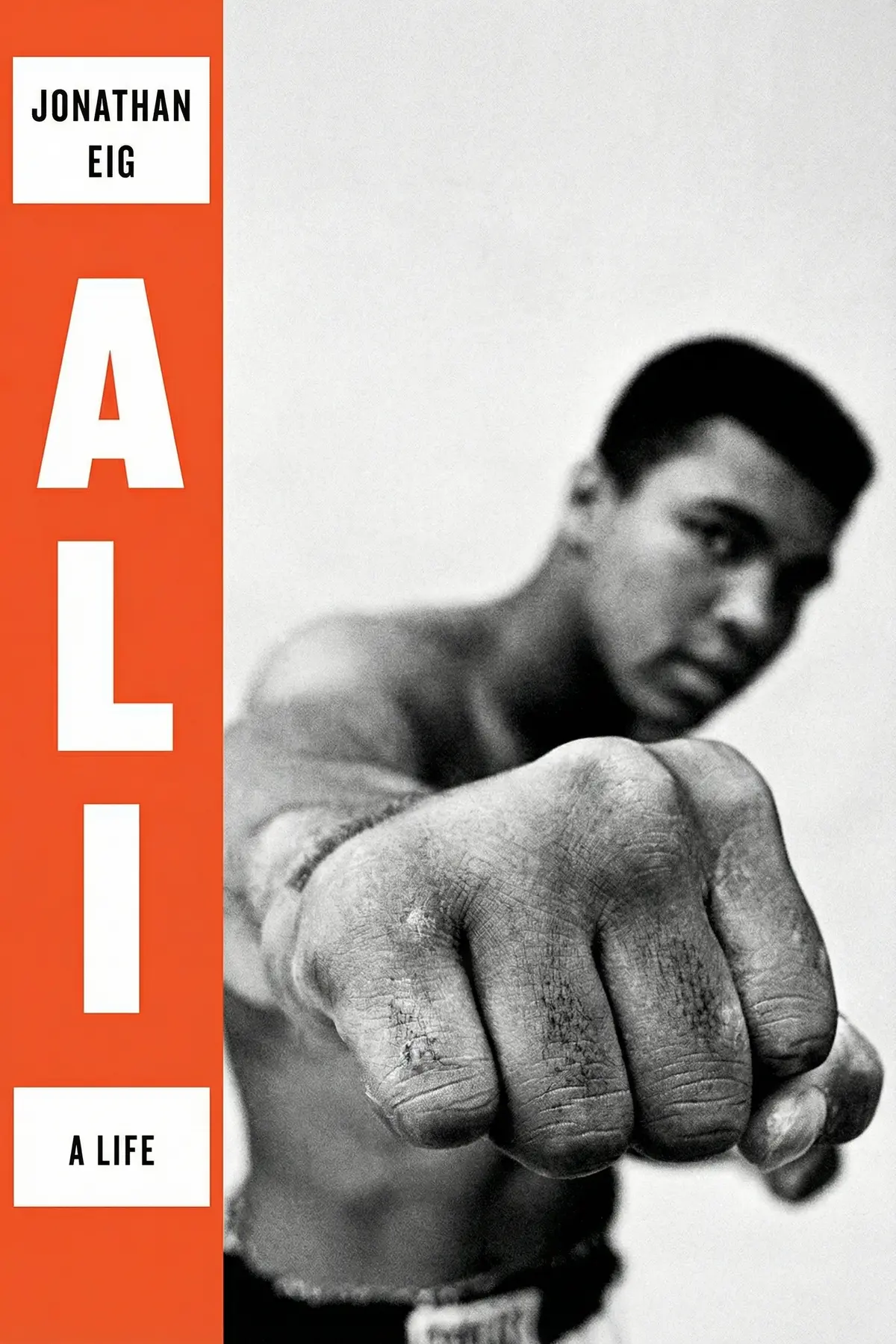
Ali: A Life
Jonathan Eig
Outlive provides a comprehensive strategy for extending healthspan and lifespan by optimizing exercise, nutrition, sleep, and emotional health to combat chronic disease and age with vitality through proactive management.
2 min 14 sec
For most of human history, the greatest threats to our survival were immediate and external: predators, infections, or injuries. Today, the landscape of danger has shifted dramatically. While we live in a world of unprecedented convenience and technological advancement, our bodies are essentially biological relics, operating on genetic code that hasn’t changed much in thousands of years. This disconnect between our ancient genes and our modern environment is at the heart of the most common health crises we face today, including heart disease, cancer, and type 2 diabetes.
Think about the way our ancestors interacted with their world. Movement was a necessity for survival, sleep was dictated by the rising and setting of the sun, and calorie-dense food was a rare luxury. In contrast, our current world provides a constant stream of high-energy food, sedentary work, and digital distractions that fragment our rest and strain our emotional health. For example, fructose—once a scarce and valuable energy source found only in seasonal fruit or honey—is now added to almost everything we eat, leading our bodies to store fat in ways that were once beneficial but are now detrimental.
To navigate this weird new world, we need more than just luck; we need a proactive strategy. It isn’t enough to wait for a diagnosis and then react. We must shift our focus from merely extending the length of our lives, or lifespan, to improving the quality of those years, known as healthspan. This requires a shift in mindset and a deep dive into four primary areas of focus: exercise, nutrition, sleep, and emotional health.
There is no universal solution that works for every person, but there is a framework you can use to manage these factors based on your own unique needs. The goal is to create a personalized game plan that allows you to remain vibrant and capable well into your later years. In the sections that follow, we will explore how to build that framework, focusing on how to live longer and, more importantly, how to live better, making each decade of your life superior to the one that preceded it.
2 min 46 sec
Imagine the physical tasks you want to perform when you are 100 years old. This long-term vision changes how you approach exercise today.
3 min 00 sec
True physical resilience requires a balance of aerobic efficiency, peak intensity, and functional strength to protect the body as it ages.
2 min 59 sec
Forget the fad diets; the key to metabolic health lies in managing energy balance, prioritizing protein, and choosing the right fats.
2 min 39 sec
Quality rest is not a luxury; it is a fundamental requirement for physical health, cognitive performance, and emotional stability.
2 min 45 sec
Longevity is meaningless without a sense of purpose and happiness. Addressing emotional well-being is the final, essential piece of the puzzle.
1 min 23 sec
The journey toward a longer and healthier life is not about finding a single ‘miracle’ cure or a temporary quick fix. It is about building a sustainable, evidence-based framework that addresses the core drivers of aging and disease. By shifting from a reactive mindset to a proactive one, you can take control of your biological destiny.
As we have explored, the strategy is multifaceted. It begins with the commitment to be an ‘athlete of life,’ training for your own Centenarian Decathlon through a balance of aerobic work, peak intensity, and strength. It continues with a sophisticated approach to nutrition that prioritizes muscle maintenance and metabolic health. It is supported by the non-negotiable foundation of restorative sleep and anchored by a deep commitment to your emotional well-being.
Remember that you are an individual, and your plan should reflect your unique needs and goals. Be open to testing different tactics, and don’t be afraid to adjust your course as you age. The ultimate promise of this approach is a life that is not just longer, but more capable and more fulfilling. By focusing on exercise, nutrition, sleep, and emotional health today, you are investing in a future where you can continue to pursue your passions and enjoy your life for decades to come.
Modern medicine has successfully extended the human lifespan, but it often fails to preserve the quality of those extra years. This summary explores the discrepancy between our evolutionary biology and the modern environment, highlighting why diseases like type 2 diabetes and heart disease are so prevalent today. It offers a framework for moving beyond reactive medicine toward a proactive approach centered on four critical pillars: physical activity, dietary biochemistry, sleep hygiene, and emotional well-being. By focusing on these areas, you can transform the way you age. The promise is not just a longer life, but a better one—ensuring that your final decades are filled with physical capability and mental clarity. Rather than following a rigid set of rules, you will learn how to build a personalized toolkit that allows you to train for the Centenarian Decathlon and maintain your health throughout every stage of your life.
Peter Attia is a renowned physician and longevity expert with a focus on the science of human optimization. Having received his MD from Stanford University, he went on to work at The Johns Hopkins Hospital and the National Cancer Institute. He’s known for his popular podcast The Peter Attia Drive, where he delves into topics such as nutrition, exercise, and mental health. Bill Gifford is a highly-respected health and wellness expert with a background in both journalism and science. He’s authored multiple best-selling books, including Spring Chicken and Ledyard.
Listeners find this book exceptionally readable and articulate, offering straightforward information that remains accessible rather than overly complex. They value the evidence-based content and its balance of scientific theory with actionable advice, viewing it as a useful tool for boosting life quality and long-term health. Described as both motivating and significant, one listener mentions it sets up a structure for beneficial health routines, while another emphasizes its all-encompassing look at both psychological and physical fitness.
This book is a massive paradigm shift in how we view aging and wellness. Instead of waiting for a disaster to happen, Attia argues for a proactive stance against what he calls the 'Four Horsemen'—the chronic diseases that claim most of our lives. I found the concept of 'Medicine 3.0' incredibly compelling because it focuses on preventing decay rather than just treating symptoms. To be fair, it is a long read, but Bill Gifford’s writing style keeps the dense science accessible and surprisingly engaging. The breakdown of exercise as the ultimate longevity lever was particularly eye-opening for me. I’ve already started rethinking my entire approach to zone 2 training and VO2 max. It is an inspiring framework for anyone who wants to ensure their 'marginal decade' is actually worth living. If you are tired of vague health advice and want data-backed strategies, this is the gold standard.
Show moreWow, the final chapter on emotional health hit me much harder than the data on cardiovascular disease or cancer. Attia is incredibly brave to share his own struggles with mental health and his 'asshole' tendencies, which makes the scientific advice feel much more earned. The book successfully redefines 'longevity' not just as a length of time, but as 'healthspan'—the quality of those years. I appreciated the deep dive into why exercise is orders of magnitude more important than diet for most people. The prose is smooth and avoids the typical 'hero’s journey' clichés that ruin most non-fiction. It’s a sobering look at how our bodies fail, yet it provides a clear, actionable roadmap to fight back. This is easily the most impactful health book I have read in the last decade. It’s comprehensive, well-researched, and truly life-changing if you actually apply the principles.
Show moreAs someone who has watched family members struggle with Alzheimer's and diabetes, this book felt like the roadmap I wish we had years ago. The distinction between lifespan and healthspan is vital. Attia makes a convincing case that we are often treating diseases far too late in the game. I loved the technical depth—he doesn't talk down to the reader, but Gifford ensures the sentences don't become unreadable jargon. The emphasis on VO2 max as a primary predictor of mortality has completely changed my gym routine. Not gonna lie, some of the sections on rapamycin and specific blood markers felt a bit 'bleeding edge,' but I’d rather have the latest data than outdated guidelines. It is a well-researched, heavy-hitting guide to taking ownership of your own biology. If you want to be a 'kickass' hundred-year-old, start here. This is essential reading for everyone over thirty.
Show moreThe concept of the 'Centenarian Decathlon' is worth the price of admission alone. It completely reframes exercise from a chore meant for weight loss into a necessary training program for your future self. I’ve read plenty of health books, but few manage to connect the dots between metabolic health, exercise, and mental well-being as effectively as this one. Attia’s vulnerability regarding his own mid-life crisis and emotional health was unexpected but added so much weight to his arguments. He isn't just a doctor shouting from a pedestal; he’s someone who was obsessed with the wrong metrics and had to find his way back. The information on sleep and the dangers of alcohol was particularly sobering for me. It is a dense, high-quality piece of work that avoids being gimmicky. If you’re serious about your future, you need to read this.
Show morePick this up if you actually want to understand how your body ages rather than just following the latest Instagram fad diet. This is a comprehensive, deep dive into the mechanics of human decline and how to stall it. I was particularly struck by the data showing how much more impactful exercise is compared to almost any other intervention. Attia’s transition from an 'optimization' obsessed engineer to a more holistic practitioner is a great narrative thread that keeps the book moving. Personally, I found the advice on bone density and muscle mass after fifty to be a wake-up call. The book is well-written, impactful, and provides a clear framework for anyone wanting to improve their quality of life. It’s not a light read, but it’s an important one. This book will be on my shelf for years as a primary reference guide for my health.
Show moreAfter hearing Attia on several podcasts, I expected a technical manual, but this was much more readable than I anticipated. The core idea of the 'Centenarian Decathlon'—training now for the physical tasks you want to do at ninety—is genius and highly motivating. Frankly, the sheer volume of information can be overwhelming at times, and I found myself wishing the actionable tips were easier to find without wading through so much narrative fluff. I also noticed the weird lack of footnotes in the main text; flipping to the back constantly to verify studies was a bit of a chore. However, the chapter on emotional health was a necessary and vulnerable addition that humanized the author. It isn't just about bloodwork and supplements; it’s about why we want to live longer in the first place. Solid, comprehensive advice that feels grounded in reality rather than just another fad diet book.
Show moreFinally got around to finishing this behemoth, and I’ve already scheduled a DEXA scan and a new blood panel. Attia’s focus on proactive 'Medicine 3.0' is exactly what the current healthcare system is missing. The way he explains the interplay between insulin resistance and the other 'Horsemen' is crystal clear and very convincing. My only real complaint is that the book feels somewhat skewed toward a male perspective, especially in the heavy emphasis on protein and muscle mass over fiber and broader nutritional variety. I would have liked to see more data specifically focused on women's health nuances. Still, the underlying framework is solid and the advice on avoiding injury through stability training is something I desperately needed to hear. It’s a valuable resource that balances deep science with practical, everyday adjustments. Definitely worth the time, even if it’s a bit of a slog in the middle.
Show moreIn my experience, health books usually focus too much on quick fixes, so I appreciated the long-term, '3.0' philosophy presented here. The writing is incredibly clear, making complex topics like autophagy and ApoB feel understandable for a layperson. I did find the lack of actionable summaries at the end of chapters a bit annoying, especially given the book's 400-page length. You really have to take your own notes if you want to remember the specific protocols for VO2 max or strength training. To be fair, Attia admits this isn't a one-size-fits-all guide, but a little more structure would have helped. The section on cancer was especially fascinating and shifted my perspective on early screening. Despite some minor structural flaws and a bit of 'man-o-sphere' bias regarding protein, the core message is incredibly powerful and well-supported. It’s a great resource for anyone wanting to be proactive.
Show moreEver wonder why a book that could easily be a 30-page pamphlet is bloated to over 400 pages? While the science regarding ApoB and metabolic health is fascinating, the structure of this book feels like a stream-of-thought draft that needed a much tighter edit. My biggest gripe is the formatting; it’s nearly impossible to go back and find specific nutritional recommendations or exercise protocols without skimming through endless anecdotes. Also, the reliance on extreme monitoring and expensive testing feels like it's geared toward a very specific, wealthy demographic. Truth is, many people live to 100 without ever knowing their VO2 max or wearing a CGM. He completely ignores the 'Blue Zones' and the role of community or simple lifestyle factors in favor of high-tech interventions. There is some invaluable information buried in here, but you have to work way too hard to extract it from the filler.
Show moreLook, the science is clearly well-researched, but the constant push for extreme monitoring and medication felt borderline obsessive to me at times. Attia’s assumption that if lowering a value is good, then lowering it even further must be better, feels like it ignores the complexity of human biology. I found the section on nutrition particularly frustrating; he almost dismisses the importance of fiber while pushing an incredibly high-protein diet that might not be right for everyone. Also, why no mention of the Blue Zones? It seems odd to write a book on longevity and ignore the populations that actually achieve it naturally without expensive gadgets. To be fair, the exercise advice is top-notch and probably the most useful part of the whole text. It’s an interesting perspective, but I’d suggest reading it with a healthy dose of skepticism. It feels like it was written for biohackers rather than average people.
Show moreJonathan Eig
Elisabeth Rosenthal
AUDIO SUMMARY AVAILABLE
Get the key ideas from Outlive by Peter Attia, plus 5,000+ more titles in English and Thai.







