
24 min 11 sec
Patient H.M.: A Story of Memory, Madness, and Family Secrets
Explore the haunting and transformative history of Patient H.M., a man whose tragic lobotomy inadvertently paved the way for our modern understanding of how human memory is stored and processed.
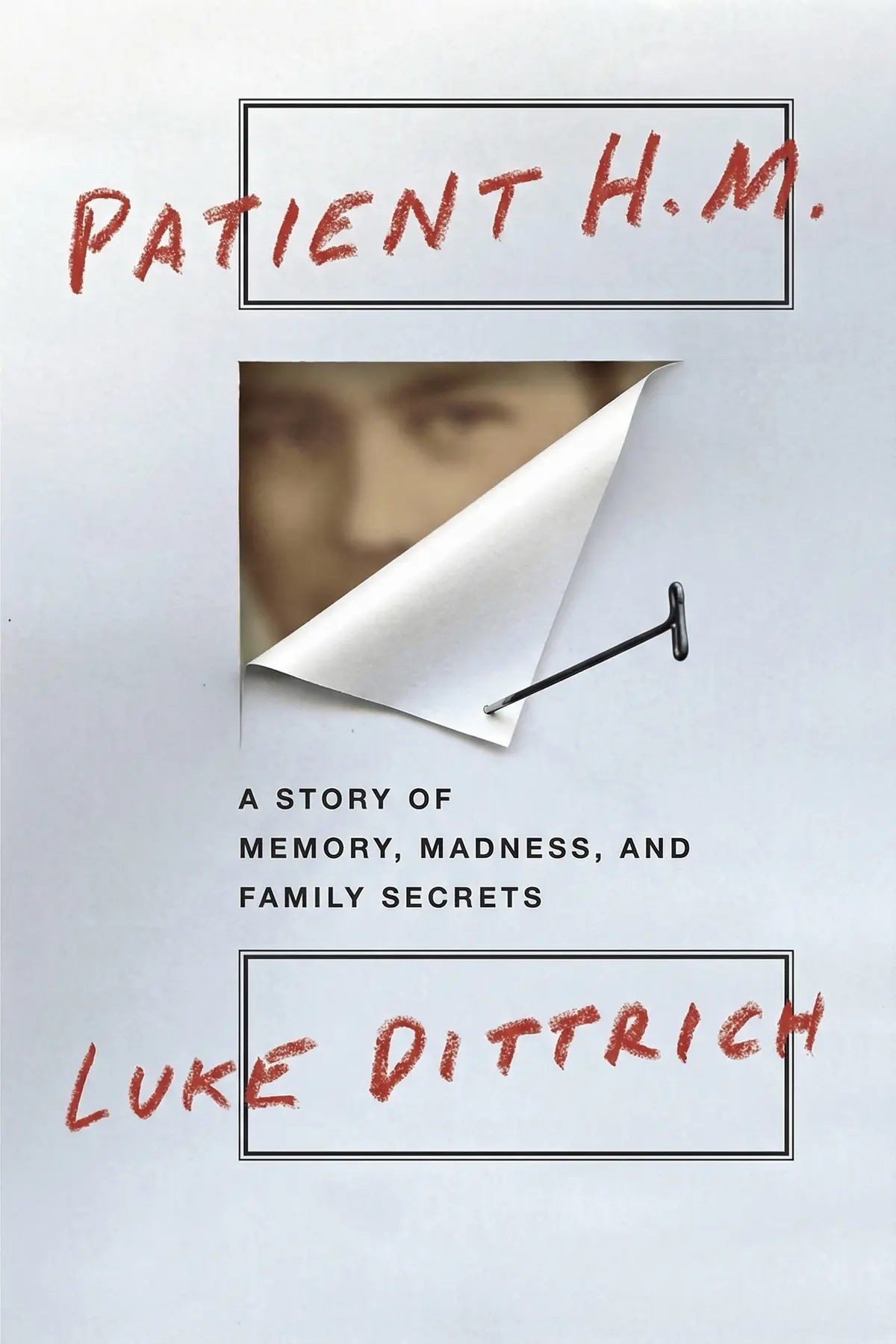
Table of Content
1. Introduction
1 min 37 sec
When we think about the history of medicine, we often imagine a steady, noble climb toward enlightenment. But the story of how we understand the human brain is much messier, filled with moments of profound tragedy and moral ambiguity. At the center of this narrative is a man named Henry Molaison, known to the scientific community for decades only as Patient H.M. In 1953, Henry underwent a radical surgical procedure intended to cure his debilitating seizures. Instead, the operation stripped him of his ability to form new memories, leaving him suspended in a permanent present.
This isn’t just a clinical case study; it’s a story of family secrets and the high cost of scientific progress. The author, Luke Dittrich, brings a unique perspective to this history, as his own grandfather was the surgeon who performed that fateful operation. Through this lens, we explore the era of the lobotomy—a time when doctors were desperate to solve the crisis of overcrowded asylums and were willing to take extreme risks to do so.
In the following sections, we will trace the path from ancient brain theories to the cutting-edge neuroanatomy of today. We’ll see how Henry’s misfortune became the foundation for almost everything we know about how the brain records our lives. We will look at the ethical shadows cast by early medical experiments and meet the ambitious figures who dominated the field. Ultimately, we’ll discover how one man, who couldn’t remember his own dinner or the faces of his doctors, managed to teach the world what it truly means to remember.
2. A Legacy of Cerebral Exploration
2 min 21 sec
From ancient Egyptian scrolls to radical 19th-century surgeries, the human quest to understand and alter the brain has a long, often shocking history that predates modern medicine.
3. The Era of Asylum Interventions
2 min 18 sec
In the mid-20th century, overcrowded asylums became testing grounds for extreme therapies designed to manage and calm the most troubled patients through physical shock and surgery.
4. A Shift Toward Functional Mapping
2 min 18 sec
The discovery that different parts of the brain control specific functions paved the way for more targeted—and more ambitious—neurological surgeries.
5. The Complicated Ethics of Medical Progress
2 min 26 sec
History shows that some of medicine’s most significant breakthroughs have emerged from disturbing and inhumane experiments, raising difficult questions about the cost of knowledge.
6. Searching for the Memory Bank
2 min 19 sec
Innovators like Wilder Penfield used electrical stimulation to uncover the brain’s hidden landscapes, accidentally stumbling upon the physical seat of human memory.
7. The Fateful Decision for Henry Molaison
2 min 18 sec
Faced with a life-shattering condition, Henry Molaison and his family chose a radical, experimental surgery that would cure his seizures but erase his future.
8. The Hippocampus and the Architecture of Memory
2 min 08 sec
The tragic outcome of Henry’s surgery allowed scientists to finally identify the hippocampus as the critical gateway for creating long-term memories.
9. Uncovering the Hidden Layers of the Mind
2 min 19 sec
Through ingenious testing, researchers discovered that memory is not a single system; even without a hippocampus, Henry could still learn new physical skills.
10. The Final Chapter of a Living Landmark
2 min 22 sec
Even after his death in 2008, Henry Molaison continued to serve science as his brain was transformed into a digital, three-dimensional map for future generations.
11. Conclusion
1 min 45 sec
The story of Patient H.M. is a profound reminder of the double-edged nature of human curiosity. Henry Molaison’s life was, in many ways, a sacrifice. Through a combination of his own family’s desperation and a surgeon’s radical ambition, he was left in a state that most of us would find terrifying—a life without a past or a future. Yet, because of that sacrifice, the field of neuroscience was catapulted forward. We moved from the era of ‘zombie-making’ lobotomies to a sophisticated understanding of the hippocampus, the nature of memory systems, and the physical architecture of the human soul.
What this really means for us is that our identities are more fragile than we think, yet more complex than we imagine. Henry showed us that you can lose your story and still keep your skills. You can lose your ‘self’ and still remain a kind, intelligent presence in the room. His case taught us that memory isn’t just one thing; it’s a multi-layered process that allows us to learn, to grow, and to connect the dots of our lives.
As we close this chapter on the dark history of psychosurgery, we are left with a clearer vision of the brain’s internal map. We carry the legacy of Henry’s ‘dream-like’ existence every time we recall a childhood memory or learn a new skill. The throughline of this story is the transition from medical barbarism to clinical compassion, driven by the data harvested from one man’s tragic misfortune. Henry Molaison may have spent his life forgetting, but through this work, his contribution remains unforgettable. He is the man who lost his memory so that we could find ours.
About this book
What is this book about?
Patient H.M. tells the dual story of Henry Molaison, the most famous patient in the history of neuroscience, and the ambitious, often reckless doctors who sought to map the human mind. After a radical brain surgery intended to cure his epilepsy left him unable to form new memories, Henry became a living laboratory for researchers. His tragic condition provided the world with groundbreaking insights into the physical location of memory and the different systems our brains use to navigate the past and present. This summary delves into the dark origins of psychosurgery, the ethical minefields of early medical experimentation, and the personal family secrets of the author, whose own grandfather performed the fateful operation on Henry. It promises a deep dive into the evolution of brain science, from the barbaric practices of mid-century asylums to the sophisticated anatomical mappings of the 21st century. Through the lens of one man's lost life, we discover the mechanisms of our own identities.
Book Information
About the Author
Luke Dittrich
Luke Dittrich is a contributing editor at Esquire, where his writing has earned him the National Magazine Award. His first book, Patient H.M., received the 2017 PEN/E. O. Wilson Literary Science Writing Award. He also has a direct personal connection to this history, as the grandson of the infamous neurosurgeon Dr. William Scoville.
Ratings & Reviews
Ratings at a glance
What people think
Listeners find the writing both compelling and polished, presenting an absorbing tale of memory through a personal lens. This deeply researched, educational account appeals to psychologists and sociologists, and one listener points out it covers the most studied brain in neuroscience. Pacing receives a mixed reception; while some describe the story as heartbreaking, others feel the middle portion tends to drag.
Top reviews
Mia
Wow, I was not prepared for how deeply this story would affect me. We’ve all heard of Patient H.M. in psychology 101, but this book finally breathes life into the man behind the initials. Henry Molaison was a person, not just a series of brain slices, and Dittrich treats his memory with a mix of reverence and investigative grit. The way the author balances the clinical advancements—like the distinction between episodic and semantic memory—with the personal tragedy of Henry’s restricted life is masterful. Look, the ethical quagmire described here is sickening. Watching how researchers guarded access to Henry like a corporate secret made my skin crawl. It reminded me of 'The Immortal Life of Henrietta Lacks' in the best way possible. This is an essential piece of non-fiction that demands to be read.
Show moreMichael
Every once in a while, a non-fiction book comes along that reads with the intensity of a top-tier suspense novel. This is that book. The author manages to turn a medical case study into a gripping mystery about memory, madness, and the secrets we keep from ourselves. I was fascinated by the exploration of how Henry's bicycle accident as a child led to a procedure that essentially froze him in time. The ethical questions raised are profound: who are we without our memories? Dittrich’s personal stake in the story adds a layer of emotional complexity that you just don't get in standard biographies. It’s a heartbreaking, sickening, and ultimately brilliant look at the frontiers of the human mind. I've already recommended it to three people.
Show moreCooper
This book is an absolute masterclass in narrative non-fiction. I was floored by the level of research Dittrich put into uncovering the darker side of his family’s legacy. He doesn't hold back when describing the arrogance of the surgeons who thought they could fix the soul with a scalpel. The conflict between the clinical pursuit of knowledge and the basic dignity of the patient is the heart of this book, and it’s handled with incredible nuance. I found the ending, with the legal battles over Henry’s brain slices, to be particularly poignant. It’s rare to find a book that is this informative while also being this emotionally resonant. If you have even a passing interest in how the brain works or the history of medical ethics, you need to pick this up immediately.
Show moreAlejandra
The connection between the author and his subject is what makes this book truly haunting. Luke Dittrich doesn’t just report on the most famous amnesiac in history; he investigates his own grandfather, the surgeon who performed the lobotomy that stole Henry Molaison’s memory. Frankly, it’s a gut-wrenching look at how 'progress' often demands a human sacrifice. The writing is incredibly fluid, making the dense neuroscience accessible without ever feeling like it's talking down to the reader. I found the descriptions of early 1950s medical practices to be the stuff of nightmares. While the narrative occasionally meanders into excessive detail about family vacations, the core ethical questions about Henry’s treatment as a 'research project' kept me hooked. It’s a necessary read for anyone interested in the dark side of medical history.
Show moreMoo
As someone who works in the medical field, I found the historical context of psychosurgery in this book absolutely fascinating. Dittrich doesn't shy away from the 'sausage-making' reality of medical progress. He paints a portrait of his grandfather, Dr. Scoville, that is both respectful and deeply critical. The man was a pioneer, sure, but he was also a risk-taker who operated on 'normal' brains with terrifying frequency. The descriptions of the surgeries, with bone dust flying and tissue being suctioned, left me completely squeamish. My only minor gripe is that the author occasionally waxes a bit too nostalgic about his family history, which can feel like it's pulling focus away from Henry himself. However, the insights into how our understanding of the brain has evolved since the 1950s are invaluable. Definitely worth the time.
Show moreJan
Picked this up on a whim and ended up staying up way too late reading about the brutal reality of mid-century medicine. Not gonna lie, some of the details about how they treated the mentally ill back then are genuinely disturbing. Dittrich writes with a cinematic flair that makes even the more technical bits about neuroanatomy feel like a thriller. I particularly enjoyed the section explaining the difference between knowing a fact and remembering how you learned it—it really makes you think about the nature of your own identity. The book does a great job of highlighting the human rights issues surrounding Henry's life. He was a human being who was essentially turned into a lifelong lab rat. It’s a sobering reminder that scientific 'breakthroughs' often come at a terrible human cost.
Show moreLek
Ever wonder what it would be like to live in a perpetual present, unable to anchor yourself to the past or the future? That was the reality for Henry Molaison, and this book captures that tragic existence beautifully. Luke Dittrich does a fantastic job of stripping away the 'Patient H.M.' label to show us the man who loved puzzles and was always polite to the strangers who poked and prodded him. The writing is sophisticated yet accessible, avoiding the dense jargon that usually bogs down science books. My only criticism is the level of detail regarding the author’s grandfather’s social life, which felt a bit like filler. Still, the core story of Henry and the ethical failures of those who 'owned' his data is absolutely gripping. A must-read for fans of Oliver Sacks.
Show moreWorawit
Was this a biography of Henry, a memoir of the author's family, or a history of neuroscience? Truth is, the book tries to be all three and doesn't always succeed. While the sections on Henry’s actual life and the tragedy of his amnesia were riveting, the pacing drags significantly in the middle. I found myself skimming through some of the repetitive transcripts of Henry’s conversations. Dittrich is clearly a talented writer, but the structure felt a bit disjointed to me, jumping between decades in a way that occasionally felt jarring. To be fair, the research is top-notch, and the revelations about the proprietary guarding of Henry's data by people like Suzanne Corkin are shocking. It’s a solid read, but it could have benefited from some tighter editing to keep the momentum going.
Show morePang
Dittrich weaves a complicated tapestry here, though some threads feel more essential than others. On one hand, you have the incredible story of Henry’s brain and how it changed everything we know about memory. On the other, you have a somewhat bloated family history of the Scoville family. Personally, I found the parts about Suzanne Corkin and the 'turf-guarding' at MIT to be the most compelling. The idea that original data might have been destroyed to protect a career is infuriating. However, the book gets bogged down in imagined scenarios and 'what-if' moments that didn't feel necessary. It’s a good book, maybe even a great one for psych students, but it requires a lot of patience to get through the slower sections.
Show moreBam
To be fair, the research is exhaustive, but the execution left me feeling cold and frustrated. I picked this up expecting a biography of the most important patient in neuroscience, but I got a lot of airing of the Dittrich family’s dirty laundry instead. The author spends an excessive amount of time on his grandfather’s narcissistic tendencies and his grandmother’s institutionalization. While I understand these things are linked, the narrative jumps around so much that it becomes hard to follow the actual science. The tone feels overly cynical at times, almost as if the author has a personal axe to grind with the scientific community. It’s a long, dense read that often loses its own train of thought. If you want a clear-cut history of Henry Molaison, you might find this as tedious as I did.
Show moreReaders also enjoyed
A History of the World in 6 Glasses
Tom Standage

A Long Way Gone: Memoirs of a Boy Soldier
Ishmael Beah

Alien Earths: The New Science of Planet Hunting in the Cosmos
Lisa Kaltenegger


A Splendid Exchange: How Trade Shaped the World
William J. Bernstein
A Spy Among Friends: Philby and the Great Betrayal
Ben Macintyre
AUDIO SUMMARY AVAILABLE
Listen to Patient H.M. in 15 minutes
Get the key ideas from Patient H.M. by Luke Dittrich, plus 5,000+ more titles in English and Thai.
- 5,000+ titles
- Listen as much as you want
- 7-day free trial
- Cancel anytime







