
17 min 26 sec
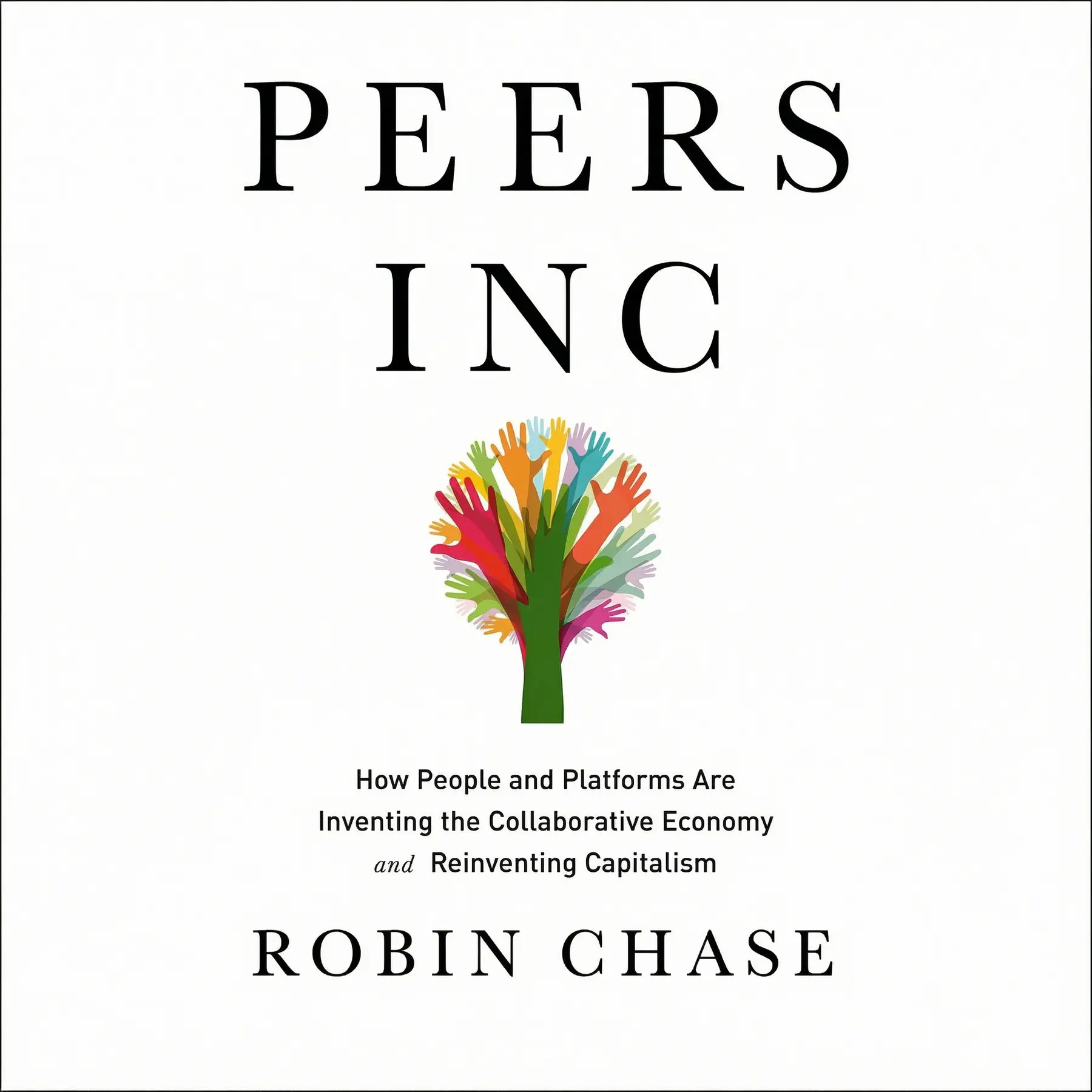
Peers Inc: How People and Platforms Are Inventing the Collaborative Economy and Reinventing Capitalism
By Robin Chase
Explore the revolutionary Peers Inc model, where individual creativity merges with corporate scale. Discover how excess capacity and collaborative platforms are transforming global capitalism, driving innovation, and offering solutions for a sustainable future.
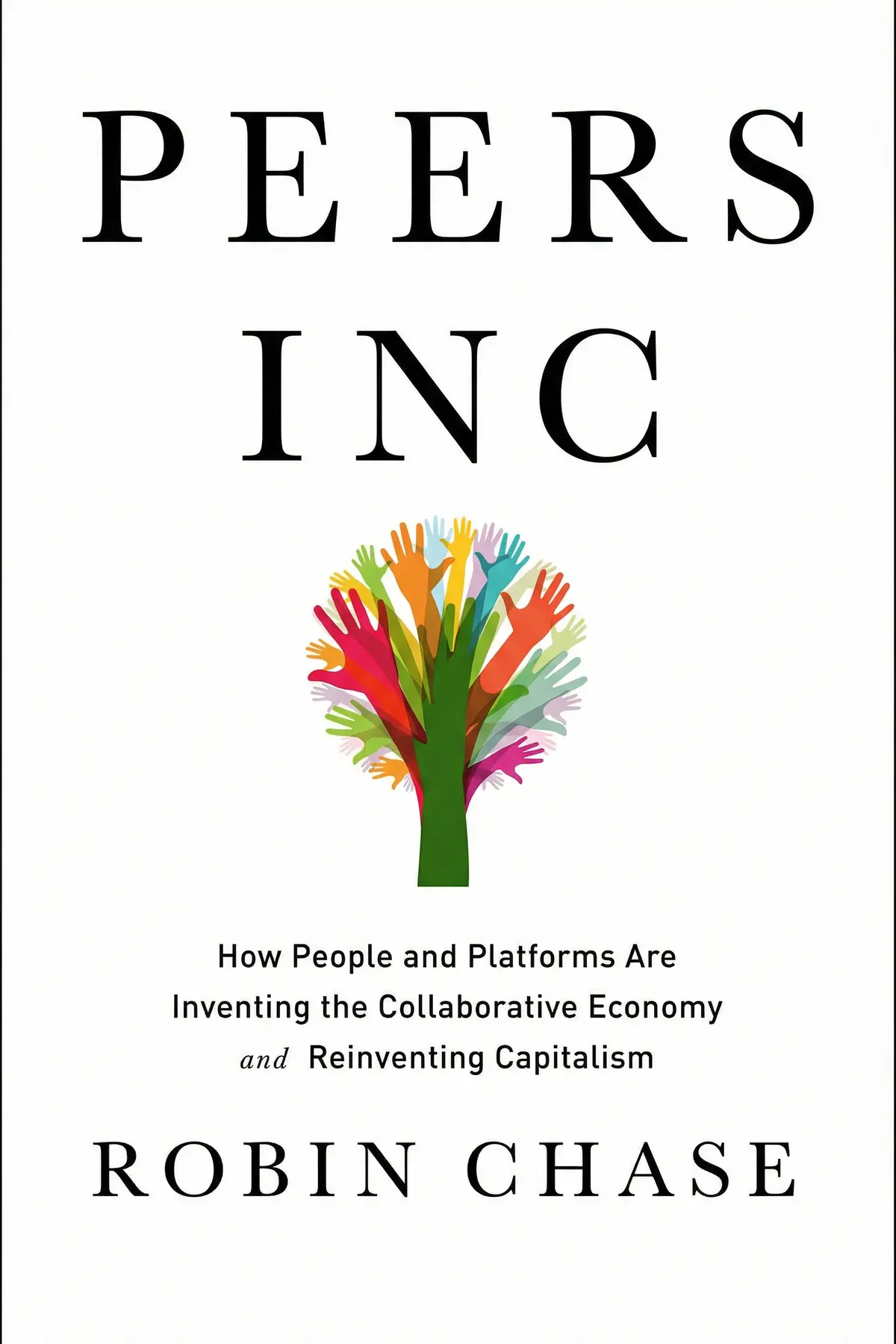
Table of Content
1. Introduction
1 min 38 sec
In our modern era, we are witnessing a fundamental shift in how the world does business. For decades, the dominant economic model was based on top-down control: companies owned assets, produced goods, and sold them to consumers. But this old way of doing things is reaching its limits. We live on a planet with finite resources, yet we are surrounded by things we own but rarely use. From the car sitting in the driveway to the empty guest room in the attic, our lives are full of wasted potential.
Enter a new concept that is redefining our relationship with ownership and commerce. This model, known as Peers Inc, brings together the massive scale of established institutions and the agile, creative energy of individual people. Think of the way companies like Airbnb or Uber have disrupted their industries not by building new hotels or buying fleets of cars, but by creating platforms that allow ordinary people to share what they already have.
This isn’t just about making a little extra money on the side; it’s about a total reinvention of capitalism. It’s about moving from a world of scarcity and hoarding to one of abundance and collaboration. In the following discussion, we will explore how this transition works, why it is so much more efficient than the traditional economy, and how it might just be the key to solving our most daunting global problems, including the looming threat of climate change. By the end, you’ll see how the intersection of corporate infrastructure and human ingenuity is creating a future where everyone has a seat at the table.
2. Unlocking the Power of Excess Capacity
2 min 22 sec
Traditional ownership is surprisingly inefficient, leaving valuable resources idle. Discover how the foundation of the new economy rests on reclaiming this lost value through smart collaboration.
3. Scaling with Intention and Quality Control
2 min 29 sec
Growing a platform too fast can lead to chaos and exploitation. Learn why a measured approach to expansion is crucial for maintaining trust and protecting your community.
4. Choosing the Right Financial Path for Growth
2 min 28 sec
The way a platform is funded determines its ultimate soul and priorities. Explore the trade-offs between private investment, public funding, and the rising power of the crowd.
5. The Role of Government in Spurring Innovation
2 min 14 sec
Innovation doesn’t happen in a vacuum, and sometimes the most helpful thing a government can do is get out of the way—or be so strict that it forces a new solution.
6. Why Global Corporations are Embracing Collaboration
2 min 21 sec
Even the world’s biggest companies are realizing they can’t do it all alone. Discover why the most successful businesses are becoming ‘Network Orchestrators.’
7. A Collaborative Solution to the Climate Crisis
2 min 18 sec
Individual action isn’t enough to save the planet, but peer-based networks offer a powerful way to redesign our systems for a greener, zero-carbon future.
8. Conclusion
1 min 36 sec
As we have explored throughout this journey, the Peers Inc model represents more than just a new way to do business; it is a fundamental restructuring of how we interact with the world and each other. By moving away from the narrow confines of private ownership and toward a culture of shared access and collaboration, we unlock a level of efficiency and creativity that was previously unimaginable. We’ve seen how excess capacity can be turned into an economic engine, how platforms can scale with integrity, and how the right funding can preserve a founder’s vision. We’ve also seen that even the largest corporations and governments have a vital role to play in this ecosystem.
The throughline of this transformation is the idea that we are better together. When a large organization provides the stable infrastructure and an individual peer provides the unique, localized contribution, the resulting value is greater than the sum of its parts. This is a win-win-win scenario: the platform owners find new ways to grow, the peers find new ways to earn and save, and the planet benefits from a more sustainable use of its resources. The transition won’t always be easy, and it requires us to rethink our old habits and regulations, but the rewards are clear. In a world of increasing complexity and shrinking resources, the collaborative economy isn’t just an interesting alternative—it is the essential framework for a prosperous and sustainable future.
About this book
What is this book about?
Peers Inc presents a paradigm shift in how we conceive of business, ownership, and global problem-solving. At its core, the book introduces a hybrid economic model that combines the best of two worlds: the significant resources and scale of large organizations (the Inc) and the diverse, localized, and innovative power of individuals (the Peers). By tapping into excess capacity—assets like spare rooms or idling cars that are currently underutilized—this model creates a more efficient and sustainable way of living. The promise of this collaborative economy is not just about better business; it is about addressing the most pressing challenges of our time, including economic inequality and the climate crisis. Through real-world examples ranging from car-sharing to open-source software, the text explores how these platforms function, how they can be successfully launched, and why they are outperforming traditional business models. Readers will learn how the synergy between institutional infrastructure and peer participation can unlock unprecedented value for everyone involved, paving the way for a more resilient and connected world.
Book Information
About the Author
Robin Chase
Robin Chase is a renowned entrepreneur and the co-founder of Zipcar, which grew to become the largest car-sharing service on the planet. Her expertise in transportation and innovation has led her to serve on the board of the Massachusetts Department of Transportation and contribute to a federal transportation advisory committee. In recognition of her global impact and visionary leadership in the sharing economy, Time magazine named her one of the 100 most influential people in the world in 2009.
Ratings & Reviews
Ratings at a glance
What people think
Listeners find the book an enjoyable read and value the caliber of its material, with one listener describing it as a great 101 on the new business model. The text is praised for its ability to synthesize knowledge, as one listener notes the way it brings together different pieces of information. Listeners also treasure the book's overall influence, with one listener describing it as an optimistic solution to mankind's biggest problems.
Top reviews
Marco
Ever wonder how the collaborative economy could actually save the planet while making us more efficient? Robin Chase presents a truly optimistic solution to some of mankind’s biggest problems by focusing on the concept of excess capacity. It is refreshing to see a cofounder of Zipcar synthesize so much information into a framework that feels both accessible and revolutionary. The idea of 'Peers Inc' isn't just a catchy slogan; it is a viable business model for the future. While some might find her passion for the environment a bit much, I found it to be the heart of the book. The way she bridges the gap between individual creativity and corporate scale is brilliant. This is a great 101 for anyone looking to understand how the internet allows us to work together in ways we never thought possible. It’s a fun read that left me feeling hopeful about our collective future.
Show moreIngrid
Robin Chase is a visionary who truly understands how idle assets can be transformed into massive opportunities for everyone involved. This book is a masterclass in understanding the world of sharing, with a special emphasis on transport that only a Zipcar founder could provide. She argues that when we switch from a buying mentality to a sharing one, the planet wins. It is a simple message, but the way she scales it into the Peers Inc framework is incredibly sophisticated. I loved how she highlighted the 'excess capacity' of our skills and knowledge, not just our cars or spare rooms. The writing is engaging and the tone is consistently optimistic. For those new to the collaborative economy, this is a must-read. It brings together so many different threads of the digital age into one clear, actionable vision. Truly an impactful read for the modern entrepreneur.
Show moreSudarat
Truth is, this is one of the most optimistic solutions to our current climate crisis I’ve encountered in years. Robin Chase doesn't just talk about the problem; she offers a functioning business framework to help solve it. By leveraging excess capacity, we can reduce emissions and make money at the same time. The book is an excellent synthesis of how digital technology allows us to scale individual efforts into global movements. I found it very fun to read and incredibly thought-provoking. Even the chapters on policy were interesting to me, as they show the broader implications of the 'Peers Inc' model. It’s a great 101 for anyone who wants to understand why the world is moving away from ownership. If you're interested in web community startups, this mindset is essential. Highly recommended for those who want to see the big picture of the collaborative economy.
Show moreYaowares
As someone who has always been fascinated by platform-based startups, I found this to be an excellent knowledge synthesis. Chase does a fantastic job of taking disparate pieces of information and stitching them into a cohesive narrative about why owning things is becoming obsolete. The book is cleverly divided into the building blocks of excess capacity and the actual execution of those ideas. Truth is, building a platform is an incredibly difficult endeavor, and while this doesn't offer a step-by-step manual, it provides a vital mindset shift. I particularly enjoyed the sections on crowdfunding and how it empowers the 'peer' side of the equation. However, I did find the chapters on government policy and universal health care to be a bit of a detour. They felt out of place in a book that was primarily about business models and transportation innovation. Still, the quality of the content is high.
Show moreLevi
Finally got around to reading this after it was recommended on a tech blog, and I have to say it’s a great 101 on the new business model. Chase provides a really useful organizational framework for anyone interested in creating a web platform. The case studies are varied, though I agree with other reviewers that some examples are starting to feel a bit dated. What stands out is her ability to explain how small peers can do things that large corporations simply can’t. The synthesis of information regarding equity-based crowdfunding was particularly useful for my own startup research. To be fair, the book does get a bit preachy toward the end regarding environmental issues, but her passion is contagious. It’s a solid four-star read for the way it redefines our relationship with stuff. Just don't expect a technical manual; it's more about the philosophy of the platform.
Show moreOat
To be fair, the book does a remarkable job of stitching together disparate threads of information into a cohesive narrative. Robin Chase uses her experience with Zipcar to explain how the combination of institutional power and peer participation creates something entirely new. I found the content quality to be high, even if I didn't agree with every one of her political conclusions. The idea that everyone wins when we share resources is compelling and well-argued. My only real gripe is that the book ignores the downsides of the shared economy, specifically regarding the erosion of worker rights. She mentions it briefly at the end, but it deserved more focus. Regardless, the book is fun to read and provides a very helpful framework for understanding how the internet is changing collaboration. It is a very insightful account of the modern sharing landscape.
Show moreYulia
Seven years is an absolute eternity in the world of technology and startups. Picking this up today, I found that many of the examples provided now feel like ancient history, which is a shame because the core message is still quite relevant. To be fair, if I had read this alongside titles like Macrowikinomics when it first debuted, I probably would have been more impressed by the foresight. The book does a solid job explaining the sharing mentality, yet it often wanders into territory that feels a bit naive regarding actual business execution. I appreciated the discussion on how the peer economy can become a victim of capitalization, but the author's tone occasionally comes across as slightly elitist. It’s a decent overview, but it lacks the academic rigor I was expecting from someone with her level of industry access. Not a bad read, but definitely showing its age.
Show moreWatcharee
The central premise of leveraging excess capacity—what Chase calls the 'Peers Inc' model—is undeniably brilliant, yet the execution details feel a bit thin. I wanted to love this because I’ve heard her speak before, but the book feels a bit far-fetched in its grander ambitions. For example, she paints a beautiful picture of a peer-led future but fails to address pressing social concerns like the lack of a safety net for gig workers. In my experience, these platform-based structures can be necessary evils rather than the pure utopia she describes. The chapters on climate change were interesting, but they dragged the overall pace down. It’s a good book for a general overview, especially if you use services like Blinkist to get the highlights, but it lacks the deep-dive business analysis I was craving. It’s a bit too much 'big ideas' and not enough 'how-to'.
Show morePim
Not what I expected from the cofounder of Zipcar, as the tone frequently veers into something that feels a bit elitist and naive. While I appreciated her insight into the transport sector, her broader observations on the sharing economy felt like they were written from a bubble. She has a great slogan in 'Peers Inc,' but the book often prioritizes her own personal views over academic rigor. The discussion on climate change was fine, but it felt like she was trying to solve the world's problems without a clear plan for execution. Frankly, the book is at its best when it sticks to the mechanics of excess capacity and building blocks. When it starts lecturing on government policy, it loses its way. It's a decent read for the core business concepts, but you have to filter out a lot of the 'preaching and pleading' to get to the gems.
Show moreNoo
Look, I came here for a business book about the sharing economy, not a manifesto on climate change and government policy. While the first few chapters on how Zipcar leveraged idle assets were insightful, the book quickly devolved into preaching. To be frank, the research felt weak when it came to backing up her more radical social claims. She describes a model that would further erode our privacy as individuals, which she mostly brushes aside. It felt like she didn't fully grasp the complex social issues like health care that she tried to tackle in the later chapters. Instead of a rigorous analysis of the Peers Inc model, we get a lot of pleading for a greener world. The passion is admirable, but the execution of the book is messy. I wanted more data and fewer personal views. It was a frustrating experience for what could have been a great case study.
Show moreReaders also enjoyed

Alibaba: The House That Jack Ma Built
Duncan Clark

1929: Inside the Greatest Crash in Wall Street History--and How It
Andrew Ross Sorkin
23 Things They Don’t Tell You About Capitalism
Ha-Joon Chang

A Little History of Economics
Niall Kishtainy
AUDIO SUMMARY AVAILABLE
Listen to Peers Inc in 15 minutes
Get the key ideas from Peers Inc by Robin Chase, plus 5,000+ more titles in English and Thai.
- 5,000+ titles
- Listen as much as you want
- 7-day free trial
- Cancel anytime







