
18 min 27 sec
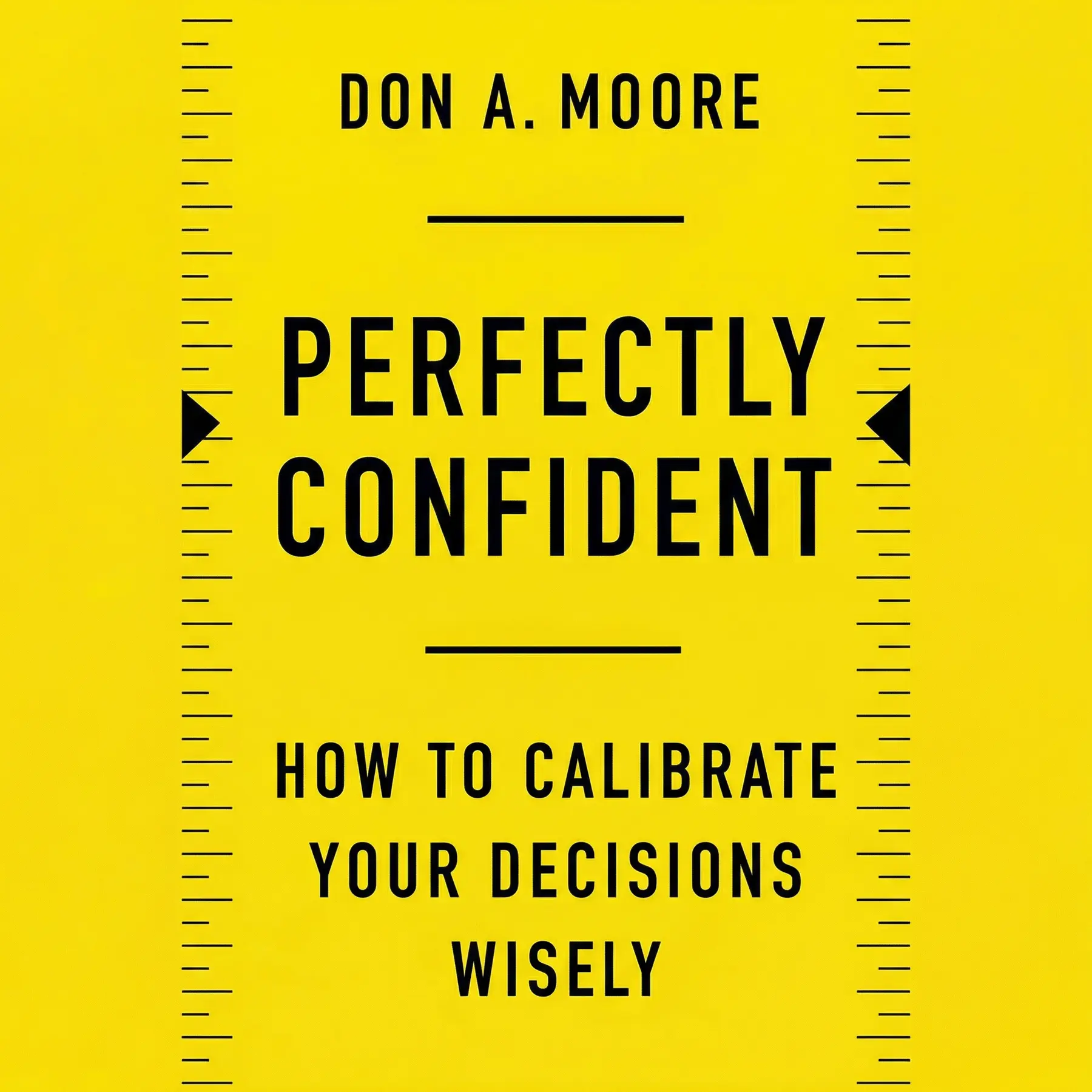
Perfectly Confident: How to Calibrate Your Decisions Wisely
By Don A. Moore
Perfectly Confident explores the science of self-calibration, teaching you how to avoid the pitfalls of overestimation and underestimation to make smarter decisions and build authentic, lasting influence in any field.
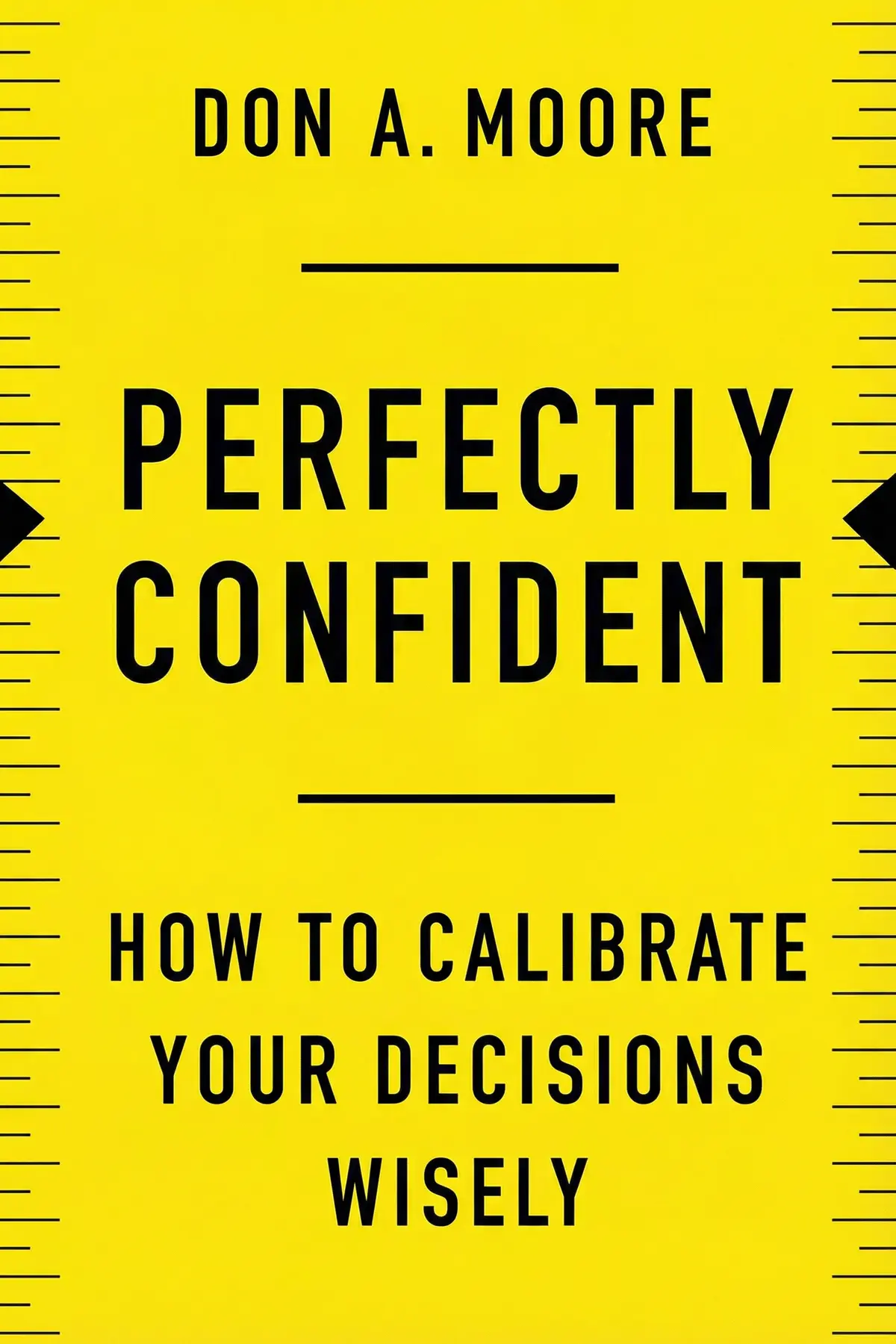
Table of Content
1. Introduction
1 min 29 sec
In our fast-paced world, we are often told that confidence is the secret ingredient to success. From motivational speakers to leadership gurus, the message is almost always the same: believe in yourself more, and the rest will follow. We’re taught that if we can just project enough certainty, we’ll win the promotion, close the deal, or inspire the team. But there’s a quiet danger in this advice. When confidence becomes untethered from reality, it stops being a tool for success and starts becoming a liability.
What if the goal shouldn’t be to maximize our confidence, but to calibrate it? Think of it like a precision instrument. If a scale isn’t calibrated correctly, it gives you the wrong weight every time, leading to bad decisions about your health or your cooking. Our self-confidence works the same way. If it’s too high, we take risks we shouldn’t. If it’s too low, we miss out on opportunities we’re actually ready for. This is where the concept of being perfectly confident comes into play.
In this exploration, we’re going to look at why finding that sweet spot is the most important skill you can develop for your career and your personal life. We’ll examine the psychological traps that lead to overconfidence, the social comparisons that trigger underconfidence, and the practical tools you can use to see the world—and yourself—more clearly. By the time we’re done, you’ll understand that the most effective leaders aren’t the ones who claim to have all the answers; they are the ones who know exactly how much they know and are brave enough to admit what they don’t.
2. The Hidden Costs of Excessive Belief
2 min 26 sec
Discover why unwavering self-belief can be a dangerous trap, leading to poor decisions and missed goals rather than the success we expect.
3. Overcoming the Mirage of Incompetence
2 min 07 sec
Unpack the psychology of underconfidence and why we often feel less capable than others simply because we can’t see their internal struggles.
4. Forecasting with a Lens of Uncertainty
1 min 54 sec
Learn to make better decisions by moving away from binary predictions and embracing the power of ranges and probabilities.
5. The Power of Comparative Choices
1 min 51 sec
Explore why asking ‘which’ instead of ‘whether’ can dramatically improve the quality of your decisions and reduce bias.
6. Tapping into the Intelligence of the Crowd
2 min 22 sec
Discover why disagreement is a vital tool for accuracy and how a diverse group of opinions often outperforms a single expert.
7. Distinguishing Confidence from Competence
2 min 09 sec
Uncover the difference between true authority and mere bluster, and learn why honesty about what you don’t know builds real trust.
8. The Architecture of a Calibrated Leader
2 min 26 sec
See how effective leadership depends on setting clear, measurable standards and creating a culture that welcomes difficult truths.
9. Conclusion
1 min 43 sec
As we wrap up this journey into the science of confidence, it’s worth reflecting on the core lesson: the most valuable form of self-belief is the one that is most aligned with the truth. We’ve seen how overconfidence can blind us to risks and how underconfidence can trap us in a cycle of unnecessary self-doubt. The path forward is not about choosing one over the other, but about constant, mindful calibration.
Confidence is not a static trait that you either have or you don’t. It is a dynamic process of evaluating your skills, gathering diverse perspectives, and being honest about the probabilities of the future. It’s about having the courage to say ‘I don’t know’ when you are uncertain, and the strength to stand firm when the evidence is on your side. When you master this balance, you stop trying to project an image of success and start making the actual decisions that lead to it.
To put these ideas into practice immediately, try starting a ‘forecast journal.’ The next time you face a significant deadline or a complex decision, don’t just pick a date or an outcome. Write down a range of possibilities and assign a percentage to each one. As the situation unfolds, go back and see how close you were. Over time, you’ll start to see patterns in your own judgment. You might discover you’re an optimist who consistently underestimates how long tasks take, or a pessimist who underestimates your own efficiency. This simple habit is the first step toward achieving a state of perfect confidence—where your belief in yourself is no longer a guess, but a well-earned reflection of your actual ability. By choosing accuracy over bravado, you don’t just become a better decision-maker; you become a person that others can truly rely on.
About this book
What is this book about?
Have you ever felt the pressure to project absolute certainty, even when you weren't sure of the outcome? Many of us are taught that confidence is the ultimate key to success, but the reality is far more nuanced. Perfectly Confident challenges the popular notion that 'more is always better' when it comes to self-belief. Instead, it argues for a meticulously calibrated middle ground where your confidence perfectly matches your actual abilities. Drawing on psychological research and real-world examples ranging from financial crises to elite sports, the book promises to help you dismantle the myths of bravado. You will learn how to use the 'wisdom of the crowd' to sharpen your own judgment, how to forecast the future using mathematical probability rather than gut feelings, and why acknowledging your limitations can actually make you more trustworthy. By the end, you'll have a roadmap for making better decisions and leading others with a level of authority that is both grounded and unshakable.
Book Information
About the Author
Don A. Moore
Don A. Moore is a distinguished professor at the University of California, Berkeley’s Haas School of Business. As an expert in decision-making and negotiations, he has shared his insights through consulting and lecturing for various organizations. Moore is the coauthor of a respected textbook on managerial decision-making and is a frequent contributor to major media outlets, including the Wall Street Journal, Fortune, and the Harvard Business Review.
Ratings & Reviews
Ratings at a glance
What people think
Listeners find the book to be highly readable and value the superb examples gathered from a variety of disciplines. The quality of information is well-regarded, with one listener mentioning that it features insightful anecdotes from the realms of business and politics.
Top reviews
Katya
Finally, a book that addresses imposter syndrome without the usual 'fake it till you make it' fluff. As someone who has always struggled with second-guessing every choice, Moore’s breakdown of underconfidence was incredibly eye-opening. The book uses research to show that being too cautious is just as damaging as being too bold. I loved the business cases he used to illustrate how leaders can create better team dynamics by being open to dissenting views. It’s a beautifully written guide that feels both authoritative and accessible. The way he explains probabilities in everyday decisions has changed how I approach my morning meetings. It is a must-read for any aspiring leader or manager.
Show moreWorawit
Wow, the research in this is just stellar. It is so rare to find a 'business' book that is actually backed by hard data instead of just some CEO’s intuition. Moore explains that the consequences of a bad choice should dictate your level of caution—using the analogy of flying an airplane versus making a new friend. This simple framework for 'erring on the side of caution' when stakes are high is something I’ll be using daily. Not gonna lie, I was skeptical at first, but the depth of the anecdotes really sold me. It’s one of those books that you’ll want to keep on your desk to reference whenever you’re facing a big fork in the road.
Show moreHiroshi
Don Moore delivers a refreshing, evidence-based take on a topic usually drowned in toxic positivity. Instead of the typical 'just believe in yourself' rhetoric, he dives into the messy reality of how our brains miscalculate risk. The examples from political history and business boardrooms provide a grounded context that makes the data feel much more applicable. Truth is, I appreciated the nuanced distinction between overconfidence and the paralyzing effects of underconfidence. It isn’t just a pep talk; it’s a toolkit for rational calibration. While some sections felt a bit academic, the payoff for those interested in decision science is massive. Highly recommended if you liked Superforecasting or other research-heavy non-fiction.
Show moreMason
After hearing about the 'calibration' concept on a podcast, I picked this up expecting a dry textbook but was pleasantly surprised. The author is clearly an expert, and his ability to weave together psychological studies with real-world political drama is impressive. He doesn't just tell you to be confident; he shows you how to be correctly confident. The strategies for avoiding confirmation bias, like the pre-mortem review, are worth the price of admission alone. My only gripe is that it feels a bit long-winded in the middle chapters where the anecdotes start to overlap. Still, for anyone serious about improving their decision-making process, this is a very solid and helpful addition to your shelf.
Show moreLek
Picked this up because I wanted to understand why I always underestimate how long a project will take. Moore’s explanation of the 'planning fallacy' and how our own egos get in the way of realistic timelines was spot on. The book provides a great middle ground between the paralyzing fear of failure and the reckless abandon of 'just believing.' I especially liked the part about acknowledging the rarity of self-fulfilling prophecies. It’s a grounded, rational look at a topic that is usually treated with way too much emotion. The prose is clear, the examples are diverse, and the takeaways are actionable. A very strong four-star read that I would recommend to colleagues.
Show moreMethinee
Look, we all know that guy who is always wrong but never in doubt—this book is essentially a manual on how to not be that person. Moore gives us a masterclass in intellectual humility. By focusing on 'calibration' rather than just 'confidence,' he changes the entire conversation about success. I found the chapter on collective decision-making particularly useful for my own work environment. It highlights the importance of seeking out dissenting opinions to fill in our own blind spots. While it could have been tighter in some areas, the quality of the information is top-tier. It's a pragmatic, evidence-based approach to living a more rational and effective life.
Show moreErn
Ever wonder why some people succeed despite being totally wrong? Moore tackles the mechanics of overconfidence with a level of rigor you don't often see in the self-help aisle. He argues that real confidence must be built on a foundation of competence, which sounds like a cliché, yet he explains it through fascinating experiments. I particularly enjoyed the section on how to use 'outside perspectives' to avoid the trap of overvaluing local information. To be fair, the pacing is inconsistent. I felt the author spent too much time on personal stories that didn't add much to the core data. It's a solid 3-star read that offers decent value but requires a lot of patience to finish.
Show moreNitaya
To be fair, the insights regarding 'betting against yourself' to test your own logic are brilliant. Moore suggests that if you aren't willing to put money on your prediction, you probably don't believe it as much as you think you do. This kind of practical advice is what keeps the book afloat. However, the book repeats a lot of truisms that felt like common sense to me. 'Skills build confidence, but not the other way around' is a recurring theme that didn't need ten chapters of explanation. In my experience, the first half is much stronger than the second. It’s a decent guide for the uninitiated, but seasoned readers of behavioral economics might find it redundant.
Show moreEleanor
This could have been a brilliant 30-page essay, but instead, it’s a repetitive 200-page slog. While the core message about calibrating your internal 'confidence meter' is vital, Moore tends to circle the same points until they lose their impact. Honestly, the writing feels a bit dry compared to the heavy hitters in this genre. I found myself skimming through the endless anecdotes about half-way through the book. If you've already read Thinking, Fast and Slow, you might find a lot of this territory already well-trodden. There are some gems here regarding the 'pre-mortem' strategy, but they are buried under layers of filler that simply didn't need to be there for the average reader.
Show moreWeera
I really wanted to love this because the premise is so important for modern life. Unfortunately, the execution falls flat for me. The writing is sluggish and lacks the punch found in similar books like Superforecasting or even Atomic Habits. Moore spends an exhaustive amount of time rehashing the idea that overconfidence is dangerous, which most people picking up this book probably already know. The 'tools' provided are okay, but they felt a bit buried in academic jargon and long-winded stories about the author's colleagues. It’s not that the information is bad—it’s just poorly packaged. If you’re a fan of dense, research-heavy texts, you might enjoy it, but I struggled to stay engaged.
Show moreReaders also enjoyed
A Liberated Mind: How to Pivot Toward What Matters
Steven C. Hayes
Acting with Power: Why We Are More Powerful Than We Believe
Deborah Gruenfeld
Age of Propaganda: The Everyday Use and Abuse of Persuasion
Anthony Pratkanis
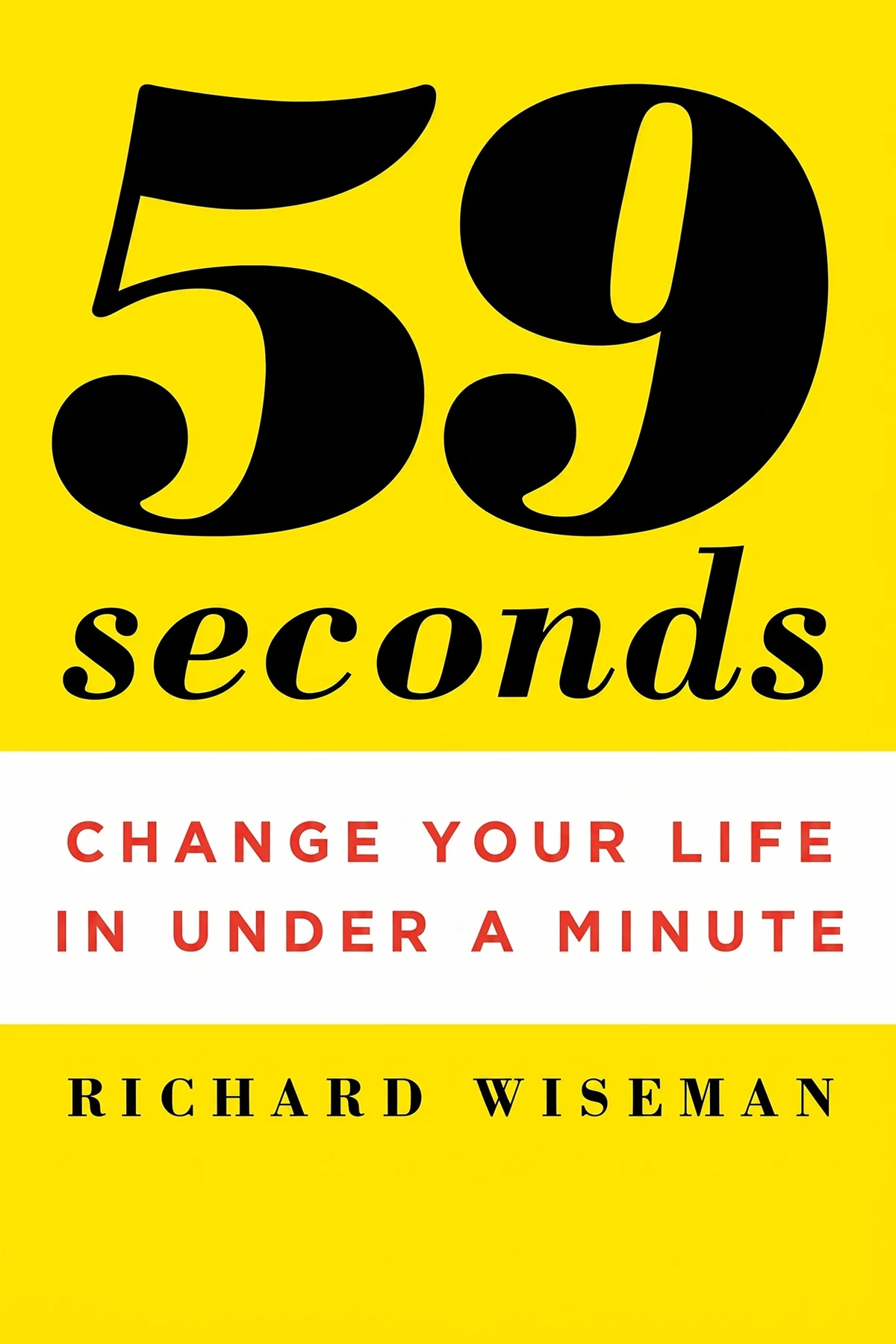
59 Seconds: Change Your Life in Under a Minute
Richard Wiseman
AUDIO SUMMARY AVAILABLE
Listen to Perfectly Confident in 15 minutes
Get the key ideas from Perfectly Confident by Don A. Moore, plus 5,000+ more titles in English and Thai.
- 5,000+ titles
- Listen as much as you want
- 7-day free trial
- Cancel anytime







