
Abundance: The Inner Path to Wealth
Deepak Chopra
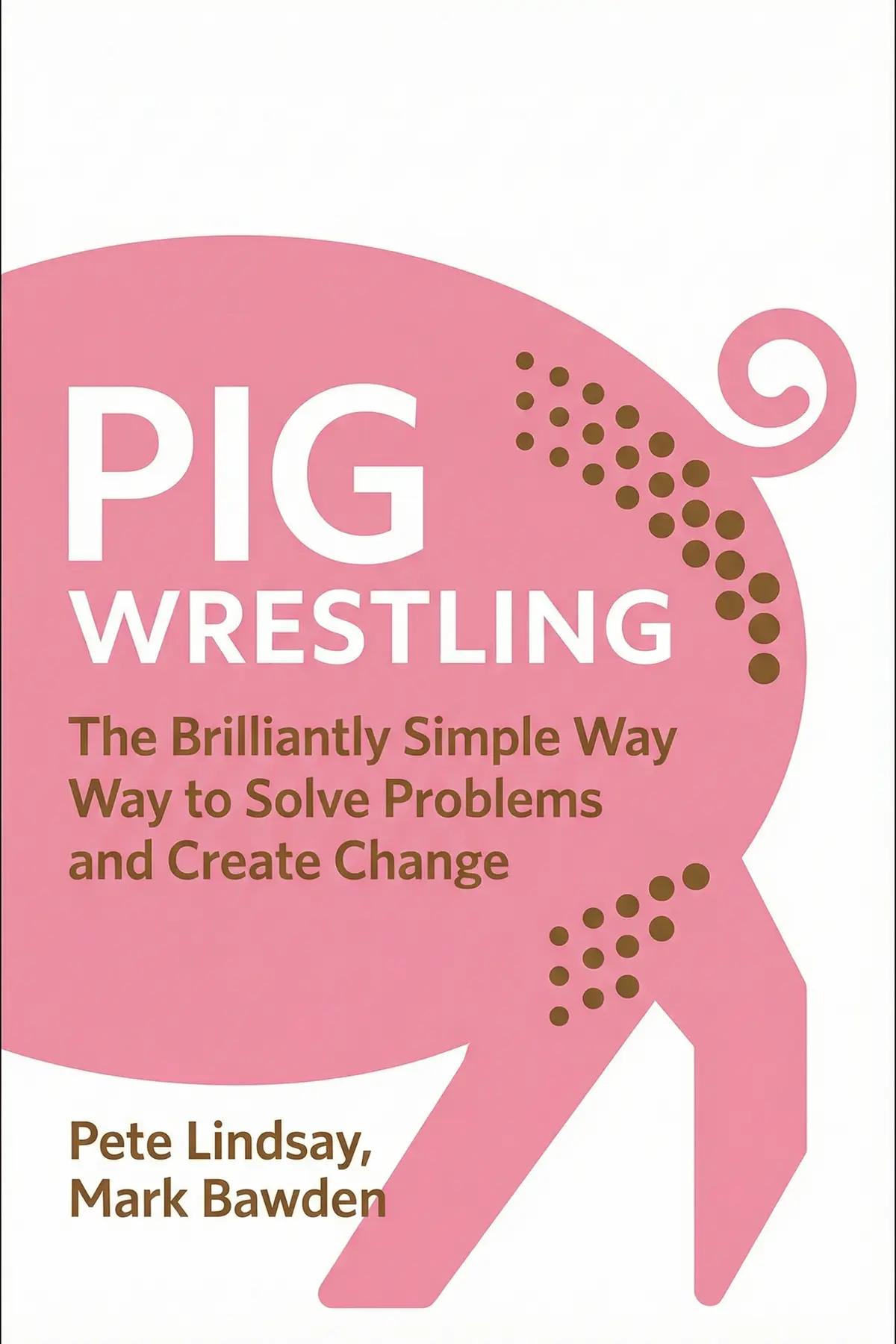
Pig Wrestling introduces a clever framework for solving stubborn problems by shifting focus away from the issue itself and toward the way we perceive, frame, and inadvertently maintain our most difficult challenges.
1 min 32 sec
We’ve all been there—trapped in a situation that feels like a loop. You’ve identified a problem, you’ve analyzed it from every angle, and you’ve deployed every solution in your arsenal. Yet, despite your best efforts, the situation remains stubbornly unchanged. It’s exhausting, it’s demoralizing, and it often leads us to believe that the problem is simply unsolvable or that we lack the necessary skill to handle it. But what if the issue isn’t your capability? What if the reason you’re stuck is simply that you’re wrestling with a pig?
The central metaphor of this journey is that trying to solve a poorly defined problem is exactly like trying to out-wrestle a pig in a mud pit. You get covered in grime, you end up completely drained, and after all that work, the pig is still there—and worse, it probably enjoyed the struggle. This summary explores a different path: Problem Cleaning. Instead of jumping straight into the mud to fight for a solution, we’re going to learn how to step back and look at the environment, the definitions, and the hidden structures that keep difficulties alive.
Through the story of a young manager seeking answers in a bustling business hub called the Collective, we will explore the ‘Pig Pen’ framework. This isn’t just a list of tips; it’s a total shift in mindset that asks you to stop fixing and start perceiving. By the time we’re finished, you’ll have a new set of lenses through which to view your professional and personal hurdles, allowing you to find simple, elegant ways forward that were invisible to you before. Let’s begin by looking at why we get stuck in the first place.
2 min 10 sec
Discover why your hardest efforts often lead to zero progress and how to recognize when you are stuck in a cycle of useless struggle with a ‘pig’ of a problem.
2 min 46 sec
Learn how to stop your impulsive reactions and use three specific mental tools to ensure you are actually focusing on the right issues.
2 min 35 sec
Understand how your previous attempts to help might be the very thing keeping the problem alive, and how to use a ‘Crystal Ball’ to find a better target.
2 min 22 sec
Shift your focus from what’s going wrong to the ‘Gold Nuggets’ of what’s going right, and learn how the environment acts as a ‘Pink Bungee Cord’.
2 min 50 sec
See how ‘bad’ behaviors can be recycled into useful energy and learn to spot the warning signs of imaginary problems and perfectionism.
1 min 31 sec
As we reach the end of our journey through the Pig Pen, the most important takeaway is that change doesn’t have to be a battle. The exhaustion we feel when facing stubborn problems is usually a sign that we’ve jumped into the mud too soon. By applying the principles of Problem Cleaning—pausing to get your ‘foot on the fence,’ re-evaluating your ‘picture frame,’ and scrubbing away unhelpful stories—you gain a level of clarity that makes action almost effortless.
Remember to look for the ‘Gold Nuggets’ that prove success is already happening, and pay close attention to the ‘Pink Bungee Cords’ of your environment. Often, a small shift in where or how a task is performed is more effective than a thousand hours of coaching. And finally, look at the people around you with a ‘recycling’ mindset. See their difficult traits as strengths in disguise, and guide that energy toward a productive goal.
The next time you find yourself feeling drained by a persistent issue, stop. Take a breath. Ask yourself: Am I wrestling a pig? If the answer is yes, step out of the mud. Clean the problem. Look at the context. Define the outcome you want through your crystal ball. You might just find that the gate was open the whole time, and the path to progress was much smoother than you ever imagined. Thank you for listening to this BookBits summary of Pig Wrestling. We hope these tools help you navigate your next challenge with ease and insight.
Have you ever felt like you were banging your head against a wall, trying every possible solution to a problem only to find yourself exactly where you started? Pig Wrestling suggests that the reason we get stuck isn't that we lack the right answers, but that we are often trying to solve the wrong problems. Through a narrative allegory involving a frustrated manager and a wise barista, the book introduces the Pig Pen framework—a set of mental tools designed to 'clean' a problem before you ever try to fix it. The promise of this approach is that most problems aren't as complex as they seem; they are simply obscured by bad framing, unhelpful stories, and environmental triggers. By learning to step back, re-evaluate your definitions, and look for 'gold nuggets' of success that already exist, you can stop the exhausting cycle of wrestling with difficulties. This guide provides a step-by-step method for identifying the 'pink bungee cords' that hold problems in place and finding more elegant, less stressful paths toward meaningful change in both business and life.
Pete Lindsay, PhD, is a performance psychologist and the cofounder of Mindflick, a consultancy that applies psychological principles to the worlds of business and high-level sport. He previously served as the head of psychology at the English Institute of Sport. Mark Bawden, PhD, also cofounded Mindflick and brings a wealth of experience from the elite sports arena, having served as the head psychologist for Team GB during the London 2012 Olympic Games.
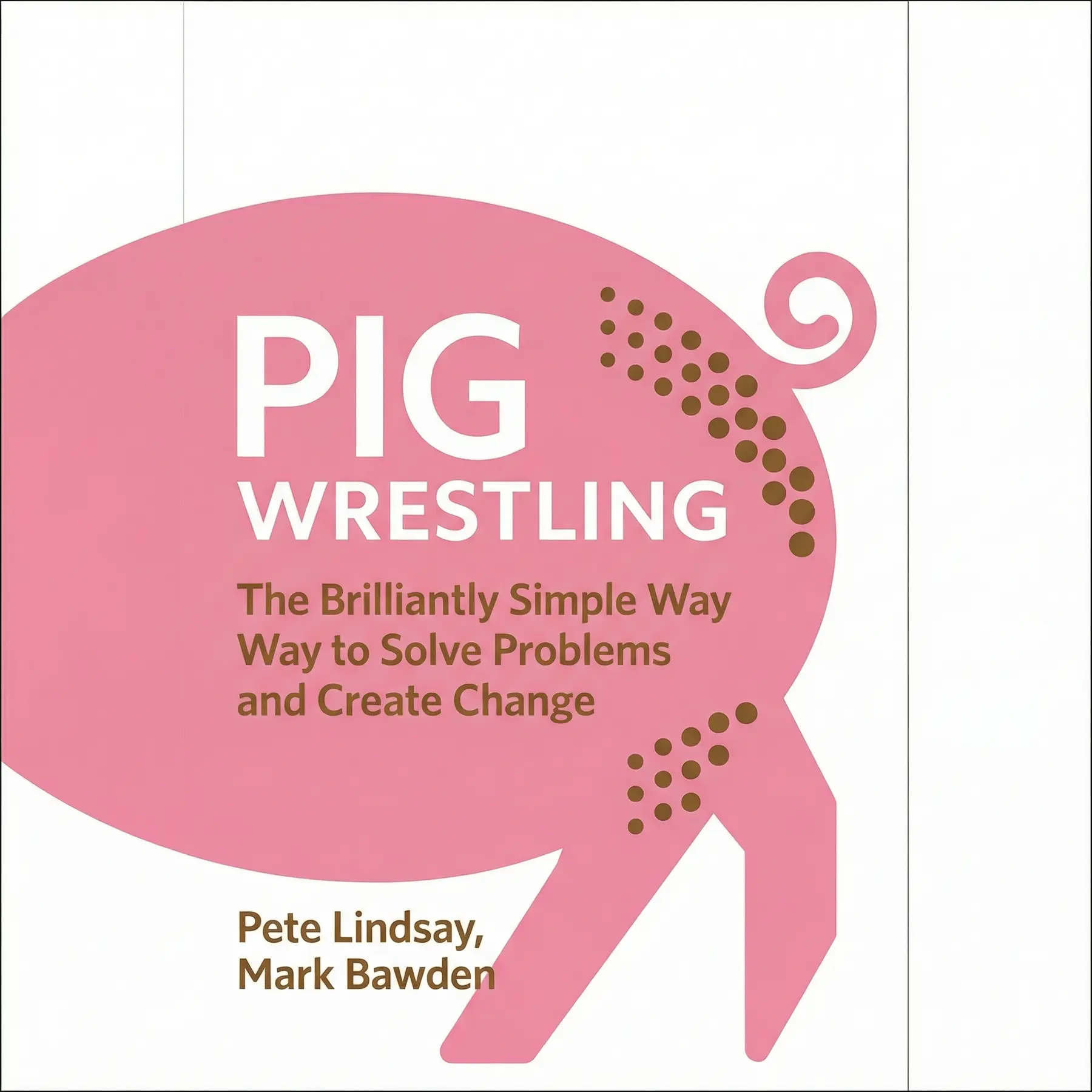
Listeners find that *Pig Wrestling* offers a non-traditional method for tackling problems, even if reactions to the fable-based narrative style are mixed. Those who listen value the integration of "memory palace" strategies and bizarre mnemonic devices, which many report are effective for remembering key ideas such as setting boundaries and reframing issues. Additionally, they praise the material for being a fast, easy-to-digest listen that translates sophisticated psychological theories into simple terms for everyone. The utility of the guidance is also highlighted, with one listener observing that the work’s distinct narrative approach "smuggles learning" straight into the mind.
Picked this up during a particularly stressful week at the office and it was exactly what I needed to reset. The concept of 'pig wrestling' sounds silly at first, but once you dive into the story of the Young Manager and the Barista, the logic really starts to click. I loved the memory palace technique; having those vivid, surreal images like the pig in the picture frame makes the steps actually stick in your brain long after you close the cover. Usually, business books are a dry, repetitive slog, but this felt like a quick journey that 'smuggles' in heavy psychology without the academic jargon. To be fair, the fable format isn't for everyone, and some might find the dialogue a bit staged. Regardless, the practical shift in perspective is worth it. I’ve already told two colleagues that certain projects aren't their pigs to wrestle. It is a total game-changer for professional boundaries.
Show moreWow, I didn't think a book about pigs would help me handle my family drama, but here we are. While it's marketed for business, the 'not your pig to wrestle' mantra is incredibly applicable to personal boundaries and toxic dynamics. The authors use a quirky story to explain why we get stuck in loops, and the visual of the red plastic bucket and the feeding trough really helped the lessons sink in. Personally, I struggle with 'premature evaluation,' and seeing it laid out in such a surreal, memorable way helped me catch myself in the act this morning. It’s rare to find a book that simplifies complex behavioral science into something you can actually use while standing in line for coffee. Short, punchy, and genuinely transformative if you're willing to embrace the weirdness of the metaphors. Highly recommended for anyone feeling overwhelmed by 'stubborn' problems.
Show moreEver wonder why some problems just seem to follow you around no matter how hard you try to fix them? This book explains exactly why, and it does so in the most engaging way possible. By using a surreal story and vivid imagery, the authors ensure the lessons aren't just understood, but ingrained. I loved the shift from 'wrestling' to 'framing.' It’s a subtle change. It makes a massive difference. The memory palace technique is brilliant; I can still see the whole pig pen setup in my mind’s eye right now. This isn't just another business book filled with fluff; it’s a practical manual for mental clarity. I’ve already bought a couple of extra copies for my team to help us stop over-analyzing the wrong things. It’s that good.
Show moreAfter hearing a lot of buzz about this one, I decided to give the 'pig' a go. The genius of this book lies in its simplicity and the use of the ancient memory palace technique to ensure you don't forget the framework. By attaching concepts like 'gold nuggets' and 'capability assessment errors' to bizarre visual cues, Lindsay and Bawden have created something far more memorable than a standard 10-step list. I especially liked the section on identifying when a problem doesn't occur, which is a nuance most of us overlook in the heat of a crisis. Look, the storytelling is definitely a bit cheesy and the Young Manager feels more like a vessel for the reader than a real person, but that's standard for this genre. It’s a solid tool for anyone looking to clean up their thinking and stop over-complicating their professional hurdles.
Show moreFinally got around to reading this and I’m pleasantly surprised by how much I remembered a week later. The whole 'memory palace' thing actually works! I can still picture the pig pen and the crystal ball vividly. The book focuses on reframing how we see problems. It pushes us to stop wrestling the 'pig'—the messy, unsolvable part—and start looking for the frame. It’s a very fast read. I finished it in two sittings, which is perfect for busy schedules. My only gripe is that the dialogue in the fable feels a little stiff and unrealistic at times. Truth is, you’re here for the mental framework, not the prose. If you want a fresh way to approach team conflicts or project bottlenecks, this is a worthy addition to your shelf. It’s simple. It's effective. It stays with you.
Show moreAs someone who has spent years in management, I've seen every problem-solving model under the sun, but this one stands out for its delivery. Instead of a dry PowerPoint-style lecture, you get a 'hero’s journey' through a repurposed power station called The Collective. It’s a smart way of leveraging neurological firepower to make learning stick. I found the concept of 'gold nuggets'—noticing the exceptions to the problem—to be the most valuable takeaway. The book is short enough that you don't feel like your time is being wasted, though I will say some of the mnemonics feel a bit clunky toward the end. Gotta say, it's much better than the standard corporate self-help fare. It encourages you to throw away old assumptions and actually look at the source of the mess rather than the symptoms.
Show moreThe advice regarding boundary-setting was the highlight for me, though the rest of the fable felt a little repetitive. I liked the premise of the Young Manager visiting different mentors, but the story was so thin it felt like it was just there to pad the page count. To be fair, the psychological principles like 'fundamental attribution error' are explained well for a general audience. It's a great read if you've never read a book on systems thinking or cognitive biases before. If you're already familiar with those topics, you might find yourself skimming through the fable to get to the actual meat. It's a solid 4-star read for me because it is useful, even if it's not entirely earth-shattering. The pig metaphor is catchy, and the 'crystal ball' section gave me a lot to think about regarding future-proofing my projects.
Show moreIs this a management manual or a dream sequence? In my experience, it’s a bit of both. The fable of the Young Manager and the various quirky characters he meets is definitely unconventional, but it serves the purpose of making the advice stick. I particularly appreciated the focus on 'confirmation bias'—how we only see what we expect to see. The book is quite short, which makes it accessible, but I did find the ending a little abrupt. It leaves you wanting a bit more concrete 'how-to' after the story concludes. However, the core message about not taking on problems that aren't yours is worth the price of admission alone. Most workplace stress comes from 'pigs' that we shouldn't even be in the pen with. A solid, thought-provoking read for anyone in a leadership role.
Show moreNot what I expected when I saw the cover, but I appreciate the effort to make problem-solving less clinical. While the authors use a fable to illustrate their points, I found the narrative about 'The Collective' and the constant traveling between departments a bit tedious for such a short book. Many of the core ideas—like confirmation bias and reframing—will be familiar to anyone who’s dipped a toe into pop psychology. That said, the mnemonic device involving the pig pen and the soapy bucket is clever for retention. Frankly, I’m not sure I’ll be using the phrase 'pig wrestling' in a boardroom anytime soon without getting some weird looks from my boss. It’s a decent introductory text for beginners, but seasoned managers might find it a bit light on new substance. Still, it's a fast read if you need a quick mental reset.
Show moreThis book isn’t very long, but it managed to feel like a total slog. I found the 'fable' structure incredibly patronizing, as if the reader couldn't handle the psychology without a fairy tale about a barista and a 'Young Manager' to hold their hand. The constant summaries and bullet points on the character's tablet felt forced and broke whatever immersion the story tried to build. Most of the advice boils down to 'think outside the box' and 'don't take on other people's problems,' which isn't exactly groundbreaking stuff. Not gonna lie, I was hoping for deep, actionable strategies, but instead, I got a collection of buzzwords and a weird picture of a pig in a frame. If you like the 'Who Moved My Cheese?' style of business books, you might enjoy this, but for me, it was a frustrating experience that lacked real depth.
Show moreDeepak Chopra
Deborah Gruenfeld
Mike Michalowicz
Richard Wiseman
Hamilton Helmer
AUDIO SUMMARY AVAILABLE
Get the key ideas from Pig Wrestling by Pete Lindsay, plus 5,000+ more titles in English and Thai.







