
All In: How Great Leaders Build Unstoppable Teams
Mike Michalowicz
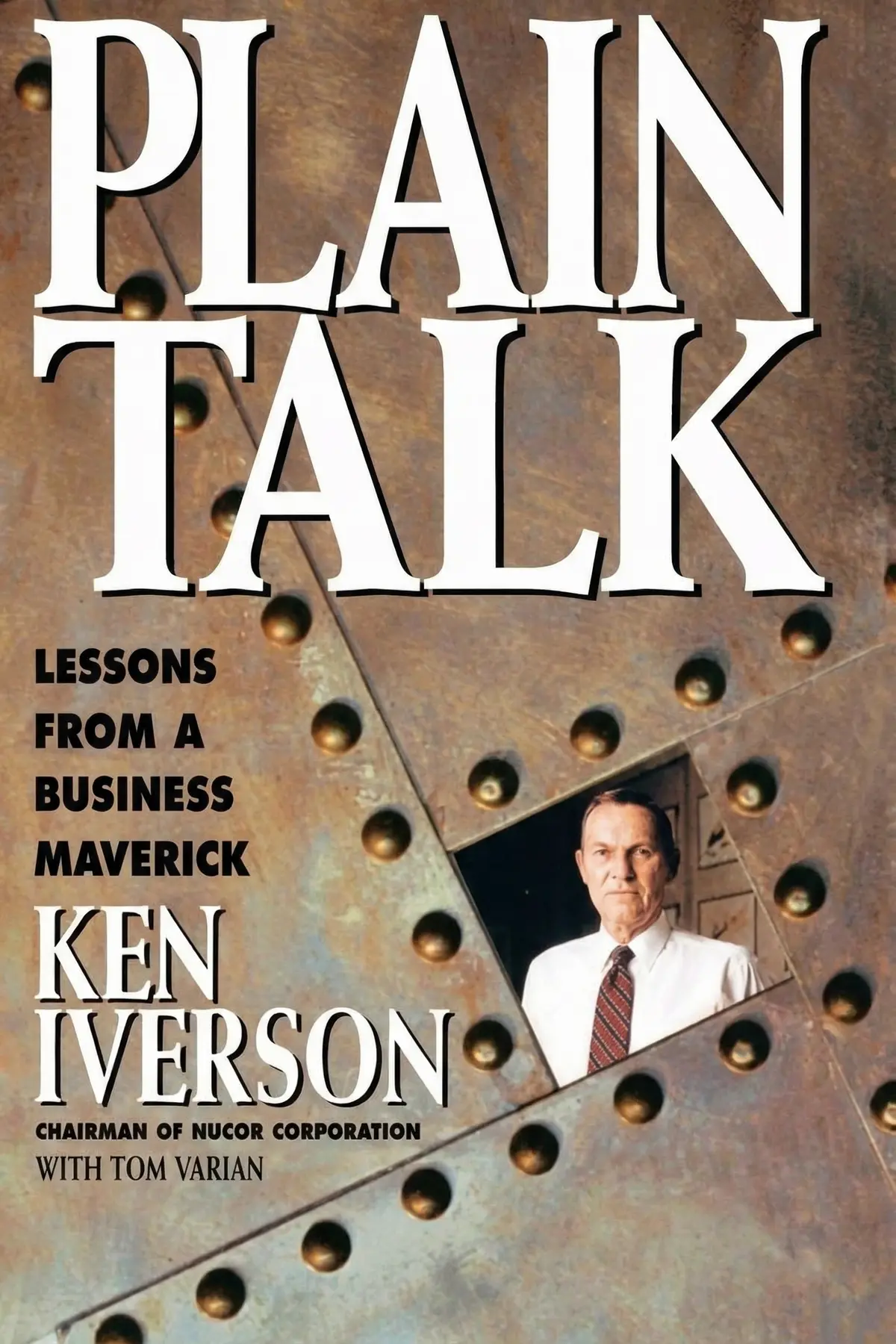
Plain Talk explores Ken Iverson’s revolutionary leadership at Nucor Steel, demonstrating how flat hierarchies, radical transparency, and a commitment to employee empowerment can transform a struggling business into an industry leader.
1 min 51 sec
In the mid-20th century, the American industrial landscape was dominated by rigid, top-down bureaucracies. Command-and-control was the standard, and the distance between the executive suite and the factory floor often felt like an unbridgeable canyon. But then came Ken Iverson and Nucor Steel. Iverson wasn’t just another executive; he was a maverick who believed that the true engine of any successful enterprise wasn’t the machinery or the capital, but the people. His approach, detailed in his reflections, suggests a radical shift in how we view the workplace. Instead of a place of drudgery and oversight, he envisioned a collaborative ecosystem where every individual felt like a partner in the company’s destiny.
Under Iverson’s stewardship, Nucor didn’t just survive; it thrived for decades in a notoriously difficult industry. This success wasn’t built on secret technology or unfair advantages. It was built on a foundation of extreme simplicity and profound trust. The throughline of Iverson’s philosophy is that by stripping away the artificial barriers of corporate life—the endless management layers, the secretive decision-making, and the fear of making mistakes—you unlock a level of human potential that traditional companies can only dream of. In this summary, we will explore the core tenets of this unconventional leadership style. We’ll look at how a massive corporation can maintain the heart and agility of a small startup, why sharing the pain during hard times is the ultimate trust-builder, and how a leader’s greatest tool might actually be their willingness to let their employees take risks and even fail. This isn’t just a story about making steel; it’s a blueprint for any leader who wants to build an organization that is as efficient as it is humane. Let’s dive into the lessons of a man who believed that plain talk and straight shooting were the ultimate competitive advantages.
2 min 26 sec
Discover how a commitment to open communication and shared financial responsibility creates an unbreakable bond between leadership and the workforce.
2 min 09 sec
Learn why reducing the layers of management can lead to faster decisions, better ideas, and a more engaged workforce.
1 min 57 sec
Explore the delicate balance between local freedom and central vision, and why giving power away is the best way to keep it.
1 min 55 sec
Uncover how hiring for character and maintaining a small-town mindset can drive innovation in a massive industrial firm.
1 min 59 sec
See why a truly innovative company must not only tolerate failure but actively use it as a stepping stone to future breakthroughs.
1 min 31 sec
Ken Iverson’s journey with Nucor Steel offers more than just a history of a successful company; it provides a timeless masterclass in human-centric leadership. His philosophy was simple yet profound: treat people with respect, give them the tools and the autonomy to succeed, and then get out of their way. By stripping away the ego and the complexity that so often plague large organizations, Iverson created a model where efficiency and humanity go hand in hand. The lessons we’ve explored—the importance of shared sacrifice, the power of a flat hierarchy, the agility of decentralized units, the value of rural talent, and the necessity of embracing failure—are all parts of a single, coherent vision.
What this really means for today’s leaders is that the traditional ways of ‘managing’ people are often the very things that hold them back. True leadership isn’t about control; it’s about empowerment. It’s about being brave enough to be ‘plain’ and ‘straight’ with your team, even when the news is bad. If you can build a culture where trust is the default and innovation is everyone’s job, you don’t need a massive manual of rules to keep things moving. You just need a shared purpose and a commitment to each other’s success. As you reflect on Iverson’s maverick approach, consider where you might be able to flatten the structures in your own life or work. Where can you offer more transparency? Where can you take a calculated risk? The Nucor story proves that when you trust people to be great, they often exceed even your highest expectations.
Plain Talk provides an inside look at the management philosophy that turned Nucor Steel into a powerhouse. It challenges the traditional corporate model by advocating for a radically flat structure, where only four layers of management exist between the factory floor and the CEO’s office. The book promises to show leaders how to foster genuine trust through shared sacrifice and open communication. It explores the power of decentralization, the value of hiring from rural communities, and the necessity of viewing failure as a prerequisite for innovation. By shifting the focus from top-down control to grassroots empowerment, Iverson offers a blueprint for building a resilient, highly motivated workforce capable of sustained excellence.
Ken Iverson was a visionary business leader and the CEO of Nucor Steel. Under his guidance, he transformed the organization into one of the largest and most prosperous steel manufacturers in the United States. Iverson is widely celebrated for his innovative management style, which prioritized flat organizational hierarchies and the empowerment of every employee.
Listeners find the book exceptionally simple to digest and value its high-quality leadership concepts and motivating material. Furthermore, the work receives praise for its straightforward management style, with one listener describing it as an excellent model for treating people well. They also appreciate the brief format and consider it essential reading for all future leaders.
Finally got around to Ken Iverson’s classic, and it’s arguably the most refreshingly direct management book in my collection. Iverson doesn't hide behind corporate buzzwords or complex diagrams; instead, he advocates for a radical simplicity that seems almost revolutionary today. He dismantled the traditional hierarchy at Nucor, replacing it with a lean four-tier structure that actually values the person on the floor. Truth is, the way he discusses "pain-sharing" during downturns makes most modern CEOs look like they’re just playing house. It’s a short read, but every page challenges the bloated "span of control" theories taught in MBA programs. While some might find his focus on factory output a bit specific to the steel industry, the underlying philosophy of trust and autonomy is universal. If you want to know how to build a culture where employees actually care, this is the blueprint.
Show moreWow. It’s rare to find a business book that feels this honest and human. Ken Iverson wasn’t just a CEO; he was a maverick who actually walked the talk by eliminating the typical executive perks that create distance between leadership and the front lines. The way he describes Nucor’s willingness to experiment and even fail is incredibly inspiring for anyone trying to foster innovation in a stagnant industry. Frankly, the book is a fast read, but the ideas stay with you long after you put it down. I was particularly struck by his insistence that no one should blindly follow orders—it’s a radical breath of fresh air compared to the micro-management we see today. This is essential reading for anyone who believes that treating people with dignity is the ultimate competitive advantage.
Show moreThis book should be required reading for every middle manager who thinks their job is to "police" their employees. Iverson’s affinity for a flat structure wasn't just about efficiency; it was about building a foundation of trust and transparency that most CEOs are too scared to try. Not gonna lie, I was skeptical at first, but the stories of Nucor’s grassroots innovation really won me over. He demonstrates that when you give people the authority to make decisions in their area of expertise, they’ll surprise you with their commitment. The writing style is wonderfully direct—reminiscent of those classic business books from the early 20th century that didn't waste your time. It’s an excellent model for how to treat people well while still crushing the competition.
Show moreGotta say, Iverson’s approach isn't exactly "new" anymore, but his credibility as the guy who actually did it makes this a must-read. He writes in a way that’s very easy to understand, stripping away the jargon to get to the heart of what makes a business work: its people. I love the idea of "shared purpose" and the way Nucor employees were motivated to work for the "fun of it" rather than just a paycheck. Personally, I found his thoughts on the "tug-of-war" between centralization and decentralization particularly insightful for large organizations. It’s a refreshing change of pace from the typical, over-polished CEO memoir. While it’s quite short, the punchy style ensures that the lessons actually stick.
Show morePicking up this slim volume was one of the best career moves I've made lately. Ken Iverson explains the philosophy behind Nucor with such clarity that you wonder why every company isn't run this way. It’s a blueprint for a future-focused, people-centric success story that prioritizes transparency over office politics. I particularly enjoyed the sections on how they handled failure; instead of punishing risk, they viewed it as a collective learning opportunity. In my experience, if corporate life was more like the environment Iverson describes, the world would be a lot more productive and a lot less stressed. This isn’t just a management book; it’s a testament to what happens when you treat your employees like adults who are capable of greatness.
Show moreAs someone who’s worked in a soul-crushing top-down environment for a decade, reading about Nucor’s culture felt like a glimpse into a parallel universe. Iverson’s "Plain Talk" is exactly what the title promises—a no-nonsense breakdown of how decentralization can actually work if you have the guts to trust your managers. He makes a compelling case for keeping things small and nimble, even as the company grows into a behemoth. I’ve read my fair share of leadership guides, but few emphasize the "intrinsic" motivation of the worker as effectively as this does. Personally, my only minor gripe is that he glosses over some of the messier parts of human ego that inevitably creep into any organization. Still, the focus on shared purpose and egalitarian perks is something more companies should adopt if they want to survive the long haul.
Show moreEver wonder how a steel company managed to thrive while the rest of the American industry was collapsing? Iverson lays it all out here with a refreshing lack of ego, focusing on a lean organizational structure that puts decision-making power in the hands of the people doing the work. In my experience, most "people-centric" books are full of fluff, but this is different because it’s backed by Nucor’s undeniable bottom-line success. He talks about "equilibrium" between centralizing and decentralizing in a way that feels very practical rather than theoretical. My only hesitation is that his style is so direct it sometimes feels a bit "old school," but maybe that’s exactly what we need right now. It’s a short, punchy manual for anyone tired of the typical corporate bureaucracy.
Show moreAfter hearing Mohnish Pabrai recommend this, I knew I had to pick it up. It’s a fascinating look at how a growth company can emerge from a non-growth industry through sheer cultural willpower. Iverson’s focus on the long-term over short-term "wins" is a lesson every modern executive needs to hear, especially in our era of quarterly earnings obsession. The book is short enough to finish in an afternoon, yet it manages to debunk the myth that scale requires a massive, rigid hierarchy. I appreciated the honesty regarding how Nucor’s incentive pay might not work for everyone. It’s a grounded, humble take on leadership that emphasizes the power of "smallness" and agility. Definitely worth the read if you're looking for a blueprint for a more engaged workforce.
Show moreThe chapter on decentralization really highlights Iverson's brilliance, but I can't help feeling that some of Nucor’s success was a "right place, right time" situation. Don't get me wrong, the egalitarian culture he built is commendable and the prose is wonderfully clear, avoiding the usual jargon that plagues this genre. However, I found myself questioning if his specific incentive structures—like tying pay so strictly to production—would actually translate to modern tech or service industries. To be fair, it felt a bit like he was belaboring the obvious in the middle sections, almost as if the book was trying to stretch a very simple (albeit great) idea into a full volume. It’s a solid piece of history and offers some good "plain talk," but it might be a bit dated for those looking for a contemporary management toolkit.
Show moreTo be fair, this is a very easy read, but I’m skeptical about how much of this success was just good luck. As Taleb might say, Iverson seems a little "fooled by randomness" here, attributing every win to his specific philosophy while ignoring broader market shifts in the steel industry. The "plain talk" style is nice, but it occasionally comes across as overly simplistic, ignoring the complexities of managing diverse personalities in a globalized world. Look, I wasn't a fan of how he dismissed traditional management theories so casually without acknowledging why they exist in the first place. It’s an interesting historical artifact about Nucor, but I didn't find many actionable insights that haven't been covered more thoroughly in modern leadership books. A bit too much survivorship bias for my taste.
Show moreMike Michalowicz
Hamilton Helmer

Margaret Heffernan
AUDIO SUMMARY AVAILABLE
Get the key ideas from Plain Talk by Ken Iverson, plus 5,000+ more titles in English and Thai.







