
26 min 33 sec
Powers of Two: How Relationships Drive Creativity – The Social Foundations of Creative Collaboration
Explore the myth of the solitary creator as Joshua Wolf Shenk reveals how history’s greatest breakthroughs actually emerge from the dynamic, often messy, and transformative chemistry of creative partnerships.
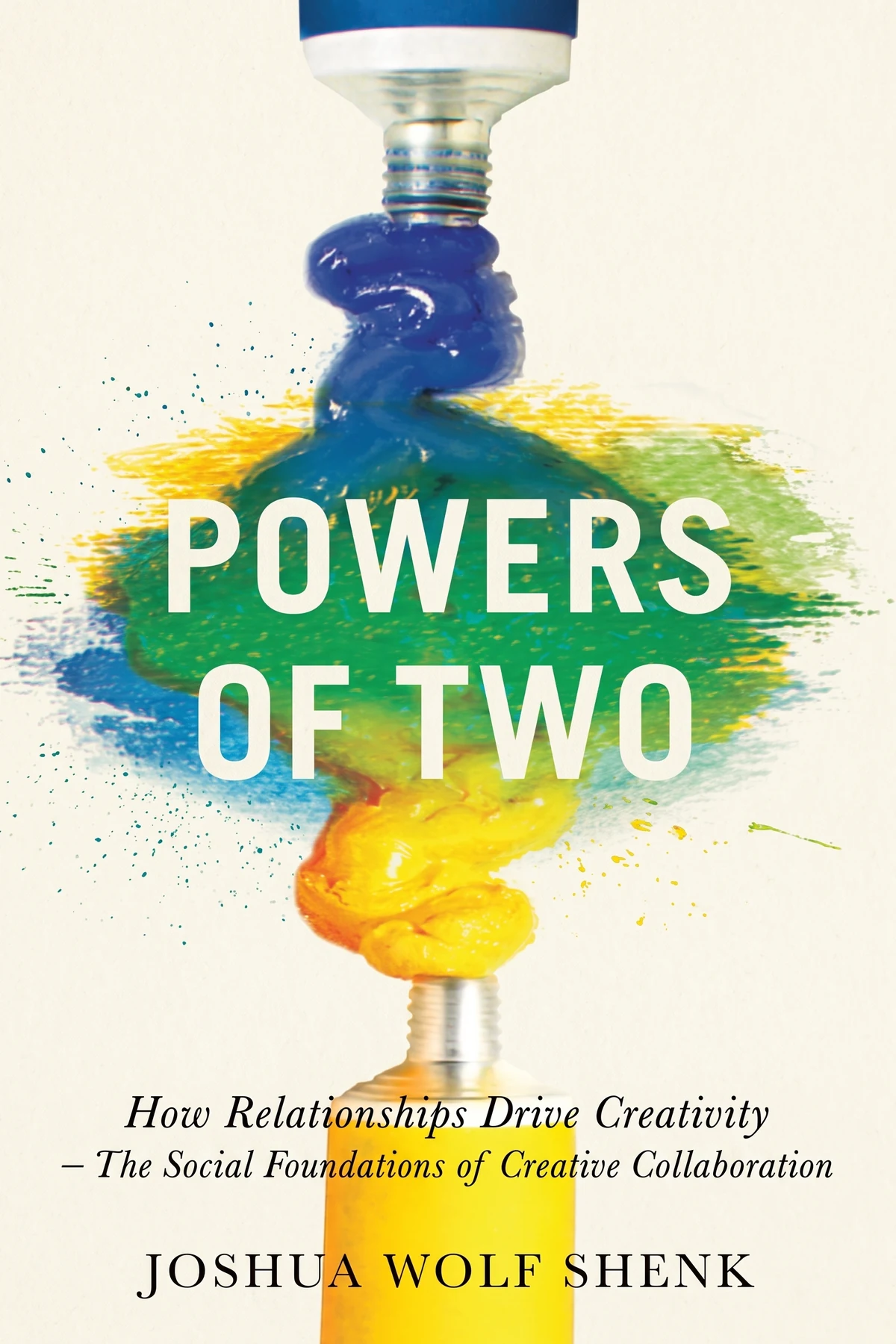
Table of Content
1. Introduction
1 min 43 sec
Think for a moment about the image of a genius. Most of us picture a solitary figure—a painter alone in a moonlit studio, a scientist hunched over a microscope in a basement, or a writer at a desk in a cabin in the woods. We have been conditioned to believe that great ideas are born in the vacuum of a single mind. We call it the myth of the lone genius, and it has dominated our cultural history for centuries. But if you look closer at the most significant breakthroughs in music, art, technology, and business, a different pattern emerges. You’ll find that behind almost every ‘individual’ success, there is a partnership.
In our exploration of Powers of Two, we are going to deconstruct this myth and replace it with a much more powerful reality: the creative duo. We will look at how two people, when locked in a specific kind of emotional and intellectual orbit, can generate a level of brilliance that is mathematically impossible for one person to achieve alone. This isn’t just about getting along or ‘brainstorming.’ It’s about a complex, sometimes volatile, and deeply intimate dance between two souls. We will examine the stages of these relationships—from the initial spark of ‘presence’ to the ultimate level of ‘faith.’ We will see why competition and conflict aren’t just hurdles to be overcome, but are actually the fuel that drives the engine of creation. By the end of this journey, you’ll understand that the most important thing you can do for your own creativity might not be to work harder in isolation, but to find the person who balances your weaknesses and challenges your strengths. This is the throughline of our discussion: the true seat of creativity is not the individual, but the pair.
2. The Evolution of the Creative Dialogue
2 min 34 sec
Uncover why our modern world is finally moving past the outdated 18th-century obsession with solitary invention and embracing the collaborative spirit of the digital age.
3. Finding the Spark in Magnet Places
2 min 46 sec
Discover how the most legendary partnerships aren’t just about finding someone like you, but about finding a ‘magnet place’ where similarities meet productive differences.
4. The Four Pillars of Collaborative Intimacy
2 min 46 sec
Follow the emotional journey of a partnership through the crucial stages of presence, confidence, and trust, leading to the rare and powerful state of blind faith.
5. The Power of Shared Rituals
2 min 29 sec
Explore how quirky habits and shared environments create a ‘social contagion’ that strengthens individual identity while merging two minds into one.
6. The Archetypes of Creative Pairs
2 min 48 sec
From the ‘star and shadow’ to the ‘dreamer and doer,’ learn to identify the different structures that make collaborations thrive—or fail.
7. The Necessity of Distance and Autonomy
2 min 19 sec
Understand why ‘double solitude’ is the secret ingredient for long-term creative success, allowing the subconscious to breathe before ideas are shared.
8. Harnessing Conflict and Competition
2 min 36 sec
Learn why the most productive relationships are often the most turbulent, and how a little bit of rivalry can push your work to unexpected heights.
9. The Paradox of the Ending
2 min 25 sec
Discover why the very traits that draw two people together often become the cause of their eventual split, and how success can be a double-edged sword.
10. The Lingering Ghost of Partnership
2 min 27 sec
Explore the profound emotional aftermath of a broken bond, where the influence of a partner continues to shape a person’s life long after the collaboration has ceased.
11. Conclusion
1 min 40 sec
As we reach the end of our journey through the dynamics of creative pairs, the central message is clear: the image of the ‘lone genius’ is a myth that we should finally lay to rest. While individual effort and self-reflection are necessary, they are only half of the equation. True, world-changing creativity is a social phenomenon. It is born in the space between two people who are willing to be present, to trust, and to challenge one another.
We have seen that the most effective partnerships are built on a foundation of similarity but are fueled by the friction of difference. We’ve learned that rituals and shared environments create a ‘social contagion’ that actually strengthens our individual identities rather than erasing them. We’ve discovered that conflict and competition are not problems to be fixed, but are essential energies that push us to be better than we could ever be alone. And we’ve recognized that while these relationships can be volatile and may eventually end, their impact is permanent.
The takeaway for your own life is this: stop looking for the answer solely within yourself. If you want to unlock your full creative potential, look for your ‘power of two.’ Find the person who balances your dreamer with their doer, or your shadow with their star. Find the person who will give you ‘double solitude’ when you need it and blind faith when the work gets hard. Creativity is not a solo flight; it is a tandem leap. By embracing the power of partnership, you aren’t just doubling your resources—you are entering into a transformative process that makes the impossible, possible. The next great idea isn’t waiting in your head; it’s waiting in the conversation you haven’t had yet.
About this book
What is this book about?
For generations, we have been told the story of the lone genius—the singular artist or inventor who retreats into isolation to bring forth greatness. In Powers of Two, this narrative is turned on its head. By examining some of history’s most iconic pairs, from Lennon and McCartney to Steve Jobs and Steve Wozniak, the work demonstrates that the basic unit of creativity is not the individual, but the pair. It explores the psychological stages that these relationships move through, the necessary friction that keeps them alive, and the rituals that bind two distinct identities into a singular force. The promise of this exploration is a new understanding of how you can find and cultivate your own creative chemistry. It outlines the specific dynamics of successful collaborations, showing how a balance of similarity and difference, or the roles of dreamer and doer, can unlock potential that neither person could reach alone. It is an invitation to see partnership not as a compromise of individuality, but as the ultimate catalyst for human achievement.
Book Information
About the Author
Joshua Wolf Shenk
Joshua Wolf Shenk is a curator, essayist and author. His article for The Atlantic, What Makes Us Happy? was the most-read online article in the history of the magazine. His first book, Lincoln’s Melancholy, was voted one of the best books of 2005 by The Washington Post.
Ratings & Reviews
Ratings at a glance
What people think
Listeners describe this work as a superb experience built on an excellent premise, praising the thorough research and perspectives on creative partnerships. They appreciate the focus on creativity; one listener emphasizes how it explores innovation, while another points out the effective stories used to support various ideas. The exploration of relationship building is well-received, with one listener noting it broadens perspectives on what is possible through collaboration. Reactions to the narrative quality are varied, as some listeners like the anecdotes, but others feel let down by the conclusion.
Top reviews
Kai
As someone who has spent years working in a creative partnership, this book felt like a revelation of things I knew but couldn't name. Shenk captures the electric, often volatile energy that exists between two people who share a vision. The section on "The Star and the Director" resonated deeply, highlighting how power imbalances can actually stabilize a partnership rather than destroy it. I was particularly moved by the description of the "interruption" stage; it made the messy breakups of famous pairs feel less like failures and more like a natural evolution. This is essential reading for anyone who believes that two heads are better than one. It is a brilliant, soulful look at human connection.
Show moreMatteo
Wow, this really opened my eyes to the collaborative nature of basically everything in our world. Not gonna lie, I used to buy into the "tortured artist alone in a room" vibe, but Shenk completely flips that script. The way he describes the "Infinite Game" of competition between Lennon and McCartney—how they used each other’s successes to climb higher—was just incredible. It’s a fast-paced, insightful, and genuinely inspiring read for anyone who wants to tap into their own innovation. If you’ve ever felt like you needed a "partner in crime" for your big ideas, this book is your validation. I couldn't put it down once I started.
Show moreWyatt
Ever wonder why certain duos just "click" while others fizzle out? Joshua Wolf Shenk dismantles the romanticized idea of the solitary creator, arguing instead that the pair is the fundamental unit of innovation. I loved the breakdown of the six stages of a creative relationship, particularly the "Infinite Game" phase where competition fuels growth. While some of the psychological backing feels more like a collection of anecdotes than a rigorous study, the stories about Lennon and McCartney are undeniably captivating. It’s a fascinating look at how we rub against each other to produce sparks. Frankly, it changed how I look at my own collaborations and how I value the friction that comes with them.
Show moreJoy
Finally got around to reading this, and I’m glad I did because the "lone genius" trope really needs to die. The concept of the dyad being the most flexible human relationship is so true—two people can build their own private world without the interference of a third party’s stabilizing influence. I appreciated the range of examples, from Buffett and Munger to the creators of South Park. My only gripe is that it leans a little too heavily on the "two-person" rule, almost ignoring how larger groups function in the real world. Still, the prose is engaging and the research into the private lives of these pairs is clearly meticulous. It's a great pick for anyone interested in the social side of innovation.
Show moreMoo
Shenk’s exploration of the creative spark is both thoughtful and expansive, moving beyond the usual suspects to find "pairs" in places you might not expect. I found the idea of "Generator and Resonator" to be a particularly helpful way to categorize how ideas are born and then refined. It’s a book about relationships just as much as it is about art or business. The narrative flows well, though the author's personal reflections on his editor occasionally felt like they belonged in a different book. Overall, it’s a solid 4-star read that offers a lot of food for thought regarding how we work with others. It makes a compelling case for finding your own creative match.
Show moreHazel
After hearing about this from a colleague, I picked it up hoping for some practical advice on team building. While it’s more of a narrative history than a "how-to" guide, the insights into power clarity and "leading while following" are incredibly valuable. The stories are great, though it’s clear the author has a few favorites he returns to constantly. Personally, I would have liked more diverse examples outside of the white, male-dominated pairs that take up the bulk of the chapters. Nevertheless, it’s a beautifully written piece of non-fiction that encourages us to find our own "resonance" with others. Very glad I read it, even if the ending was a bit of a letdown.
Show moreChamnong
The chapter on Jobs and Wozniak was definitely a highlight for me, but the rest of the book felt a bit uneven in its pacing. Shenk does a great job illustrating how creative friction leads to breakthroughs, yet I found myself skimming the more academic-lite sections. Truth is, the distinction between "collaboration" and "influence" is blurry here, and at times it feels like the author is reaching to fit every historical figure into a two-person box. It’s a wonderful read if you love trivia and character studies, but don't expect a definitive roadmap for your own professional life. The writing is polished, though the ending felt slightly abrupt and left me wanting more closure.
Show moreMaya
Look, I wanted to love this more than I actually did, though I can’t deny the quality of the storytelling. The historical vignettes are the real star here, especially the parts about Picasso and Matisse pushing each other to redefine modern art. However, the framework of "Meeting, Confluence, Dialectics" etc., feels a bit like a forced structure applied to very different types of relationships. It’s more of a rumination than a study, and while I enjoyed the insights into the McCartney-Lennon dynamic, it felt a bit repetitive by the halfway mark. It’s a decent choice for a book club, but it’s more "pop-psych" than "psychology." Not a bad read, but not ground-breaking either.
Show moreMadison
This book feels like a missed opportunity to truly analyze group dynamics, opting instead to fixate on the magic of pairs. While I enjoyed learning about the rivalry between Magic Johnson and Larry Bird, I kept waiting for a deeper dive into why the number two is so special. In my experience, the third person often acts as the glue, but Shenk views them mostly as a wedge that causes "system failure." It’s an interesting perspective, certainly, but it feels a bit biased toward a specific type of intimacy. The writing style is lovely, yet the lack of hard evidence left me wanting more. It's a collection of fascinating stories that don't quite add up to a universal theory.
Show moreNum
To be fair, I went into this expecting a bit more scientific meat and came away feeling like I’d read a very long magazine article. Shenk spends so much time on the Beatles that it almost feels like a music biography interrupted by occasional sociological observations. The idea that all creativity requires two people feels just as arbitrary and unsupported as the "lone genius" myth he’s trying to debunk. Why is a trio less effective than a dyad? He never really provides a satisfying answer to that, and the narrative tends to wander into "cool stories" territory rather than proving a thesis. It was an okay read for the anecdotes, but the central argument felt flimsy and overstretched.
Show moreReaders also enjoyed

AUDIO SUMMARY AVAILABLE
Listen to Powers of Two in 15 minutes
Get the key ideas from Powers of Two by Joshua Wolf Shenk, plus 5,000+ more titles in English and Thai.
- 5,000+ titles
- Listen as much as you want
- 7-day free trial
- Cancel anytime







