

18 min 19 sec
Predictable Revenue: Turn Your Business Into a Sales Machine with the $100 Million Best Practices of Salesforce.com
Predictable Revenue reveals how to escape the feast-or-famine sales cycle by implementing specialized roles, lead generation systems, and the revolutionary Cold Calling 2.0 method used by Salesforce.com.
Table of Content
1. Introduction
1 min 53 sec
Imagine for a moment that you are trying to steer a ship across a vast ocean, but you have no way of knowing how much fuel you will have from one day to the next. Some days the tanks are overflowing; other days, you are running on empty, drifting aimlessly while you wait for a refill. This is the stressful reality for many business owners and sales leaders who live in a state of constant uncertainty regarding their income. They look at their results at the end of the month and hope for the best, but they lack a clear view of what the next quarter or the next year will actually look like.
Without a way to forecast growth, planning for the future becomes an exercise in guesswork. You cannot comfortably hire new staff, invest in new equipment, or expand into new markets if you do not know whether the money will be there to support those moves. This is where the concept of predictable revenue becomes the ultimate competitive advantage. It is not just about making more money; it is about creating a system where sales growth is a calculated, expected outcome rather than a series of lucky breaks.
In this summary, we are going to explore the framework that helped Salesforce.com add over one hundred million dollars in recurring revenue. We will move past the outdated idea that sales is just a numbers game where you simply need to hire more people and work them harder. Instead, we will look at how to build a specialized ‘sales machine’ that focuses on high-quality lead generation and modern communication strategies. By the end of this journey, you will understand how to stop chasing every shiny object and start building a pipeline that you can actually count on. The throughline of this approach is a shift from aggressive promotion to strategic attraction and process-driven execution. Let’s dive into how you can turn your sales department into a predictable engine of growth.
2. The Failure of Traditional Sales Scaling
2 min 06 sec
Simply hiring more salespeople is no longer a guaranteed way to grow your bottom line in a world of informed buyers.
3. Categorizing Your Leads for Maximum Efficiency
2 min 06 sec
Not all prospects are created equal, and understanding the three distinct types of leads is the first step toward a focused strategy.
4. Harnessing the Power of Inbound Attraction
2 min 06 sec
Discover how to make the right prospects come to you through strategic referrals and the psychology of free trials.
5. Executing a Strategic Approach to Conferences
1 min 52 sec
Stop wasting money on aimless trade show appearances by implementing a rigorous system for preparation and follow-up.
6. The Necessity of Sales Specialization
2 min 10 sec
Dividing your sales team into four distinct roles is the secret to increasing both productivity and predictable results.
7. Transitioning to Cold Calling 2.0
2 min 05 sec
Forget the high-pressure tactics of the past; this new method uses targeted emails to build a pipeline of interested prospects.
8. Moving From Closing Deals to Building Success Plans
1 min 59 sec
Shift your perspective from hitting a quota to helping your client achieve a specific vision of their future success.
9. Conclusion
2 min 02 sec
Building a sales organization that produces predictable, scalable revenue is not about finding a few ‘superstar’ salespeople who can sell ice to Eskimos. It is about moving away from the hero-culture of sales and moving toward a process-driven machine. By specializing your roles, you ensure that every part of the sales funnel—from the first touch to the final signature—is handled with expertise and consistency. You ensure that prospecting never takes a backseat to closing, and that your existing customers are never ignored in the rush to find new ones.
We have explored how the world of sales has changed, requiring us to trade manipulation for attraction. By categorizing leads into seeds, nets, and spears, you can allocate your resources more effectively. By adopting ‘Cold Calling 2.0,’ you can reach out to your ideal clients in a way that is respectful and professional. And by focusing on success plans rather than just closing deals, you build long-term relationships that result in recurring revenue.
However, a machine is only as good as the people running it. As an actionable final thought, remember that the energy of your team is a critical asset. To keep your sales engine running at peak performance, avoid the temptation to grind your employees down with endless hours. Sustainable growth requires a sustainable pace. Encourage your team to take regular breaks and step away from their screens every 90 minutes. When your people are energized and focused, they will execute your processes with more clarity and enthusiasm. If you commit to these principles—specialization, lead categorization, and a focus on client success—you will find that revenue is no longer something you have to guess at. It will become something you can predict, plan for, and rely on as you build the future of your company.
About this book
What is this book about?
This book provides a comprehensive blueprint for transforming a chaotic sales department into a streamlined, high-growth engine. It challenges the traditional 'hire more people' approach to scaling revenue, arguing instead for a focus on specialized roles and consistent lead generation systems. By breaking down the barriers between prospecting and closing, the authors demonstrate how companies can build a predictable pipeline of high-quality opportunities. Readers will learn the 'Cold Calling 2.0' framework, which shifts away from intrusive phone calls toward targeted, referral-based outreach. The book also outlines how to categorize leads into seeds, nets, and spears to better allocate resources. Ultimately, the promise of this work is to provide business leaders and sales professionals with the tools to forecast their future earnings with confidence and build a sustainable, scalable sales machine that doesn't rely on luck or heroics.
Book Information
About the Author
Aaron Ross
Aaron Ross is the managing director of the consulting firm Predictable Revenue, Inc. During his tenure at Salesforce.com, he pioneered new sales techniques that fundamentally changed how the industry approaches lead generation. He is also the author of CEOflow. Marylou Tyler serves as the CEO of Predictable Revenue, Inc. and brings over twenty-five years of experience in the sales industry, having worked with prominent clients such as Apple, Deloitte, and Mastercard.
Ratings & Reviews
Ratings at a glance
What people think
Listeners find the book highly readable and value it as a great source of best practices, with one listener noting it offers a thorough method for finding new prospects. Moreover, the text is full of useful ideas; one listener describes it as an efficient crash course in the sales industry. Additionally, listeners praise the writing style, with one noting it’s a non-jargon-filled writer.
Top reviews
Anawin
Wow, this is an absolute masterclass in outbound strategy that cuts through the typical fluff found in sales literature. Aaron Ross and Marylou Tyler have created a guide that is remarkably easy to read and highly actionable. I loved the lack of jargon; they explain complex organizational structures in a way that actually makes sense. The concept of 'Predictable Revenue' isn't just a catchy title—it is a legitimate goal achieved through the rigorous separation of roles. After implementing just a few of the prospecting tips, we saw a noticeable shift in our lead quality. Personally, I think this book is a competitive advantage for anyone willing to actually follow the steps. It is the OG for a reason. Even with the older references, the logic is flawless. This is one of those rare business books I will actually keep on my shelf for reference.
Show moreBua
Ever wonder why Salesforce scaled so aggressively during its early years? This book pulls back the curtain on the exact outbound engine they used. Predictable Revenue is a dense, experience-based manual that is filled with actionable points for C-level executives and managers alike. I was expecting a lot of fluff, but what I got was a strategic roadmap. The authors do a great job of explaining why your current sales team might be failing—usually because they are spread too thin. Gotta say, the tips on how to structure a 'cold' email to get a referral are worth the price of the book alone. It’s an excellent foundation for any startup founder. It may be the 'OG' book, but the wisdom here is timeless. Highly recommended for anyone who needs to build a sales machine from scratch.
Show moreErn
Picked this up on a recommendation and was pleasantly surprised by how readable it was despite being a business manual. The authors speak from a place of deep experience, not just theory. They understand the real-world friction between marketing and sales. I found the section on 'mistakes for C-level people' to be particularly stinging but necessary. The truth is, most sales problems are actually management problems. By implementing the specialized roles suggested here, you remove the 'prospecting' burden from your top closers. This allows them to do what they do best: close. It’s a brilliant, non-jargon-filled look at how to grow a business sustainably. I don't give five stars often, but for the impact this had on our internal processes, it’s well-deserved. Truly a best-kept secret for those who haven't read it yet.
Show moreMikael
Finally got around to reading the 'Sales Bible' of Silicon Valley and I can see why it is held in such high regard. The primary insight—separating your market response reps from your outbound prospectors—is something many startups still get wrong. Ross provides a very detailed method for discovering new prospects without relying on soul-crushing cold calls. I found the section on 'Blackberry-sized emails' quite funny, though it shows the book's age. The truth is, the framework works if you have the right price point. You can't just throw people at a problem without a system, and this book provides that structure perfectly. It is a quick, efficient crash course for anyone entering the SaaS space. Just be prepared for some management 'mumbo jumbo' toward the final chapters that doesn't quite match the technical quality of the beginning.
Show moreTak
Not what I expected from a business book, but in a good way. Instead of the typical '10 secrets of closing' nonsense, this is a functional blueprint for building a department. The breakdown of how Salesforce built their outbound machine is fascinating. I especially liked the emphasis on not making your closers do their own prospecting. It seems obvious now, but the book explains the 'why' behind it through experimental data. Look, some of the tactics for emailing feel a bit gimmicky by today's standards, like asking for a referral to the right person. Still, the underlying strategy of specialization is sound. It’s an excellent source of best practices for anyone trying to move away from 'lumpy' revenue toward something more consistent. It’s a solid 4-star read that every founder should skim at least once.
Show moreDivya
As someone who has struggled with lead generation for years, the distinction between seeds, nets, and spears was eye-opening. The authors understand that you can't just tell a salesperson to 'go sell more' without giving them a funnel. This book provides a clear, proven tactic for creating that funnel. I appreciated the specific examples and the illustrations that help visualize the sales process. My only gripe is that it feels slightly repetitive in the middle sections. You could probably get 80% of the value by reading the first half and the conclusion. However, the advice on avoiding unsolicited phone calls is still very relevant in 2024. Most people just don't pick up the phone anymore, so the email-first approach is vital. It’s a practical, no-nonsense guide for scaling a sales team.
Show moreFelix
Look, the advice here is solid but it comes with a specific context that many readers might overlook. This sales process is specifically tailored for products with a certain lifetime value. If your LTV is too low, the cost of an SDR team will eat your margins alive. That being said, for the mid-market and enterprise space, this is pure gold. The writing style is conversational and fast-paced. I finished it in two sittings. I particularly liked the focus on the Market Response Rep role. Most companies lump inbound and outbound together, which is a huge mistake. By separating them, you ensure that no lead falls through the cracks. It’s an efficient crash course in modern sales architecture. It has a few flaws and a bit of survivorship bias, but the core principles are undeniably effective.
Show morePatchara
The core takeaway is simple: specialize or die. If you have your best salespeople spent half their day hunting for phone numbers, you are losing money. Predictable Revenue teaches you how to stop that leak. While I agree with other reviewers that it can be a bit 'self-promotional' for Ross's consulting business, the actual advice is top-tier. The breakdown of lead types—seeds, nets, and spears—is a framework I use every day now. It helps in defining which marketing activities are actually driving revenue. The book is a bit of a relic in terms of the tech it mentions, but the psychology of the sales process remains the same. It’s a motivating read that gives you a concrete plan. If you're tired of 'unpredictable' months, just buy the book and follow the Salesforce model.
Show moreScarlett
If you are looking for a silver bullet to solve your revenue problems, this isn't it, but there is some decent theory here. The authors break down lead generation into three categories: seeds, nets, and spears. While the 'spears' or outbound prospecting section is the most famous part, it feels a bit dated in the era of modern spam filters. I appreciate the focus on specialization within the sales team, separating the SDRs from the AEs. To be fair, this was probably revolutionary when it first came out, but now it's just standard industry practice. The writing is clear and avoids heavy jargon, which I liked. However, I can't help but feel like I was being sold a consulting package for half the book. It’s a good historical reference for how Salesforce scaled, but don't expect it to change your life today.
Show moreNathan
Why did I spend six hours listening to what is essentially a long-form advertisement for sales consulting? This book could have easily been condensed into a three-page PDF or a quick blog post without losing any of the meat. The core message is simply to split your sales team into those who find leads and those who close deals. Frankly, the rest of the content feels like filler designed to drive traffic to the author's website. There are constant mentions of outdated technology like Blackberries that make the advice feel a bit dusty. If you are selling a product with a low lifetime value, this process will absolutely bankrupt you. It only works for a specific mid-market niche. I found the tone a bit obnoxious and self-congratulatory throughout the chapters.
Show moreFeatured in
Readers also enjoyed
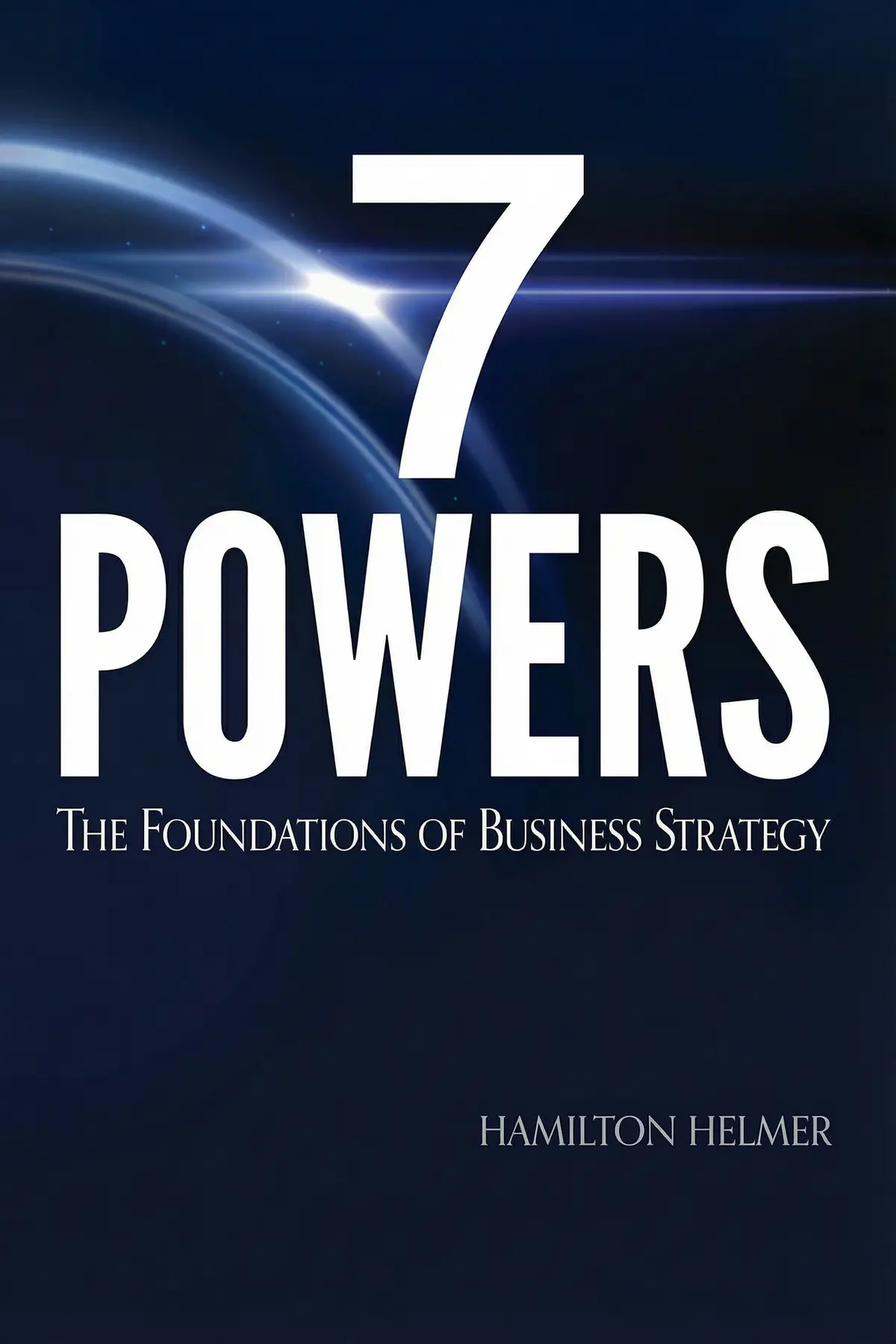
7 Powers: The Foundations of Business Strategy
Hamilton Helmer

Alibaba: The House That Jack Ma Built
Duncan Clark
AUDIO SUMMARY AVAILABLE
Listen to Predictable Revenue in 15 minutes
Get the key ideas from Predictable Revenue by Aaron Ross, plus 5,000+ more titles in English and Thai.
- 5,000+ titles
- Listen as much as you want
- 7-day free trial
- Cancel anytime







