
A Liberated Mind: How to Pivot Toward What Matters
Steven C. Hayes
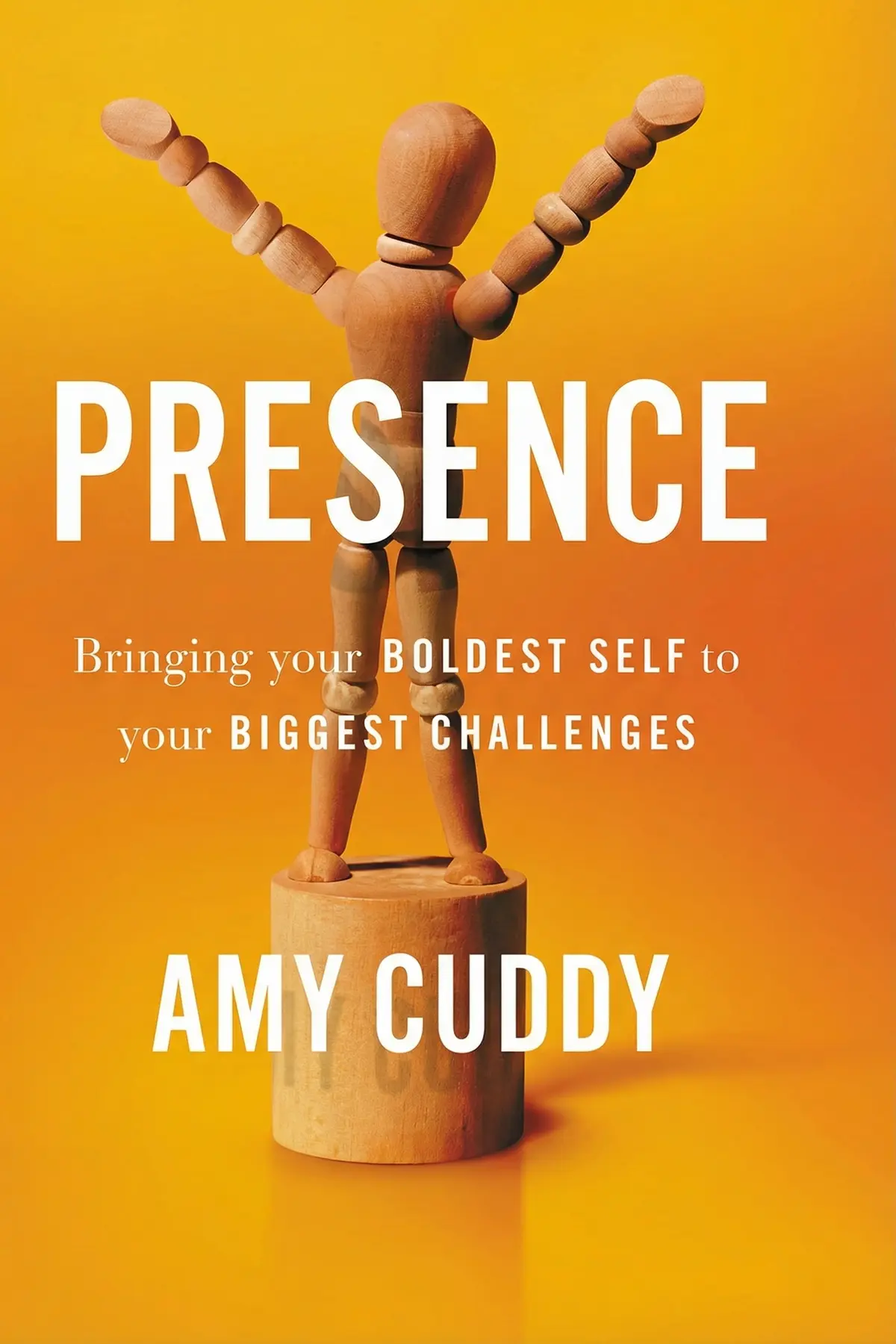
Presence explores how our physical posture and internal narratives shape our confidence. Amy Cuddy reveals science-backed techniques, like power posing, to help you bring your boldest, most authentic self to high-pressure moments.
1 min 55 sec
We have all been there: standing in the hallway before a major job interview, or perhaps waiting in the wings of a stage before giving a presentation. Your heart is hammering against your ribs, your palms are damp, and your mind is racing with every possible way things could go wrong. In these moments, it feels like our anxiety is a separate entity entirely, one that is determined to sabotage our performance. We tell ourselves to ‘just be confident,’ but that advice often feels hollow when our bodies are screaming at us to run and hide.
But what if the relationship between your mind and your body wasn’t a one-way street? What if, instead of waiting for your mind to feel confident before your body acts confident, you could use your physical form to command your brain into a state of poise? This is the central premise of Presence. It is a deep dive into the fascinating science of how our physical presence—the way we hold our shoulders, the way we breathe, and the way we occupy space—dictates our internal state of being.
In the pages that follow, we are going to explore why your body language often speaks louder than your words, and how even those with aphasia can teach us a vital lesson about human communication. We will look at the psychological weight of our core values and why defining what matters most to us can actually change our blood chemistry during a crisis. We will also tackle the ‘imposter’ that lives inside so many successful people, learning why that feeling of being a fraud is so common and how to strip it of its power.
Ultimately, this is a journey toward authenticity. It is about learning to deliver your message not just with your mouth, but with your entire being. By the time we reach the end, you will have a toolkit of practical, scientifically-grounded strategies—from the famous ‘power pose’ to specialized breathing techniques—designed to help you show up as your best self when it matters most. Let’s begin by looking at the silent signals we send long before we ever open our mouths.
2 min 27 sec
Discover why your body language might be revealing your true thoughts even when you’re trying to hide them, and how observers pick up on these silent signals.
2 min 09 sec
Learn a simple writing exercise that can lower your cortisol levels and build a psychological shield against the pressures of high-stakes environments.
2 min 11 sec
Explore the surprising prevalence of feeling like a fraud and why even the highest achievers often struggle with a sense of inadequacy.
2 min 12 sec
Understand the biological mechanisms of curiosity versus fear and how to shift your mindset from defensive to adventurous through memory.
2 min 05 sec
How expansive movements and ancient defensive instincts shape the way we are perceived by others and how we perceive ourselves.
2 min 09 sec
Learn how the highway between your brain and your heart can be used to manually switch off your stress response through simple breathwork.
2 min 07 sec
How physical stances can actually change your willingness to take risks and your overall sense of agency in social environments.
2 min 16 sec
Discover how to integrate power posing and mindful posture into your daily routine and high-pressure events without looking awkward.
1 min 41 sec
As we have explored, presence is not a mysterious quality that some people are born with and others are not. It is a state of being that arises from the harmonious interaction between our bodies, our minds, and our personal values. We have seen how our physical form can be a lead-in to our psychological state—that by expanding our posture, we can expand our sense of possibility. We have learned that the stress of high-stakes moments can be managed not just through willpower, but through the biological shortcuts of the vagus nerve and the grounding power of our core beliefs.
The throughline of Amy Cuddy’s work is that we have far more agency over our internal world than we realize. We do not have to be victims of our own anxiety or slaves to the ‘imposter’ that lives in our minds. By taking a few minutes to power pose in private, by breathing deeply to calm our nervous systems, and by standing tall even when we feel small, we can fundamentally change how we show up in the world.
The most immediate step you can take today is to start noticing when you are ‘collapsing’—whether that’s over your phone or during a tense conversation. Set a reminder on your phone for every hour to check your posture. When it goes off, take a deep breath, roll your shoulders back, and take up a bit more space. This tiny habit is the first step in a larger transformation. Presence is a practice, not a destination. It is something you bring to the table every single day. By mastering your body, you master your mind, and by mastering your mind, you unlock the ability to bring your boldest, most authentic self to every challenge life throws your way.
Have you ever left a high-stakes meeting or a public speech feeling like you didn't represent your true self? Presence addresses this universal struggle, explaining that the key to confidence isn't just in what we say, but in how we carry ourselves. Amy Cuddy investigates the deep connection between the body and the mind, showing how simple physical adjustments can lower stress hormones and increase our sense of personal power. The book promises a path toward authenticity, helping readers overcome imposter syndrome and the 'freeze' response that often occurs under scrutiny. By mastering our body language and nervous systems, we can navigate life's biggest challenges with poise and genuine authority.
Amy Cuddy is an author and psychologist who previously taught at the Harvard Business School. In 2012, she became world renowned for her TED Talk on the benefits of power posing. Her first major book, Presence, is a New York Times and Washington Post bestseller that has been translated into thirty languages.
Listeners consider this work highly valuable, supported by significant psychological research, and they enjoy the excellent actionable tips that expand past just building confidence through power posing. Furthermore, the writing is clear and engaging, incorporating authentic anecdotes that make the scientific data feel relevant. They also appreciate the motivating message, with one listener highlighting how the book enables people to stay fully engaged in any environment.
Ever wonder why you feel small in big meetings despite having all the right answers? This book dives deep into the psychological bridge between our physical bodies and our mental states, offering tools that are both simple and profound. Frankly, the concept of the 'starfish' pose sounded silly at first, but practicing these expansions truly changed how I approached my last promotion board. Cuddy backs her claims with extensive psychological studies that make the advice feel grounded rather than just another 'think positive' mantra. I appreciated the real-life stories from people who used these techniques to overcome paralyzing anxiety in high-stakes moments. It is a wonderful guide for anyone looking to reclaim their personal power and show up as their most authentic self.
Show moreAmy Cuddy offers an empowering perspective on how small physical adjustments can lead to massive shifts in self-perception and external influence. This isn't just a book about standing like Wonder Woman; it is a deep dive into the science of how we inhabit our own skins. Not gonna lie, I was moved to tears by her personal story of recovery and how she fought to regain her cognitive identity after her accident. The research presented is incredibly accessible, making complex social psychology feel relevant to everyday interactions. I’ve started implementing the 'presence' techniques before my public speaking engagements, and the difference in my internal calm is palpable. This is an essential read for anyone who has ever felt like an impostor in their own life.
Show moreAs someone who has always struggled with impostor syndrome, I found the chapter on personal power and the 'starfish' pose deeply resonant. I remember feeling completely out of my league in a graduate-level theory class, much like one of the students mentioned in the book’s examples. After applying these techniques to my posture and mindset, I stopped feeling like a fraud and started actually engaging with the material. The results were tangible; my final presentation was the best I’ve ever given, and I finally felt like I belonged in that room. Cuddy’s writing is clear and cogent, turning complex behavioral science into a roadmap for personal growth. This book changed how I view my interactions with the world and gave me the courage to be seen.
Show moreThe connection between our physiology and our feelings of presence is something we often overlook in our digital-first, hunched-over world. Frankly, this book is an eye-opener regarding how our slumped postures over phones are literally draining our confidence and power. I loved the technical explanations of how breathing and movement can reset our nervous systems before a high-pressure event. It’s more than just a quick fix; it’s about developing a permanent habit of occupying space and owning your presence. The stories included are genuinely inspirational and illustrate the research in a way that feels human and attainable. I’ve recommended this to several colleagues who struggle with anxiety, and they have all found the 'power poses' to be effective.
Show moreNot what I expected, as I usually find self-help books to be a bit dry or overly simplistic in their approach to mental health. Instead, I found an utterly fascinating and profound exploration of how we can use our bodies to hack our brains and improve our presence. Got to say, the author’s vulnerability about her own struggles with feeling present makes the scientific advice feel much more authentic. While there are a few chapters that feel like they are just rehashing the same point, the overall message is transformative. It empowers you to stop being a bystander in your own life and start showing up with genuine bold confidence. It’s a great mix of academic research and practical application that actually works if you’re willing to try it.
Show moreThis book provides a fascinating bridge between psychological theory and the physical way we carry ourselves in the world. To be fair, some sections do wander into long-winded territory with endless anecdotes, but the core message regarding the body-mind connection is undeniably powerful. I found the sections on 'power posing' before an interview to be particularly actionable and easy to implement immediately. Even as someone skeptical of the self-help genre, I was impressed by the scientific rigor woven throughout the narrative. It explains why we retreat into ourselves during conflict and how to physically interrupt that cycle of powerlessness. While it could have been edited more tightly, the practical advice is well worth the time spent reading.
Show morePicked this up during a particularly stressful season at work when I felt my confidence slipping away into the floorboards. The book is wonderfully written and manages to bring dry psychological research to life through compelling, relatable narratives. I particularly liked the distinction between social power and personal power, as it shifted my focus toward internal validation. Some critics say it’s just 'fake it till you make it,' but Cuddy argues for something much deeper: faking it until you become it. While the middle chapters felt a bit bogged down with redundant examples, the overall impact on my daily routine has been significant. It’s a solid resource for building a toolkit to handle those 'biggest challenge' moments without losing your cool.
Show moreLook, I appreciate what Amy Cuddy is trying to do here, but the book feels significantly longer than it needs to be. The central premise—that our posture influences our hormones and confidence—is brilliant and backed by interesting research, yet it gets buried under layers of repetitive stories. In my experience, you can get the gist of the 'fake it till you become it' philosophy from her TED talk without needing to slog through every fan letter she has ever received. There are some gems about breathing and yoga that I hadn't considered before, which were quite helpful. However, the pacing is so slow that I found myself skimming large sections just to get to the actual techniques. It is a decent resource, but it lacks the punch of a shorter, more focused manual.
Show moreAfter hearing the TED talk years ago, I expected much more depth from this full-length book. Truth is, most of the valuable information is squeezed into the final chapters, while the rest feels like a repetitive collection of fan mail and old research. While I admire the author’s resilience in overcoming her traumatic brain injury, the narrative often slips into a self-congratulatory tone that makes it difficult to stay engaged. It feels as though the publishers took a brilliant twenty-minute presentation and stretched it thin with anecdotes and repetitions to meet a standard industry word count. If you have already watched the video online, you have likely absorbed eighty percent of the useful takeaways. Save your time and just revisit the talk instead.
Show moreWow, I really wanted to like this book, but it felt like a 200-page version of an old Cosmo magazine article from the mid-nineties. The 'advice' boils down to standing tall and smiling, which most of us learned in elementary school or from a basic etiquette guide. Personally, I found the constant self-congratulatory tone about how her TED talk 'saved lives' to be incredibly off-putting and borderline narcissistic. Every few pages, there is another story about a stranger tearfully thanking her, which adds zero value to the actual science of the book. It’s a lot of fluff and padding around a very thin premise that could have been summarized in a single blog post. If you want real psychological depth, look elsewhere because this is mostly just expensive cheerleading.
Show moreSteven C. Hayes

Deborah Gruenfeld
Anthony Pratkanis
AUDIO SUMMARY AVAILABLE
Get the key ideas from Presence by Amy Cuddy, plus 5,000+ more titles in English and Thai.







