
13 min 06 sec
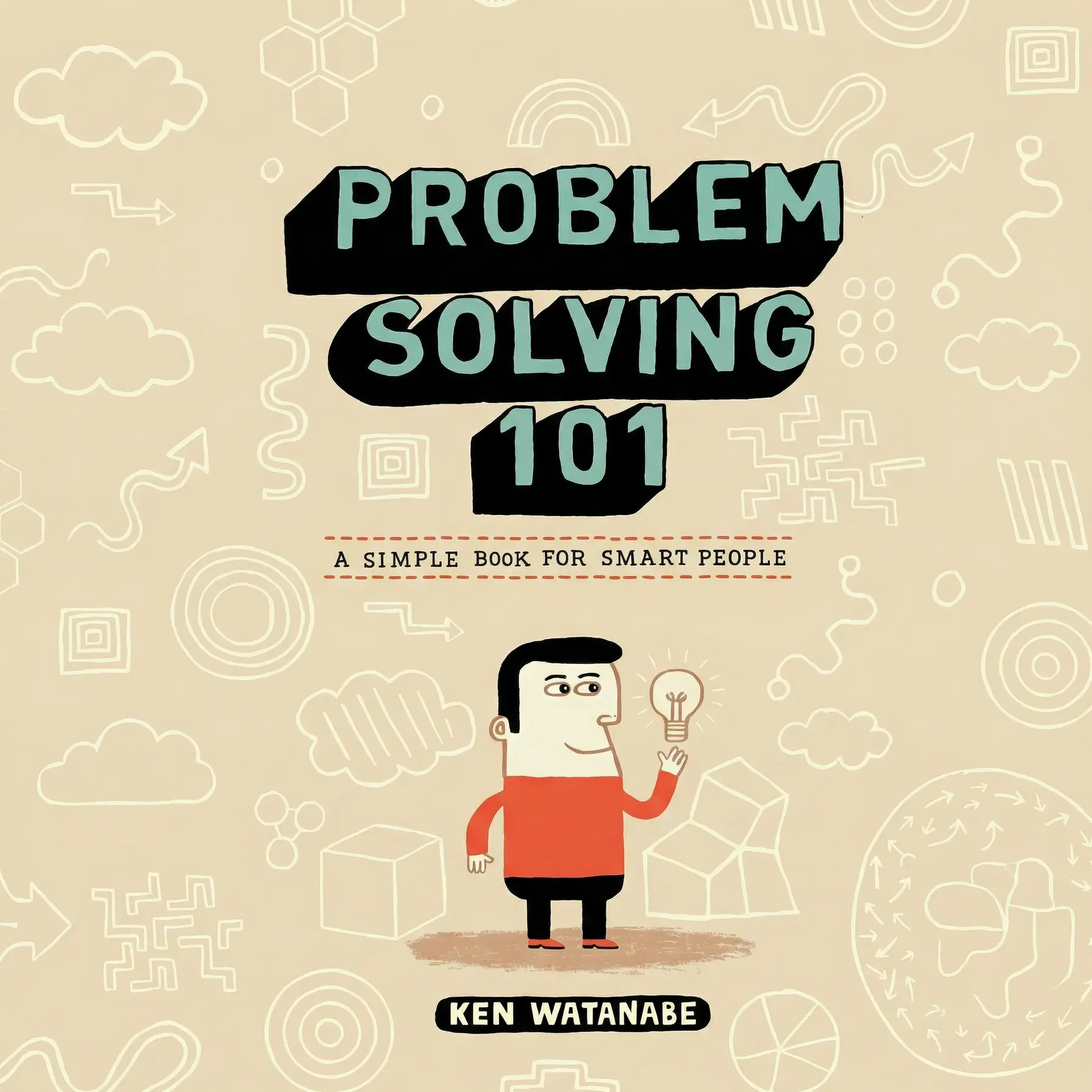
Problem Solving 101: A Simple Book for Smart People
By Ken Watanabe
Master the art of clear thinking and effective action with Ken Watanabe's simplified problem-solving framework, designed to turn complex obstacles into manageable, step-by-step successes for anyone, anywhere.
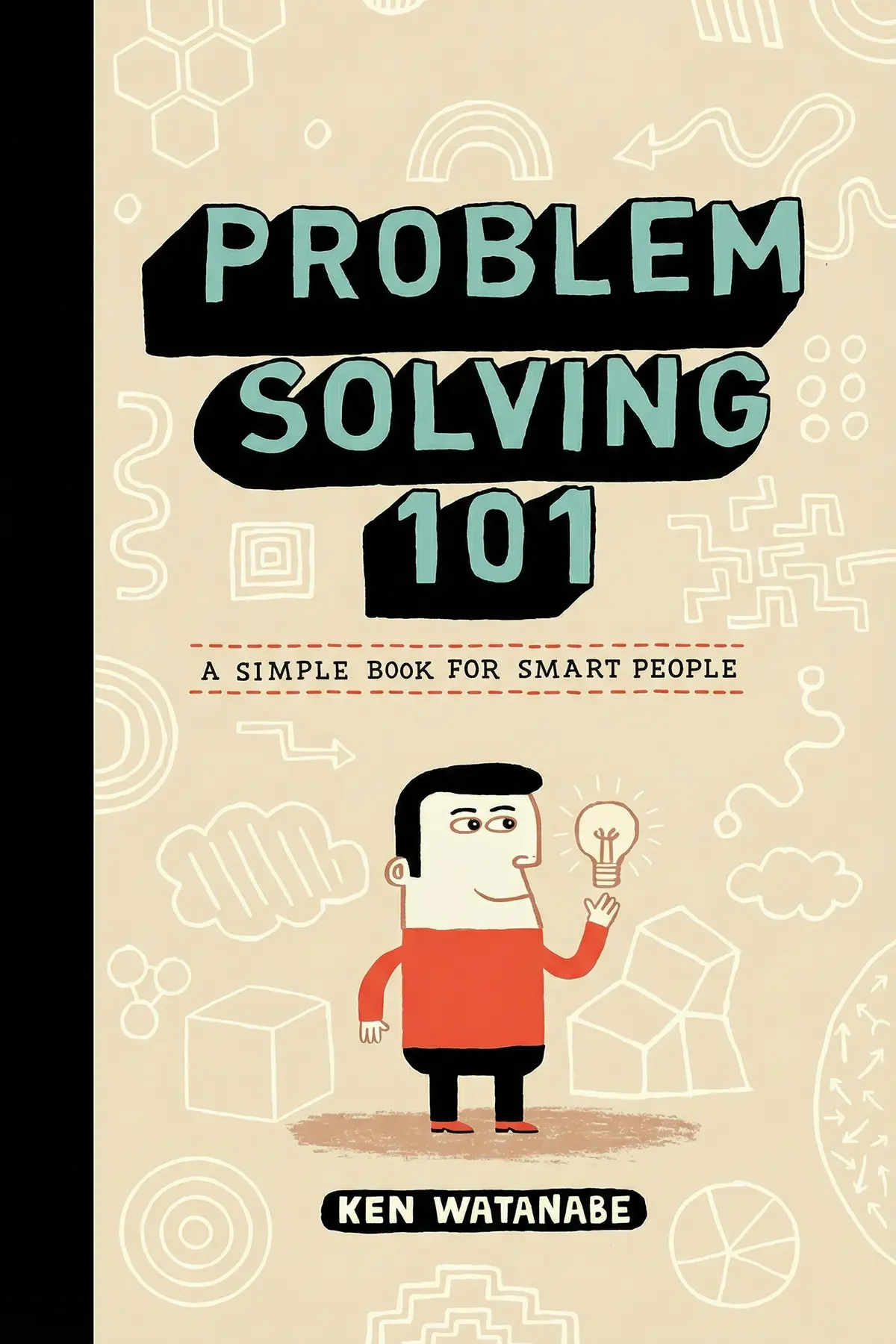
Table of Content
1. Introduction
1 min 10 sec
We have all been there: staring at a goal that feels miles away, blocked by obstacles that seem like a tangled mess. Whether you are trying to fix a project at work, improve your grades, or save up for a dream vacation, the sheer weight of a problem can sometimes feel paralyzing. It is easy to feel like you are just not smart enough or lucky enough to figure it out. But what if the issue isn’t your talent, but your process?
Ken Watanabe’s approach in his guide, originally conceived for students but adopted by professionals worldwide, is built on a powerful premise: solving problems is a skill that anyone can master. It isn’t about being a genius; it is about having a reliable system to take a messy situation and turn it into a clear path forward. This book offers a throughline of simplicity, showing how to peel back the layers of frustration to find the actionable heart of any challenge. By the end of this journey, you will see how a four-step method can transform the way you interact with every hurdle in your life, replacing confusion with a sense of control and purpose. We are going to explore how to stop reacting to symptoms and start solving the real issues, using tools that make the complex world suddenly feel a whole lot simpler.
2. Deconstructing the Mountain
1 min 52 sec
When a problem feels too big to handle, the secret isn’t to work harder, but to look closer and find the specific pieces that are actually broken.
3. Finding the Root Cause
1 min 48 sec
Stop guessing and start investigating by using a visual tool that maps out every possibility to reveal why things aren’t going as planned.
4. Strategy Through Analysis
1 min 38 sec
Not all ideas are created equal, and choosing the right path requires balancing the impact an action will have against the effort it will take to pull it off.
5. The Anatomy of a Dream
1 min 49 sec
Big ambitions often stay out of reach because we fail to quantify the distance between where we are and where we want to be.
6. Mapping the Route to the Goal
1 min 44 sec
By using a logic tree to explore every possible way to reach a target, you can eliminate ineffective paths and focus on what truly works.
7. The Power of Adjustment
1 min 41 sec
Planning is only half the battle; the real mastery comes from tracking your progress and being willing to change course when you hit a snag.
8. Conclusion
1 min 24 sec
As we reach the end of this exploration of Ken Watanabe’s system, the most important takeaway is that problem-solving is not a mysterious gift bestowed upon a few. It is a repeatable, disciplined habit of the mind. Whether you are navigating the complexities of a professional career or simply trying to achieve a personal milestone, the four-step process—identifying the specific problem, finding the root cause, analyzing solutions, and executing with flexibility—provides a roadmap through the fog of uncertainty.
If you find yourself stuck today, remember the actionable advice of using criteria and evaluation. If you are torn between several choices, don’t just wait for a feeling to hit you. List your criteria, rank their importance from a simple plus to a triple plus, and see which option actually measures up. This kind of objective analysis removes the emotional exhaustion of decision-making.
The throughline of this entire approach is that clarity is the antidote to stress. When you stop looking at your challenges as a single, overwhelming blur and start seeing them as a series of logical puzzles, you regain your power. The tools we’ve discussed—logic trees, impact-effort matrices, and gap analysis—are your instruments for carving out success. So, take that big, scary goal of yours, break it into tiny pieces, and start solving the first one. You might just find that the path to your biggest dreams was right there all along, waiting for you to simply clear the way.
About this book
What is this book about?
Problem Solving 101 is a practical, easy-to-follow guide that demystifies the process of overcoming challenges. Originally written to teach critical thinking to Japanese schoolchildren, the book has become a global favorite for adults seeking a structured way to handle business hurdles and personal goals. It outlines a repeatable four-step system: identifying the core issue, finding the root cause, creating a data-driven solution, and executing an action plan. The promise of this book is that no problem—whether it is improving a school band's attendance or saving for a major purchase—is insurmountable when broken down logically. By using visual tools like logic trees and impact-effort matrices, readers learn to stop guessing and start analyzing. It is about moving away from reactive stress and toward a proactive, strategic mindset that fosters confidence and clarity in the face of any difficulty.
Book Information
About the Author
Ken Watanabe
Ken Watanabe is a Japanese author. He was formerly a consultant at McKinsey & Company and is now based in Tokyo where he manages his own education, media and entertainment company, Delta Studios.
Ratings & Reviews
Ratings at a glance
What people think
Listeners find this problem-solving guide to be an excellent primer that details core methods and aids in visualizing decision-making steps. Furthermore, the advice is simple to use, written appropriately for children and adults, and serves as an educational manual for everyone. They also value its amusing and absorbing narrative, with one listener highlighting how it transforms any challenge into an enjoyable experience.
Top reviews
Yam
Wow, I never realized how messy my thought process was until I saw these diagrams laid out so clearly. This book doesn’t just tell you to think better; it gives you the actual tools to dismantle a problem piece by piece. I’ve started using the pros and cons tables for everything from grocery shopping to major life pivots, and the clarity is life-changing. Don't let the 'for kids' origin fool you because most adults I know can’t solve problems this logically. It turns a stressful, overwhelming situation into a fun little puzzle that you can actually solve. Truly, it's an essential guide for every household library.
Show moreWoravit
Ever wonder why some people just seem to 'get' how to fix things while others just flounder? This book reveals that it isn't some innate talent, but a repeatable habit that anyone can master with practice. Watanabe takes high-level McKinsey consulting techniques and makes them accessible to the average person, which is a feat in itself. The illustrations are charming and keep the mood light, which helps when you're trying to tackle stressful topics. I especially appreciated the emphasis on not rushing into decisions without gathered data. It’s a short read that packs a punch, reminding us that the best solutions are usually the most systematic ones. Highly recommended for parents and professionals alike.
Show moreRodrigo
Picked this up on a whim and ended up mapping out my entire career pivot using the frameworks provided. Frankly, I wish I had read this twenty years ago because it would have saved me so much wasted energy on 'dreamer' phases. The distinction between the 'critic,' the 'dreamer,' and the 'problem-solving kid' is a powerful way to audit your own behavior. It’s a very quick read, but the impact lasts much longer if you actually take the time to draw out the trees. It’s rare to find a book that is both this simple and this practical without being condescending. Watanabe has created a masterpiece of functional education.
Show moreIce
The chapter on the logic tree is worth the price of admission alone for the sheer clarity it provides. I’ve read dozens of business books that spend 400 pages saying what Watanabe says in about ten. The beauty of this book is its brevity; it gets straight to the point without any unnecessary corporate jargon. Whether you're a student trying to buy a computer or an executive trying to streamline a department, these steps apply. It’s an empowering read that makes even the most daunting obstacles feel manageable and even a little bit exciting. Don't let the simple exterior deceive you—this is high-level thinking disguised as a children's story.
Show moreWorawit
Look, this wasn't originally meant for CEOs, and that's exactly why it works so well for everyone else. We spend so much time trying to look smart that we forget how to actually solve the problems right in front of us. This book reminds us that systematic thinking is a discipline that requires patience and a willingness to break things down. I loved the section on the Eisenhower matrix and how it helps prioritize tasks based on real impact rather than just urgency. It’s a humble little book from Japan that holds the secret to a much more organized and productive life. If you’re tired of feeling overwhelmed, just buy it and do the exercises.
Show moreChiw
Finally got around to reading this little Japanese gem, and it’s surprisingly effective despite the cute illustrations. Most people overcomplicate their problems until they’re paralyzed by indecision, but this book strips everything back to the basics of logic and action. I loved the breakdown of the 'Kiwi' case study because it shows how luck is often just preparation meeting opportunity. My only gripe is that it feels a bit repetitive if you’ve ever taken a basic project management course. Still, the visual nature of the logic trees makes the concepts stick in a way that dense textbooks never could. It’s a solid refresher for anyone feeling stuck in a rut.
Show moreMason
As someone who manages a small team, I found Watanabe's approach surprisingly refreshing for such a slim volume. We often get bogged down in 'analysis paralysis,' but the 'Problem-Solving Kids' framework forces you to stop complaining and start executing. I actually used the school band example to explain resource allocation to my junior staff, and it clicked instantly. It’s not a revolutionary tome of secret knowledge, but the discipline it preaches is something we all lack in this fast-paced world. My only issue is that some sections feel a bit too brief, leaving you wanting a deeper dive into more complex scenarios. Regardless, it’s a great tool for simplifying the complex.
Show moreAria
Is it a business manual or a middle-grade textbook? To be honest, I'm still trying to figure that out after finishing the last page today. Ken Watanabe obviously knows his stuff coming from a McKinsey background, but the simplification here is so extreme it borders on the absurd. While the systematic approach to breaking down problems is helpful for those who are naturally disorganized, the examples are just too juvenile to keep an adult reader fully engaged. It’s a quick read, maybe thirty minutes at most, but it left me wishing for more meat on the bones. It's great for kids, but calling it a must-read for 'smart people' is quite a stretch.
Show moreJib
Truth is, the concepts here are solid gold, but the delivery is a bit too sugary for my taste. I appreciate the intent of making problem-solving accessible, but the constant references to characters like Miss Mushroom felt like I was back in primary school. If you can look past the fluff, the logic trees are actually brilliant for visualizing bottlenecks in any process. It’s a decent introductory book, but I wouldn't call it life-altering if you've already spent years in the workforce. It’s the kind of thing you read once, take two notes, and then pass on to your niece or nephew. Good for what it is, just not what I expected.
Show moreManika
I felt completely insulted by the marketing of this book as a 'business' guide when it clearly belongs in a kindergarten classroom. To be fair, the logic tree concept is fundamentally sound, but explaining it through the lens of a school band or a character like Miss Mushroom is patronizing to any working professional. I spent the whole time waiting for a real-world corporate application that never actually materialized. If you enjoy being treated like a seven-year-old, then go ahead and dive in. For the rest of us, it's a massive waste of time that offers nothing new to anyone with a basic education. I wanted hard data and sophisticated strategies, not drawings of mushrooms.
Show moreReaders also enjoyed



A Guide to the Good Life: The Ancient Art of Stoic Joy
William B. Irvine
A High-Performing Mind: Strengthen Your Mind and Live Your Best Life
Andrew D. Thompson

Abundance: The Inner Path to Wealth
Deepak Chopra

59 Seconds: Change Your Life in Under a Minute
Richard Wiseman
AUDIO SUMMARY AVAILABLE
Listen to Problem Solving 101 in 15 minutes
Get the key ideas from Problem Solving 101 by Ken Watanabe, plus 5,000+ more titles in English and Thai.
- 5,000+ titles
- Listen as much as you want
- 7-day free trial
- Cancel anytime







