
Man and His Symbols
Carl Jung
Explore the foundational framework of personality through Carl Jung’s lens. This summary decodes how introversion, extroversion, and four mental functions shape our unique ways of interacting with the world and achieving inner wholeness.
1 min 39 sec
In the early twentieth century, the field of psychology was still in its infancy, struggling to find a language that could accurately describe the vast complexities of human nature. In 1913, against the backdrop of a peaceful Swiss lakeside, Carl Jung began to formulate a theory that would eventually provide that language. He noticed that people were not merely a collection of random behaviors or repressed traumas; rather, they seemed to operate according to specific, consistent patterns. These patterns weren’t just quirks of habit—they were fundamental structures of the mind.
His landmark work, Psychological Types, was published in 1921, and it remains one of the most significant contributions to our understanding of the self. This wasn’t just a manual for psychiatrists; it was a roadmap for anyone seeking to understand why they feel at home in a crowded room while their neighbor feels drained, or why some people trust their gut while others demand a spreadsheet of data before making a move. Jung’s work serves as a bridge between our inner experiences and our outer reality.
In this exploration, we are going to look at the throughline of Jung’s thought: the idea that every individual possesses a unique psychological signature. We will unpack the mechanics of psychic energy, the four primary functions of the mind, and the hidden realms of the unconscious. More importantly, we’ll see how these concepts aren’t just theoretical categories, but tools for a process Jung called individuation—the lifelong journey toward becoming our most authentic, whole selves. By the end of this journey, you’ll have a new perspective on your own mind and a deeper empathy for the diverse personalities you encounter every day.
2 min 55 sec
Discover the fundamental divide in human nature: the way we direct our energy toward either the external world or our own internal landscape.
3 min 17 sec
Explore the four distinct tools the mind uses to perceive reality and make sense of the world, from cold logic to gut instinct.
2 min 49 sec
Peel back the layers of the human mind to reveal the shared heritage and personal secrets that drive our behavior from the shadows.
2 min 34 sec
Learn why the parts of ourselves we reject are often the keys to our growth, and how ignoring them creates a ‘fate’ we can’t escape.
2 min 43 sec
Discover the lifelong journey of bringing your unique psychological parts into a harmonious whole, moving beyond mere social roles to your true self.
1 min 36 sec
As we conclude our journey through Carl Jung’s Psychological Types, the overarching message is one of profound self-acceptance and growth. Jung didn’t just give us categories like introversion and extroversion to put ourselves in boxes; he gave us these concepts to help us break out of them. By understanding our natural tendencies and the primary functions we use to navigate the world, we gain the clarity needed to see where we are out of balance. We learn that our ‘weaknesses’ are often just the undeveloped functions that are waiting for our attention.
His work invites us to look beneath the surface of our daily lives and engage with the vast, rich world of the unconscious. It challenges us to face our shadows and to seek a wholeness that incorporates every part of who we are. The throughline of this summary is clear: understanding your type is the beginning of the journey, not the end. It is the foundation upon which you can build a more conscious, authentic life.
As an actionable takeaway, consider this: in the coming week, pay close attention to your reactions to people who are your ‘psychological opposite.’ If you are a logical thinker, notice how you react to someone who leads with their values. If you are an extrovert, notice the tension you feel in quiet moments. Instead of judging these differences, see them as mirrors reflecting the parts of yourself that are calling out for development. By acknowledging these other ways of being, you take your first conscious step on the path of individuation. The map is in your hands; the journey toward your true self is yours to take.
Psychological Types is a seminal work that offers a comprehensive map of the human psyche. Carl Jung moves beyond simple observations of behavior to uncover the underlying structures of personality. He introduces the now-famous concepts of introversion and extroversion, explaining how our psychic energy flows either inward toward thoughts or outward toward the world. Beyond these basic attitudes, the book details four cognitive functions—thinking, feeling, sensation, and intuition—that dictate how we process information and make decisions. The ultimate promise of Jung’s work is the path toward individuation. By understanding our dominant traits and confronting our hidden 'shadow' sides, we can move toward a state of psychological balance. This guide serves as both a tool for self-discovery and a manual for improving our relationships with those who see the world differently than we do.
Carl Jung (1875-1961) was a pioneering Swiss psychiatrist and the founder of analytical psychology. A former president of the International Psychoanalytical Association, his prolific career included major works such as The Psychology of the Unconscious and Synchronicity. Jung’s deep explorations of the human mind earned him honorary degrees from Harvard and Oxford, and his theories continue to influence psychology, literature, and religious studies worldwide.
Carl Jung
Listeners find this work to be a deep assembly of sharp observations, and one listener emphasizes its study of the various ways people mentally react to their surroundings. Opinions on the ease of reading are varied; some listeners consider it a superb selection while others remark that it is not an easy book to read. Overall, listeners feel the content is well worth the investment.
Carl Jung is a master of penetrating the human spirit in ways that modern psychology often fails to do. This book offers a profound collection of observations regarding how individuals respond differently to their shared environment based on internal wiring. I was particularly struck by the discussion on the 'subjective world' of the interpreter, which explains why brilliant minds like Freud and Adler could disagree so fundamentally. Jung doesn't just categorize people; he explains the very machinery of consciousness and the evolution of human thought through the ages. The comparison between the thinking and feeling functions in early theologians was a highlight for me. While the text is undeniably heavy and requires multiple readings to fully grasp, the depth of wisdom found here is worth every penny. It is an essential foundation for anyone who wants to move beyond surface-level personality tests and into true analytical psychology.
Show moreEver wonder why two people can look at the same object and see two completely different realities? Psychological Types provides the answer by exploring the varied psychological responses we have to our surroundings. This is much more than a simple classification system; it is a survey of the history of ideas through a psychological lens. Jung’s erudition is breathtaking, moving from pre-Socratic philosophy to early Christian theology with incredible ease. I found the concept of enantiodromia—the idea that everything eventually turns into its opposite—to be a life-changing realization for my own growth. The book is certainly a challenge, and the sentence structure can be quite complex at times. Yet, the reward is a comprehensive understanding of human nature that feels both ancient and cutting-edge. It is easily one of the most important books I have ever added to my library.
Show moreThis book changed my entire perception of human interaction and personal development. Jung doesn't just give you a label; he gives you a map of the soul's internal landscape. After hearing so much about the collective unconscious, seeing it applied to individual typology was eye-opening. The way he describes the introverted feeling type was spot on and helped me validate my own internal experiences. I particularly enjoyed the analysis of the 'transcendent function' and how it allows us to bridge the gap between opposing parts of ourselves. Some reviews claim it’s unreadable, but I found that if you take it slow, the logic is actually quite clear. It is a remarkable achievement that stands as a testament to Jung's genius. Every serious student of humanity needs to tackle this at least once in their life.
Show moreThe chapter on the 'General Description of Types' is worth the price of admission alone for any psychology enthusiast. Picked this up to settle some debates in the online typology community and found that most people have Jung all wrong. His actual definitions are much more fluid and centered on the flow of psychic energy than the rigid boxes we see today. The distinction he makes between the four functions—thinking, feeling, sensation, and intuition—is brilliant and provides a solid framework for self-analysis. I loved the deep dive into the 'type problem' in poetry, even if it was a bit slow in places. It really illustrates how our psychological makeup influences our creative output and aesthetic tastes. This is an essential text for anyone looking to understand the 'why' behind human behavior. It truly penetrates the surface of our everyday personas.
Show moreJung's ability to map the landscape of the psyche is simply unparalleled in the history of psychology. I’ve been a student of his work for years, but reading 'Types' in its entirety was a different kind of odyssey. The truth is, the book is quite dense, but the effort is repaid with interest in every chapter. His analysis of the differences between Origen and Tertullian was particularly fascinating to me as a history buff. He shows that our theological and philosophical conflicts are often just projections of our internal psychological structures. It’s a very ambitious work that manages to stay credible despite its massive scope. While the prose is elegant, it is also quite heavy, making it a slow burn rather than a page-turner. If you want a profound collection of insights, look no further.
Show moreFinally got around to reading the source material for the MBTI, and it was a revelation. It’s fascinating to see how the original concepts of introversion and extroversion differ from our casual, modern definitions. Jung describes these not as social traits, but as fundamental orientations toward the objective or subjective world. Truth is, the middle sections regarding Schiller and Goethe were a bit of a slog for me personally. I struggled to stay focused during the long-winded historical surveys of philosophical disagreements. Nevertheless, when Jung finally describes the eight functional types, the accuracy is almost eerie. Reading the description of the introverted intuitive type felt like someone had read my private diary. It’s not an easy book to read by any stretch of the imagination, but it is deeply credible. I now understand my family’s quirks through a much clearer lens.
Show moreAs someone who appreciates a scholarly approach to the mind, I found this to be a fascinating, if difficult, journey. Jung manages to weave together history, religion, and clinical observation into a single, cohesive theory of the psyche. I’ll admit that I felt a bit lost during the parts about ancient Greek mythology and its relation to personality. Those sections felt somewhat irrelevant to my initial goal of learning about cognitive functions. However, the chapter on the 'General Description of Types' is a masterpiece of psychological literature. It offers a nuanced view of the 'wholeness' of the individual and the constant tension between dominant and suppressed functions. Some might find the prose too academic, but the level of detail is necessary for the subject matter. It is a significant work that demands your full attention and respect.
Show moreNot what I expected, but in a way that challenged my lazy assumptions about how personality works. I came looking for a simple test and left with a deep appreciation for the history of Western thought. The book functions as a sort of psychological phenomenology, tracing how our inner orientations have shaped philosophy and religion for centuries. To be fair, the sheer length of the book is intimidating, and the vocabulary can be a bit much for a casual reader. I had to keep a dictionary nearby for some of the more obscure terms Jung favors. Despite the difficulty, the insights into how extroverts attach themselves to objective objects were incredibly helpful for my relationships. It’s an excellent read for those who want to do the work. Just don't expect to breeze through it in a single weekend.
Show moreExpect a long haul if you plan on finishing this dense tome. To be fair, most people only care about the last few chapters where the actual personality types are defined, but Jung spends hundreds of pages on historical philosophy first. I found the sections on the 'type problem' in poetry and ancient mythology quite arduous to navigate without a degree in classics. How can a modern reader stay engaged with obscure literary critiques for hours on end? Frankly, the book is brilliant when it finally gets to the point about cognitive functions, but the filler is exhausting. If you are looking for a quick Myers-Briggs guide, this is definitely not it. However, the insights into how the subjective world influences our reality are piercing once you dig them out. It is a rewarding experience if you have the patience of a saint.
Show moreLook, I really wanted to love this, but it was just too much of a struggle to get through the irrelevant sections. I am primarily interested in the psychological functions as they apply to real people today. Reading page after page about the aesthetic theories of Friedrich Schiller felt like a massive detour from the main topic. When Jung is talking about the types themselves, he is a genius and his descriptions are eerily accurate. However, the bulk of the book is so bogged down in academic jargon and obscure historical references that I felt lost half the time. It’s not an easy book to read, and I think most people would be better off with a summary. I appreciate the intellectual depth, but the pacing is truly glacial. It’s worth it for the 'General Definition' chapter, but be prepared to skim the rest.
Show more
Richard Wiseman
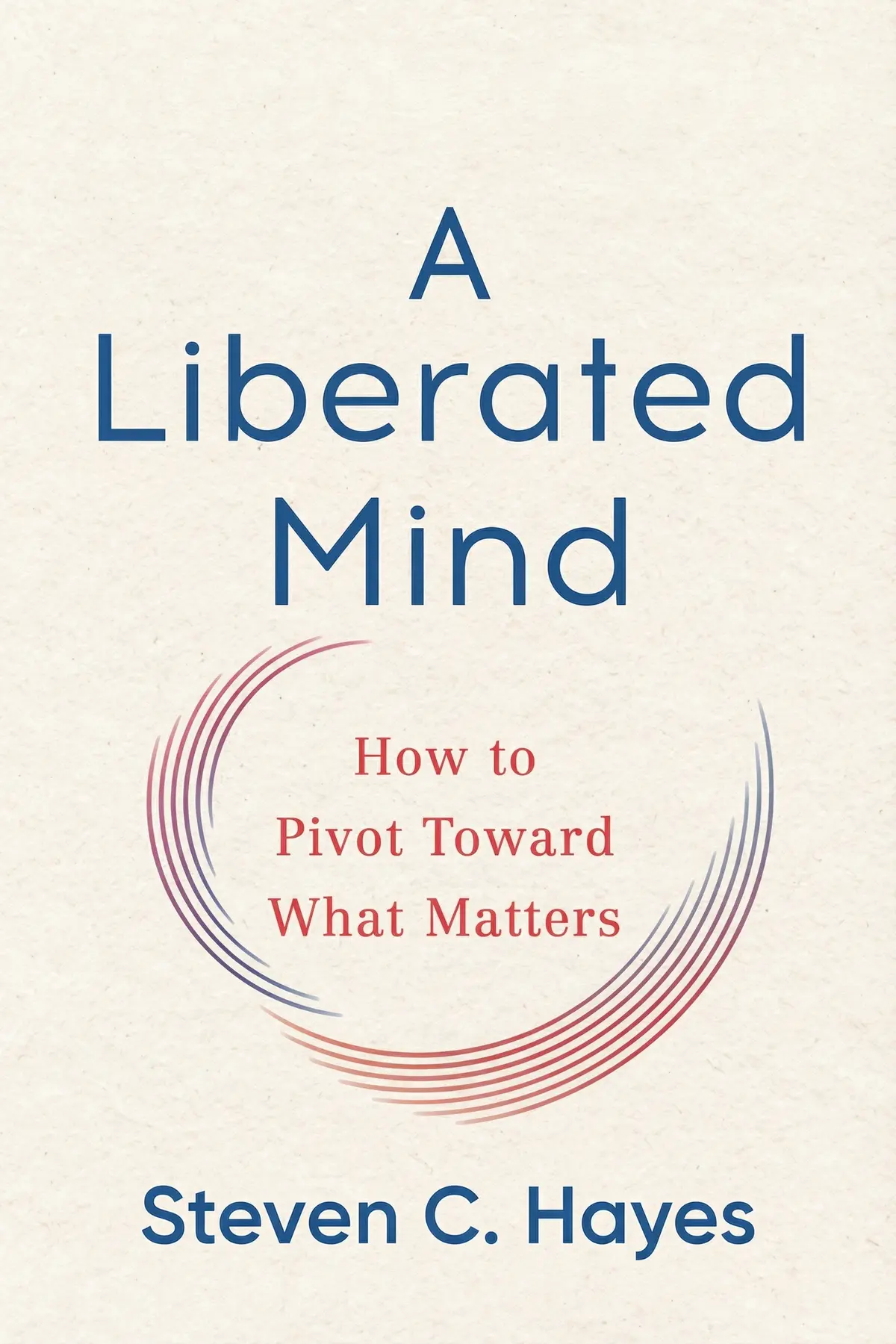
Steven C. Hayes
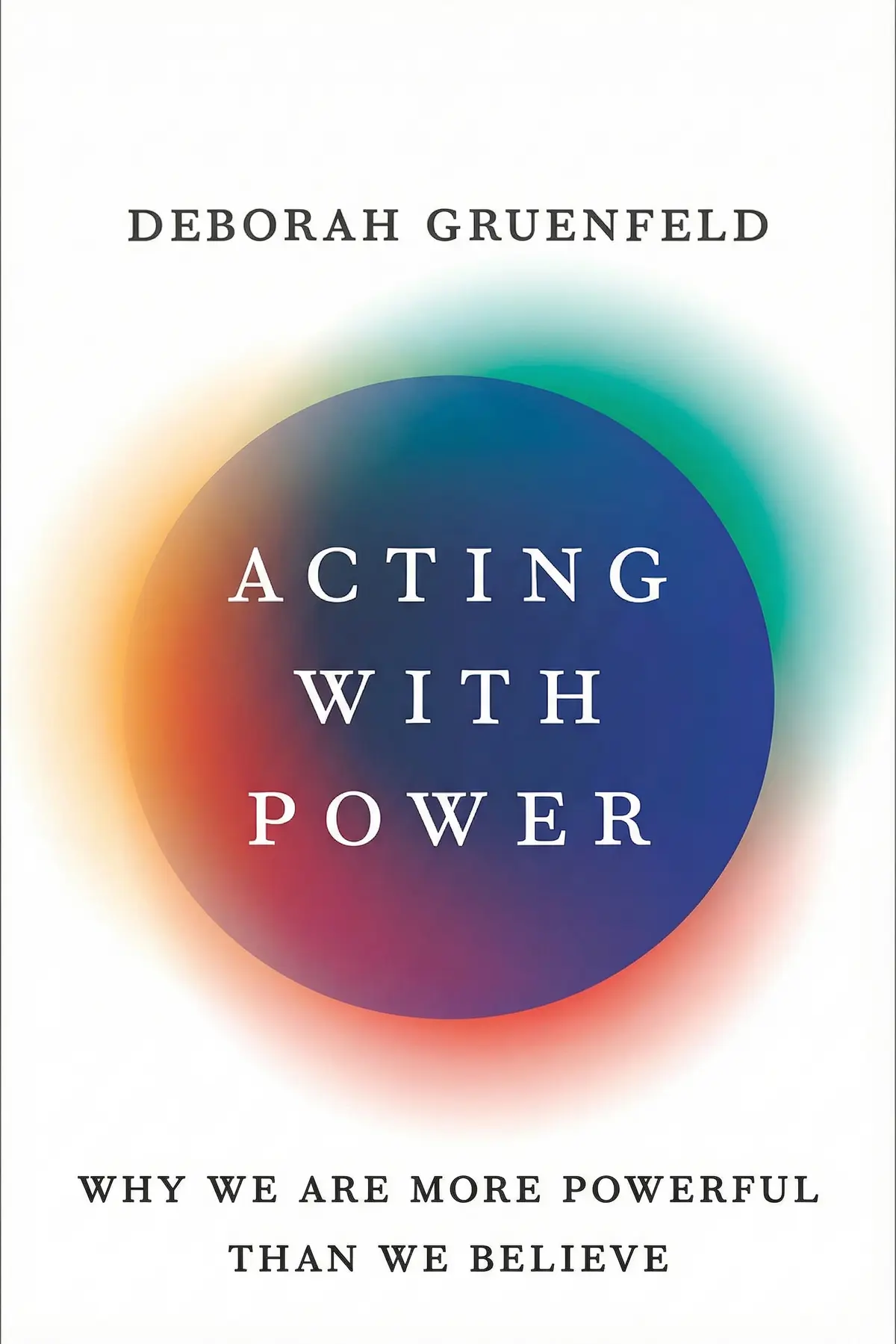
Deborah Gruenfeld
Anthony Pratkanis
AUDIO SUMMARY AVAILABLE
Get the key ideas from Psychological Types by Carl Jung, plus 5,000+ more titles in English and Thai.







