
14 min 53 sec
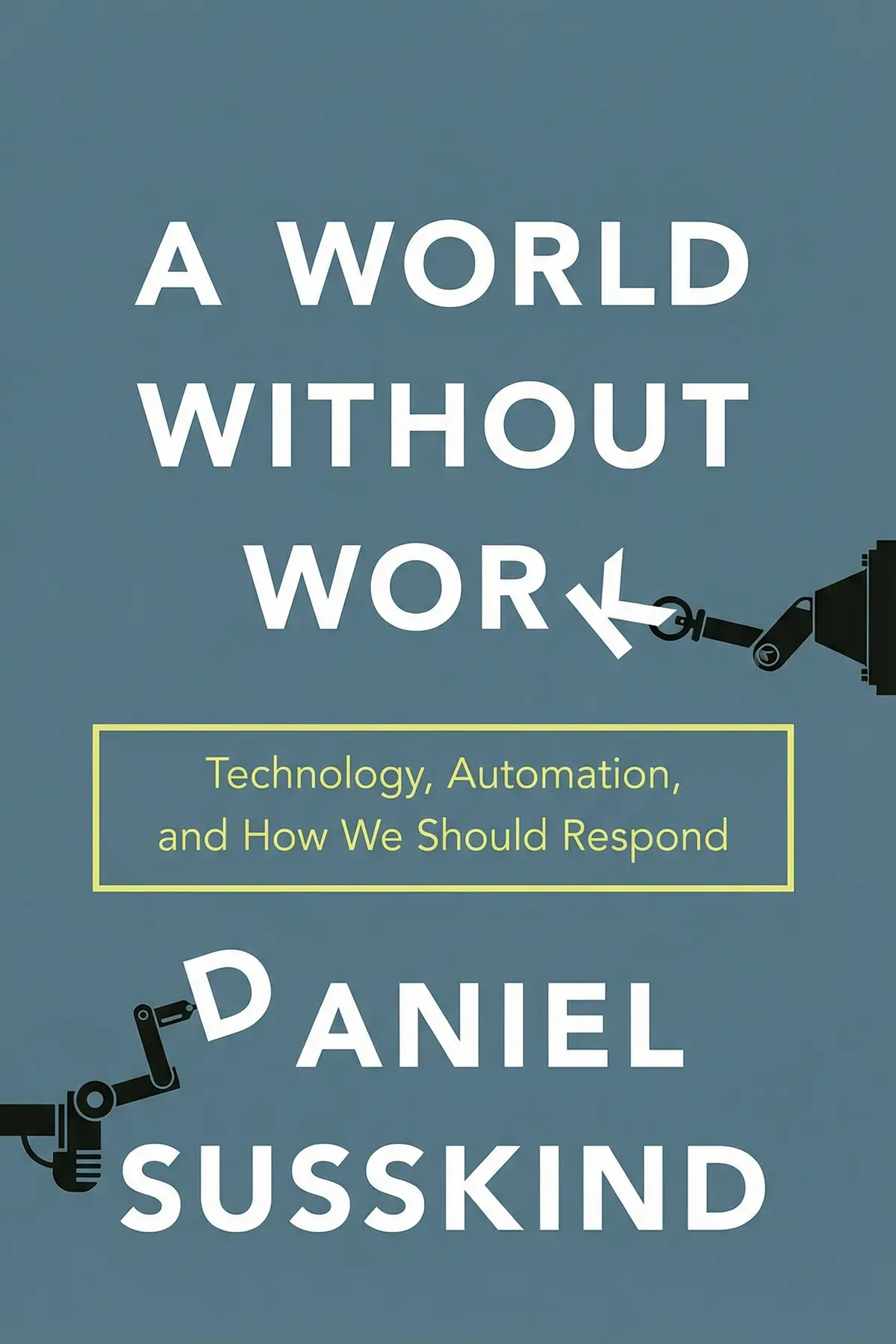
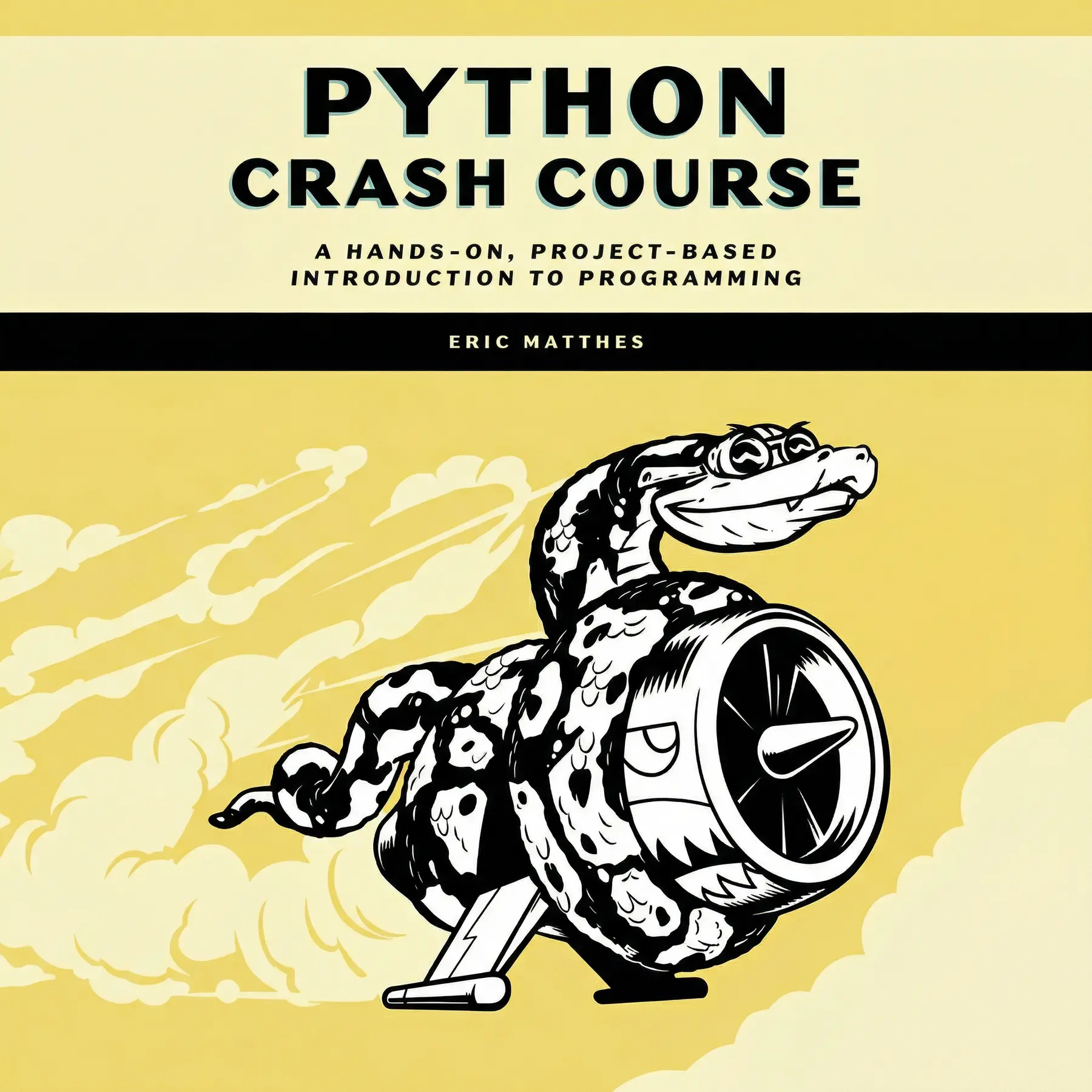
Python Crash Course: A Hands-On, Project-Based Introduction to Programming
By Eric Matthes
A comprehensive, project-based guide to mastering Python. This summary breaks down programming fundamentals, data visualization, and web development, transforming absolute beginners into capable coders through practical, hands-on techniques and real-world applications.
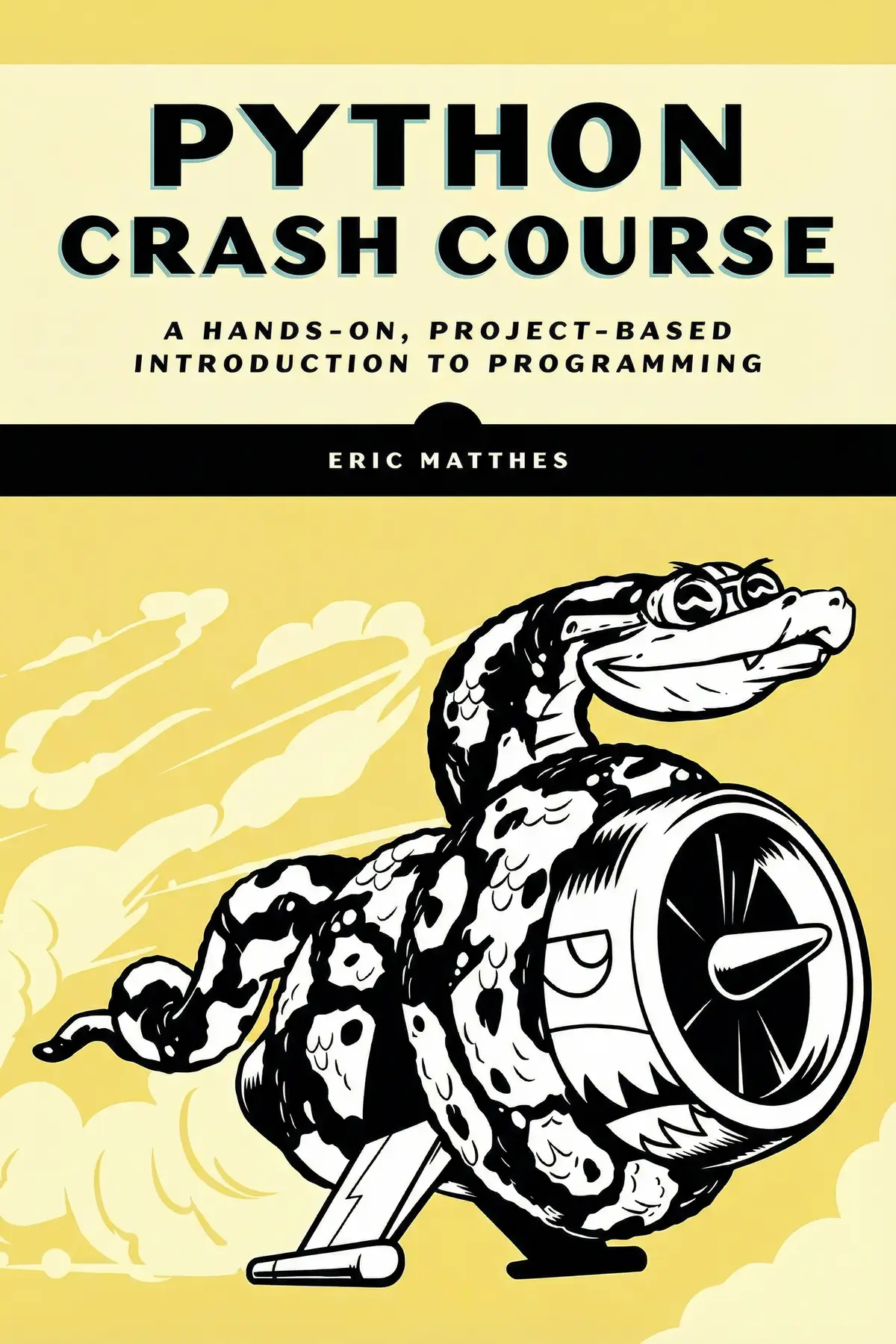
Table of Content
1. Introduction
1 min 32 sec
In our modern era, software is the invisible architecture of our daily lives. Every time we check the weather, play a game, or browse a website, we are interacting with complex code. Among the hundreds of programming languages used to build this world, Python has risen to the top. It is celebrated not just for its power, but for its approachability. Python is designed to be readable, simple, and incredibly flexible. Whether you are interested in automating boring office tasks, analyzing massive datasets, or building the next great web platform, Python is the tool that can get you there.
This exploration of Python Crash Course is designed to take you from a curious observer to a confident creator. We aren’t just looking at the grammar of code; we are looking at how to build logic, handle information, and eventually turn abstract ideas into working applications. We will start with the basic building blocks that every programmer needs, then move into the structures that allow software to handle complex real-world data. From there, we will see how Python can visualize information and even power professional-grade websites.
As you listen, you’ll notice a recurring theme: the ‘Zen of Python.’ This philosophy prioritizes clarity over cleverness. It suggests that there should be one obvious way to do things and that simple is better than complex. By adopting this mindset, you’ll learn to write code that isn’t just functional, but also elegant and easy to maintain. So, let’s begin this journey into the heart of modern programming and see how you can start building your own digital dreams.
2. The Core Components of Python Syntax
1 min 48 sec
Discover the foundational elements of coding, from naming data with variables to manipulating text and numbers through the elegant principles of Pythonic design.
3. Organizing and Manipulating Collections of Data
1 min 33 sec
Learn how to manage groups of information effectively using lists and loops, allowing your programs to handle repetitive tasks with precision and ease.
4. Logic, Decisions, and Dynamic Interaction
1 min 58 sec
Explore the tools that allow software to think and react, using conditional logic and user input to create interactive experiences.
5. Scaling Code with Functions and Classes
1 min 48 sec
Transition from writing simple scripts to building professional software by mastering the art of modularity and object-oriented programming.
6. Making Programs Resilient and Robust
1 min 38 sec
Learn the professional techniques for handling errors gracefully and ensuring your code works as intended through rigorous automated testing.
7. Visualizing Data and Connecting to the Web
1 min 35 sec
Transform abstract numbers into compelling visual stories by leveraging Python’s ability to process files, use APIs, and generate interactive charts.
8. Building and Deploying Dynamic Web Applications
1 min 38 sec
See how the Django framework simplifies the complex process of web development, allowing you to create secure, user-focused sites ready for the world.
9. Conclusion
1 min 23 sec
The journey through Python Crash Course reveals that programming is not a mysterious art reserved for the elite, but a practical and accessible skill that anyone can learn. By starting with the basic syntax and moving through the logic of loops and conditionals, you build a foundation of computational thinking. When you add the power of functions, classes, and error handling, you move from writing simple instructions to engineering robust software systems.
What truly makes Python stand out is its vast ecosystem. As we’ve seen, it can take you from the internal logic of a local script to the visual clarity of data charts and the global reach of a web application. The ‘Zen of Python’ reminds us to keep our code simple and readable, which is the key to long-term success in any technical field.
As you move forward, the most important thing you can do is continue to build. Take the projects and concepts discussed here and make them your own. Experiment with new datasets, try building a different type of web tool, or automate a task in your own life. The skills you’ve learned are the keys to a kingdom of infinite creativity. Whether you want to pivot your career, solve a specific problem, or just understand the world a little better, Python is the engine that can drive you toward those goals. The path to innovation is now open to you—it’s time to start coding.
About this book
What is this book about?
Python Crash Course is an essential roadmap for anyone looking to enter the world of programming through one of the most versatile languages in existence. The book moves beyond abstract theory, focusing instead on the practical mechanics of writing clean, efficient code. It begins with the absolute basics—variables, lists, and loops—before transitioning into more complex concepts like object-oriented programming and error handling. The true promise of this guide lies in its project-oriented approach. It doesn't just teach you how to write code; it teaches you how to use code to solve problems and create tangible products. You will explore how to transform raw data into stunning visual narratives using powerful libraries, and how to build fully functional web applications from scratch. By the end, you won't just know the syntax of Python; you will have the mindset of a developer ready to build, test, and deploy original software.
Book Information
About the Author
Eric Matthes
Eric Matthes is a seasoned educator with a background as a high school science and math teacher. He combines his classroom expertise with a lifelong passion for programming to create accessible, user-friendly educational software. Matthes is dedicated to using open-source solutions to address inefficiencies in the education system, making complex technical subjects approachable for students of all levels.
Ratings & Reviews
Ratings at a glance
What people think
Listeners find this Python guide offers a robust entry into basic programming, featuring setup instructions and thorough explanations that are both accurate and concise. The material is user-friendly for novices, instructing them effectively through various hands-on projects and exercises. Listeners also value the clear writing and engaging style, with one listener specifically noting how it covers scripting comprehensively.
Top reviews
Ping
This book is essentially the gold standard for anyone who wants to dive head-first into the world of programming without drowning. It works for almost every type of learner. Matthes has an incredible knack for breaking down complex syntax into digestible chunks that don't feel condescending, which is vital when you are struggling with your first script. Truth be told, I was terrified of loops and dictionaries until I sat down with this guide. The first half builds your confidence through clear setup instructions and foundational concepts that actually stick in your brain. By the time you reach the projects, you feel ready for the alien invasion game. It’s not just a textbook; it’s more like a mentor guiding you through the initial fog of learning to code in a way that feels natural and steady. While some parts of the Pygame section felt a bit rushed, the overall structure is impeccable for a newcomer.
Show moreNitaya
The chapter on data visualization using Matplotlib was exactly what I needed to kickstart my research project involving mapping historical locations. I had struggled with documentation for weeks before finding this book's concise explanations and well-organized examples. It’s amazing how quickly you can go from 'Hello World' to plotting complex datasets or even working with APIs to fetch live data from the web. Look, the real strength here is that you aren't just memorizing commands; you're learning how a developer thinks about a project from start to finish. I particularly appreciated the instructions on setting up your environment, which is usually the biggest hurdle for newbies. There were a few moments in the Django section where I felt I was just copying code without a full grasp of the 'why,' but it still provided a solid foundation. This book is a fantastic starting point.
Show moreChloe
Picked this up after getting frustrated with online tutorials that skip over the essential basics of Python syntax. Matthes does a fantastic job of walking you through everything. He ensures you don't get lost in the weeds while setting up your environment or writing your first few scripts. However, the exercises in the back half of the book are where things started to feel a bit thin for me because they don't really challenge your logical thinking. Often, the author introduces a third-party package and asks you to implement it without explaining what each line of the library is actually doing. It’s a bit like being given a recipe where half the ingredients are pre-mixed. You get the result, but you don't necessarily learn the flavor profile. Still, for a total beginner, it's a solid experience because it keeps the momentum going through the difficult parts.
Show morePichaya
Wow, what a difference a well-structured book makes compared to scouring random YouTube videos and outdated blog posts. This guide is incredibly readable and clear. It makes the daunting task of learning a new language feel like a series of manageable victories for once. I loved the Space Invaders project specifically because it turned abstract logic into something visual and interactive immediately. To be fair, if you already have a computer science background, you might find the pace a little sluggish in the first hundred pages. But for the rest of us, the hand-holding is exactly what’s required to build a lasting foundation in programming. The way it covers everything from basic lists to complex web apps is truly impressive for a 'crash course' that actually delivers on its name. I am finally starting to feel like a real programmer.
Show moreHang
After hearing so much buzz about this versus Head First Python, I decided to give Matthes a shot for my first foray into scripting. It’s a clear winner in terms of organization and the logical flow of topics, making it nearly impossible for a newcomer to get lost. The hands-on projects are the real meat of the book. They allow you to see how different libraries interact in a real-world scenario. In my experience, the Pygame section was the highlight, even if I don't plan on becoming a game developer. It just helps you understand object-oriented programming in a way that dry exercises never could. My only gripe is that the problem sets can feel a bit 'paint-by-numbers' rather than requiring true creative problem-solving or deep thinking. It’s a minor flaw in an otherwise stellar guide that I would recommend to anyone.
Show moreWatchara
Finally got around to finishing this, and I can say it's probably the most enjoyable technical book I've ever owned. The author has a way of explaining the standard library that makes it feel like you're discovering secret powers rather than studying for a boring exam. I particularly enjoyed the section on web applications because it demystifies how the backend of a professional site actually functions. Frankly, the balance between theory and practice is nearly perfect, though I do agree with others that the exercises could be a bit more challenging. It’s a great book for absolute beginners who need their hands held through the initial setup and basic scripting. If you are looking for a way to jumpstart your coding journey, this is the one. You will definitely feel a sense of accomplishment by the end.
Show moreSuthinee
As a seasoned professional in another field looking to automate some tasks, I found the project-based approach here refreshing and effective. Most coding books focus entirely on dry theory. This one bridges the gap by showing you how to build something functional almost immediately. The web application portion using Django was eye-opening, especially in terms of how it structures a professional-looking site. Personally, I think the exercises in the earlier chapters could have been more demanding to really test our logic. They felt quite repetitive at times. You're mostly just swapping out list values rather than making you think through a new problem. Regardless, the clarity of the writing and the accuracy of the code examples make it a top-tier resource for self-taught learners who need to see results quickly to stay motivated.
Show moreLucas
Ever wonder if those 'beginner-friendly' coding books actually live up to the hype? This one definitely does, providing a solid introduction that feels both professional and accessible at the same time. I spent my weekends working through the API section, and I was genuinely surprised at how quickly I could visualize data from various platforms. The writing style is clean and avoids unnecessary jargon, which kept me engaged through some of the more technical chapters. Gotta say, I wish there was more depth in the Django section, as it feels like you're only scratching the surface of web development. Nevertheless, it served as a perfect springboard for my current career transition into data analysis and scripting. It’s a must-have for your technical library if you are starting from zero. You will learn the basics very effectively here.
Show moreJune
Looking at the landscape of Python resources, this book stands out for its clarity and the high quality of its project-based curriculum. I am currently training to be an instructor. I found the progression of topics to be incredibly logical for a student's learning curve because it doesn't overwhelm them with technical jargon before they understand the basics. The emphasis on real-world practice through Django and Matplotlib ensures that the reader stays motivated and sees the value in what they are learning. To be honest, some of the code for the projects felt a little dated or overly simplified, but that’s the trade-off for making it accessible to everyone. It is an all-round excellent introduction that I will certainly be recommending to my own students in the future. It’s engaging, informative, and provides the exact springboard needed for a career. You won't regret buying this guide.
Show moreNoo
Not what I expected given the glowing reviews, and frankly, I found the second half of the book to be quite disappointing for a serious student. My biggest issue is that while it claims to be a 'crash course,' it often feels like you are just transcribing code from the page. It is a chore. Not gonna lie, I finished the data visualization project and realized I couldn't recreate any of it without looking back at the text for every single line. The reliance on third-party packages without deep explanation means you're learning how to use those specific tools rather than learning the logic of Python itself. It’s fine for a quick introduction, but it lacks the intellectual rigor I was hoping for in a technical manual. If you want to feel like a coder quickly, buy it, but don't expect to actually understand the language deeply. I honestly expected better.
Show moreReaders also enjoyed

AUDIO SUMMARY AVAILABLE
Listen to Python Crash Course in 15 minutes
Get the key ideas from Python Crash Course by Eric Matthes, plus 5,000+ more titles in English and Thai.
- 5,000+ titles
- Listen as much as you want
- 7-day free trial
- Cancel anytime







