
20 min 21 sec
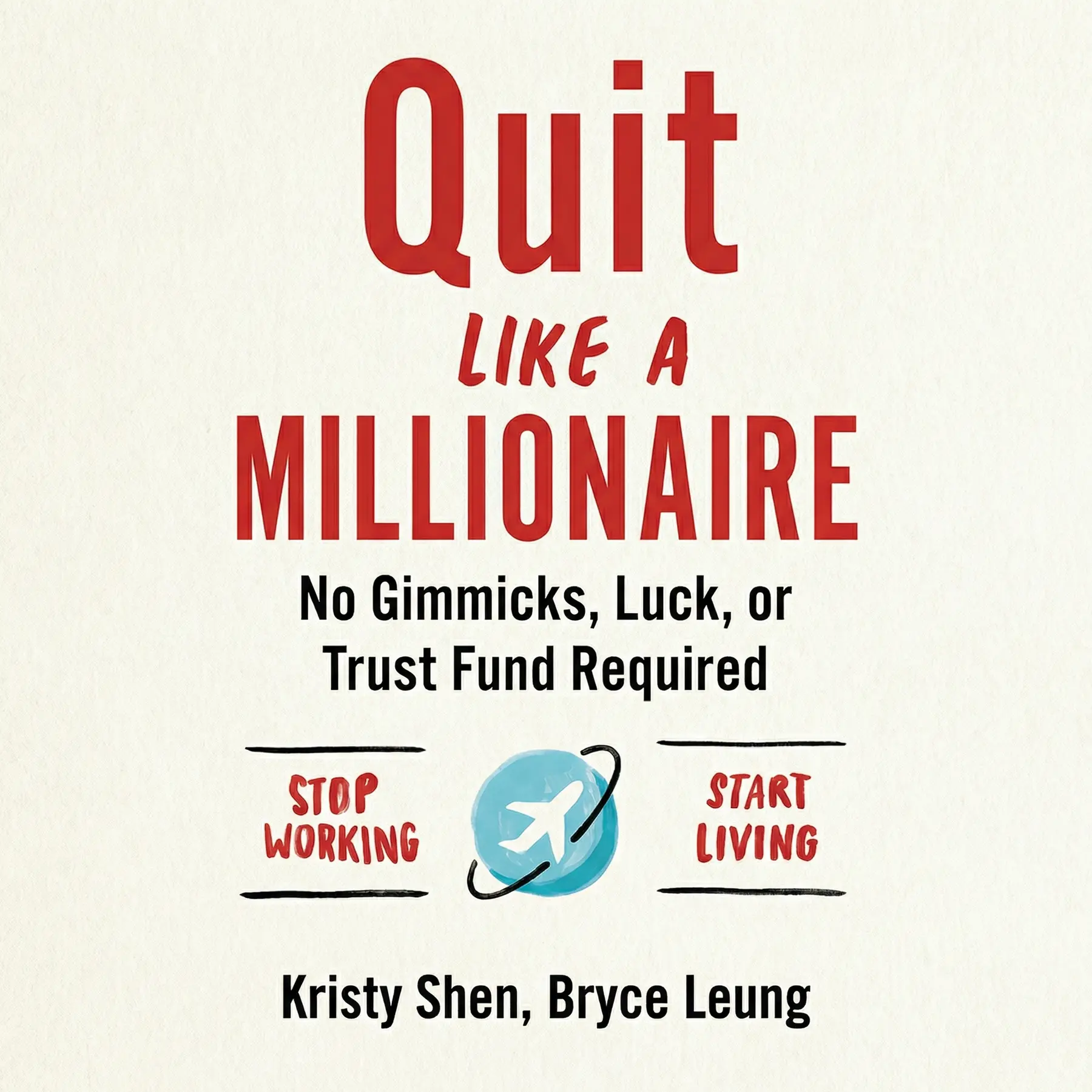
Quit Like a Millionaire: No Gimmicks, Luck, or Trust Fund Required
Discover a math-based roadmap to financial independence. This guide challenges traditional beliefs about homeownership and careers, showing how strategic saving and index investing can lead to early retirement and lasting freedom.
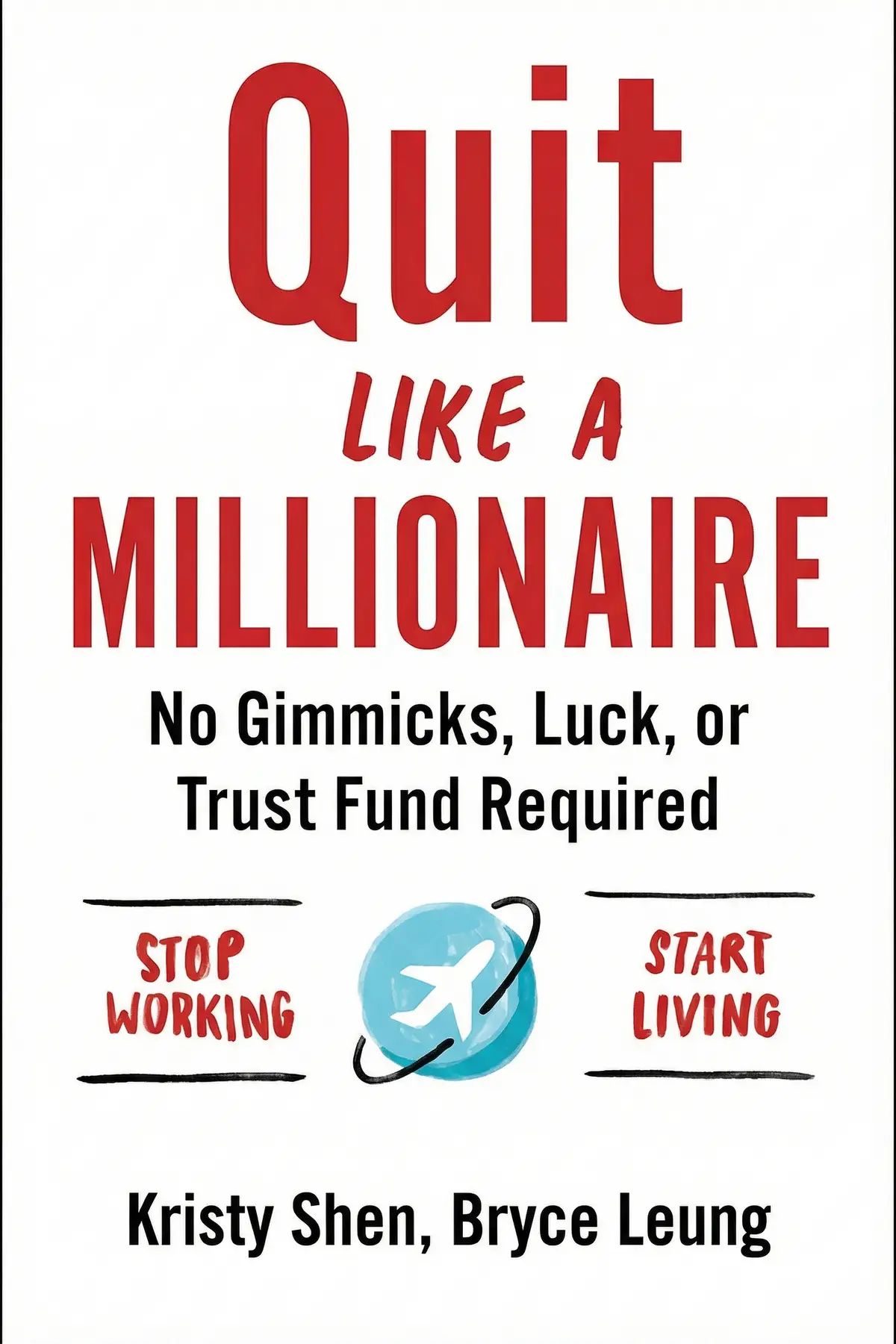
Table of Content
1. Introduction
1 min 33 sec
We live in a world that often treats the pursuit of money with a bit of a cold shoulder. We’ve all heard the phrase that money can’t buy happiness, and while there’s some truth to that—you can’t simply purchase a joyful soul—there is a very important flip side to that coin. Financial lack is a nearly guaranteed path to stress and limitation. When you look at money not as a status symbol, but as a tool, everything changes. It becomes the resource that buys you the most precious thing of all: your time.
Think about the things that truly matter in your life. Perhaps it’s the ability to care for your family, the chance to explore new corners of the globe, or the freedom to sit down with a good book without the weight of a looming deadline. All of these things require a foundation of financial security. This is the philosophy of Kristy Shen, a woman who didn’t wait until she was sixty-five to claim her life. She retired at thirty-one, not because she won the lottery, but because she mastered the math of wealth.
In this journey, we are going to look at the world through a different lens. We’ll examine why some of the most common advice we receive—like following your passion or buying a home—might actually be holding you back from true independence. We’re going to explore a roadmap that is unashamedly focused on logic and numbers, designed to help you erase debt and build a portfolio that works for you. By the time we’re done, you’ll understand the mechanics of early retirement and how to navigate the pitfalls that keep most people stuck in the daily grind. This isn’t about getting rich quick; it’s about getting free forever. So, let’s begin by looking at why your heart might not be the best guide for your career choices.
2. The Fallacy of Following Your Passion
2 min 11 sec
Chasing your dreams might feel inspiring, but the numbers often tell a different story about long-term stability and creative freedom.
3. Debt as a Modern Form of Bondage
1 min 58 sec
Understanding the cultural roots and mathematical reality of debt reveals why it is the ultimate obstacle to your personal liberty.
4. The Strategic Eradication of Consumer Debt
1 min 55 sec
Breaking the cycle of repayment requires a ruthless prioritization of high-interest loans and a temporary commitment to extreme frugality.
5. Happiness Through Experience over Possessions
2 min 01 sec
Our brains are wired to get bored with stuff, but investing in memories provides a lasting psychological return on investment.
6. Deconstructing the Myth of Home Ownership
1 min 43 sec
While often called the ultimate investment, owning a home comes with hidden costs that can actually erode your net worth over time.
7. The Rule of 150 for Smart Housing Decisions
1 min 47 sec
Calculate the true cost of homeownership with this simple formula to determine if buying or renting is the right move for your situation.
8. The Power of Index Investing
1 min 44 sec
Forget trying to pick the next winning stock; betting on the entire market is a safer and more effective way to build long-term wealth.
9. Retirement as a Function of Savings Rate
1 min 51 sec
Your path to freedom isn’t about the size of your paycheck, but the percentage of that income you manage to keep and invest.
10. The Four Percent Rule and Geographic Arbitrage
1 min 52 sec
Master the math of a sustainable portfolio and learn how living in different parts of the world can make your money go much further.
11. Conclusion
1 min 46 sec
As we wrap up this look into the mechanics of financial freedom, it’s worth returning to the fundamental question: what are you working for? For most of us, the answer isn’t ‘more stuff.’ It’s the ability to live on our own terms. We’ve explored how a math-based approach can cut through the noise of traditional financial advice. We’ve seen that your choice of career, your attitude toward debt, and your understanding of the real costs of homeownership are the levers that determine your future.
Building wealth isn’t a mystery; it’s a series of intentional choices. It’s about choosing index funds over hot stock tips, and experiences over expensive gadgets. It’s about understanding that your savings rate is the most powerful tool in your arsenal. By applying the Rule of 150 to your housing and the Four Percent Rule to your savings, you move from the realm of guesswork into the realm of strategy.
Here’s one practical step you can take today to begin this transformation: make your waste visible. We often spend money on things that don’t actually add value to our lives because they become invisible to us. Try the ‘closet test.’ Move all your clothes to one side of your wardrobe and place a marker in the middle. As you wear and wash items, put them on the other side. After a few months, you’ll see exactly which items are your favorites and which are just taking up space. This simple exercise can be applied to your digital subscriptions, your kitchen pantry, and your daily habits.
When you start to see the gap between what you spend and what actually brings you joy, you’ll find the capital you need to start your journey. Financial independence isn’t a destination for the lucky few; it’s a possibility for anyone willing to follow the numbers. The path is clear, the math is on your side, and the freedom is waiting for you to claim it. Thank you for joining us on this BookBits journey toward a more intentional and independent life.
About this book
What is this book about?
Quit Like a Millionaire is a deep dive into the mechanics of wealth-building that ignores the usual platitudes of the financial industry. Instead of suggesting you simply work harder or wait for a lucky break, the authors present a systematic approach based on mathematical reality. They explore why following your passion might be a financial disaster and why the 'American Dream' of owning a home is often a hidden money pit. The book provides a comprehensive strategy for escaping the rat race. It covers everything from the cultural psychology of debt to the technical details of index investing and safe withdrawal rates. By shifting focus from income levels to savings rates and utilizing techniques like geographic arbitrage, the authors demonstrate that financial independence is an achievable goal for ordinary people. It is a promise of freedom—not through gimmicks, but through understanding how money actually works and making decisions that favor long-term liberty over short-term consumption.
Book Information
About the Author
Kristy Shen
Kristy Shen and Bryce Leung are former engineers from Canada who successfully exited the corporate world to retire in their early thirties. As self-made millionaires, they now spend their time traveling globally and sharing financial wisdom through their platform, Millennial Revolution. Their story and methods have gained international recognition, appearing in major publications such as the New York Times, the Independent, and Women’s Health Magazine.
Ratings & Reviews
Ratings at a glance
What people think
Listeners find the guidance in this book to be both stimulating and actionable, providing in-depth breakdowns of investment strategies. The material is thorough and accessible, making for a rewarding experience that listeners can finish over a single weekend. Additionally, the text includes a motivating personal narrative that engages the audience; listeners appreciate the book's affordability, with one mentioning it assists young people in learning about wisely saving money.
Top reviews
Bua
Wow. This isn't your typical dry finance manual; it’s a punchy, math-heavy manifesto that actually makes sense for our generation. Kristy Shen’s journey from growing up in extreme poverty in Maoist China to retiring in her early thirties is both harrowing and deeply motivating. I loved how she broke down the 'Yield Shield' and the specific tax-avoidance strategies without making my eyes glaze over. To be fair, her tone can be a bit polarizing—she’s unapologetically blunt about choosing a high-paying career over 'passion'—but the logic is sound. It’s refreshing to see a woman’s perspective in the male-dominated FIRE community. I finished this in two sittings and immediately started re-evaluating my 401k allocations. If you’re tired of the vague advice found on most finance blogs, this provides a concrete roadmap that feels achievable even if you don't start with a silver spoon.
Show moreNew
Finally got around to reading this, and I’m honestly kicking myself for not finding it sooner. Most investment books are written by people who started with a high net worth, but Kristy’s 'scarcity mindset' resonated with me on a personal level. She doesn't just tell you to invest; she explains the 'why' behind every move using clear, logical frameworks. I particularly appreciated the detailed research into the US tax code despite her being Canadian. The concept of the 'Pot of Gold' and how to bridge the gap until retirement age is something I haven't seen explained this clearly elsewhere. It's a comprehensive guide that covers everything from choosing a degree to geographic arbitrage. The humor is sharp and keeps the momentum going through the dryer technical bits. This is easily the most practical finance book I’ve read in the last five years.
Show moreSue
Ever wonder why we're taught that homeownership is the only way to build wealth? This book completely deconstructs that myth and replaces it with a fascinating, math-driven strategy for total freedom. I loved the 'Pot of Gold' metaphor and the very specific advice on how to draw down your portfolio without going broke. Shen and Leung have a great way of taking intimidating financial concepts and making them actually fun to learn about. The writing is witty and fast-paced, which is a rare feat for a book about index funds. Even though I’m not planning to retire at 31, the concepts of geographic arbitrage and the 'Cash Cushion' gave me a much clearer sense of security. It’s a worthwhile investment of your time that provides way more value than its cover price. Highly recommend for any young person starting their career.
Show moreSaranya
Look, if you want a blueprint that actually accounts for the math instead of just 'vibes,' this is it. Kristy Shen doesn't sugarcoat anything. She shows exactly how she and Bryce went from $0 to $1M by being ruthless with their expenses and smart with their investments. The breakdown of how to use various retirement accounts to your advantage is the best I've seen in print. I loved the focus on the 'Sequence of Returns' risk; it's a topic most beginners ignore but it's crucial for early retirement. The book is well-organized, moving from her childhood in China to her career in Canada and then to their global travels. It’s an inspiring story backed by cold, hard numbers. Whether you want to retire tomorrow or in twenty years, the lessons on building a 'Yield Shield' are essential.
Show moreLeila
Picked this up after seeing it on a few FIRE blogs, and I have to say, the 'rent vs. buy' math was a total eye-opener. As a millennial living in an overpriced city, the pressure to buy a house is constant, but Shen uses hard data to show why renting might actually be the faster path to wealth. My only minor gripe is that she occasionally glosses over the nuances of the American healthcare system, which is much more of a nightmare than the book implies for those without Canadian safety nets. Still, the technical breakdown of index funds and tax-loss harvesting is top-tier. The writing is snappy and humorous, making complex topics like the 4% rule feel like a casual conversation. It’s a great weekend read that actually leaves you with actionable steps instead of just 'feel-good' fluff about saving pennies on lattes.
Show moreBun
As someone who grew up in a middle-class bubble, Kristy’s backstory was a real wake-up call regarding the privilege we often take for granted. Her survival-based approach to money is fascinating, though her 'work a job you hate for the money' stance is a tough pill to swallow for some. The math she presents is incredibly compelling, especially the breakdown of how fees can eat your retirement alive. I do wish there was more focus on the risks of a litigious society—she seems to ignore the need for umbrella insurance or asset protection entirely. That said, her explanation of the 'Yield Shield' during market downturns is worth the price of the book alone. It’s a smart, calculated look at how to win at capitalism without being a 'psycho' about it. A very solid four stars for the clarity and the unique cultural perspective she brings.
Show moreWachira
In my experience, most money books ignore the psychological barriers of being risk-averse, but this one leans right into them. Kristy’s 'engineer' approach to risk management is refreshing because it doesn't just say 'dont be afraid,' it gives you the math to prove you'll be okay. The section on the 'Yield Shield' was particularly insightful for someone like me who gets nervous during market dips. I did find the dismissal of Dave Ramsey’s existence a bit odd, as his methods are the starting point for so many people, but her strategy is definitely more advanced. The book is comprehensive, covering both US and Canadian contexts, which is rare. It’s not perfect—some of the lifestyle choices sound a bit miserable—but the financial mechanics are undeniably effective. If you want a blueprint for independence, this is it.
Show moreWaree
After hearing Kristy on a podcast, I had to see if the book lived up to the hype. Frankly, it’s one of the most entertaining finance books I’ve ever picked up. The authors have a sharp, irreverent voice that keeps you engaged even when they are diving deep into tax-loss harvesting or the intricacies of the 401k. I appreciated the case studies, though I would have liked to see more diversity in the examples—it felt a bit heavy on tech workers and engineers. Still, the core message about prioritizing 'freedom' over 'stuff' is one that more people need to hear. It’s a great weekend read that simplifies the complex world of investing without being condescending. Just be prepared for some brutal honesty about your spending habits and your career choices.
Show morePairot
To be fair, the first few chapters where she discusses her childhood were a bit of a rollercoaster for me. While her story is impressive, the way she dismisses the 'follow your passion' mantra feels a bit cynical, even if it is pragmatic for reaching early retirement. The book is heavily focused on the stock market as the only viable path, which ignores the benefits of real estate or side hustles that many other authors swear by. I also found the lack of discussion on asset protection and liability a major oversight for someone building a million-dollar portfolio. However, the breakdown of how to legally minimize taxes in both Canada and the US is brilliant. If you can get past the somewhat abrasive 'engineer-brain' tone, there are some genuine gems of wisdom here regarding investment strategy and the psychology of scarcity.
Show moreCha
Not what I expected, specifically regarding the housing debate which felt a bit narrow in scope. Comparing a cheap rental to an expensive mansion with a massive mortgage isn't exactly a fair fight, and she skips over the hidden costs of renting like moving fees or security deposits. The tone is also quite aggressive at times; she clearly has no patience for conventional financial wisdom or people who don't prioritize math over emotion. On the plus side, her study of the 4% rule and sequence of returns risk is excellent. She makes the stock market feel less like a casino and more like a tool. It's a useful read if you want to optimize your taxes, but take the lifestyle advice with a grain of salt. It feels like a book written for a very specific type of person—someone who is willing to be hyper-frugal now to be free later.
Show moreReaders also enjoyed
AUDIO SUMMARY AVAILABLE
Listen to Quit Like a Millionaire in 15 minutes
Get the key ideas from Quit Like a Millionaire by Kristy Shen, plus 5,000+ more titles in English and Thai.
- 5,000+ titles
- Listen as much as you want
- 7-day free trial
- Cancel anytime







