
17 min 58 sec
Reading Like a Writer: A Guide for People Who Love Books and for Those Who Want to Write Them
Discover how to elevate your writing by studying the masters. Francine Prose demonstrates how intentional word choice, sentence rhythm, and meticulous details transform reading into a powerful masterclass for any aspiring writer.
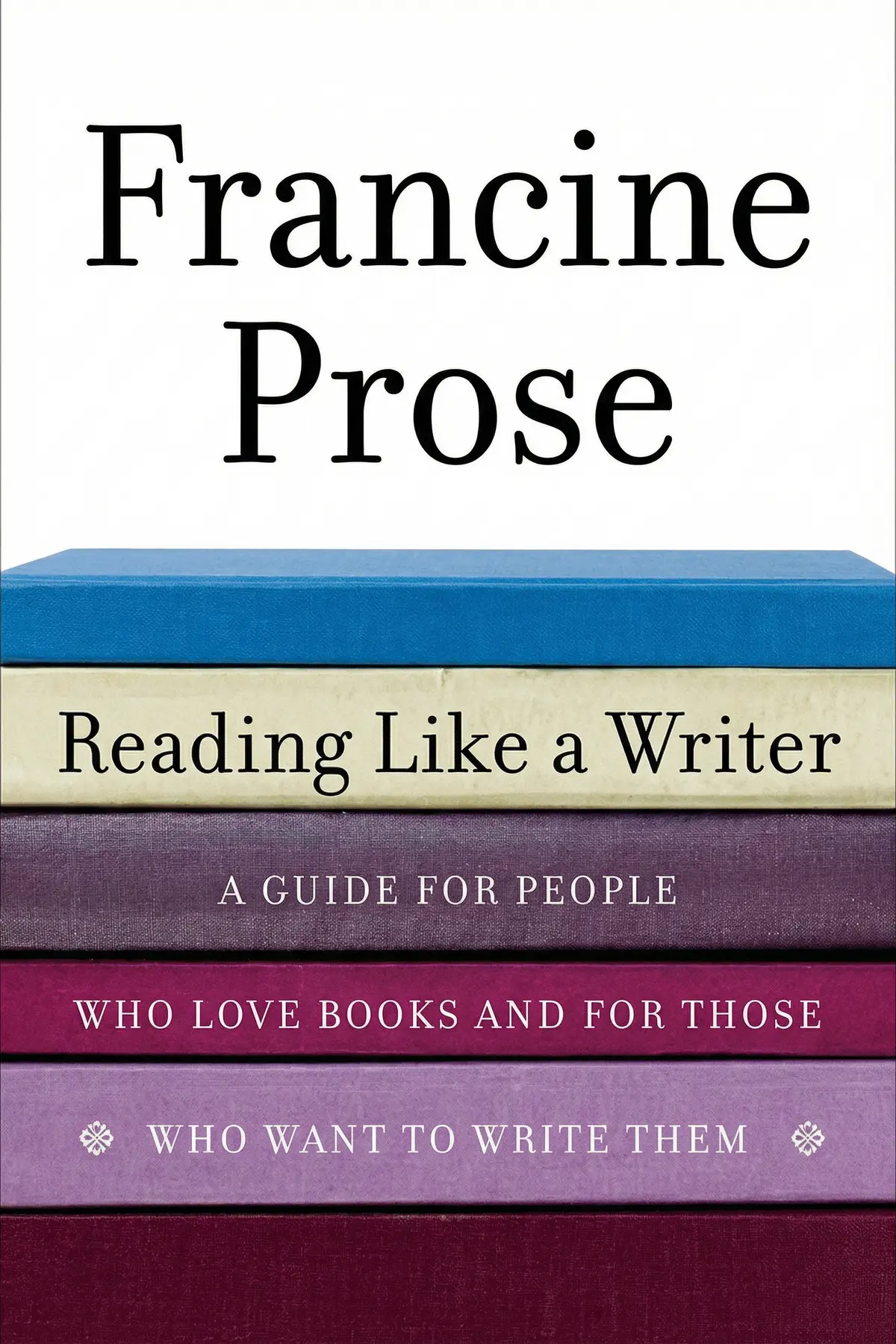
Table of Content
1. Introduction
1 min 58 sec
Have you ever found yourself standing in front of a massive bookshelf, staring at the spines of classic novels, and wondering what the secret is? We often look at a finished masterpiece and see it as a monolith—a perfectly formed object that simply appeared in the world. But for those of us who want to write, or even for those who simply want to understand the books we love more deeply, that perspective is a bit of a trap. We shouldn’t be looking at the finished product as a single unit. Instead, we need to look at the individual bricks, the mortar, and the blueprint.
This is the core philosophy of Francine Prose’s approach to literature. She suggests that if you want to write a great novel, you don’t necessarily need a formal degree or a stack of instructional manuals telling you where the inciting incident should go. What you need is a library card and a significant amount of patience. The premise here is that the greatest teachers in the world are already sitting on your shelves. They are the writers who have solved the very problems you are currently facing.
But here is the catch: you can’t learn from them if you read the way most of us do in the modern age. We are trained to consume information quickly. We skim, we hunt for the main point, and we rush toward the ending to see how it all turns out. To read like a writer is to do the exact opposite. It is an act of slowing down to a crawl. It is about becoming curious about why a specific word was chosen over its thousand synonyms, or why a sentence has a particular lilt to it.
In this journey, we’re going to explore how to transition from a consumer of stories into a student of craft. We’ll look at the microscopic level of the single word, move up to the architecture of the sentence and the paragraph, and eventually see how those small choices build the massive pillars of character and narration. By the end, you’ll see that writing isn’t a magical gift bestowed upon the lucky; it’s a series of conscious, careful decisions that you can learn to make for yourself.
2. The Necessity of Slowing Down
2 min 12 sec
In an era of fast-paced information, we have forgotten how to truly see the words on the page. Learn why slow reading is the ultimate writing tool.
3. The Power of Word Choice
2 min 09 sec
With over a hundred thousand words to choose from, a writer’s specific selection reveals their entire strategy. Discover how one word can define a story.
4. Crafting the Musical Sentence
2 min 01 sec
A beautiful sentence is more than just a conveyor of facts; it is a piece of music. Learn how rhythm and clarity work together.
5. Paragraphs as the Lungs of a Story
1 min 57 sec
Paragraphs provide the rhythm of thought and emphasis. Understand why the way you break your text is as vital as the words themselves.
6. The Art of Narrated Perspective
2 min 02 sec
Whether through the ‘I’ of a first-person account or the ‘He/She’ of the third person, the narrator’s voice is the reader’s only guide.
7. Defining Characters Through Action and Speech
1 min 54 sec
Great characters aren’t built from lists of traits, but from what they do, think, and say. Learn the three pillars of characterization.
8. The Convincing Power of Tiny Details
1 min 57 sec
Precision is what makes a fictional world feel real. Discover why a specific car or a small gesture is the key to literary truth.
9. Conclusion
1 min 48 sec
As we wrap up this exploration of the writer’s craft, the most important takeaway is a shift in your identity as a reader. You are no longer just someone who consumes books; you are an apprentice to every author you read. The magic of literature isn’t something that happens by accident. It is the result of a thousand tiny, deliberate choices—the word, the rhythm, the paragraph, the detail. By slowing down and paying attention, you are essentially peering over the shoulder of the great masters as they work.
You’ve seen how a single nameless character can represent a whole class of people, how a sentence can mimic the sound of falling snow, and how a ten-year-old car can tell a story of a broken marriage. These aren’t just observations; they are tools that are now in your kit. The next time you sit down to write, don’t feel like you have to invent the wheel. Look back at the books that moved you. Rip them apart. See how they were put together.
If there is one final piece of actionable advice to carry with you, it is this: write with courage. Often, we are held back by the fear of judgment—from critics, from our peers, or even from our families. But great literature is rarely born from playing it safe. Many of the books we now consider classics were seen as strange or even scandalous when they first appeared. So, give yourself permission to write something that might be ‘too much.’ Write something your mother wouldn’t like. Break the rules you think you’re supposed to follow. By combining the technical precision of close reading with the bravery to find your own voice, you stop just loving books and start creating them. The library is waiting for you, and now, you know exactly how to listen to what the books are trying to tell you.
About this book
What is this book about?
This exploration of the literary craft argues that the most effective way to learn writing is not through seminars or rulebooks, but through the deliberate act of close reading. Francine Prose invites readers to slow down and view literature from the inside out, examining how the world's greatest authors construct their stories one word at a time. By moving past the habit of skimming for plot, you will learn to see the architectural beauty of a sentence and the psychological depth of a well-placed paragraph. The book promises to refine your creative instincts by showing you how to find inspiration in the classics, ultimately helping you find your own unique voice through the lessons hidden in plain sight on your bookshelf.
Book Information
About the Author
Francine Prose
Francine Prose is a celebrated best-selling author and essayist. Her distinguished career includes being a finalist for the National Book Award in 2000 for her novel, Blue Angel. Over the years, she has been the recipient of numerous literary prizes, cementing her status as a significant voice in contemporary literature.
Ratings & Reviews
Ratings at a glance
What people think
Listeners find this work an essential guide for budding authors, delivering intriguing nuances of effective prose alongside perspectives on literary masterpieces. The material is also an engaging listen that features practical illustrations, with one listener highlighting the presence of lengthy excerpts from famous literature shared in their entirety. Furthermore, they prize the intellectually stimulating themes and believe it is a worthwhile investment.
Top reviews
Rania
Look, if you are the type of person who geeks out over a perfectly placed comma, this is your bible. Francine Prose—and yes, that name is too perfect—has delivered a masterclass in literary appreciation. She doesn't give you a formulaic checklist. Instead, she gives you a pair of spectacles to see how the greats actually do it. I spent hours following her through the works of Joyce and O'Connor. It’s fascinating stuff. While some people complain about the length of the quotes, I found them essential for context. You can’t learn to build a house without looking at the bricks. This is an essential addition to any writer’s bookshelf. It is worth every penny.
Show moreNong
Prose has written a profound meditation on the connection between the reader’s eye and the writer’s hand. This isn't your typical 'how to get published' fluff. It is a rigorous, beautiful examination of the craft at its most granular level. I especially appreciated the final chapter on 'Reading for Courage.' It reminded me that writing is a brave act. Every so often, a book comes along that makes you want to immediately sit down at your desk, and this is one of them. The insights into the works of Chekhov were particularly moving. It’s a thought-provoking, essential guide for those who truly love the art of fiction. I can't recommend it enough.
Show moreSupranee
After hearing several authors cite this as a major influence, I finally committed to a close reading of my own. I was not disappointed. The book is packed with helpful examples that demonstrate the fascinating subtleties of great writing. I loved how she broke down sentences to show how they move us to read more closely. My Amazon cart is now overflowing with the classics she referenced. Truth is, this book is a treasure trove for anyone who wants to understand the 'why' behind the 'what.' It’s a celebration of literature that makes you want to be a better reader and a more intentional writer. Truly a must-have for the serious student.
Show moreKaen
As someone who spends more time reading than writing, I found this deeply comforting yet occasionally tedious. Prose lives up to her name with some beautiful insights into the craft. However, the book often feels like an MFA session you didn't sign up for. The best part is easily the 'Books to be Read Immediately' list at the back. I’ve already added a dozen titles to my cart! I’ll be the first to admit that her close reading method has merit, even if the lengthy excerpts from the classics can be exhausting to wade through. It’s a solid resource for those with the patience for it. Definitely a thought-provoking read for any book lover.
Show moreElan
Finally, a guide that prioritizes the beauty of a single sentence over the mechanics of a three-act structure. Prose argues that we learn to write by practice and by studying the masters. This is a refreshing take in an age of formulaic 'how-to' books. I particularly loved her deep dive into Chekhov; her enthusiasm is contagious. My only gripe is that she leans so heavily on the 19th century that more contemporary voices feel ignored. Still, for an aspiring novelist, the focus on 'sentences' and 'words' is invaluable. It’s a demanding read that forces you to slow down. Well worth the money for the mindset shift alone. It’s a celebration of art.
Show moreSook
Picked this up during my first creative writing workshop and it completely shifted my perspective on what makes a book 'good.' Prose has this way of deconstructing a paragraph that makes you feel like you’re finally seeing the engine of the story. I found the chapter on 'Dialogue' especially helpful for identifying my own bad habits. Not gonna lie, she can come across as a bit of a literary elitist at times. She definitely has a specific 'type' when it comes to her favorite authors. But if you can get past the snobbery, there is a wealth of knowledge here. It’s a must for anyone who wants to move beyond just 'telling a story' and start crafting real art.
Show moreHom
Honestly, I found myself oscillating between utter fascination and mild annoyance while working through these chapters. The anecdote about her Mormon students reacting to Kleist’s 'The Marquise of O—' was brilliant and funny. It proves that great literature can cross any cultural divide. Yet, the book is dense. It’s not something you can breeze through in an afternoon. Some of the chapters, like the one on 'Gesture,' felt a little undercooked compared to her exhaustive analysis of sentences. However, the thought-provoking nature of her critiques is undeniable. If you’re serious about your craft, you need to understand the subtleties she’s pointing out. It’s a dense but ultimately rewarding look at the mechanics of fiction.
Show moreBua
The chapter on gesture alone changed the way I look at dialogue in my own drafts. Prose highlights how the smallest physical movement can reveal more about a character than three pages of internal monologue. This is exactly the kind of 'writerly' insight I was looking for. Admittedly, her focus is strictly on literary fiction, so don’t expect any tips on world-building or magic systems. But the fundamentals of language are universal. I’ve started reading my own favorite books with a highlighter in hand, trying to spot the 'deceptively minor decisions' she describes. It’s an eye-opening exercise for any aspiring author. This book is a slow burn but it's incredibly rewarding to finish.
Show morePhimwan
Why is there no chapter on plot? To be fair, I should have realized from the title that this was going to be a 'high-falutin' academic exercise when the author mentioned learning to read by tackling Proust in the original French while in India. Prose seems to despise genre fiction, never once mentioning a thriller or a sci-fi novel unless it’s to imply they are 'big crappy novels.' She is clearly a literary snob. While the chapter on paragraphing had some decent observations, most of the book is just her geeking out over 19th-century Russians. If you aren't trying to write the next Victorian masterpiece, you might find her advice narrow and pretentious. Not for me.
Show moreSirinat
Skip this if you're looking for a practical manual. Frankly, the author’s technique of lecturing for a moment and then hiding behind pages of quotes got on my nerves. It felt like filler. I was hoping for specific rules on how to use certain tools to create effects, but Prose just keeps insisting that talented writers don’t need them. Then there is the weird, elitist anecdote about her bus trip which made her seem totally out of touch with the 'riff raff' of the real world. The truth is, this book is less of a guide and more of a series of long-winded literary appreciations. It left me feeling no better off than before I opened it. Frustrating.
Show moreReaders also enjoyed
AUDIO SUMMARY AVAILABLE
Listen to Reading Like a Writer in 15 minutes
Get the key ideas from Reading Like a Writer by Francine Prose, plus 5,000+ more titles in English and Thai.
- 5,000+ titles
- Listen as much as you want
- 7-day free trial
- Cancel anytime







