
22 min 20 sec
Reinventing Organizations: A Guide to Creating Organizations Inspired by the Next Stage of Human Consciousness
Explore the evolution of organizational structures and the emergence of Teal organizations. Learn how self-management, wholeness, and evolutionary purpose are redefining the modern workplace for greater fulfillment and efficiency.
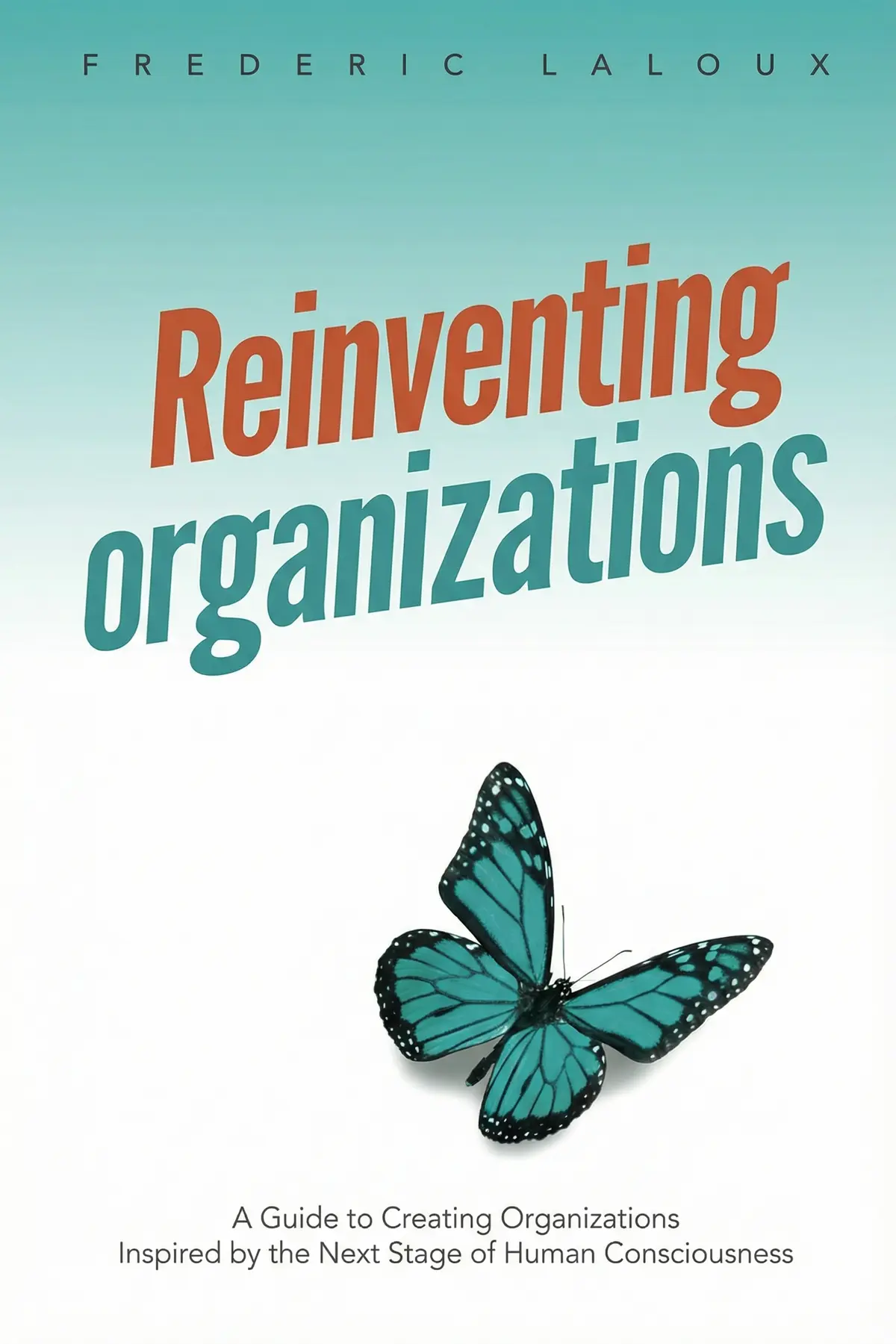
Table of Content
1. Introduction
1 min 57 sec
Think about your typical Monday morning. For most people in the modern workforce, the day begins by looking at a list of tasks that have been handed down from above. Even if you have a great deal of expertise in your field, your actions are likely still governed by the preferences and decisions of a manager or a corporate board. We have become so accustomed to this hierarchical way of living that we rarely stop to ask if it actually makes sense in the twenty-first century. Most of our organizations are built like pyramids, with power concentrated at the top and a vast foundation of employees at the bottom who are expected to follow orders.
But what if this feudal approach to business is reaching its expiration date? There is a growing sense that our current way of working is outdated, inefficient, and, quite frankly, exhausting. Many of us feel a disconnect between our professional lives and our personal values. We want to contribute something meaningful, yet we find ourselves trapped in bureaucratic systems that prioritize control over creativity. This is where Frederic Laloux enters the conversation. He suggests that we are on the verge of a massive shift in how humans organize their work.
In this summary, we are going to explore a new model of organization that aligns with a more advanced state of human consciousness. This isn’t just a theoretical dream; it is a reality already being practiced by pioneers around the world. We will look at how companies can thrive without traditional bosses, how they can encourage employees to show up as their whole selves, and why a focus on purpose can actually lead to better financial results than a focus on profit alone. This journey will take us through the history of human cooperation and land us in the future of work—a stage Laloux calls the Teal organization. Prepare to rethink everything you thought you knew about management, power, and what it means to be a professional.
2. The Evolutionary Stages of Human Organizations
3 min 09 sec
Discover how the way we organize ourselves has evolved through distinct colors, reflecting our growing complexity as a species and our changing social structures.
3. The Efficiency of Self-Managing Systems
2 min 21 sec
Explore how removing traditional management hierarchies can lead to higher motivation, better service, and surprising financial savings.
4. Making Decisions through the Advice Process
2 min 35 sec
Learn about a unique decision-making framework that avoids the pitfalls of both top-down mandates and the paralysis of consensus.
5. Embracing Wholeness in the Workplace
2 min 23 sec
Discover why modern work often requires us to wear a mask and how Teal organizations encourage employees to bring their full, authentic selves to the office.
6. A More Honest Approach to Recruitment
2 min 08 sec
Learn how the hiring process shifts when the goal is to find a cultural match rather than just filling a slot on an organizational chart.
7. Living for an Evolutionary Purpose
2 min 07 sec
Explore the shift from profit-driven motives to a mission-driven approach where the organization is viewed as a living entity with its own sense of direction.
8. Leadership in a Bossless World
2 min 10 sec
What happens to the CEO when there are no orders to give? Discover the subtle and vital role of leadership in flat organizations.
9. Implementing the Transition to Teal
2 min 05 sec
Moving to a self-managed structure is a journey, not a switch. Learn how to gradually introduce Teal principles into an existing organization.
10. Conclusion
1 min 25 sec
As we reach the end of our exploration into Reinventing Organizations, the primary takeaway is that we are not stuck with the rigid, soul-crushing hierarchies of the past. The evolution from Red to Teal represents a profound journey in human maturity. We are moving toward a world where organizations are seen as living systems rather than machines, and where work is a place of personal growth rather than just a means to an end.
The throughline of Laloux’s work is trust. To move toward a Teal future, we must trust that people are naturally capable, responsible, and creative. We must trust that a clear purpose will guide us better than a five-year plan ever could. And we must trust that by showing up as our whole selves, we don’t become less professional—we become more powerful.
If you are a leader or an employee looking to bring these ideas into your own life, start small. Look for one area where you can replace a rule with a conversation. Find a way to use the advice process for your next decision. Encourage a colleague to share a part of themselves they usually keep hidden. The shift to a more fulfilling way of working doesn’t require a global revolution; it starts with the courage to do things differently in your own corner of the world. By reinventing how we work, we are ultimately reinventing how we live together.
About this book
What is this book about?
Reinventing Organizations examines the history of human collaboration and argues that we are entering a new era of consciousness. Author Frederic Laloux identifies the limitations of traditional, hierarchical models and introduces the 'Teal' paradigm. This new approach shifts away from top-down control toward a system based on self-management and trust. The book promises a roadmap for leaders and employees who feel stifled by corporate bureaucracy. It details how successful companies are already operating without bosses, allowing employees to bring their authentic selves to work, and focusing on a higher mission rather than just the bottom line. By looking at real-world examples, it provides a practical vision for a more human and effective way to organize our collective efforts.
Book Information
About the Author
Frederic Laloux
Frederic Laloux is a former strategy consultant for McKinsey & Company. He has dedicated his career to researching and advising companies on how to adopt innovative organizational structures and practices that foster both productivity and employee well-being.
Ratings & Reviews
Ratings at a glance
What people think
Listeners find this work essential and thoroughly researched, with one noting it's a must-read for those frustrated with the status quo. Furthermore, the text provides excellent insights into organizational development, including one listener who describes it as a breathtaking re-imagining of the modern organization. Listeners also appreciate the inspirational content, with one mentioning it gives hope for humanity's future, as well as the practical approach that highlights clear examples of practices that work. The book is intellectually stimulating, with one listener noting it challenges current thinking.
Top reviews
Somsak
This book is essentially a blueprint for a more humane future of work. Laloux has crafted a breathtaking re-imagining of the modern organization that moves beyond the typical corporate grind. I was particularly struck by the metaphor of organizations as living systems rather than clunky, soulless machines. It offers genuine hope for humanity by suggesting that we can operate from a place of wholeness and evolutionary purpose. While some of the spiritual elements might feel a bit airy to the strictly traditional manager, the core message is vital. The case studies provided give concrete proof that self-management isn't just a pipe dream; it's a functioning reality for those brave enough to let go of control. It’s a must-read for anyone frustrated with the status quo of modern hierarchy. Truly life-changing stuff if you're open to it.
Show moreDome
Laloux has crafted a breathtaking vision that goes far beyond typical corporate strategy. As someone who has felt the suffocating weight of middle management for years, reading about the 'Advice Process' and peer-based salaries felt like coming up for air. The book is incredibly well-researched, drawing from diverse industries like healthcare and manufacturing to prove these ideas aren't just for Silicon Valley startups. It gives me real hope for humanity's future. We are finally seeing a move toward wholeness where people don't have to check their souls at the door. Some might call it 'spiritual psychobabble,' but frankly, our current 'Orange' obsession with greed and KPIs is what's truly crazy. This is a profound, thought-provoking manual for anyone looking to build a company that actually values the people inside it.
Show moreArjun
After hearing so much hype in the agile community, I finally dove into the Teal world. Wow. This isn't just another business book; it’s an invitation to a different way of being. Laloux argues that we are at a tipping point in human consciousness, and our organizations are finally catching up. I loved the focus on bringing your 'whole self' to work. Why should we have to wear a professional mask? The research feels deep and the stories are genuinely inspirational. It provides a much-needed sense of direction for those of us tired of the materialistic obsession of modern modernity. It's a breathtaking re-imagining that makes you realize just how much potential we are wasting in our current hierarchies. I've already started implementing the advice process in my own team, and the results are promising. Absolutely essential reading.
Show moreSaranya
As someone who has survived three different 'Orange' corporate restructures, this was the oxygen I needed. This book is a must-read for anyone who feels that the current way we work is fundamentally broken. Laloux doesn't just complain; he provides a clear, practical approach with examples of practices that actually work. The shift from seeing an organization as a machine to seeing it as a living organism is a simple but massive paradigm shift. It’s thought-provoking and gives me a strange sense of peace about where we are heading. Yes, the language is a bit flowery and spiritual at times, but that’s because he’s trying to describe something that transcends our current vocabulary. If you’re looking for a sign that work doesn’t have to be a soul-crushing experience, this is it. Brilliant and necessary.
Show moreOlivia
Picked this up thinking it was another dry management text, but it’s more like a manifesto for the soul. The way Laloux connects human history with organizational structure is fascinating. I was particularly impressed by the depth of the case studies; he clearly spent years researching these companies. The focus on 'evolutionary purpose'—letting the organization find its own way rather than forcing it with five-year plans—is a radical and exciting concept. Not gonna lie, some of the 'spiritual' parts were a bit outside my comfort zone, but they fit the overall theme of wholeness. It’s a book that stays with you long after you finish the last page. It challenges you to rethink everything you thought you knew about leadership and power. A truly breathtaking and stimulating piece of work that offers a path out of the status quo.
Show moreBua
Ever wonder why our offices feel like soulless machines designed to crush creativity? Laloux offers a compelling answer through his color-coded evolutionary framework, moving from Red 'wolfpacks' to the elusive 'Teal' organizations. Truth is, the first half of the book is absolutely brilliant in its analysis of how we got here. The descriptions of Achievement-Orange and its obsession with growth really hit home. However, I have to admit the tone becomes increasingly saccharine in the later chapters. To be fair, not everyone is going to be comfortable with 'blessing the building' or 'listening to the organization’s soul.' Despite the occasionally fuzzy language and New Age tilt, the practical insights into self-organizing teams are gold. If you can filter out the mysticism, there’s a transformative management model buried in here. It's a stimulating read that certainly challenges current thinking.
Show moreLaor
The chapter on self-management practices alone is worth the price of admission. I found the specific examples of how companies like Buurtzorg and FAVI operate without traditional bosses to be incredibly enlightening. Laloux does a great job of showing how these structures actually work in the real world, rather than just theorizing. My only gripe is that the writing style can be a bit 'woo-woo' at times. He uses words like 'wholeness' and 'vibrational' in ways that might make a CFO’s skin crawl. But if you can look past the schmaltz, the logic of distributed intelligence is sound. It’s a refreshing alternative to the command-and-control models that are failing us today. The book is essential for those who believe that humans are capable of more than just following orders. Definitely stimulating, even if you don't buy into the spiritual reenchantment stuff.
Show moreChai
Finally got around to finishing this behemoth, and truth is, it changed how I see hierarchy. The breakdown of historical stages—Red, Amber, Orange, Green—is a brilliant way to classify different operating models. It helped me realize that most of my career has been spent in 'Orange' structures where strategy is king but the spirit is dead. Laloux’s vision of 'Teal' is beautiful, though I worry about how scalable it really is for larger, traditional firms. The book is quite thorough, perhaps too thorough, as it tends to repeat its core tenets every few chapters. I also found the 'empty chair' rituals a bit weird for a professional setting. However, the underlying principles of trust and evolutionary purpose are powerful. It’s a great insight into organizational development that every CEO should at least consider, even if they aren't ready to go full Teal yet.
Show moreOscar
While I found the framework of organizational evolution fascinating, the execution is a bit of a curate’s egg. On one hand, the concept of the 'Advice Process' is a game-changer for decision-making. It provides a structured way to handle autonomy without descending into total chaos. On the other hand, the book suffers from significant cherry-picking of evidence. Laloux presents these 'Teal' companies as paradises, yet a quick search reveals they face the same messy turnover and human drama as anywhere else. The section on psychic powers and 'transrational' ways of knowing was where he nearly lost me entirely. It felt less like a management text and more like an Age of Aquarius manifesto. It’s a repetitive read that could have been half the length. Still, I’ll give it three stars for the sheer audacity of the vision and the useful appendices on conflict resolution.
Show moreHenry
Look, I wanted to like this, but the shift from organizational theory to 'transrational' mysticism was just too much for me. The author starts with a useful enough framework, but he quickly gets swept away by his own infatuation with the 'Teal' idea. He claims these organizations are 'living beings' with their own evolutionary purpose, which sounds more like a cult than a business model. To be fair, his description of the frustrations of the 'Orange' machine is accurate. But his solution is to replace structure with what he calls 'listening' to the organization? It’s pseudoscientific babble. He ignores the failures of the companies he highlights—Zappos has had massive turnover, yet he presents it as a paradise. The book is repetitive, overly long, and relies on anecdotes that feel completely biased. If you want actual data on motivation, just read 'Drive' instead.
Show moreReaders also enjoyed
7 Powers: The Foundations of Business Strategy
Hamilton Helmer

A Bigger Prize: How We Can Do Better Than the Competition
Margaret Heffernan
A Year with Peter Drucker: 52 Weeks of Coaching for Leadership Effectiveness
Joseph A. Maciariello
AUDIO SUMMARY AVAILABLE
Listen to Reinventing Organizations in 15 minutes
Get the key ideas from Reinventing Organizations by Frederic Laloux, plus 5,000+ more titles in English and Thai.
- 5,000+ titles
- Listen as much as you want
- 7-day free trial
- Cancel anytime







