
26 min 40 sec
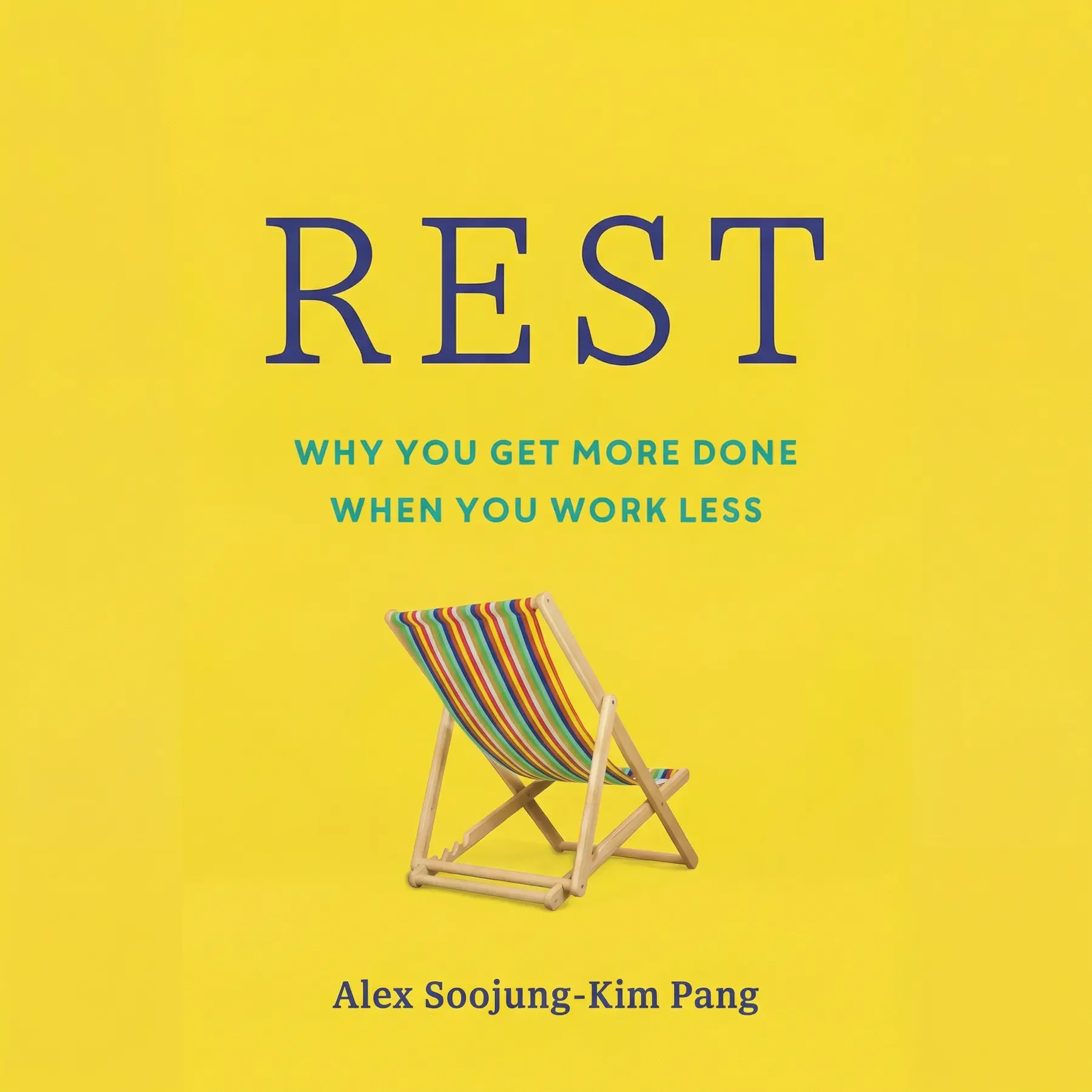
Rest: Why You Get More Done When You Work Less
Discover why peak performance isn't about working more. This summary explores the science of rest, showing how intentional downtime, exercise, and deep play are essential for creativity and long-term success.
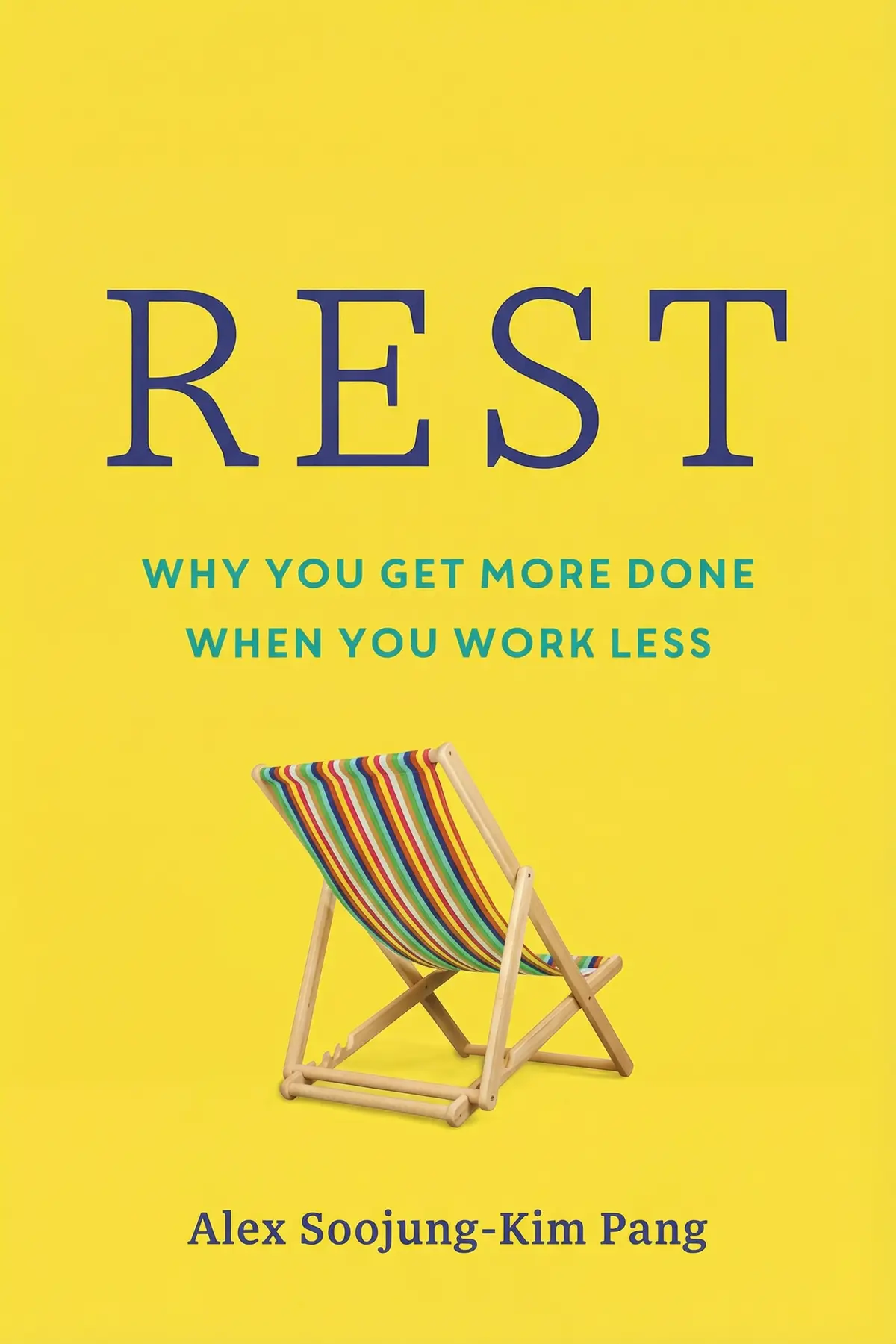
Table of Content
1. Introduction
2 min 04 sec
In our modern landscape, we often treat busyness as a badge of honor. We live in an era shaped by near-constant connectivity, where our digital devices act as tethering lines back to the office, no matter where we are. This culture of ‘always-on’ productivity suggests that the path to success is paved with long hours, late nights, and the sacrifice of personal time. But what if this approach is actually sabotaging the very results we’re trying to achieve? Silicon Valley strategist Alex Soojung-Kim Pang experienced this firsthand. After years of relentless pushing, he took a sabbatical and made a startling discovery: by working less and resting more, his output actually improved in quality and quantity.
This leads us to a fundamental throughline: rest is not merely the absence of work; it is an active partner to it. When we step away from our desks, our brains don’t simply switch off. Instead, they transition into a different mode of processing that is vital for creativity, problem-solving, and cognitive stamina. This exploration will move beyond the idea of passive relaxation to look at ‘deliberate rest.’ We will see how scientific evidence supports a new way of structuring our days, our bodies, and our hobbies to reach a higher level of performance.
Over the course of this summary, we will examine why the most brilliant minds often limit their most intense labor to a few hours a day and why activities like walking, napping, and even deep physical exercise are the secret weapons of the world’s most successful people. We’re going to dismantle the myth of the grind and replace it with a more sustainable, scientifically backed framework for a life of both high achievement and profound well-being. By the end, you’ll understand why the most productive thing you can do for your career might be to finally take that break you’ve been putting off.
2. The Four-Hour Creative Window
2 min 49 sec
Examine the counterintuitive truth that your most productive work likely happens in a focused four-hour burst rather than a long, grueling day.
3. The Subconscious Power of Walking
2 min 25 sec
Discover why moving your body through space can unlock the mental breakthroughs that escape you while sitting still at a desk.
4. Napping as a Cognitive Tool
2 min 26 sec
Uncover how a brief midday rest can actually sharpen your memory and improve your emotional regulation for the afternoon ahead.
5. The Art of Strategic Stopping
2 min 16 sec
Learn why finishing your work for the day at the exact right moment is more important than simply finishing the task.
6. Sleep as Biological Maintenance
2 min 35 sec
Understand the vital internal processes that occur during deep sleep to protect your brain from long-term decline.
7. The High Cost of Skipping Vacations
2 min 28 sec
Explore why the ‘no-vacation’ lifestyle is a recipe for both personal health crises and professional inefficiency.
8. The Four Pillars of True Recovery
2 min 25 sec
Examine the specific psychological conditions—relaxation, control, mastery, and detachment—required to fully recharge.
9. The Intellectual Power of Physical Fitness
2 min 31 sec
Discover how intense exercise doesn’t just build muscle, but also facilitates brain growth and protects your memory.
10. Deep Play and the Churchill Method
2 min 36 sec
Learn how engaging in ‘deep play’ through absorbing hobbies provides the ultimate psychological rescue from high-stakes stress.
11. Conclusion
2 min 05 sec
As we bring these ideas together, the throughline becomes clear: the most successful people in the world don’t achieve greatness despite their rest; they achieve it because of it. We have seen that the human brain is not designed for endless, undifferentiated labor. Instead, it thrives on a rhythm of intense focus followed by deliberate recovery. By embracing a schedule that honors a four-hour window of deep work and utilizing tools like walking, napping, and strategic stopping, we can actually increase our productivity while reducing our stress.
We’ve also explored how our physical health and our hobbies—our ‘deep play’—are not separate from our professional performance. Sleep is the brain’s essential cleaning service, and exercise is its fuel. Hobbies like Churchill’s painting or Curie’s cycling are the psychological safety valves that prevent burnout in high-stakes environments. When we integrate these elements, we move away from the unsustainable ‘grind’ and toward a life of sustainable excellence.
The actionable takeaway is simple but profound: start treating your rest with the same respect you give your work. You can begin tomorrow by scheduling your most difficult task for a focused morning block and then taking a literal hike. As even tech leaders like Mark Zuckerberg have found, moving meetings to a walking format can turn a standard business discussion into a creative opportunity. Stop seeing rest as a reward you get only when you’re finished. Instead, see it as the very foundation that makes your best work possible. By learning to work less and rest better, you aren’t just helping your career; you are reclaiming your health, your creativity, and your life.
About this book
What is this book about?
In a world that prizes constant activity, Rest: Why You Get More Done When You Work Less challenges the narrative of the endless hustle. Alex Soojung-Kim Pang demonstrates that the most successful and creative minds in history—from Nobel laureates to world leaders—didn't work eighty-hour weeks. Instead, they treated rest as a deliberate practice. This summary breaks down the biological and psychological mechanisms that turn downtime into a fuel for productivity. It explores why early morning deep-work sessions are more effective when followed by leisure, how physical hobbies can protect our brains, and why a vacation is a medical and professional necessity rather than a luxury. You will learn the specific rhythms that allow your subconscious to solve complex problems while you sleep, walk, or pursue active hobbies. By shifting the perspective on rest from an absence of work to an essential partner of it, this guide provides a blueprint for a more balanced, high-achieving life. You’ll see that the key to doing great things isn't grinding until you break, but learning to step back so your mind can do its best work.
Book Information
About the Author
Alex Soojung-Kim Pang
Alex Soojung-Kim Pang is the founder of the Restful Company, a consultancy firm based in Silicon Valley that teaches organizations how to cultivate a better work-life balance through talks and workshops. A visiting fellow at Stanford University, Pang is the author of The Distraction Addiction. He has also written for Slate, Wired, Atlantic Monthly and Scientific American.
Ratings & Reviews
Ratings at a glance
What people think
Listeners find the material thoroughly researched and engaging, written with clarity and supported by many real-world cases. They value the exploration of how rest boosts productivity and work-life balance, with one listener observing that it increases their capacity to focus. The book fosters creativity, and one listener notes that it presents a healthy, integrated way to think about work.
Top reviews
Milk
Pang argues that rest is actually a skill we have to cultivate, rather than just a passive state of doing nothing. This shift in mindset changed how I view my weekends entirely. Instead of just 'vegging out' in front of the TV, I’m looking for 'deep play' that actually recharges my mental batteries. The book is well-written and clear, though it does lean heavily on the 'I'm a genius and I nap' trope throughout the middle chapters. I specifically enjoyed the breakdown of how rest stimulates creativity by allowing the subconscious to work on problems in the background. If you can get past the somewhat repetitive nature of the biographies, there is a lot of gold in here. It is a refreshing take on work-life balance.
Show moreBrahim
Wow, I am officially a convert to the four-hour focused workday after finishing this deep dive into 'active' rest. Entering my 'smart girl era' means reading nonfiction that actually challenges the way I live, and this one delivered on that front. I was obsessed with the sections on how napping improves focus and how 'deep play' provides a sense of fulfillment that passive entertainment never can. The book explains the science behind the 'aha!' moments we get in the shower, which made me feel so much better about my own wandering mind. Even though I usually find history a bit boring, the way Pang ties it into neurobiology kept me engaged most of the time. It’s a total vibe for anyone trying to maximize their creative output.
Show moreJib
Finally got around to reading this and the section on 'deep play' was the absolute highlight for me. I had never considered how intense hobbies like mountain climbing or sailing could actually be a form of rest, but Pang makes a compelling case. The book is very well-researched, though it does get a bit repetitive with the 'Look at what Darwin did' examples after a while. It provides a wholesome approach to work that emphasizes sustainability over short-term grinding, which is a message we desperately need. Not gonna lie, I was skeptical at first, but the data on how walking boosts creativity won me over. It’s a great companion piece to any book on high-performance habits.
Show moreHarper
After hearing so much about the 'always-on' hustle culture, Pang’s perspective felt like a necessary exhale for my overworked brain. He treats rest as a partner to work rather than an enemy of it, which is a wholesome approach that I really needed to hear. The research into how four hours of focused labor is the sweet spot for peak productivity was particularly eye-opening for my own creative process. I’ve started implementing the 'deliberate rest' techniques he suggests, like long walks without my phone, and my ability to concentrate has improved noticeably. While some of the historical examples feel a bit 'cherry-picked,' the core message is thought-provoking and incredibly well-researched. It’s a solid read for anyone feeling burnt out.
Show moreWachira
Cal Newport’s fans will find a lot to love here, though the focus shifts from the intensity of the work to the quality of the downtime. I loved the comparison between deliberate practice and deliberate rest, especially the idea that we need 12,500 hours of the latter for mastery. It’s a very analytical book that uses evidence from prospective studies of scientists to show why 'active' rest is superior to total idleness. My only gripe is that the author repeats himself quite a bit, making it feel like it could have been a shorter, punchier read. Still, the chapters on napping and the importance of a morning routine are highly practical for anyone in the creative class. It definitely helped me stop feeling guilty about taking mid-afternoon breaks.
Show moreOak
As someone who struggles with chronic guilt whenever I'm not being productive, this book was a bit of a paradigm shift for my mental health. Pang shows that resting isn't a 'tax' on our creativity but rather a vital investment in our future work. The writing is incredibly clear, and the examples—while mostly focused on famous men—really help illustrate what 'flow' looks like in a daily routine. I’ve started prioritizing my sleep and taking short naps, and I can frankly say my concentration levels have never been higher. It’s a very thought-provoking read that pushes back against the toxic 'always-busy' mentality that plagues our current culture. I highly recommend it for managers who want to support their teams better.
Show moreYanin
Frankly, the reliance on nineteenth-century aristocrats like Darwin to prove points about modern labor feels a bit outdated and out of touch. The author spends too many pages on 'neurobollocks' and ungeneralizable psychology experiments that don't always support his grander claims. However, the underlying theory about the partnership between work and rest is solid enough to make the book worth your time. I found the advice on carving out four hours of 'deep work' to be the most practical takeaway for my own career. It’s not a perfect book, and it definitely cherry-picks its data, but it still offers some interesting insights into how we can improve our focus. Just take the historical anecdotes with a huge grain of salt.
Show moreTak
Ever wonder how Churchill found time for naps while leading a nation through war? This book is basically a collection of those kinds of 'Great Man' anecdotes, which can be entertaining but ultimately feel a bit repetitive and elitist. Pang does a decent job connecting these stories to some modern neuroscience, but I was hoping for something more pragmatic for a modern office worker. It is all well and good for a nineteenth-century aristocrat to go on a four-hour walk, but my boss would have a heart attack. To be fair, the concept of 'active rest' is interesting, but I found the lack of focus on meditation to be a huge oversight throughout the text.
Show moreLeo
The truth is, this could have been a much shorter essay or even a single long-form blog post. While the neuroscience of sleep and the studies on walking and creativity were genuinely fascinating, they were buried under mountains of historical fluff. I found myself checking out during the long sections about the habits of painters and physicists from the 1800s. It felt derivative of other 'productivity' books I’ve read lately, adding very little new information to the conversation. If you’ve already read 'Deep Work', you might find this a bit redundant. It’s okay for a quick skim, but don’t expect a life-changing revolution in how you manage your daily schedule.
Show moreApichat
This book fails to acknowledge the massive privilege required to implement its suggestions. While Pang makes some valid points about the science of the brain, he relies almost exclusively on anecdotes about famous men who achieved greatness while resting. He raves about Darwin's schedule but completely ignores the invisible labor of the women who cooked, cleaned, and raised children in the background. If you are a single parent or working a minimum-wage job, these 'rest' strategies are essentially a fantasy. I’d recommend Tricia Hersey’s 'Rest is Resistance' for a much more inclusive and realistic take on how inequality barriers prevent true restoration. It’s frustrating to read a book that treats systemic issues as mere personal scheduling choices.
Show moreFeatured in
Readers also enjoyed
AUDIO SUMMARY AVAILABLE
Listen to Rest in 15 minutes
Get the key ideas from Rest by Alex Soojung-Kim Pang, plus 5,000+ more titles in English and Thai.
- 5,000+ titles
- Listen as much as you want
- 7-day free trial
- Cancel anytime







