Rest: Why You Get More Done When You Work Less
Alex Soojung-Kim Pang
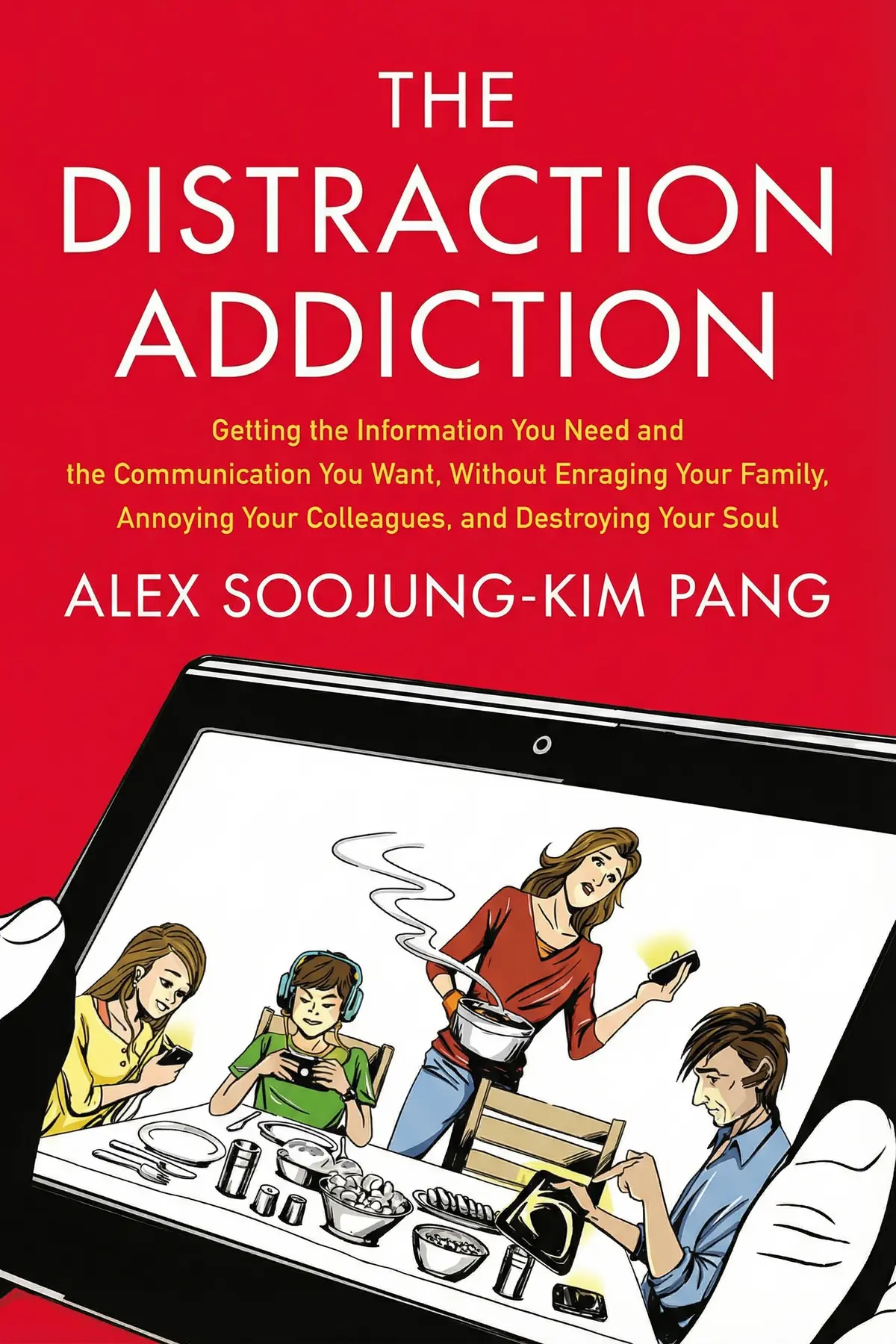
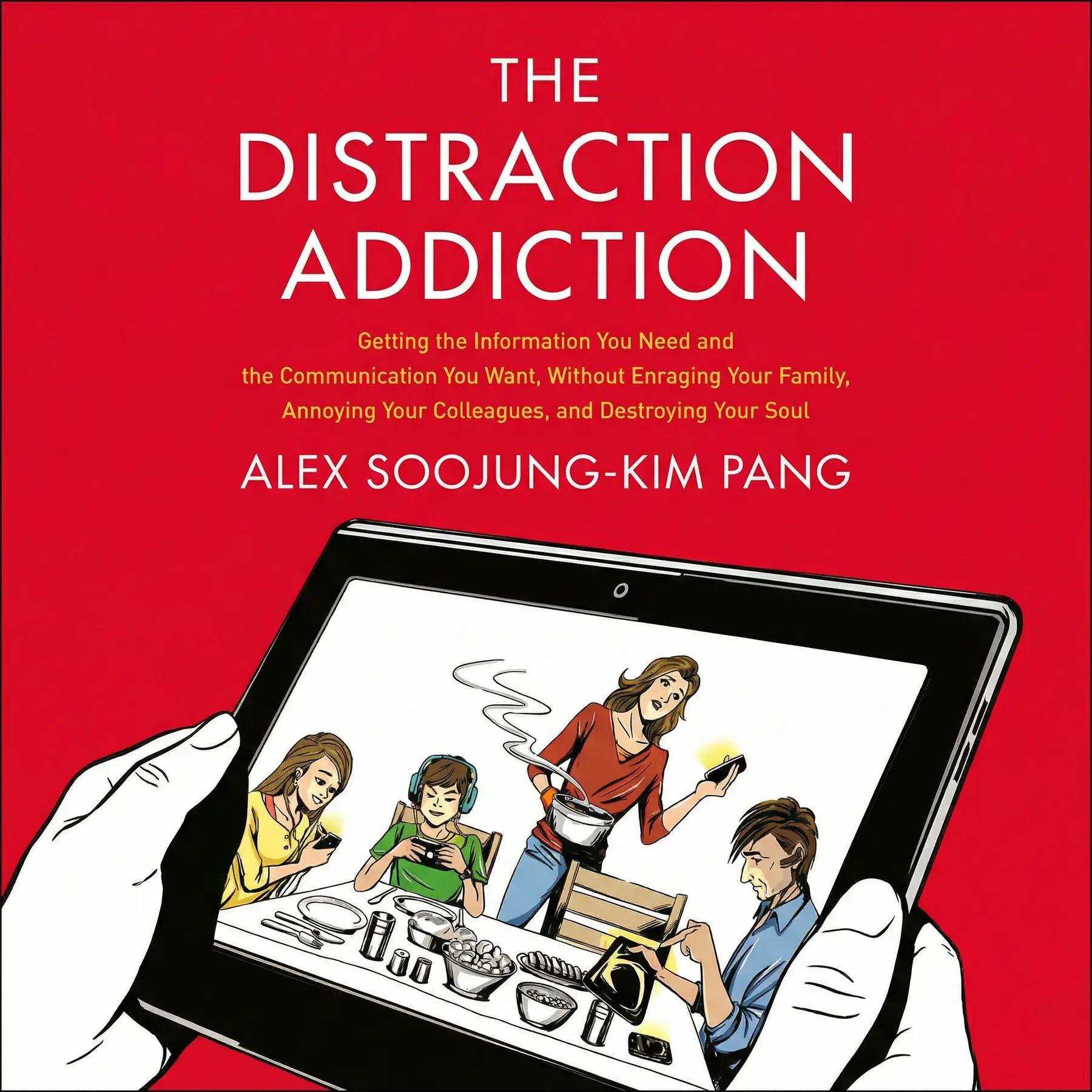
The Distraction Addiction explores how we can reclaim our focus in a hyper-connected world by utilizing mindfulness, contemplative design, and intentional technology use to transform digital habits into productive, creative tools.
2 min 18 sec
Stop for a moment and take a mental inventory of your current digital environment. How many screens are within your reach? How many tabs do you have open right now, and how many apps are silently demanding your attention with red notification bubbles? If you feel like your focus is being pulled in a dozen different directions at once, you’re not alone. We live in an era of unprecedented connectivity, but this gift of instant information comes with a heavy price: the fragmentation of our concentration and the erosion of our inner peace.
Being a digital native today—or even just someone who has had to adapt to this high-speed world—is exhausting work. Data pings into our lives at a rate that far exceeds our brain’s natural processing power. We find ourselves constantly toggling between tasks, scrolling through feeds, and checking emails, often without a clear purpose. This constant state of distraction doesn’t just lower our productivity; it can feel like it’s actually destroying our souls and annoying everyone around us.
But here’s the shift in perspective we need: technology itself isn’t the enemy. It is a tool, and like any tool, its impact depends entirely on how we wield it. In this summary, we are going to explore a new way of relating to our devices. We’ll look at cutting-edge neuroscience and ancient wisdom to understand why we feel so addicted to the digital world and, more importantly, how we can break that spell.
We’ll discover how Charles Darwin used simple habits to sustain his massive intellectual output, the real difference between effective multitasking and the trap of switching tasks, and how something as simple as a structured walk or a few minutes of meditation can literally rewire your brain for better focus. By the end of this journey, you’ll have a roadmap for getting the communication you want and the information you need without losing yourself in the process. Let’s dive into how we can turn digital distraction into mindful presence.
2 min 36 sec
Discover why our brains respond to notifications like a physical craving and how to shift from being a slave to your devices to a master of digital flow.
2 min 43 sec
What we often call multitasking is actually a destructive process called switch-tasking that drains our energy and triples the time needed to finish a project.
2 min 40 sec
Buddhist philosophy and modern neuroscience agree: your level of distraction isn’t caused by your phone, but by the state of your mind before you even pick it up.
2 min 10 sec
Explore the fascinating way we treat computers like people and how virtual reality can be a powerful tool for achieving long-term personal goals.
2 min 23 sec
Learn how Charles Darwin’s ‘thinking path’ reveals the secrets to creating physical and mental spaces that naturally encourage deep, focused thought.
2 min 03 sec
Find out how a simple commitment to unplugging can repair your relationships and restore your sense of being present in your own life.
2 min 12 sec
As we wrap up our exploration of the digital landscape, it’s clear that the path to a more focused life doesn’t involve moving to a cave or throwing our computers into a lake. The Distraction Addiction isn’t a call to abandon technology, but a manifesto for using it with greater intentionality. We’ve seen how our brains can get trapped in the loop of addiction and switch-tasking, but we’ve also seen how the ancient practice of mindfulness and the modern application of contemplative design can help us reclaim our mental real estate.
The throughline of this journey is that focus is a skill, and like any skill, it requires the right environment and consistent practice. Whether it’s emulating Charles Darwin’s daily walks or adopting ‘Zenware’ to simplify our digital workspace, the power to change our relationship with information is in our hands. We have the ability to move from being reactive consumers of data to being intentional creators of our own lives.
So, what is your next step? A great way to start is by identifying your personal ‘digital enemies.’ We all have that one app or website that acts as a black hole for our time. For you, it might be an endless news feed; for someone else, it might be a specific social media platform. Once you’ve identified the culprit, take an active step to limit its power. This might mean deleting the app from your phone, using software to block it during work hours, or committing to a Digital Sabbath where you leave your devices in a drawer for a full day.
Remember, every time you choose to put down the device and engage with the world around you, you are strengthening your mind and honoring your soul. Distraction is a choice, but focus is a gift you give to yourself and everyone you care about. By becoming a mindful user of technology, you ensure that you are getting the communication you want and the information you need, without losing your sense of self in the process. Now, take a deep breath, perhaps step away from the screen for a moment, and start practicing the art of being present.
In an era where digital notifications never seem to end, we often feel like slaves to our screens. The Distraction Addiction offers a refreshing perspective, suggesting that our gadgets aren't the problem—our relationship with them is. Drawing on insights from neuroscience, psychology, and even ancient Buddhist philosophy, the book explains why we feel addicted to our devices and how that addiction fragments our attention. It introduces the vital distinction between true multitasking and the efficiency-killing habit of switch-tasking. Beyond just diagnosing the problem, the book provides a roadmap for a more focused life. It explores how we can use technology as a tool for flow rather than a source of stress, looking at everything from the benefits of virtual reality motivation to the importance of Darwin’s daily walks. Readers are promised a path toward digital mindfulness, learning how to integrate technology into their lives in a way that supports deep work and meaningful relationships. By the end, you’ll understand how to set boundaries that protect your soul and your productivity without needing to abandon the modern world.
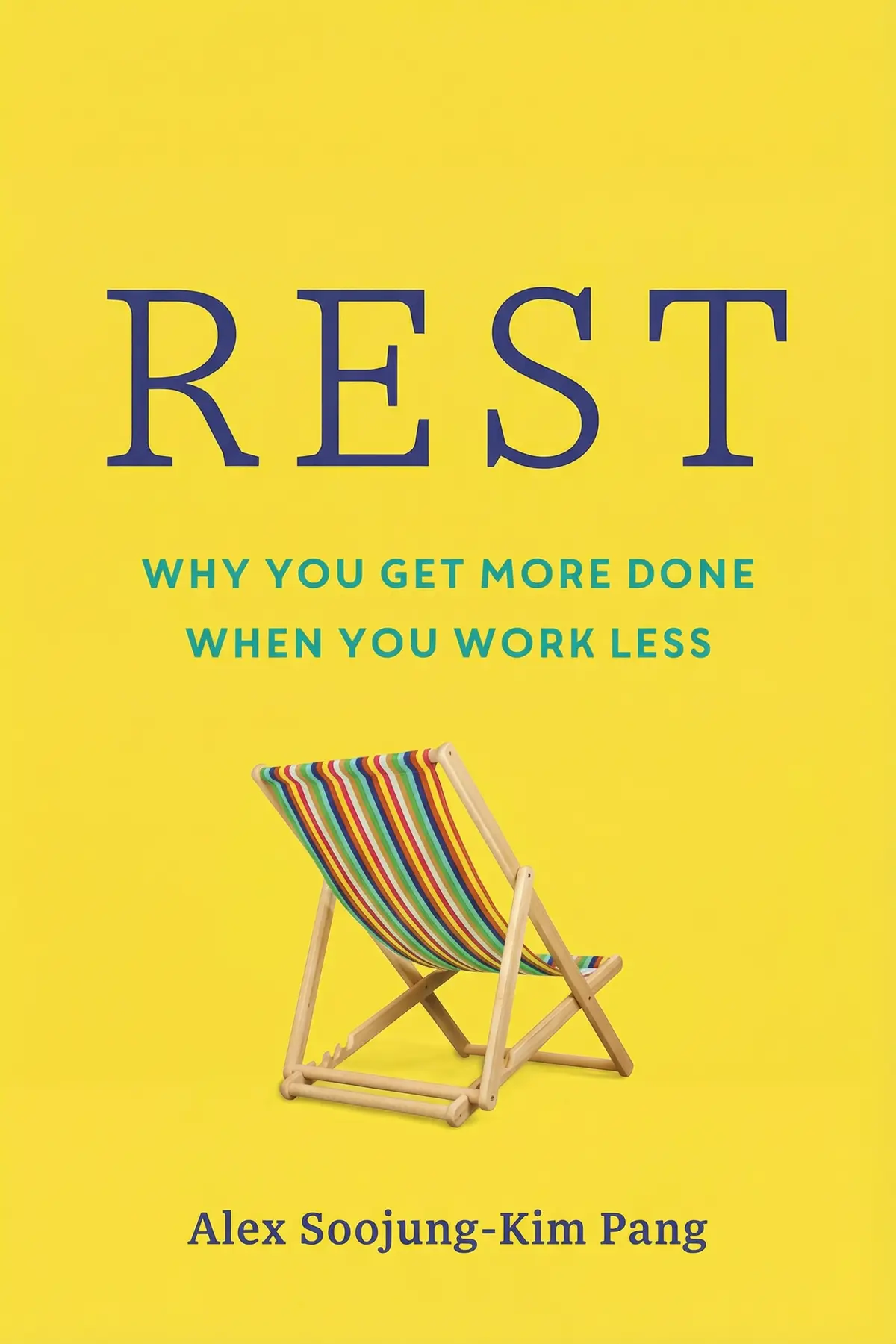
Alex Soojung-Kim Pang is a bestselling author whose work has been translated into seven languages and praised by prestigious newspapers including the New York Times and Washington Post. Before founding the Restful Company to teach businesses and individuals about the importance of proper rest, he was a visiting scholar at Stanford University and a forecaster for several Silicon Valley think tanks. He is also the author of Rest: Why You Get More Done When You Work Less (2016).
Alex Soojung-Kim Pang
Listeners find the book’s reasoning to be quite compelling, with one listener highlighting the way it incorporates Eastern philosophy throughout the text. Additionally, the work earns praise for its captivating anecdotes and citations of fascinating studies.
As someone who has struggled with the constant pull of the 'ping' for years, this book felt like a revelation. Pang doesn't just give you a list of apps to download; he challenges you to rethink your entire relationship with the digital world. I loved the way he wove Buddhist concepts into the discussion of 'contemplative computing,' making the argument that we can be mindful even while we are online. The research he cites regarding 'flow' and how interruptions erode our happiness was particularly convicting for me. I’ve started implementing a weekly digital Sabbath, and the difference in my mental clarity is already noticeable. This is easily the most important book on technology I’ve read in a decade. It’s dense and requires focus, but the payoff is immense for anyone willing to put in the work.
Show moreParents of teenagers absolutely need to read this. We are all living in a state of perpetual distraction, and Pang does a brilliant job of explaining how this environment is reshaping our brains and our relationships. I was particularly struck by the discussion on 'flow'—how true happiness comes from deep engagement, something our phones are designed to prevent. The book is beautifully written, blending Eastern philosophy with hard data in a way that feels both grounded and inspiring. It’s helped me set better boundaries for my own tech use and has given me the language to talk to my kids about their 'digital sabbaths.' It’s a dense read, but every page offers something worth contemplating. Highly recommended for anyone feeling overwhelmed by the digital age.
Show moreEver wonder why you feel so drained after just ten minutes of scrolling through social media? Pang offers a fascinating look at the 'distraction addiction' through a lens that blends modern neuroscience with ancient Eastern philosophy. I particularly enjoyed the stories about Zen monks who manage to blog and use technology without losing their centeredness; it’s a refreshing take compared to most 'digital detox' books that just tell you to throw your phone in a lake. The idea of 'entanglement'—that our tools are actually extensions of our minds—really changed how I view my smartphone. While some sections felt a bit plodding and overly academic, the practical steps for a 'digital Sabbath' are worth the price of admission. It’s a thoughtful guide for anyone trying to stay connected without losing their soul.
Show moreAfter hearing so much about the 'distraction addiction,' I was curious to see if Pang had any real solutions. What I found was a very human approach to a technical problem. Instead of advocating for a total retreat from the modern world, he suggests we treat our devices like the tools they are. I was fascinated by the section on 'real-time' and how our need for instant responses is actually making us less productive and more anxious. The writing style is a bit dense in the beginning, almost like a textbook, but it picks up once he starts sharing practical experiments you can run on yourself. I’ve already turned off most of my notifications, and I’m trying to 'tweet mindfully' as he suggests. It’s a solid 4-star read for the thoughtful insights.
Show moreThe chapter on entanglement alone makes this book worth reading. Alex Soojung-Kim Pang explores the idea that our technology isn't just a tool, but a literal extension of our nervous systems and cognitive abilities. This perspective shift changed how I handle my laptop and phone; I no longer see them as enemies to be defeated, but as parts of my 'extended mind' that need better training. I did find the author's tendency to wax poetic about his own experiences a bit distracting (the Mario Kart story was particularly odd), but the core message is incredibly strong. He weaves together history, philosophy, and tech criticism in a way that feels very fresh. It's a great pick for a book club because there's so much to argue about.
Show moreFinally got around to finishing this, though I’ll admit I skimmed a good portion of the middle chapters. There are some genuine jewels of wisdom buried in here, particularly the distinction between 'switch-tasking' and true multitasking, but they are surrounded by far too many long-winded anecdotes. Pang is clearly brilliant, and his research into how technology changes our breathing and mood is genuinely insightful. However, the book often loses its momentum when he goes off on tangents about historical figures or personal travel stories. Look, if you’re short on time, just jump straight to the final chapter where he summarizes the 'Eight Steps'—it’s the meat of the book without all the filler. It’s a decent read for the beach, but it could have been half as long and twice as effective.
Show moreThis book is essentially a deep dive into things most of us already know, just dressed up in more sophisticated language. I liked the parts about Charles Darwin’s walking habits and how physical movement aids memory, but I’m not sure I needed a whole chapter on it. The tone is a bit 'plodding' at times, and I found myself getting distracted while reading a book about distraction, which is a bit ironic. Still, the concept of the 'extended mind' is a powerful one that I haven’t seen explored quite this way before. It’s not a bad book by any means, but it feels like it’s aimed at people who are just discovering that their phones might be a problem. If you’re already tech-savvy, you might find it a bit elementary.
Show moreNot what I expected, to be honest. I was looking for a productivity hack-fest, but this is much more of a philosophical inquiry into how we live now. While I appreciate the depth of the research and the focus on 'contemplative environments,' the book felt a bit too 'Buddhism-lite' for my taste. Some of the advice, like 'learn to be aware of your breathing,' felt a little too basic for a book of this length. On the plus side, the author’s critique of the 'toddleresque' nature of our phones was hilarious and very relatable. It’s a nice enough read if you enjoy wandering narratives, but if you want quick fixes, you’ll be disappointed. A middle-of-the-road experience that has some good takeaways if you’re patient enough to find them.
Show moreSeriously, how did this get so much hype? I picked this up hoping for some groundbreaking strategies to reclaim my focus, but instead, I got a lecture on why playing Mario Kart with your kids is somehow a profound mindfulness exercise. If you have ever used an 'Off' button or unsubscribed from a newsletter, you’ve already mastered half of what Pang is selling here. The writing is meandering and, frankly, quite self-indulgent in places. I found the 'contemplative computing' concept interesting in theory, but the execution felt like a collection of blog posts stitched together. To be fair, the research on how our devices act like demanding toddlers is spot on, but I don't need a 200-page book to tell me that. Save your time and just read a Lifehacker article instead.
Show moreWow. I really tried to like this, but it just felt like one long, rambling lecture from someone who discovered the internet yesterday. The advice to 'unsubscribe from mailing lists' is something my grandmother could have told me, and I didn't need to read an entire book to figure out that checking email first thing in the morning is a bad habit. The author spends way too much time on flowery descriptions of his travels and interviews, which made the whole thing feel more like a memoir than a self-help or science book. It lacks the punchy, actionable advice I was looking for. If you’re a complete novice to the idea of digital wellness, you might find something here, but for anyone else, it’s a bit of a snooze.
Show moreAUDIO SUMMARY AVAILABLE
Get the key ideas from The Distraction Addiction by Alex Soojung-Kim Pang, plus 5,000+ more titles in English and Thai.