

25 min 52 sec
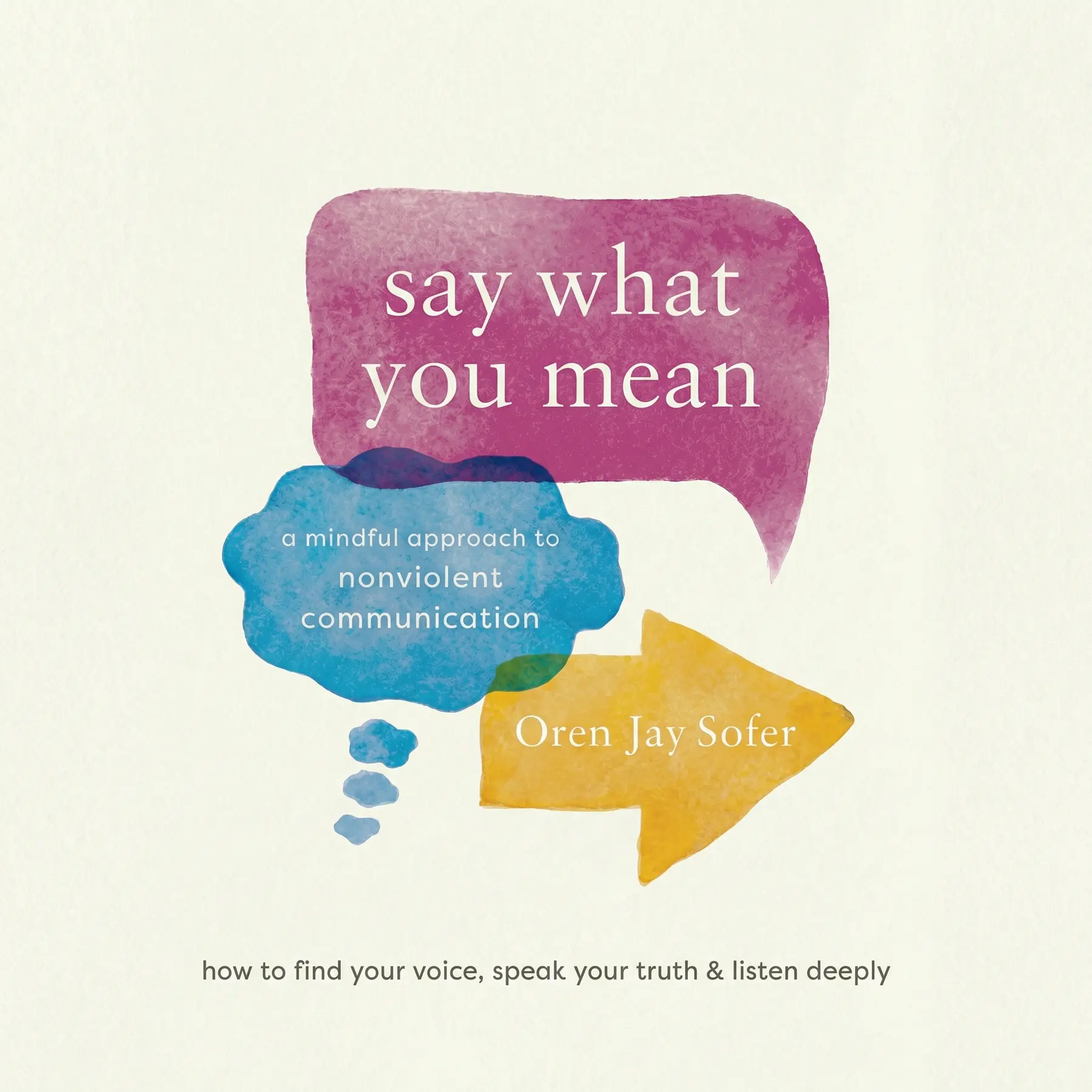
Say What You Mean: A Mindful Approach to Nonviolent Communication
Say What You Mean provides a comprehensive framework for mindful communication. It combines the principles of mindfulness, somatic awareness, and Nonviolent Communication to help people express themselves authentically and listen with deep empathy.
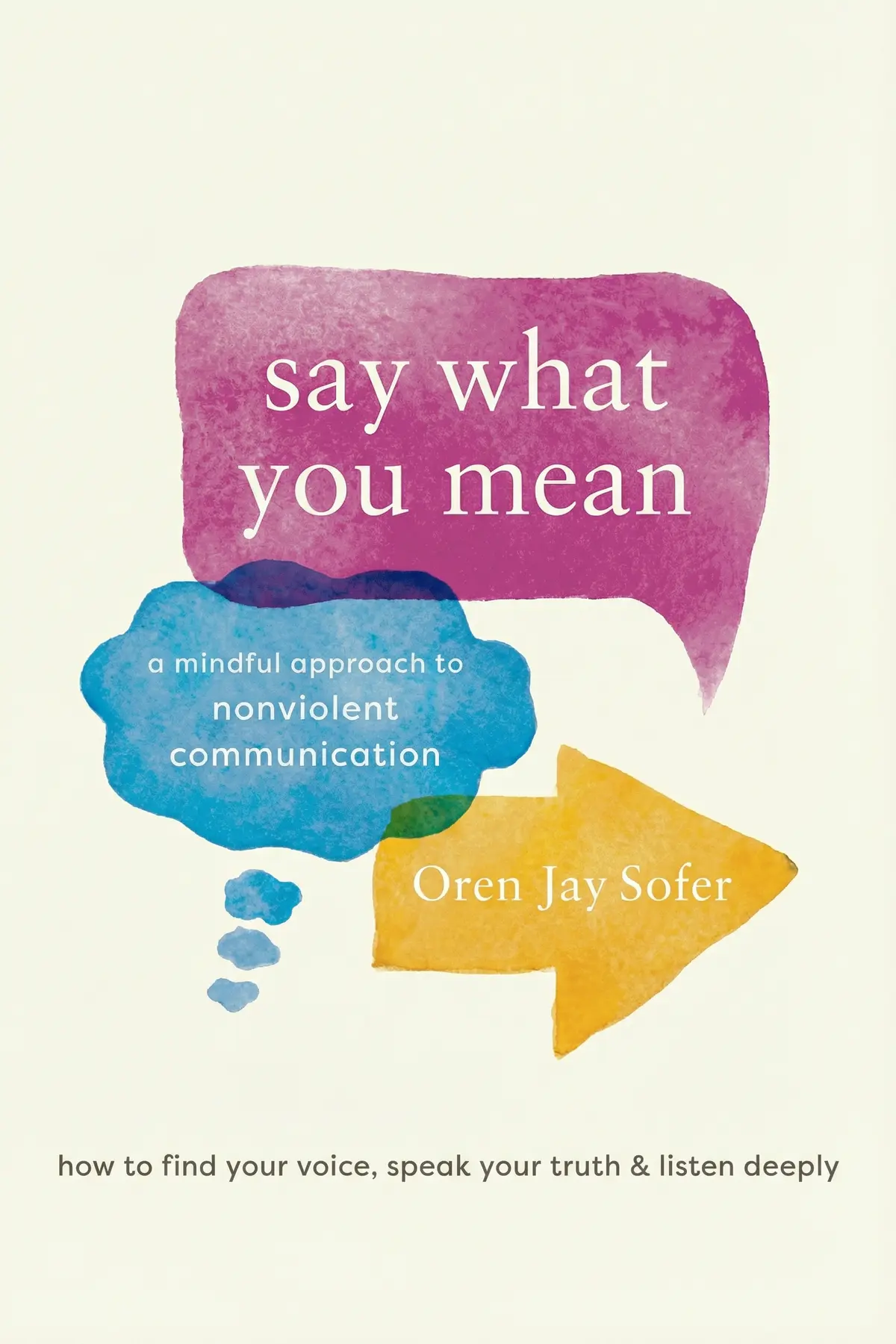
Table of Content
1. Introduction
1 min 50 sec
Have you ever walked away from a conversation feeling like you were speaking a completely different language, even though you used the same words? Perhaps you’ve felt the frustration of being ignored while your partner’s eyes were glued to a screen, or maybe you’ve found yourself shouting in a disagreement, wondering how things escalated so quickly. We communicate every single day, yet it remains one of the most challenging skills to master. Words have the incredible power to heal or to harm, to build bridges or to burn them. When we fail to say what we mean—or fail to hear what others are truly saying—our relationships suffer, and our sense of connection withers.
In this exploration of Oren Jay Sofer’s work, we are going to look at a powerful, three-part framework designed to change the way you interact with the world. This isn’t just about learning better vocabulary; it’s about changing your internal posture. It is about bringing mindfulness into your speech and your listening, ensuring that every word you utter comes from a place of awareness rather than habit. We will delve into how to stay present when emotions run high, how to identify the deep human needs that drive our behavior, and how to make requests that actually lead to positive change.
The throughline of our discussion today is simple but profound: effective communication requires us to lead with presence, come with curiosity, and focus on needs. By the end of this summary, you’ll have a new set of tools to navigate the complexities of human interaction with grace and clarity. You’ll learn how to transform conflict into intimacy and how to find your voice in a way that is both authentic and compassionate. So, let’s begin this journey into the heart of meaningful dialogue by looking at the very first requirement for any successful exchange: the power of being here, right now.
2. The Foundation of Presence
2 min 18 sec
Communication is about more than just finding the right words; it begins with how we show up in the moment. Explore why being physically and mentally present is the essential first step for any real understanding to occur.
3. Recognizing Choice Points
2 min 23 sec
Every conversation is a series of decisions, often made without our conscious awareness. Learn how to identify the specific moments where you can choose to speak or listen to change the flow of a dialogue.
4. Understanding Conflict Styles
2 min 29 sec
Conflict is inevitable, but the way we handle it often makes things worse. Discover the four common unhelpful conflict styles and how to stop the cycle of blame that prevents resolution.
5. The Role of Intention
2 min 13 sec
Behind every word we say is an underlying intention that shapes the outcome of the talk. Learn how shifting your focus from ‘winning’ to ‘understanding’ can fundamentally alter your connections.
6. Deep Listening and the Art of Reflection
2 min 19 sec
Feeling heard is one of the most basic human needs, yet it is often the first thing lost in a disagreement. Discover a simple technique to ensure that empathy remains at the center of your dialogues.
7. Distinguishing Needs from Strategies
2 min 31 sec
At the root of every human action is a universal need. Learn how to look past ‘what’ people are doing to understand ‘why’ they are doing it, which is the secret to resolving any conflict.
8. Emotions as Inner Signals
2 min 47 sec
We are often taught to suppress our feelings, but emotions are actually vital pieces of information. Understand how to decode these signals to better understand your own well-being.
9. Observation vs. Judgment
2 min 26 sec
The words we use to describe a situation can either open a door or slam it shut. Learn the ‘camera test’ to strip away judgments and start your conversations on neutral ground.
10. Making Effective Requests
2 min 26 sec
Asking for what we need can feel vulnerable and difficult, but it’s essential for satisfaction. Discover how to make clear, positive, and flexible requests that people actually want to fulfill.
11. Conclusion
2 min 10 sec
We have covered a lot of ground today, moving from the internal silence of presence to the external clarity of making a request. The journey of mindful communication is not about becoming a perfect conversationalist who never makes a mistake. Instead, it’s about developing a new kind of relationship with yourself and others—one based on awareness, honesty, and empathy. The throughline of this entire approach is the realization that understanding is the ultimate goal of every word we speak. When we lead with presence, we ensure we are actually ‘there’ for the exchange. When we clarify our intentions, we move away from the habits of blame and competition. And when we focus on needs, we find the common humanity that exists beneath even our deepest disagreements.
If there is one thing to take away from this, it is the importance of the pause. In our fast-paced, reactive world, the ability to stop for even a single second before responding is a superpower. It is in that pause that you can check your body, notice your emotions, and choose a path that leads toward connection rather than conflict. As you move forward, try to view every interaction as a practice session. You won’t always remember to reflect, and you won’t always manage to stay neutral, but every time you catch yourself slipping back into old patterns, you have an opportunity to begin again.
Start small. Perhaps today, you can practice just one thing—maybe it’s using the ‘camera test’ to describe a situation, or maybe it’s taking a breath before you answer a difficult email. These small shifts, when practiced consistently, have a cumulative effect. They change the climate of your home, the culture of your workplace, and the quality of your life. Communication is the bridge we build to reach one another. By applying these principles of mindfulness and nonviolence, you are ensuring that your bridge is strong, open, and built to last. Go forth with curiosity and care, and let your words be a reflection of the person you truly want to be.
About this book
What is this book about?
Communication is the lifeblood of human connection, yet many of us struggle to truly hear others or be heard ourselves. This guide explores the foundational skills needed to transform every interaction into an opportunity for understanding and growth. It moves beyond simple conversational tips to address the internal state of the speaker and listener, focusing on the three essential pillars: presence, intention, and attention. By integrating mindfulness with the practical steps of Nonviolent Communication, the book offers a roadmap for navigating conflicts, expressing difficult emotions, and making clear requests. The promise is a shift from reactive, habitual patterns toward a more conscious and compassionate way of relating. Whether dealing with a difficult colleague or a close family member, these principles help bridge the gap between people and foster more meaningful relationships.
Book Information
About the Author
Oren Jay Sofer
Oren Jay Sofer is a Somatic Experiencing Practitioner and a Certified Trainer of Nonviolent Communication. He teaches meditation and communication retreats and workshops all over the world. He is also the founder of Next Step Dharma, a meditation course platform, and co-founder of Mindful Healthcare, which provides training in mindfulness and communication to healthcare workers.
Ratings & Reviews
Ratings at a glance
What people think
Listeners find this work to be a premier guide to mindful dialogue, labeling it a transformative tool for grasping interactions and a reachable route to poise and transparency. Furthermore, they praise its clear prose, high-caliber writing, and overall worth. The book also earns acclaim for its focus on mindfulness; specifically, one listener highlights how it fosters heightened attentiveness and grounding. Listeners also prize the empathetic framework, with one mentioning how it builds compassion for those around them, and they find the material simple to apply.
Top reviews
Layla
Wow, I finally feel like I have a map for the messy terrain of human connection. This isn't just another self-help book; it’s a powerful synthesis of Peter Levine's somatic work and traditional Nonviolent Communication. Each chapter builds a foundation of curiosity and care that helps you show up for yourself before you even try to engage with others. I’ve noticed a significant shift in my patience levels during stressful family dinners. The writing quality is top-notch, maintaining a compassionate tone without becoming overly sentimental. It teaches you how to pause, which is a simple concept but incredibly difficult to execute in the heat of the moment. Definitely a game changer for my mental health and interpersonal dynamics.
Show moreAria
Ever wonder why your most well-intentioned conversations still end in a standoff? This book provides a clear, actionable guide to shifting that dynamic by focusing on what truly matters in an interaction. I appreciated how Sofer moves beyond the robotic scripts and encourages using your own authentic voice. The emphasis on leading with presence has helped me stay grounded during contentious meetings where I previously would have shut down. It’s an easy-to-use resource that develops a deeper awareness of the body’s physical signals. Personally, I found the section on unmet needs particularly eye-opening for understanding my own frustrations. Highly recommended for anyone seeking to communicate with more empathy and less reactivity.
Show moreIsabella
Finally got around to reading this, and it’s a total game changer for anyone tired of reactive arguments. I love how it combines the internal work of meditation with the external work of speaking. Most mindfulness books stop at the cushion, but Sofer takes it into the streets and the boardroom. The focus on curiosity over judgment is something I try to practice daily now. Not gonna lie, some of the examples felt a bit idealistic, but the core principles are undeniably effective if you put in the work. It’s a powerful read that helps you develop empathy for others while maintaining your own boundaries. This is easily one of the best books on communication I’ve encountered in years.
Show morePornthip
After hearing so much about the pitfalls of robotic communication, I’m glad I found a guide that emphasizes genuine human connection. This book is filled with useful strategies to help reframe your internal dialogue and how you show up for others. The author’s voice is incredibly kind and patient, which makes the difficult work of changing lifelong habits feel possible. I particularly appreciated the focus on somatic signals; learning to feel my heart race before I say something I regret has been life-changing. It’s a powerful, practical book that I’ve already recommended to several friends and family members. If you want to move away from moralistic judgments and toward positive-sum exchanges, this is the manual you need.
Show moreSupachai
Picked this up after a colleague mentioned it during a particularly tense project cycle. The book offers a remarkably accessible path to clarity and grace, especially for those of us who tend to get defensive. By breaking communication down into presence, intention, and attention, Sofer makes a complex psychological discipline feel manageable. Truth is, I’ve tried reading Rosenberg before and found it a bit technical, but this version feels more grounded in daily reality. Some sections do feel a bit repetitive, and the listicle-style formatting can be distracting if you’re looking for deep theory. However, the practical exercises for personal and social relationships are genuinely transformative. It’s worth the investment for the somatic insights alone.
Show moreYindee
The chapter on leading with presence really changed how I view my morning commutes and office interactions. As someone who often feels overwhelmed by the 'noise' of daily life, I found Sofer’s approach to be an excellent resource on mindful communication. He weaves together several different modalities, like Somatic Experiencing, in a way that feels fresh and transformative. My only gripe is that it can feel a little technical in the middle sections, which might slow down some readers. Frankly, I think the value for money here is high because you can return to the exercises whenever you feel yourself slipping back into old, 'violent' patterns. It’s a gentle yet powerful tool for anyone looking to foster deeper awareness.
Show moreRungrat
As someone who struggles to 'land the plane' when talking to my spouse, Sofer’s approach provided a much-needed structure. He explains how to express what is 'alive inside of you' without coming across as accusatory or demanding. I particularly liked the distinction between thoughts and feelings, as I often confuse the two when I'm frustrated. The book is written with a sense of clarity and grace that makes the lessons stick, even if some of the NVC formulations still feel a bit awkward at first. It’s a practical book that doesn't just talk about theory but gives you the actual 'recipe' for better connection. I’ve started using the 'observation-feeling-need-request' flow, and it’s already diffusing some of the tension at home.
Show moreCooper
In my experience, most communication books are either too academic or too fluffy, but this one hits the sweet spot. It offers a very accessible path to understanding the NVC model through the lens of mindfulness. The three-step process—presence, intention, and attention—is easy to remember and apply even when you're in the middle of a disagreement. I did find some of the social justice examples a bit shoehorned in, and a few of the anecdotes felt slightly unrealistic for high-stakes conflict. Still, the overall quality of the writing and the depth of the exercises make it a worthwhile read. It definitely helps you cultivate a more compassionate approach to both yourself and the people around you.
Show moreAim
Look, I’m a fan of mindfulness, but I found the writing style here a bit too didactic for my taste. The chapters all seemed to blur together after a while, making it hard to remember specific takeaways without constantly referencing my notes. While the three-step method is solid, the execution felt a bit hazy and repetitive. It’s a kind and compassionate book, no doubt, but it lacks the rigorous structure I was hoping for in a communication guide. It’s a decent introductory text if you’ve never heard of NVC, but seasoned practitioners might find it a bit vacuous. I didn't hate it, but it didn't exactly change my life—it’s just another mindfulness-adjacent guide in a very crowded market.
Show morePlernpiriya
Not what I expected based on the hype, as it felt like a diluted version of Marshall Rosenberg’s original framework. While Sofer is clearly well-intentioned, the book often reads like a long list of mindfulness tips rather than a deep dive into the technical nuances of communication. To be fair, if you are brand new to the concept of needs and feelings, there is some value here. For anyone already familiar with 'giraffe language,' however, the new-agey additions might feel like unnecessary clutter. I found the style a bit boring and didactic at times. It pays lip service to social justice but fails to address how these tools work for disadvantaged groups in truly challenging situations. You might be better off with the original NVC source material.
Show moreReaders also enjoyed



A New Earth: Awakening to Your Life’s Purpose
Eckhart Tolle

Aflame: Learning from Silence
Pico Iyer

Be Here Now
Ram Dass

AUDIO SUMMARY AVAILABLE
Listen to Say What You Mean in 15 minutes
Get the key ideas from Say What You Mean by Oren Jay Sofer, plus 5,000+ more titles in English and Thai.
- 5,000+ titles
- Listen as much as you want
- 7-day free trial
- Cancel anytime







