
25 min 25 sec
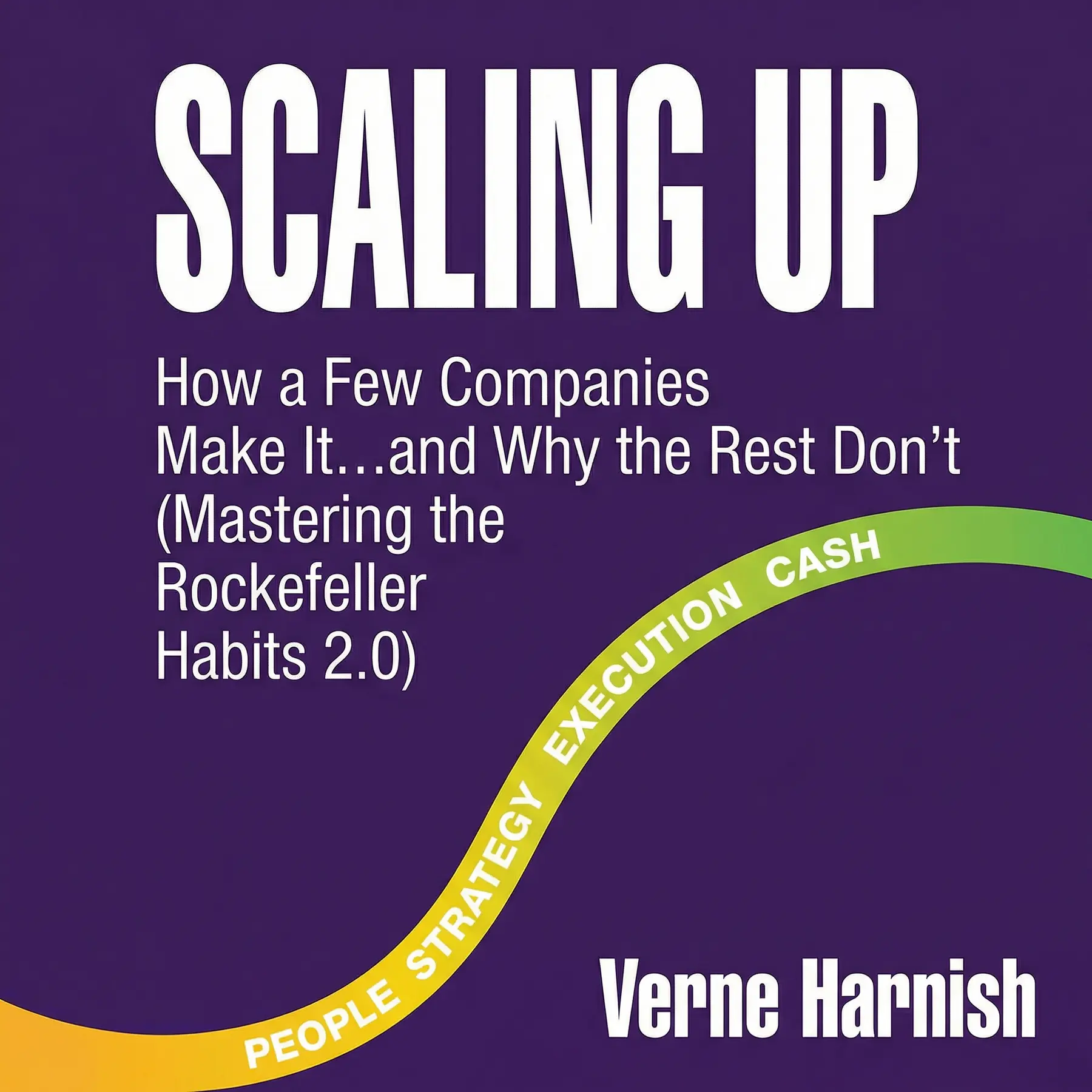
Scaling Up: How a Few Companies Make It...and Why the Rest Don’t (Mastering the Rockefeller Habits 2.0)
Scaling Up is a comprehensive strategic framework designed to help leadership teams navigate the complexities of business growth by mastering the four critical pillars of people, strategy, execution, and cash management.
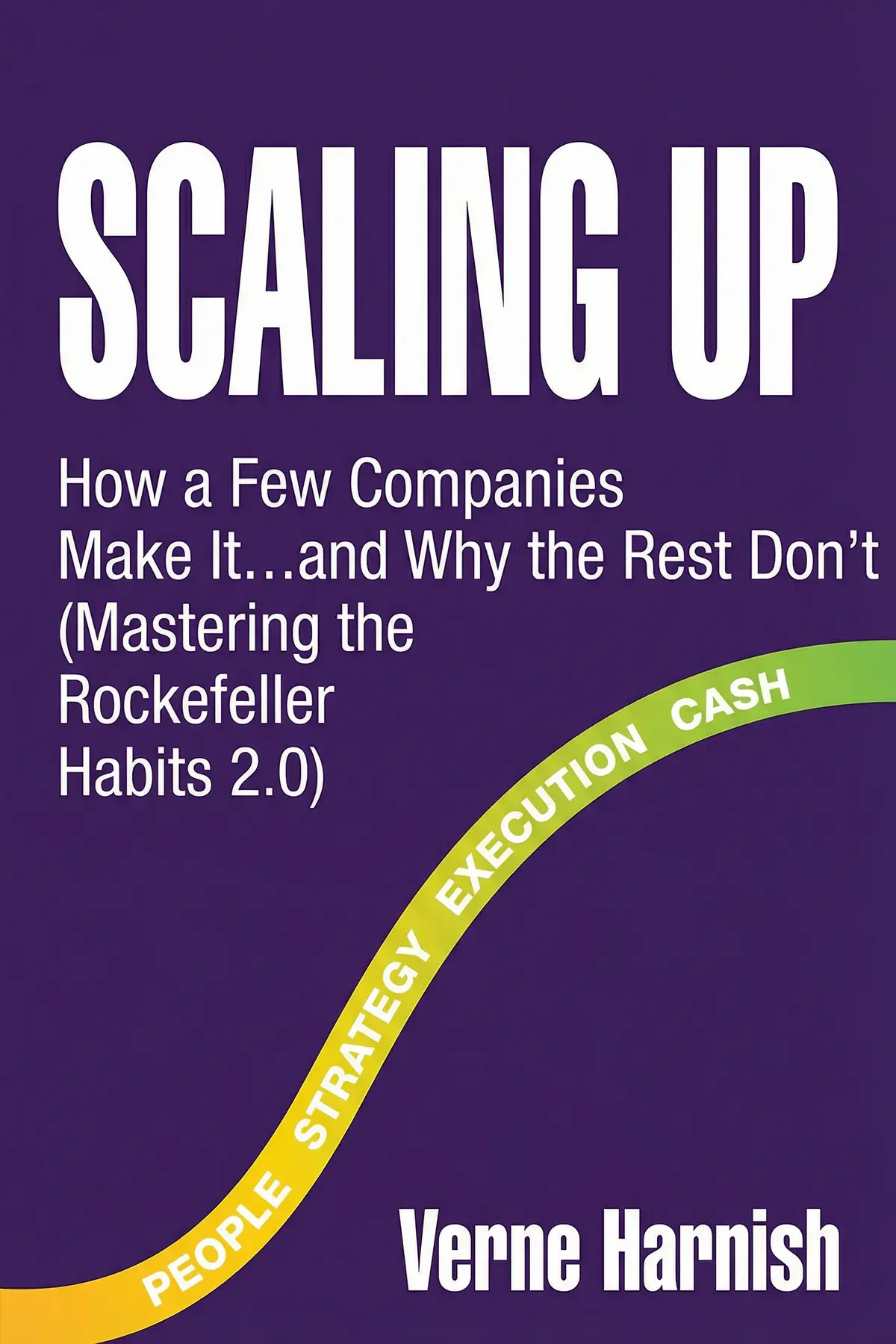
Table of Content
1. Introduction
2 min 05 sec
Every year, thousands of new businesses are launched with grand ambitions and promising products. Yet, the statistics tell a sobering story. The vast majority of these ventures disappear within a few years, and of those that survive, only a tiny fraction ever manage to grow into significant, industry-changing organizations. This raises a fundamental question: Why is it that some companies can expand effortlessly while others crumble under the weight of their own success?
You might assume that as a company gets larger, things should naturally get easier. After all, you have more resources, more talent, and more market presence. But the reality is often the opposite. Growth introduces a level of complexity that can easily spiral out of control. Suddenly, the informal communication that worked when you were five people in a garage fails when you are fifty people spread across two floors. The cash that seemed plentiful when you were small is suddenly swallowed up by inventory and payroll.
Scaling Up is about navigating this transition. It’s about moving from a business that relies on the heroic efforts of a few individuals to a professional organization that runs on systems, discipline, and a clear vision. Throughout this summary, we will explore the ‘Rockefeller Habits’—a set of principles derived from the legendary business practices of John D. Rockefeller. These habits are designed to provide a structure for four essential areas of any business: your people, your strategy, your execution, and your cash.
We will look at how to transform your managers into coaches, how to find the ‘X-factor’ that differentiates you from every competitor, and why the rhythm of your daily meetings is the heartbeat of your company. Whether you are leading a team of ten or ten thousand, these insights provide a checklist for sustainable, profitable growth. By the end, you’ll understand that scaling isn’t just about getting bigger—it’s about creating a framework that allows your company to fulfill its ultimate potential without burning out your team or your bank account. Let’s dive into the four pillars of scaling up.
2. The Four Foundations of Growth
2 min 11 sec
Success in scaling is built upon four fundamental pillars that every leader must master to avoid the common pitfalls of rapid expansion.
3. The Paradox of Expansion
1 min 52 sec
Your company’s growth might be killing it—literally. Discover why scaling revenue without scaling your internal systems is a fast track to organizational collapse, and the counterintuitive fix that keeps culture alive.
4. Defining Clear Accountability
2 min 17 sec
Discover how visual charts can eliminate confusion and ensure that every vital process in your company has a single point of responsibility.
5. Transitioning from Manager to Coach
1 min 57 sec
Stop managing tasks and start multiplying talent. Discover why coaching your team is the secret to scaling without becoming the bottleneck.
6. The Power of a Unified Vision
2 min 21 sec
Learn how to distill your company’s purpose and long-term goals into a concise strategy that keeps everyone aligned and motivated.
7. Owning Your Market Space
2 min 05 sec
Stop competing on price and start owning a word in your customer’s mind. Discover how identifying your X-factor—that one overlooked advantage—creates a moat your competitors can’t cross.
8. The One-Page Strategic Plan
2 min 15 sec
Simplify your complex business objectives into a single page that drives action and keeps the entire team focused on what matters most.
9. Establishing an Execution Rhythm
2 min 25 sec
Your meetings aren’t the problem—they’re your secret weapon. Discover how a disciplined rhythm of huddles, reviews, and data transforms chaos into flawless execution.
10. Maximizing the Cash Conversion Cycle
2 min 00 sec
Explore why cash flow is more important than profit for a growing firm and how to shorten the time it takes to get your money back.
11. Pulling the Financial Levers
2 min 03 sec
Small tweaks to seven financial levers can transform your bottom line more than massive overhauls ever will. Discover which lever in your business is worth pulling first.
12. Conclusion
1 min 54 sec
Scaling a business is one of the most difficult challenges a leader can face. It is a journey that requires a shift in mindset from doing to leading, and from intuition to systems. Throughout this summary, we have explored the four pillars that support sustainable growth: People, Strategy, Execution, and Cash.
We’ve seen that you must transition from being a manager to a coach, building a team that is accountable and empowered. We’ve discussed how a clear strategic vision—anchored by core values and an ambitious BHAG—provides the direction your team needs to move in unison. We’ve looked at the importance of an execution rhythm, where daily huddles and data-driven reviews keep the company on track. And finally, we’ve emphasized that cash flow is the vital energy that allows all of this to happen, and that by pulling the right financial levers, you can fund your own expansion.
The transition from a small company to a large one is rarely smooth, but it doesn’t have to be chaotic. By implementing the Rockefeller Habits, you create a structure that can absorb the shocks of growth and turn complexity into a competitive advantage. The throughline of this entire process is discipline. It is the discipline to hold the meetings, the discipline to track the data, and the discipline to stay true to your strategy even when things get difficult.
As you move forward, remember the most actionable piece of advice from this framework: start with your communication rhythm. If you do nothing else, implement a 15-minute daily huddle with your leadership team. This simple habit will begin to clear the fog of growth and ensure that you are tackling your biggest obstacles every single day. Growth is complex, but with the right tools and a commitment to these habits, your company can not only scale up but thrive for generations to come.
About this book
What is this book about?
Scaling Up explores the intricate journey of taking a business from a successful startup to a sustainable, high-impact organization. It addresses the common pitfalls that cause most companies to plateau or fail when they try to expand. The core of the book is built around the idea that growth is a double-edged sword: while it brings more revenue, it also increases complexity, taxes communication, and can quickly deplete cash reserves if not managed with precision. The book promises a practical roadmap for leaders who feel overwhelmed by the day-to-day chaos of a growing firm. By focusing on four key areas—attracting the right people, creating a truly differentiated strategy, maintaining a disciplined execution rhythm, and optimizing cash flow—Verne Harnish provides a set of tools known as the Rockefeller Habits. This summary details how to implement these habits to ensure that as your company gets bigger, it also gets better, more profitable, and more enjoyable to lead.
Book Information
About the Author
Verne Harnish
Verne Harnish is a prominent figure in the business world, often referred to as the Growth Guy. He is the founder of Gazelles, a global enterprise dedicated to executive coaching and corporate growth. In addition to his leadership at Gazelles, Harnish serves as a columnist for Fortune magazine. He is the author of several influential books, including The Greatest Business Decisions of All Time. Scaling Up serves as the modernized and expanded edition of his classic international bestseller, Mastering the Rockefeller Habits, reflecting decades of experience in helping companies scale effectively.
Ratings & Reviews
Ratings at a glance
What people think
Listeners find this business guide to be an essential read, specifically for individuals launching startups and new company owners. It delivers functional advice and real-world insights that help people develop a unique competitive strategy and explore organizational foundations in detail. They value the book's straightforward nature, with one listener pointing out the ready-to-use templates, and describe it as an invaluable tool for businesses dedicated to growth.
Top reviews
Siriporn
Ever wonder why some companies explode while others just coast? Verne Harnish basically hands you the blueprint here, though you better bring a highlighter and some coffee. It’s not a light beach read, but for an entrepreneur trying to move past the 'mom and pop' stage, it is pure gold. We implemented the daily huddles and the OPSP (One Page Strategic Plan) immediately. The structure provided for our leadership meetings changed the entire rhythm of our office within a month. People complain about the acronyms, but they act as a useful shorthand that eventually sticks. It's the most practical business manual I've ever owned, period.
Show moreEmily
Picked this up on a recommendation from a mentor and it’s easily the most useful resource in my library. Most authors give you 'what' to do, but Verne gives you the 'how' with zero fluff. The 'Power of One' analysis for cash flow was a massive eye-opener for our accounting department. We stopped guessing about our margins and started looking at the specific levers that actually drive growth. Not gonna lie, it’s a firehose of information. You have to take it one chapter at a time or you’ll get overwhelmed. If you are serious about moving from $1M to $10M, this is your bible.
Show moreHemp
Finally got around to reading this and I’m kicking myself for waiting so long. The 'One Page Strategic Plan' is a masterpiece of simplification that forced our executive team to finally align on our core purpose. In my experience, most companies fail because they try to do too much, but Harnish emphasizes saying 'no' to the wrong opportunities. The focus on 'Profit per X' changed how we view our entire product line. This isn't just a book to read; it’s a toolkit to implement over several years. If you're an entrepreneur who feels like they’re drowning in day-to-day operations, this will give you your life back.
Show moreWoramet
The chapter on Strategy alone is worth the price of admission. Moving from SWOT to SWT (Strengths, Weaknesses, and Trends) was a subtle shift that completely changed our long-term forecasting. Truth is, most business books are 200 pages of fluff around one good idea, but this is the exact opposite. Every page has a tool or a metric that you can actually use. We used the '7 Strata of Strategy' to find a differentiator that our competitors can't easily copy. It’s helped us move away from competing on price and toward owning a specific 'word' in our market. Essential for any growth-minded founder.
Show moreEmma
Wow. This book is a beast in the best way possible. It’s the first time I’ve seen a comprehensive system that links high-level strategy directly to daily execution without losing anything in translation. The focus on 'A-players' and the job scorecard changed our entire hiring process for the better. We used to hire based on 'gut feeling,' but now we have a repeatable process that actually works. It’s a rare breed of business book that is both highly tactical and visionary. I keep a copy on my desk and refer to it at least once a week during our quarterly planning sessions. Highly recommended.
Show moreScarlett
As someone who has navigated the messy middle of a startup, I found the section on 'The 4 Decisions' to be incredibly grounding. The book provides a very specific framework for People, Strategy, Execution, and Cash that most business books gloss over with vague anecdotes. Look, it’s dense—almost like a textbook—so don't expect to finish it in one sitting. I did find the Kindle version a bit frustrating because the diagrams are small and hard to read, which is a shame given how vital the worksheets are. Buy the physical copy so you can actually use the templates provided. It’s worth the extra effort for the clarity it brings to your scaling process.
Show moreEleni
After hearing so much buzz in my CEO peer group, I finally dove into the 'Scaling Up' methodology. It’s a significant step up from Harnish's previous work, offering much more depth on the 'Cash' and 'People' pillars. I particularly liked the Function Accountability Chart (FACe) as it cleared up a lot of internal confusion about who actually owns what. My only gripe is that it feels a bit too 'one-size-fits-all.' Some of the meeting rhythms felt a bit excessive for our remote team structure. Still, the actionable insights far outweigh the minor annoyances of the writing style. It's a solid, disciplined roadmap for growth.
Show morePatchara
This book has enough acronyms to make a Pentagon official dizzy. Seriously, Harnish tries to turn every single concept into a three or four-letter shorthand, and it gets exhausting after the first fifty pages. To be fair, the core logic is sound, especially the focus on cash and execution. However, if you already own Mastering the Rockefeller Habits, you might feel a bit of deja vu. It feels like an updated version with extra layers of complexity that aren't always necessary for smaller teams. I appreciate the Jim Collins references, but at times I felt I was reading a derivative work rather than something entirely fresh.
Show moreZanya
Frankly, the content is five-star, but the presentation is a bit of a mess. It’s a very 'busy' book with gray boxes, sidebars, and charts crammed into every corner, which makes for a distracting reading experience. I felt a tiny hint of information overload where I didn't know where to start. It relies heavily on the reader already being familiar with Jim Collins' concepts, which is fine, but it lacks a bit of its own unique voice at times. I’ve implemented the daily huddles with my team and they’ve been effective, but I’m struggling to get through the technical chapters. Good, but proceed with patience.
Show moreTom
Not what I expected based on the rave reviews. This isn't really a book; it’s more like a disorganized binder of checklists and corporate-speak that lacks any real narrative flow. Every other page seems to reference Jim Collins or another business guru, making me wonder why I didn't just read the source material instead. The tone feels incredibly corporate and detached, which didn't resonate with our smaller, organic culture at all. Honestly, it felt like being yelled at by a consultant who loves the sound of his own jargon. There are some okay ideas buried in here, but the acronym soup made it nearly impossible for me to stay engaged.
Show moreReaders also enjoyed
A Year with Peter Drucker: 52 Weeks of Coaching for Leadership Effectiveness
Joseph A. Maciariello



Acting with Power: Why We Are More Powerful Than We Believe
Deborah Gruenfeld
All In: How Great Leaders Build Unstoppable Teams
Mike Michalowicz
AUDIO SUMMARY AVAILABLE
Listen to Scaling Up in 15 minutes
Get the key ideas from Scaling Up by Verne Harnish, plus 5,000+ more titles in English and Thai.
- 5,000+ titles
- Listen as much as you want
- 7-day free trial
- Cancel anytime







