
16 min
Scaling Up Compensation: Turning Your Largest Expense Into a Strategic Advantage
Scaling Up Compensation offers a strategic blueprint for transforming pay from a massive business expense into a powerful tool for driving growth, culture, and long-term employee commitment through alignment and fairness.
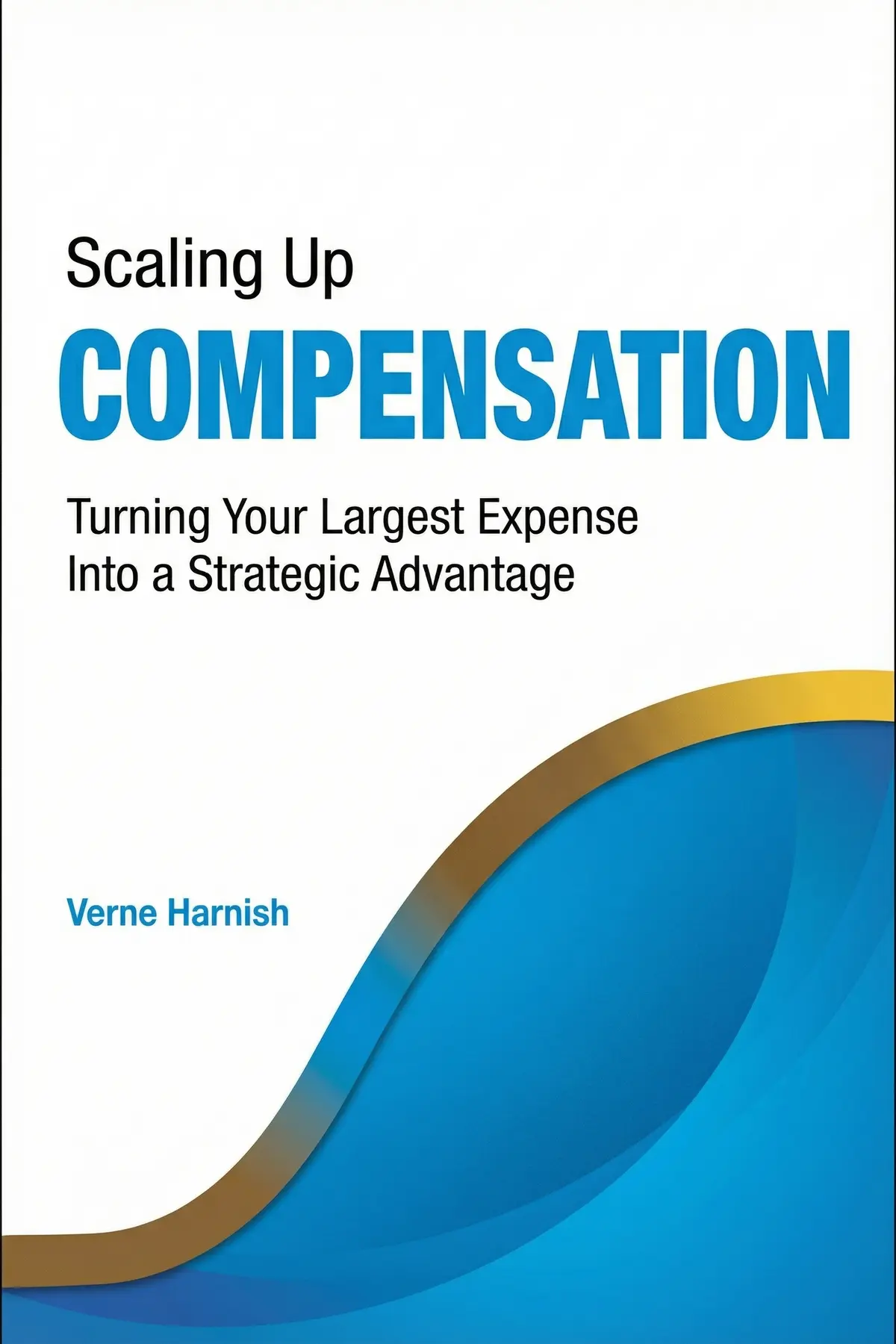
Table of Content
1. Introduction
1 min 59 sec
In the world of growing a business, there is perhaps no topic more sensitive, more debated, or more potentially explosive than how much people get paid. For the leader of a scaling company, compensation often feels like a giant, immovable weight on the balance sheet. It is your largest expense, yet it frequently feels like it’s being managed with a mix of guesswork, tradition, and reactive negotiations. When a key player threatens to leave, you throw money at them. When a new hire asks for more than the budget allows, you panic. This creates a patchwork of salaries that lacks rhyme or reason, eventually leading to a culture of secrecy, resentment, and disengagement.
But what if we looked at compensation through a completely different lens? What if, instead of seeing it as a cost to be minimized, we saw it as a strategic investment to be optimized? This is the core shift explored in Verne Harnish’s approach. Compensation is not just about numbers on a paycheck; it is the primary way a company communicates its values and priorities. It tells employees what the company actually cares about—not what the mission statement says, but what the bank account rewards.
In this summary, we are going to dive into a comprehensive framework for rebuilding your pay systems from the ground up. We will explore why mimicking your competitors’ pay structures is a recipe for mediocrity and how you can use unique compensation models to define your company’s identity. We’ll look at the vital distinction between fairness and equality, and why treating everyone the same can actually be the most unfair thing you can do. We will also dissect the common mistakes companies make with bonuses and incentives, uncovering why they often backfire and how to fix them.
Finally, we will discuss the transformative power of profit-sharing and equity, showing how you can move your workforce from a mindset of ‘renting’ their jobs to ‘owning’ their outcomes. By the end of this journey, you’ll see how to align your people’s pockets with your company’s purpose, turning your compensation strategy into a true competitive advantage.
2. Strategic Differentiation in Pay
2 min 25 sec
Copying a competitor’s salary structure might seem safe, but it often dilutes your company’s unique culture and competitive edge.
3. The Power of Structured Fairness
2 min 32 sec
True fairness in the workplace isn’t about paying everyone the same, but about creating a logical, transparent framework for growth.
4. When Incentives Backfire
2 min 29 sec
Bonuses are the most popular tool in a manager’s kit, but without careful design, they can easily destroy teamwork and focus.
5. Gamification and the Spirit of Gain-Sharing
2 min 28 sec
Short-term, team-based rewards can turn mundane work into an engaging game that drives immediate and visible results.
6. From Employees to Owners
2 min 33 sec
When you share the long-term value of the business, you change the fundamental mindset of your workforce from ‘renters’ to ‘stewards.’
7. Conclusion
1 min 34 sec
Rethinking your compensation strategy is not a one-time project; it is an ongoing commitment to aligning your business’s most significant investment with its most important goals. We’ve explored how pay is far more than a simple transaction—it is a strategic signal, a framework for fairness, and a catalyst for ownership. By moving away from the ‘copycat’ approach and building a system that reflects your unique culture, you create a powerful tool for attracting the right people and repelling the wrong ones.
Remember that while base pay provides the foundation of security and fairness, it is the creative use of shared incentives and gain-sharing that provides the daily energy. And for the long term, nothing beats the power of profit and value sharing to turn a group of employees into a dedicated team of owners. The throughline across all these ideas is clarity: when people understand how they are paid and why, the drama of compensation disappears, replaced by a shared focus on performance and growth.
As you move forward, start by auditing your current system. Where is the friction? Where are the ‘handshake deals’ causing resentment? Begin by creating a logical structure, then look for ways to make the ‘game’ of work more engaging. Your compensation system is a living part of your company. When it is designed with intention and transparency, it becomes a strategic advantage that doesn’t just cost money—it makes the company better for everyone involved. Take the leap from seeing pay as a burden to seeing it as the ultimate lever for your company’s success.
About this book
What is this book about?
For many business leaders, compensation is a source of constant tension—a balancing act between staying competitive and managing the company's largest expense. Scaling Up Compensation challenges the traditional view of pay as a static overhead cost, arguing instead that it is one of the most effective levers available for shaping organizational behavior. By moving away from generic salary structures and toward systems that reward specific strategic goals, companies can foster a culture of high performance and loyalty. The book provides a clear framework for rethinking how people are paid, focusing on five core principles. It explores the nuances of salary bands, the pitfalls of individual bonuses, and the psychological power of shared incentives. Ultimately, the promise of this approach is a more harmonious workplace where employees think and act like owners, ensuring that the company's financial success is directly linked to the well-being and motivation of its workforce.
Book Information
About the Author
Verne Harnish
Verne Harnish is a seasoned entrepreneur, business strategist, and founder of the Entrepreneurs’ Organization (EO). He’s best known for his expertise in scaling companies and has authored several best-selling business books, including Mastering the Rockefeller Habits and The Greatest Business Decisions of All Time. Harnish also led MIT’s Birthing of Giants entrepreneurship program for years.
Ratings & Reviews
Ratings at a glance

What people think
Listeners view this title as a brief yet extremely useful tool for executives, commending the way it simplifies intricate pay systems into straightforward design concepts. Additionally, people value the varied case studies and data provided to show how to sync worker motivation with corporate objectives, while one listener points out that the appendix provides substantial extra worth. They further state that the guide works well for encouraging an "owner's mindset" among staff, rendering it a helpful addition for anyone aiming to grow their company.
Top reviews
Saovapa
As a founder who has spent years agonizing over bonus pools, this book finally provided the framework I was missing. Verne Harnish manages to distill the dense, often terrifying world of pay structures into five digestible pillars that prioritize design philosophy over just cutting checks. I especially appreciated the emphasis on building an 'owner's mindset' rather than just handing out entitlements that people eventually ignore. Truth is, most of us get incentives wrong because we don't think about the long-term behavioral impact. While it is a quick read, the density of the research—particularly regarding how to move away from toxic internal competition—is impressive. The examples of gamifying gains felt fresh and actionable for my leadership team. It is a vital supplement for anyone already using the Scaling Up methodology. Highly recommended for those who want their team to actually care about the bottom line.
Show moreAudrey
Ever wonder why your best employees still seem disengaged despite a decent salary? Harnish explores this paradox by breaking down the difference between base pay and performance-aligned incentives. I found the section on share options and equity to be the most enlightening part of the entire book. It moves past the typical 'carrot and stick' approach and dives into how to foster genuine solidarity within a workforce. Look, the reality is that compensation is usually a mess of legacy decisions and emotional reactions. This book cleans that up. The appendix alone is worth the price of admission, offering practical tools that I started implementing the day after I finished reading. It is a short, punchy, and incredibly practical guide. It’s rare to find a business book that respects the reader's time this much. If you want a team that thinks like owners, buy this today.
Show moreSuthida
The chapter on gamifying gains completely changed my perspective on how to align employee interests with company profitability. Verne Harnish has a knack for taking something as dry as 'compensation' and making it feel like a strategic lever for growth. This isn't just about pay; it's about culture. In my experience, most firms fail because they treat compensation as a secret, back-office function. This book argues for a more transparent, philosophy-driven approach that rewards the right behaviors. The research cited is modern and challenges a lot of the 'old school' thinking regarding commissions and yearly reviews. I found the examples of companies moving toward solidarity-based pay particularly moving. It’s a quick, high-impact read that provides a clear guide for both new and seasoned CEOs. It helped me simplify our complex scheme into something the team actually understands and appreciates. Five stars for clarity and utility.
Show moreAnong
Picked this up during a flight and ended up taking more notes than I have on books triple its length. What Harnish does best here is dismantling the 'pay for performance' myth that actually hurts most companies. He shows how to build a system where employees aren't just working for a check, but are truly invested in the scale-up journey. The book is packed with research that proves why most bonus plans fail. It’s refreshing. I loved the focus on creating a coherent, flexible structure that doesn't just treat everyone like a number. The examples of gain-sharing are particularly eye-opening for anyone in the service or manufacturing sectors. It is easily the best resource I’ve found for fostering an 'owner’s mindset' across an entire organization. If you are serious about scaling, you cannot afford to ignore the psychological impact of your pay scale.
Show moreGift
Wow, I didn't think such a short book could tackle the mess of share options so effectively. Verne Harnish understands that compensation is the ultimate expression of a company’s values. If you value competition, you pay one way; if you value solidarity, you pay another. This book forces you to decide what kind of company you are before you even look at a spreadsheet. The five key topics covered are essential for any CEO who feels like they are overpaying for underperformance. It's a quick read but it stays with you. I found myself re-evaluating our entire philosophy on the train ride home. While it focuses a lot on US examples, the underlying logic of human motivation is universal. This is a must-read for entrepreneurs who want to stop being 'the boss' and start leading a team of owners. Simply brilliant and highly actionable.
Show moreSofia
This book acts as a fantastic bridge between high-level strategy and the nitty-gritty of payroll. It feels like a natural evolution of the 'Good Jobs Strategy,' focusing heavily on how to attract high-caliber talent without just throwing money at the wall. My only real gripe is that it has a very strong US focus. If you are operating in Europe or Asia, you'll definitely need to spend some extra time translating these structures to fit local labor laws and cultural norms. To be fair, the core principles of fairness and transparency are universal. The writing is snappy and avoids the fluff usually found in business manuals. I loved the distinction between salary structures and 'gamified' incentives. It’s not a full step-by-step manual, but as a collection of design principles, it’s top-tier. A solid 4-star resource for any growing executive.
Show moreDimitri
Not exactly what I expected, but in a good way. I was looking for a rigid, spreadsheet-style guide on exactly what to pay a mid-level manager, but Harnish focuses more on the 'why' and the overarching architecture. Some parts felt a bit like a sales pitch for his coaching services, yet the sheer volume of real-world examples kept me engaged. The story-based format makes the concepts of share options and gain-sharing much easier to visualize. Frankly, I think the advice on avoiding 'entitlement' bonuses is worth the read alone. We have all seen how a yearly bonus can become a source of resentment if it’s not handled correctly. While I would have liked a bit more granular detail on initial setup, the design principles are rock solid. It’s a strong companion piece to the original Scaling Up book and well worth the afternoon it takes to read.
Show moreChai
After hearing so much buzz in my entrepreneur circles, I picked this up to fix our messy bonus structure. It is definitely more of a 'design' book than a 'how-to' manual. The focus is on the philosophy of pay—how you attract the right caliber of people and keep them focused on the right goals. Personally, I think the advice on avoiding financial incentives that drive 'irrational' behaviors was the most valuable takeaway. We’ve struggled with salespeople cannibalizing each other, and the solidarity-based models discussed here offer a real solution. It’s a fast read, which I appreciate, but it does leave you wanting a bit more depth in certain areas like international tax structures. Still, the appendix provides some great worksheets and templates that make the transition easier. It is a strong 4-star book that every business builder should have on their shelf.
Show moreThitima
Truth is, most compensation books are either too academic or too superficial, but this one hits a nice middle ground. It reads very much like supplementary material to Scaling Up, drawing heavily from proven frameworks while adding new layers of practical examples. I liked the focus on 'gamification'—it makes the math of business feel like a winnable challenge for the staff. To be fair, it is quite opinionated. Harnish has a specific worldview on how business should run, and if you don't buy into the 'Scale Up' philosophy, you might find some parts frustrating. There were moments where it felt a little bit like an advertisement for his consulting network. However, the value of the actual strategies and the clarity of the appendix far outweigh the 'salesy' tone. It’s a solid 4-star addition to any business library.
Show moreRungrat
Finally got around to reading this and I have mixed feelings. On one hand, the impulses behind the book are great—who doesn't want a more motivated team? On the other hand, it felt a bit light on new information if you have already read 'The Good Jobs Strategy' or Harnish's previous work. It is very short. I finished it in under two hours. I was hoping for more of a step-by-step roadmap for a small organization, but it felt more like a collection of high-level case studies and design philosophies. Gotta say, the US-centric approach to benefits and tax implications makes it a bit harder to apply elsewhere without a lot of extra legwork. It’s a decent book for a quick mental reset, but don’t expect a comprehensive technical manual on compensation. It works as a starting point, nothing more.
Show moreReaders also enjoyed
A Year with Peter Drucker: 52 Weeks of Coaching for Leadership Effectiveness
Joseph A. Maciariello


Acting with Power: Why We Are More Powerful Than We Believe
Deborah Gruenfeld
All In: How Great Leaders Build Unstoppable Teams
Mike Michalowicz
7 Powers: The Foundations of Business Strategy
Hamilton Helmer

A Bigger Prize: How We Can Do Better Than the Competition
Margaret Heffernan
AUDIO SUMMARY AVAILABLE
Listen to Scaling Up Compensation in 15 minutes
Get the key ideas from Scaling Up Compensation by Verne Harnish, plus 5,000+ more titles in English and Thai.
- 5,000+ titles
- Listen as much as you want
- 7-day free trial
- Cancel anytime







