

AI 2041: Ten Visions for Our Future
Kai-Fu Lee
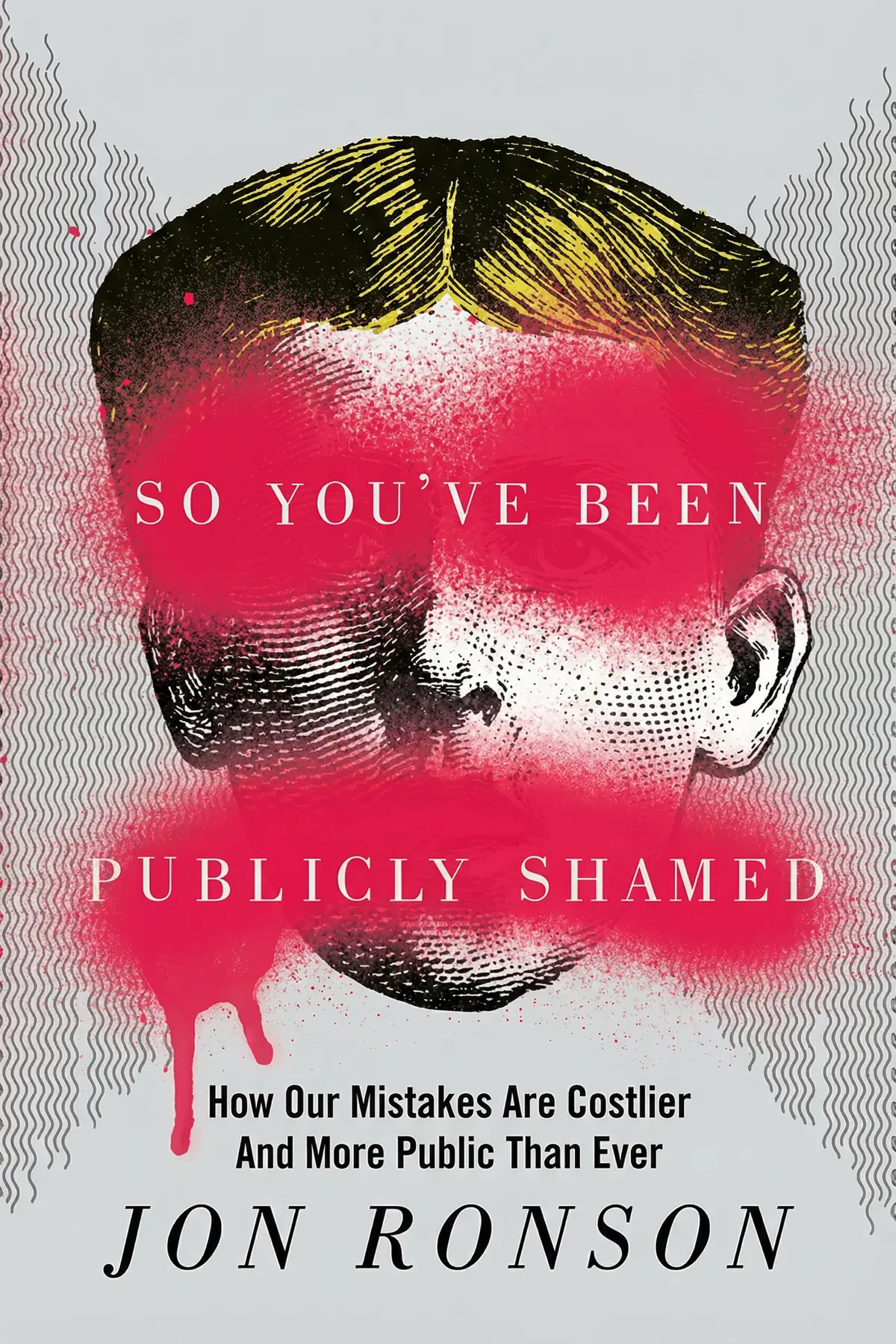
Jon Ronson explores the terrifying resurgence of public shaming in the digital age, examining how social media mobs can destroy lives over minor mistakes and whether this modern-day pillory serves justice or cruelty.
1 min 44 sec
Imagine the feeling of a cold, digital wind blowing through your life. You’ve made a mistake—perhaps a small one, a poorly timed joke, or a misunderstood photo—and suddenly, you aren’t just facing the judgment of your peers; you are facing the judgment of the world. In the era of social media, the public square has expanded to include everyone with a smartphone, and the results can be devastating. This is the central premise of Jon Ronson’s exploration into the modern phenomenon of humiliation.
We often think of progress as a linear path away from the brutality of the past. We look at the stocks and the pillories of the medieval era as relics of a more primitive time. However, as Ronson demonstrates, those ancient urges to punish, degrade, and ostracize have not disappeared. They have simply moved online. This summary will take you through the landscape of the digital shame-storm. We will look at how the power of the crowd can be used to right systemic wrongs, but also how that same power can mutate into something far more personal and destructive.
Through various real-life examples, we will examine the psychological toll of being the target of a mob. We’ll see how the feeling of powerlessness in the real world can drive people to seek control in virtual spaces, often at the expense of another person’s livelihood and sanity. This isn’t just a book about social media; it’s a look into the darker corners of human nature and the systems we’ve built that allow our worst impulses to flourish at the speed of a click. We’ll explore the throughline of how shame acts as a weapon, a deterrent, and a source of profit, asking ourselves if we’ve truly moved past the public whipping post or if we’ve just built a more efficient version of it.
2 min 22 sec
Centuries ago, societies used physical shaming to maintain order. Today, we’ve revived these brutal practices through social media, transforming minor errors into life-altering scandals.
2 min 20 sec
While it can be cruel, public shaming sometimes acts as a powerful tool for the disenfranchised to hold large corporations and authorities accountable.
2 min 13 sec
Digital shaming often emerges from a deep-seated feeling of powerlessness in the physical world, leading people to reclaim their agency through online activism.
2 min 13 sec
When individuals join a digital mob, their behavior shifts. They often act not out of madness, but out of a shared moral conviction that justifies their aggression.
2 min 25 sec
The consequences of being publicly shamed go far beyond professional loss, often leading to long-term psychological trauma, social isolation, and a permanent sense of fear.
2 min 05 sec
There is a way to escape the shadow of a public shaming, but it is reserved for the wealthy. Reputation management firms offer a high-priced way to rewrite a digital history.
1 min 38 sec
The return of public shaming in the digital age is a stark reminder that our technology has evolved much faster than our social ethics. We have been handed a megaphone that can reach the entire world, and all too often, we use it to shout down anyone who makes a misstep. As Jon Ronson’s investigation shows, the line between holding someone accountable and participating in a digital lynching is dangerously thin. We have revived the pillory, but we’ve stripped away the geographic and temporal limits that used to give victims a chance to start over.
What this really means for us as individuals is that we need to practice a new kind of digital empathy. Before we join the latest chorus of outrage, we should consider the human being at the center of the storm. We must recognize that the feeling of power we get from shaming someone is often a temporary fix for our own feelings of inadequacy or powerlessness. While shaming can occasionally be a force for corporate or political accountability, when directed at individuals, it frequently results in a level of destruction that far outweighs the original offense.
Ultimately, the throughline of this exploration is the realization that a society without a path to redemption is a fragile one. If we continue to allow our digital lives to be governed by the fear of a single mistake, we lose the freedom to be human, to be flawed, and to grow. The challenge moving forward is to find a way to use our new connectivity to build a culture that values justice over humiliation and understanding over vitriol. We must decide if we want to be a community that heals or a mob that destroys.
In this deep dive into the mechanics of human judgment, Jon Ronson investigates the phenomenon of public shaming—an ancient practice that has found new life through the internet. The book traverses historical punishment methods, from medieval stocks to colonial whippings, and contrasts them with the viral outcries of the twenty-first century. Ronson doesn't just look at the victims; he explores the psychology of the shamer and the industry that has emerged to clean up digital reputations. Readers are promised a nuanced look at why we feel compelled to tear others down and the devastating, long-term consequences for those caught in the crosshairs. By analyzing high-profile cases of online cancellations and the quiet trauma of those who survived them, Ronson questions the ethics of our collective outrage. He explores the thin line between social justice and digital vigilantism, ultimately offering a cautionary tale about the power of the crowd and the fragility of our modern reputations.
Jon Ronson is an award-winning author, journalist, and documentary maker. His diverse body of work has appeared in major publications like The Guardian and Time Out Magazine, and he has contributed to television programming for the BBC and Channel 4. Ronson is the author of nine books, including the acclaimed best-seller The Men Who Stare at Goats.
Listeners find this work an essential read for the modern age, noting its high readability and challenging content that prompts profound reflection. The book is highly absorbing, with one listener describing it as a page-turner, and they value the relevant subject matter and meticulously researched case studies. Furthermore, the narratives are delivered with balance and objectivity, and listeners praise the quality of the writing, with one specifically mentioning the approachable storytelling style. Listeners also appreciate the balanced empathy shown toward all parties involved in shaming and the book’s ability to foster a greater sense of compassion for others.
This book genuinely changed how I interact with people online. It’s so easy to hit retweet on a witty takedown without stopping to think about the person on the other side of the screen. Ronson humanizes the villains of the week in a way that is both uncomfortable and necessary. We’ve traded our humanity for a sense of moral superiority, and the results are often devastating. The stories of people losing their livelihoods for one stupid mistake really hit home for me. Frankly, it’s a terrifying look at the power of the collective. I loved the way the author isn't afraid to admit his own participation in these mobs. It’s a brilliant, empathetic piece of journalism that should be required reading in high schools. Highly recommend for the digital age.
Show moreFinally got around to reading this and now I want to delete all my social media accounts. Seriously, the power of a bored crowd is the most terrifying thing I've read about all year. Ronson tells these stories with so much empathy that you can't help but feel for the victims, even when they did something clearly wrong. The way Justine Sacco's life was dismantled while she was literally in the air, unable to defend herself, is haunting. The book is incredibly engaging and reads like a thriller in some parts. I loved the accessible style; it doesn't feel like a dry academic text at all. It’s current, relevant, and a major wake-up call. We need to find a way to hold people accountable without dehumanizing them in the process. This is easily one of the most important books of the decade.
Show morePicked this up on a whim after seeing it mentioned in a thread about cancel culture. Ronson has this incredibly breezy writing style that makes heavy topics feel digestible without stripping away the gravity of the situations. Seeing the timeline of Justine Sacco’s life imploding over a single tweet was a wake-up call about how fast the internet moves. We think we’re being virtuous warriors for social justice, but often we’re just a part of a faceless mob crushing a human being. It's a scary look at how vigilante justice has evolved from the public pillories of the 1700s to the smartphone in your pocket. I did feel like he let some people off a bit too easy, though. He’s very empathetic, maybe too much so for someone like Jonah Lehrer who actually did lie to his readers. Still, it’s a necessary read for anyone with a social media account.
Show moreRonson’s latest is certainly a page-turner, but I found myself frustrated by the lack of a cohesive conclusion. He presents these fascinating, heartbreaking case studies like Lindsay Stone or the S&M scandal of Max Mosley, but then he just sort of peters out at the end. To be fair, his research into how Google search results can be manipulated to hide shame was eye-opening. However, the author seems to dodge the harder questions about accountability. When does a call-out become a shaming? He doesn't really provide a roadmap for how we fix this toxic environment. It’s more of a collection of anecdotes than a rigorous sociological study. It's definitely thought-provoking, but it left me with more questions than answers. The conversational tone makes it fly by, even when the subject matter is deeply uncomfortable.
Show moreEver wonder what happens after the internet moves on to the next scandal? This book answers that question, and the answer is usually total ruin. Ronson dives deep into the lives of Justine Sacco and Lindsay Stone, showing the long-tail effects of a viral mistake. The writing is sharp and frequently funny, which helps balance out the inherent depressing nature of the subject matter. I particularly enjoyed the exploration of how we’ve revived public shaming, a practice we supposedly abandoned a century ago because it was too cruel. It’s fascinating to see how the social justice crowd has become the new moral police. My only gripe is that the book feels a bit disjointed in the second half. The flow isn't as tight as his previous work, but it's still a very compelling read. It makes you think twice before joining a pile-on.
Show moreThe intersection of technology and primitive human impulses is a dark place, and Ronson navigates it with surprising grace. He masterfully draws parallels between the historical pillory and the modern Twitter feed. What I found most striking was the concept of borrowed virtue—the idea that we shame others to prove our own goodness to our tribe. The research into the Stanford Prison Experiment and its links to shame was a highlight for me. Truth is, we are all just one bad joke away from being the next target of a global mob. The book is well-researched and presented with a level of fairness that is rare in today's polarized media. While the ending felt slightly abrupt, the journey there was incredibly thought-provoking. It’s a poignant reminder that there is a real human being behind every avatar we attack.
Show moreThe first half is a solid 5 stars, but the second half really drags. Ronson starts out strong with the big viral cases we all remember, but then he wanders off into these weird subplots that don't feel related to the internet at all. I was hoping for more analysis on cancel culture and less on quirky individuals in workshops. Still, the Sacco story is worth the price of admission alone. It’s a very readable book and Ronson is a great narrator, but it feels like it needed a stronger editor to keep it on track. It’s fine for a plane ride, but don't expect it to change your life or offer any real solutions to the mess that is social media. It increases your empathy for sure, even if it feels a bit unfinished by the final page.
Show moreNot what I expected from someone as acclaimed as Jon Ronson. While the initial chapters about the Twitter mob were engaging, the book quickly loses its way. He spends a lot of time defending people who, quite frankly, were being pretty awful. There is a glaring hole in his analysis regarding the gendered nature of online harassment. Women are targeted with a level of vitriol that far exceeds what men face, yet Ronson barely touches on this before moving on to the next quirky interview. The section on the shame workshop was bizarre and felt like filler. Also, his reliance on experts who seem to have no actual credentials made me question the research as a whole. It felt like he had a pre-written conclusion and only looked for stories that fit his narrative. It’s a lightweight take on a very heavyweight problem.
Show moreLook, I enjoy Ronson’s voice, but this felt a bit like a collection of long-form blog posts rather than a finished book. The case studies are undeniably interesting, especially the one about the journalist Jonah Lehrer and his struggle to apologize correctly. However, the narrative jumps around quite a bit. One minute we’re talking about 18th-century prisons, and the next we’re at a weird retreat for people trying to get over their inhibitions. It’s all very Ronson-esque, but I wanted more depth on the psychology of the crowd. Why do we feel so good when we’re destroying someone? He touches on it, but never quite gets to the root of the issue. It’s an easy read and certainly kept me turning pages, but it lacked the punch I was hoping for. A solid 3 stars for effort.
Show moreMaybe I’m in the minority here, but I found this book incredibly one-sided and frustrating. Ronson spends the entire time crying over poor people who were called out for being racist or dishonest. Accountability isn't shaming, it's just the consequences of your own actions. He tries to make us feel sorry for people like Jonah Lehrer, who literally made up quotes! Why should we give him a pass? The book completely ignores the harm these people caused and instead focuses on how sad they are now. It felt like a giant pity party for privileged people who finally got told no. Plus, the writing is way too flippant for such a serious topic. I don't care about his weird shame workshops or his trips to the Hollywood Hills. This book is just an excuse to silence people who are finally finding their voice online. Skip it if you care about real justice.
Show moreKai-Fu Lee



Fay Bound Alberti
Daniel Goleman
AUDIO SUMMARY AVAILABLE
Get the key ideas from So You’ve Been Publicly Shamed by Jon Ronson, plus 5,000+ more titles in English and Thai.







