

21 min 09 sec
Spam Nation: The Inside Story of Organized Cybercrime – From Global Epidemic to Your Front Door
By Brian Krebs
Spam Nation investigates the massive, invisible infrastructure of global cybercrime, detailing how a handful of powerful hackers control the flood of digital junk and the dangerous malware hidden within it.
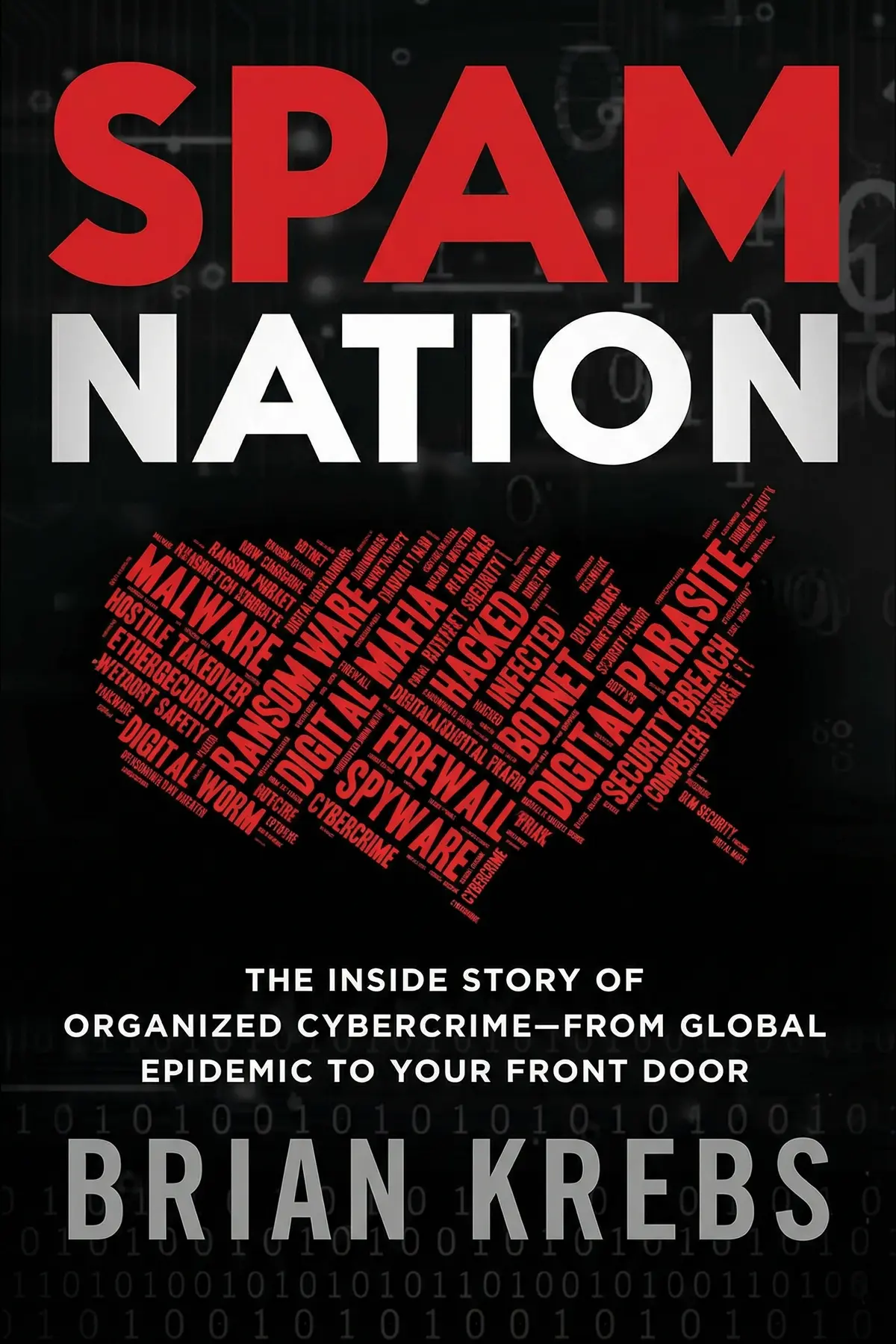
Table of Content
1. Introduction
1 min 48 sec
Every morning, millions of people around the world perform a ritual that has become second nature: they open their email inboxes and begin deleting the clutter. Most of it is harmless junk—clumsy advertisements for miracle cures, dubious financial opportunities, or suspicious links from distant relatives. It is easy to view this constant stream of noise as nothing more than a minor digital tax on our time. However, as we will explore today, that perspective is dangerously incomplete. The reality is that the spam hitting your computer is the primary weapon of a sophisticated, multi-billion-dollar criminal industry.
This investigation takes us into the hidden engine room of the internet, where a small group of highly organized individuals orchestrates a global epidemic. We are no longer talking about lonely hackers in basements; we are looking at powerful syndicates with their own customer service departments, payment processors, and political connections. Through this summary, we will trace the path of these digital threats from their origins in Eastern Europe to the screens of unsuspecting users everywhere.
The throughline of this journey is the constant evolution of digital warfare. As security improves, criminals innovate. As law enforcement closes one door, the syndicates build another. We will see how individual computers are conscripted into “zombie armies,” how personal health is gambled with through unregulated pharmacies, and how a bitter feud between two digital kingpins eventually brought a massive criminal empire to its knees. By understanding these dynamics, we move from being passive targets to becoming informed participants in our own digital safety. It is time to look past the subject lines of those annoying emails and see the vast, organized machinery that sent them.
2. The Hidden Threat of Digital Malware
2 min 23 sec
Discover why that annoying junk mail is far more than a nuisance, serving instead as a primary vehicle for software that can seize control of your personal technology.
3. The Architecture of Criminal Partnerkas
2 min 05 sec
Uncover the organized business models used by digital kingpins to scale their illegal operations and dominate the global market for illicit goods.
4. The Dominance of Global Botnet Kingpins
2 min 06 sec
Explore how just a few individuals in Russia harnessed massive networks of hacked computers to fire off billions of messages every single day.
5. The High Price of Unregulated Medicine
2 min 00 sec
Examine the dangerous economics behind ‘rogue’ pharmacies and why the promise of cheap prescriptions often leads to tragic consequences.
6. The Fallout of the Pharma Wars
2 min 09 sec
Witness how a bitter personal rivalry between two of the world’s most powerful spammers led to the downfall of a digital empire.
7. The Risks of Fighting Back
2 min 11 sec
Learn about the brave ‘anti-spam’ activists who put their lives and livelihoods on the line to defend the integrity of the internet.
8. Corporate and Legal Accountability
2 min 05 sec
Explore the critical role that private companies and government regulations play in strangling the financial oxygen of cybercrime syndicates.
9. The Evolution of Modern Digital Threats
2 min 13 sec
Understand how the decline of pharmaceutical spam has given way to more sophisticated and direct dangers like ransomware and identity theft.
10. Conclusion
2 min 09 sec
As we have seen throughout this exploration of the digital underworld, the world of spam is not just a messy corner of the internet; it is a mirrors-and-smoke industry built on sophisticated technology and ruthless ambition. From the technical brilliance of botnets like Cutwail and Rustock to the boardroom-level organization of the partnerkas, cybercriminals have built a parallel economy that operates right under our noses. We have witnessed how personal vendettas between kingpins like Gusev and Vrublevsky can shift the entire global landscape of crime, and how the bravery of anti-spam activists is often met with terrifying retaliation.
The most important takeaway is that our digital world is more interconnected than we often realize. A single infected computer in one country can be part of a force that takes down a national bank in another. The shift from selling fake medications to the rise of ransomware proves that these criminals are highly adaptable. They will always go where the money is, and as long as there are vulnerabilities—both technical and human—they will continue to thrive. This highlights the vital importance of basic digital hygiene. While the government and big corporations play their part in strangling the financial lifeblood of these syndicates, the first line of defense is always the individual user.
What this really means for you is a need for a fundamental shift in how you view your digital presence. Protecting your passwords, being skeptical of unexpected communications, and understanding the risks of the ‘too-good-to-be-true’ offer are no longer just suggestions; they are necessities. The industry of spam survives on the ‘click’ of the unsuspecting. By refusing to provide that engagement, and by using strong, complex passwords that combine a variety of characters, you make yourself a much harder target. The story of the cybercrime world is one of constant evolution, and by staying informed, you ensure that you are not just a passive victim of the next wave of digital innovation. Stay alert, stay skeptical, and keep your digital doors locked.
About this book
What is this book about?
Spam Nation provides a deep dive into the shadowy world of internet illicit activity, moving from the annoying emails in your inbox to the high-stakes operations of international cybercrime syndicates. It explains that spam is not merely a marketing nuisance but a primary delivery system for malicious software that can hijack personal computers for criminal purposes. Through meticulous research, the narrative uncovers the internal politics and bitter rivalries among the few individuals who control the majority of the world's spam output. The book promises to pull back the curtain on the technical and social engineering tactics used by hackers to defraud millions. It details the rise of illegal online pharmacies, the devastating power of botnets, and the evolving threat of ransomware. By following the investigative trail of the author, listeners will understand the financial incentives driving this global epidemic and the significant challenges faced by law enforcement and private security firms. Ultimately, it serves as an urgent call to awareness, teaching users how to protect themselves in an increasingly hostile digital landscape.
Book Information
About the Author
Brian Krebs
Brian Krebs is an award-winning investigative journalist who spent fourteen years reporting on the complex world of cybercrime for The Washington Post. He is widely recognized for his expertise in computer security and shares his findings on his highly regarded blog, KrebsOnSecurity.com.
Ratings & Reviews
Ratings at a glance
What people think
Listeners find the writing exceptionally accessible and well-crafted, with one listener highlighting how the author presents complicated data in a clear fashion. Furthermore, the narrative earns praise for its high-quality storytelling, and listeners consider it essential reading for cybersecurity experts looking to improve their defenses. The book also receives positive remarks for its educational value and the perspective it provides on the digital underworld. However, reactions to the technical depth are varied; while some listeners feel the concepts are explained well, others believe the work lacks sufficient detail.
Top reviews
Wacharapol
Ever wonder why your inbox used to be flooded with cheap Viagra ads? This book provides the answers in exhaustive, sometimes exhausting, detail. Krebs focuses heavily on the rivalry between the two biggest spam operations in Russia, painting a picture of a digital wild west. I never realized how much of the spam economy was driven by simple consumer demand for affordable medication. Frankly, it’s a bit depressing to see how these criminals exploit gaps in the healthcare system to fuel their botnets. The book is well-written and flows like a crime novel, which helps when dealing with all the complex technical jargon. I found the final chapter on personal security to be the most practical part, though it could have been expanded. If you want to understand the 'who' and 'why' behind the spam, this is the definitive guide.
Show morePatchara
Gotta say, even if you’re a seasoned IT pro, there is a lot of nuance here regarding the economics of the underground. We often focus on the 'how' of a breach, but Krebs forces us to look at the 'why' and the 'who' behind the keyboard. The book illustrates how difficult it is to bring these people to justice when they are protected by sovereign states. I found the description of the 'Partnerka' system—how they recruit affiliates to do the dirty work—to be incredibly insightful. It’s not just one guy in a basement; it’s a global affiliate marketing scheme for illegal goods. Some of the technical explanations were a bit simplified, but that makes it accessible for non-technical stakeholders in a business setting. It’s an excellent resource for building a better defense-in-depth strategy.
Show moreSomporn
Finally got around to reading this dive into the shady world of botnets and Russian drug lords. Krebs manages to take a topic that sounds incredibly dry—email spam—and turns it into a compelling narrative about rivalries and greed. I was particularly struck by how he breaks down the relationship between pharmaceutical spammers and the credit card industry. It isn't just about annoyance; it’s about a massive, global infrastructure designed to siphon money from unsuspecting users. Truth is, the storytelling is top-notch even if some of the technical details feel a bit glossy. I would have liked more info on how researchers actually track these server IPs, but the human element kept me turning pages. It's a solid piece of investigative journalism that makes you rethink every 'junk' email you've ever received.
Show moreSaranya
The audiobook version by Christopher Lane is probably the best way to consume this because those Russian names are a mouthful. Lane does a decent job, though his accents are a bit inconsistent across different characters. As for the content, it’s an eye-opening look at the 'Spam Nation' that exists just out of sight. I was particularly interested in how Visa and MasterCard eventually became the primary tools for shutting these operations down. It turns out that following the money is much more effective than trying to play whack-a-mole with the servers themselves. Not gonna lie, some of the middle chapters drag a bit as the author gets bogged down in the minutiae of specific hacker squabbles. However, for anyone interested in the history of the early 2010s internet, this is essential reading.
Show moreUdom
Brian Krebs has a real talent for making the invisible infrastructure of the internet feel like a high-stakes thriller. I went into this expecting a dry manual on email filters, but I ended up reading a saga about international fugitives and corrupt officials. The detail regarding the University of Alabama researchers trying to test the spam-bought pills was particularly gripping. It highlights the absurd legal hurdles that prevent us from actually fighting these cybercriminals effectively. Let's be real, the book can be a bit heavy on the author's own perspective, which might grate on some readers. I didn't mind it as much because his personal involvement in the story adds a layer of authenticity. It’s a compelling narrative that proves the truth is often stranger than fiction in the digital world.
Show moreRapee
After hearing Krebs on various podcasts, I expected a technical deep dive, but what I got was more of a true-crime drama. The focus is much more on the personalities and the political environment in Russia than on the actual code used to build the botnets. For some, this will be a plus, but I was hoping for more information on things like IP spoofing and server architecture. That said, the storytelling is excellent and kept me engaged through the more dense financial sections. It’s frightening to realize how vulnerable our personal data really is when faced with these massive, well-funded organizations. This is a must-read for anyone who thinks their antivirus software makes them invincible. It’s an informative, if slightly lopsided, look at the darker corners of our connected world.
Show moreMaya
As someone who follows cybersecurity news closely, I found this to be a bit of a mixed bag. Krebs clearly knows his stuff, but the transition from writing short blog pieces to a full-length book seems a bit bumpy in places. He spends quite a lot of time on his own personal history with the Washington Post, which felt slightly self-indulgent when I really just wanted to learn about the botnets. To be fair, the sections detailing the inner workings of the Russian pharmaceutical underground are fascinating and provide a perspective you won't find anywhere else. The technical level is accessible for a general audience, though a bit light for those already in the industry. It's an informative read that highlights the sheer scale of the cybercrime problem, even if the pacing is occasionally uneven.
Show moreChanpen
Look, the landscape of cybercrime moves at light speed, so a book from 2014 is naturally going to feel like a history lesson. Even so, the foundational concepts Krebs explains are still incredibly relevant today for anyone in the tech field. The way he describes the birth of the 'scareware' industry is chillingly similar to the modern ransomware threats we face. In my experience, most people don't realize how organized these 'miscreants' actually are. They operate like legitimate corporations with customer support and marketing departments. My only real gripe is that the book jumps around chronologically, which can make it hard to follow the timeline of events. Despite that, it’s a high-quality piece of investigative work that captures a specific era of the internet perfectly. It belongs on the shelf of any aspiring security researcher.
Show moreMaksim
The sheer number of 'miscreants' mentioned in this book makes it hard to keep track of who is backstabbing whom. I appreciate the list of characters at the front, but in the heat of the narrative, they all started to feel like the same person. It’s a very specific look at the Russian spam scene, which might be too narrow for someone wanting a broader overview of global hacking. Still, the insight into the fake antivirus market was worth the price of admission alone. I was surprised to learn how many legitimate companies were indirectly profiting from this traffic for years. It's obvious that the writing is a bit jerky in the later chapters, suggesting it might have been rushed to print. It’s a solid read that provides good historical context but fails to truly captivate throughout.
Show moreHenry
This book feels like a collection of blog posts that were stretched way too thin to fill a hardcover. While the subject of cybercrime is fascinating, the execution here is less than stellar because of the repetitive nature of the anecdotes. Krebs mentions the importance of understanding IP addresses but then fails to actually explain the mechanics of how they are spoofed or tracked in a meaningful way. Personally, I found the endnotes incredibly distracting; having to flip back and forth in an ebook is a chore that ruins the narrative flow. The focus on the personal feuds between Russian hackers started to blend together after a while, making the 'miscreants' feel interchangeable. It’s an okay introduction for a layman, but it lacks the analytical depth I was hoping for from such a renowned expert.
Show moreReaders also enjoyed








AUDIO SUMMARY AVAILABLE
Listen to Spam Nation in 15 minutes
Get the key ideas from Spam Nation by Brian Krebs, plus 5,000+ more titles in English and Thai.
- 5,000+ titles
- Listen as much as you want
- 7-day free trial
- Cancel anytime







