
21 min 25 sec
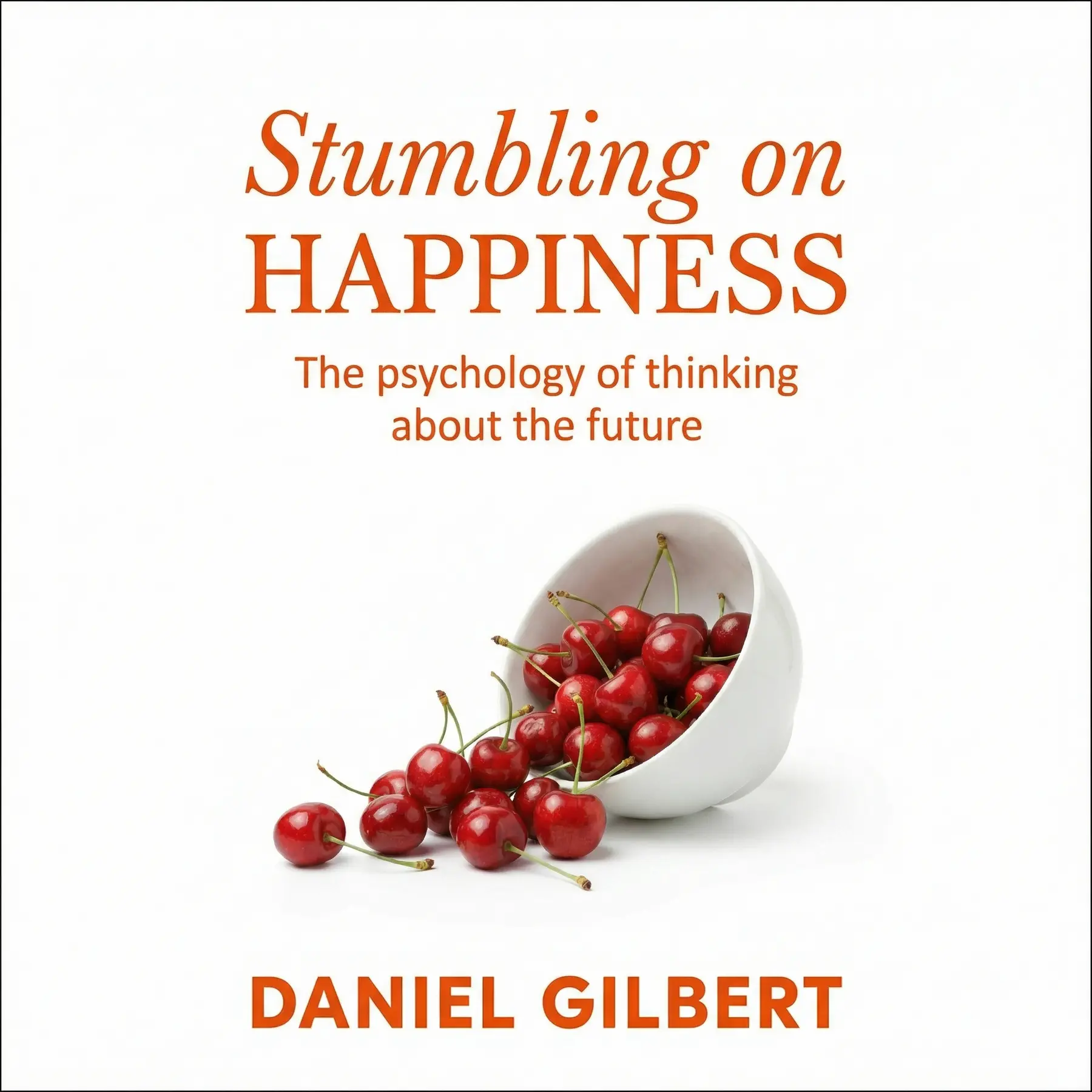
Stumbling on Happiness
Explore the fascinating psychology behind why we fail to predict our future happiness. Learn how our brains construct reality and why our instincts about what we want are often surprisingly wrong.
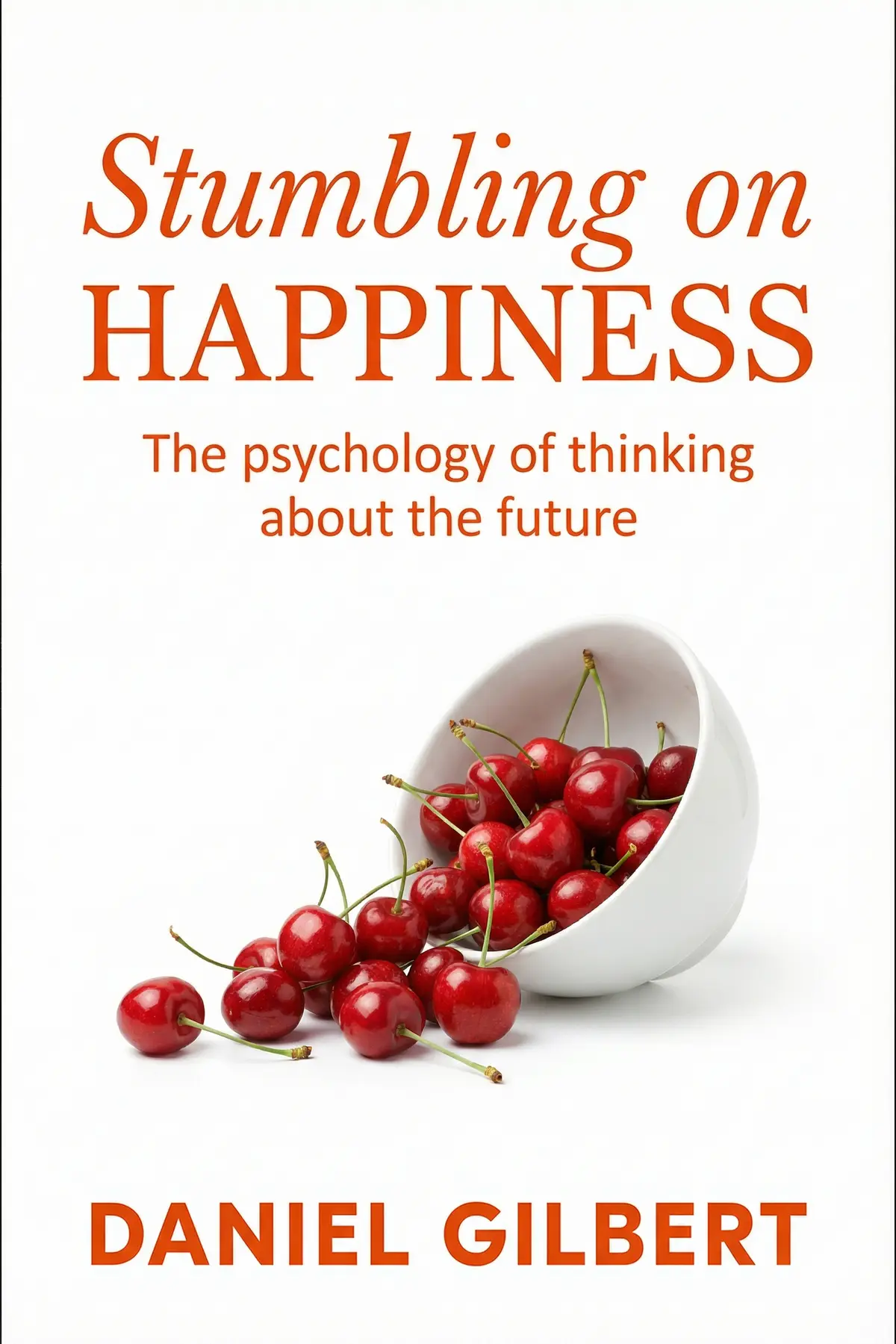
Table of Content
1. Introduction
1 min 48 sec
Most of us spend a significant portion of our lives looking forward. we plan for the weekend, we save for retirement, and we dream about the person we might one day become. We operate under a very specific assumption: that we know what will make our future selves happy. We assume that if we get that promotion, buy that house, or marry that person, the ‘us’ of ten years from now will be satisfied. But what if the very tools we use to predict that happiness—our memory and our imagination—are fundamentally broken?
In Daniel Gilbert’s exploration of the mind, we find that we are actually quite poor at forecasting our own feelings. We are, in a sense, stumbling through our lives because our brains are designed to prioritize the present and take shortcuts when imagining the future. This doesn’t happen because we are unintelligent; it happens because of the way our neural hardware is built. Our minds are constantly ‘filling in’ details that aren’t there and ‘leaving out’ details that actually matter.
Over the course of this summary, we’re going to look at the psychological mechanics that lead us astray. We will explore how our current mood acts like a filter that colors our entire vision of the years to come, and why our memories of the past are more like creative reconstructions than accurate video recordings. We’ll also see why having more freedom and more choice can actually make us less happy, and why we often ignore the best source of information about our future: the people around us.
The goal here isn’t just to point out our flaws, but to understand the ‘throughline’ of human cognition. By seeing the shortcuts our brains take, we can start to bridge the gap between who we are now and who we will be later. It’s an invitation to stop trusting our faulty internal crystal ball and start looking at the world with a bit more psychological humility. Let’s dive into the fascinating reasons why happiness is so hard to predict.
2. The Fabricating Mind
1 min 48 sec
Your brain is a master architect that builds a complete picture of reality even when information is missing, often without you ever realizing a gap existed.
3. The Simulation Trap
1 min 42 sec
When we imagine the future, we tend to fixate on a single, vivid scenario while ignoring the infinite number of other ways things could actually play out.
4. The Prison of the Present
1 min 44 sec
Our current emotional state acts as a heavy anchor, making it nearly impossible to accurately imagine how we will feel in a different context later on.
5. The Comparison Conundrum
1 min 52 sec
We often judge the value of our choices by looking at the past rather than the potential for future satisfaction, leading us into poor financial and life decisions.
6. The Peculiarity Bias
1 min 46 sec
Our memories are heavily weighted toward the unusual and the dramatic, which causes us to miscalculate how often certain events actually occur.
7. The Super-Replicator Myth
1 min 53 sec
Societal beliefs about happiness, such as the idea that more money always leads to more joy, often persist because they benefit the system, not the individual.
8. The Illusion of Uniqueness
1 min 46 sec
We mistakenly believe that our internal lives are so distinct that we cannot learn from the experiences of others, leading us to ignore valuable advice.
9. The Psychological Immune System
1 min 47 sec
Our brains have a hidden defense mechanism that helps us recover from major tragedies, but it often fails to protect us from minor daily annoyances.
10. The Burden of Choice
1 min 42 sec
We prize freedom and flexibility, but having the ability to change our minds often prevents us from ever being truly satisfied with what we have.
11. The Mystery and the Mirror
1 min 47 sec
Explaining the world around us helps us feel in control, but it also robs life of its emotional intensity, while our social circles often act as echo chambers.
12. Conclusion
1 min 50 sec
As we wrap up this exploration of the mind’s inner workings, we are left with a startling realization: we are not the experts on our own happiness that we think we are. Our brains are incredibly sophisticated at keeping us alive and functioning within a society, but they aren’t necessarily designed to provide us with an accurate forecast of what will make us feel good a year from now. We are architects of our own reality, but we are building with warped wood and fuzzy blueprints.
So, what can we actually do with this information? The throughline here is a call for a shift in perspective. Instead of trusting your imagination to simulate the future, start looking at ‘surrogates’—people who are already living the life you are considering. Their current feelings are a much better map for your future than your own creative imagination.
Secondly, don’t be afraid of the big leaps. Your psychological immune system is stronger than you give it credit for. You will likely regret the things you didn’t do far more than the things you did and failed at, because your mind can find meaning in a mistake, but it has nothing to work with when it comes to inaction. Be bold, take the risk, and trust that your brain will find a way to rationalize the outcome.
Finally, recognize the value of commitment. In a world obsessed with ‘keeping options open,’ the happiest people are often those who have closed the door on alternatives and decided to be content with their choices. Satisfaction isn’t something you find; it’s something your brain builds once it knows there is no turning back. By understanding the quirks of our own psychology, we can stop ‘stumbling’ toward a mirage of happiness and start making choices that actually resonate with the reality of being human. Happiness might be difficult to predict, but it is much easier to find when you understand why you were looking in the wrong places to begin with.
About this book
What is this book about?
Stumbling on Happiness explores the strange and often counterintuitive ways the human mind imagines the future. While we believe we are the masters of our own desires, Daniel Gilbert reveals that our brains are constantly filling in gaps, warping memories, and misjudging what will truly bring us joy. The book dives deep into the cognitive biases that prevent us from accurately forecasting our emotional states. By examining the intersection of psychology, neuroscience, and philosophy, the book promises to help you understand why your 'future self' often seems like a stranger. You will discover why variety isn't always the spice of life, why a house fire can sometimes be easier to process than a minor annoyance, and why asking a stranger for advice might be more effective than following your own intuition. It is a guide to understanding the internal machinery that shapes our search for satisfaction.
Book Information
About the Author
Daniel Gilbert
Daniel Gilbert is a highly distinguished Professor of Psychology at Harvard University. His academic career is marked by numerous prestigious awards for both his innovative research and his engaging teaching style. Beyond his academic work, he is the author of the international bestseller Stumbling on Happiness. His insightful perspectives on human behavior and the mind have been featured in prominent global publications, including the New York Times and TIME magazine.
Ratings & Reviews
Ratings at a glance
What people think
Listeners find the book to be thought-provoking, with one review observing how it interlaces psychological facts and theories. The writing is approachable and captivating, and listeners enjoy the humor, with one mentioning how it educates while staying entertaining. Listeners characterize it as an excellent volume on the science of happiness, and one review emphasizes how it causes readers to reflect on their own thinking. Although some listeners find it simple to follow and absorbing, others claim it is a difficult read and can be tedious.
Top reviews
Kek
Finally got around to reading this after seeing Daniel Gilbert’s TED talk, and the book is even better. It is definitely not a 'how-to' guide for finding joy; instead, it is a fascinating exploration of why we are so terrible at predicting what will make us happy in the future. Gilbert uses a lightness of touch and a sharp wit that makes complex psychological research feel like a conversation over a beer. I found myself laughing out loud at his analogies while simultaneously reconsidering every major life decision I’ve ever made. The way he explains our 'blind spots' and how we fill in details of the future that don't exist is genuinely eye-opening. While some might find his humor a bit much, I thought it kept the dense information from feeling like a textbook. If you want to understand the machinery of your own mind, this is essential reading.
Show moreMai
Picked this up on a whim and was absolutely captivated by the unique perspective on human decision-making. Gilbert explains that our brains are 'filling-in' machines that create a future based on our biased pasts and our present moods. This isn't your typical self-help fluff; it’s a rigorous look at the mechanics of the mind. The humor is sharp and frequent, making the data on risk aversion and habituation easy to digest. I found the section on conjoined twins particularly moving and thought-provoking, as it challenged my own assumptions about what constitutes a 'good' life. It makes you reflect on your own choices and why you chase things that don't actually bring lasting satisfaction. It's a superb tome that is both intellectually stimulating and genuinely entertaining to read.
Show moreJoy
Truth is, I didn't think a book about psychology could be this funny. Gilbert has a way of explaining the most complex theories of the mind with analogies that are both hilarious and perfectly accurate. This book really makes you reflect on your own thoughts and the ways you've lied to yourself about what you want. The idea that we are much more like everyone else than we care to admit was a tough pill to swallow, but he presents it with such charm that you can't help but agree. It’s a brilliant exploration of the human condition and why we are consistently surprised by our own feelings. I've already recommended it to several friends who are interested in why humans behave the way they do.
Show moreSupaporn
As a person who usually avoids pop-science, I was surprised by how much I enjoyed this. Gilbert manages to weave together neuroscience, philosophy, and behavioral economics without ever making the reader feel overwhelmed or bored. The book focuses on the 'prospection' errors we make, essentially showing how our brains are wired to fail at imagining our future selves correctly. I particularly liked his point about how we treat our future selves like strangers. Frankly, it’s a bit humbling to realize that our imaginations are so flawed. My only real gripe is that the book stops right when it gets to the 'so what?' part of the equation. He explains the problem beautifully but offers very little in the way of solutions, which might frustrate some readers looking for more practical application.
Show moreLily
After hearing about this book for years, I finally dove in and found it incredibly thought-provoking. Gilbert is a smooth and entertaining writer who knows how to keep a narrative moving even when discussing complex neurological processes. The central premise—that we 'stumble' on happiness rather than finding it through careful planning—is backed by some really fascinating experiments. I especially appreciated the discussion on how variety is the key to beating habituation, even if we naturally resist it. Sometimes the jokes felt a bit forced, but they did help break up the more academic sections of the text. It’s a great book for anyone interested in why they make the same mistakes over and over again. It’s definitely more of a science book than a self-help one, which was a welcome change of pace for me.
Show moreWilliam
Ever wonder why we work so hard for things that don't end up making us happy? Gilbert answers this by looking at the blind spots in our predictive abilities, specifically how we fail to account for absences. The writing is accessible and engaging, making it one of the better pop-science books I’ve read in recent years. He does a great job of explaining why we trust our own imaginations more than the testimony of others, even though the latter is more accurate. While the tone is a bit academic at times, the insights into 'prefeeling' and the 'psychological immune system' are worth the effort. I walked away feeling like I understood my own brain a little better, even if I’m still just as likely to make the same errors tomorrow.
Show moreArm
Not what I expected based on the title alone. If you’re looking for a roadmap to bliss, you should probably look elsewhere because this is strictly a cognitive psychology book. Truth is, I found the middle sections quite monotonous as the author listed experiment after experiment to prove a point that felt a bit obvious after the first few chapters. Gilbert is undeniably smart, but his tone can occasionally drift into being a bit patronizing, as if he's the only one who has figured out that our memories are biased. I appreciated the sections on how our current emotions color our view of the future, but the lack of a strong cohesive thesis made it feel like a collection of essays rather than a unified book. It's an interesting read for a rainy weekend, but it didn't stay in my memory as much as I hoped it would.
Show moreMuk
The chapter on how we perceive the future through the lens of the present was the highlight for me, but the rest felt a bit hit-or-miss. Personally, I found the author’s wit to be a double-edged sword; sometimes it was genuinely funny, but other times it felt like he was trying too hard to be the 'cool professor.' The book does a great job of outlining our cognitive fallacies, like how we overestimate how bad we will feel after a tragedy. However, it felt like a bit of a laundry list of psychological quirks without a strong ending to tie them all together. It's a decent introduction to the field if you're new to it, but seasoned readers of behavioral science might find it a bit repetitive. It's fine for what it is, but it didn't leave a lasting impact on my life.
Show morePhu
In my experience, books with titles like this are usually a letdown, and while this wasn't bad, it wasn't life-changing either. The book is essentially about how we suck at predicting our future emotions because our present state influences us so much. It’s a solid premise, but the author takes a very long time to get to the point in several chapters. There is a lot of 'academic fluff' that could have been trimmed down to make for a more punchy read. It’s well-researched, sure, but I found myself skimming through some of the longer descriptions of old psych experiments. It’s a good choice if you want a light introduction to cognitive psychology, but don't expect it to actually help you find happiness in any practical way.
Show moreChatri
Look, I know this is a bestseller and highly recommended by everyone, but I couldn't get past the author's cocky writing style. Gilbert treats the reader like an idiotic student, reiterating basic concepts as if they are revolutionary discoveries that he personally unearthed. It felt like he was talking down to me for the entire duration of the book. He acknowledges in the beginning that he wrote it 'all by himself' and then spends the rest of the time citing his students' hard work, which felt incredibly arrogant. While the science behind our predictive failures is sound, the delivery was so infuriating that I struggled to finish it. If you have any background in psychology, you already know 90% of what is in here anyway. Save your time and read a more humble researcher's work instead.
Show moreReaders also enjoyed
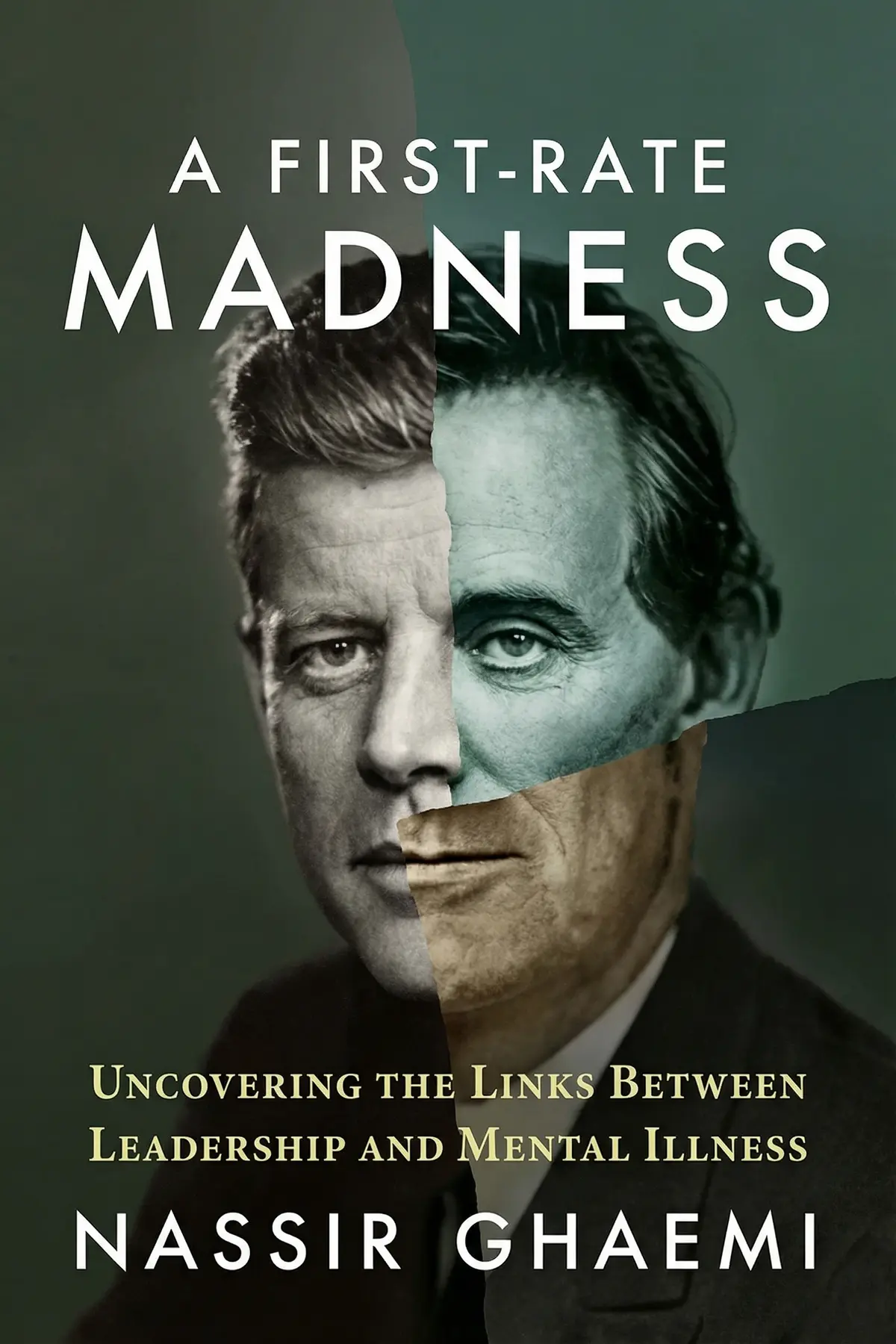
A Liberated Mind: How to Pivot Toward What Matters
Steven C. Hayes
Acting with Power: Why We Are More Powerful Than We Believe
Deborah Gruenfeld

Age of Propaganda: The Everyday Use and Abuse of Persuasion
Anthony Pratkanis
AUDIO SUMMARY AVAILABLE
Listen to Stumbling on Happiness in 15 minutes
Get the key ideas from Stumbling on Happiness by Daniel Gilbert, plus 5,000+ more titles in English and Thai.
- 5,000+ titles
- Listen as much as you want
- 7-day free trial
- Cancel anytime







