

All In: How Great Leaders Build Unstoppable Teams
Mike Michalowicz
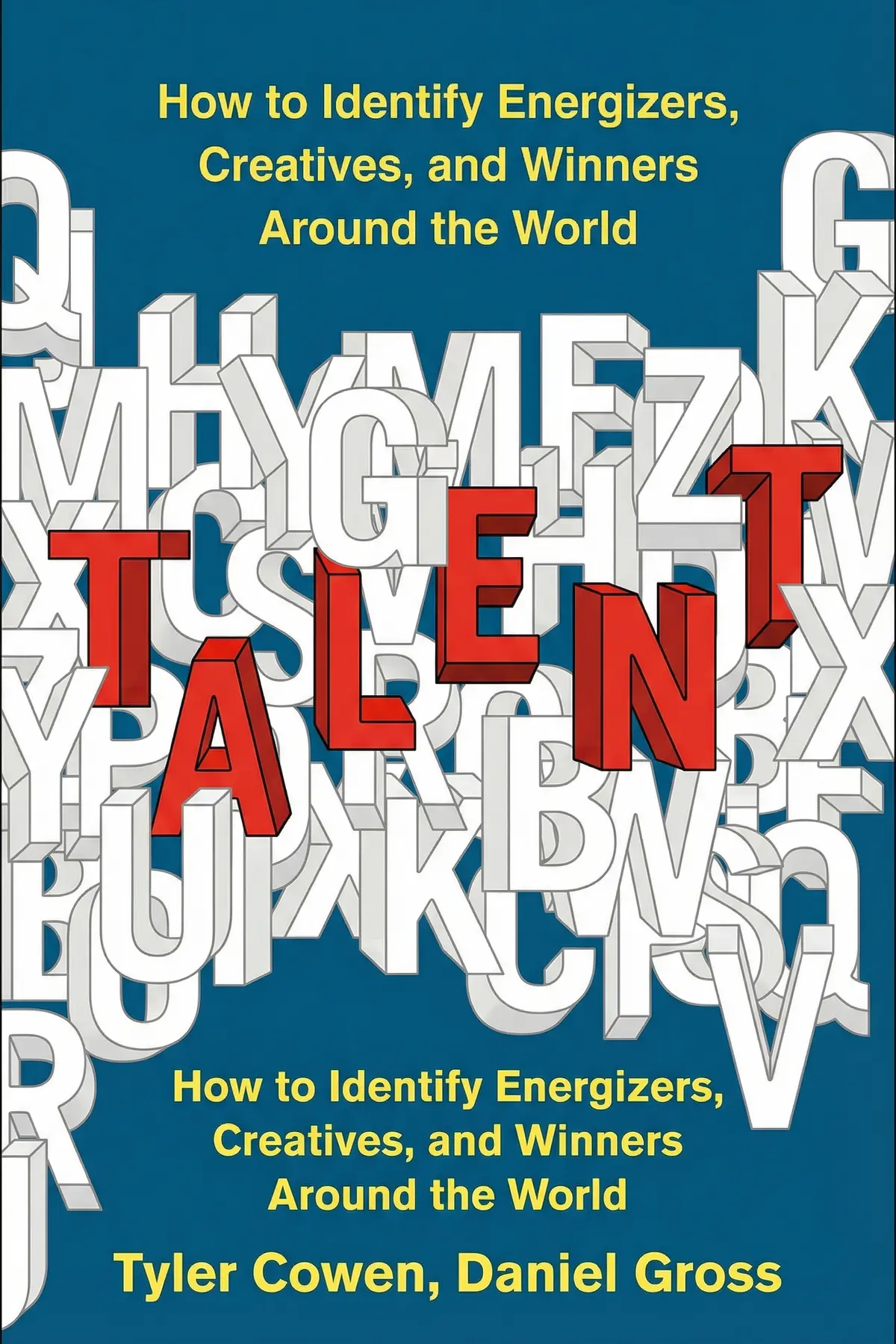
Talent explores innovative strategies for identifying and nurturing exceptional individuals, challenging traditional hiring practices to uncover hidden potential and drive organizational success in a rapidly changing global economy.
1 min 35 sec
In our modern era, the most valuable currency isn’t capital, and it isn’t even technology. It is the ability to find, attract, and keep the right people. We live in a world where the difference between a mediocre team and an extraordinary one is often found in a handful of high-potential individuals—people who have the drive, the creativity, and the unique spark to push boundaries. Yet, despite how vital this search is, most of us are remarkably bad at it. We rely on old-fashioned resumes, standardized interview questions, and a narrow view of what success looks like. We look for polish and credentials when we should be looking for raw energy and unconventional thinking.
This exploration into the art and science of talent discovery aims to change that. It moves beyond the surface-level metrics to understand the psychological and behavioral traits that truly signal greatness. Throughout this journey, we will look at how to identify those rare individuals who act as ‘energizers’ in an organization—people who not only perform well themselves but elevate everyone around them. We will see how to spot these winners even when they don’t fit the traditional mold, and how to create a culture that allows them to flourish. Whether you are a CEO, a startup founder, or simply someone trying to build a better community, mastering the skill of talent identification is perhaps the single most impactful thing you can do for your future. The throughline here is simple but profound: the world is full of hidden genius, and your job is to develop the eyes to see it, the language to attract it, and the environment to sustain it.
2 min 22 sec
Traditional hiring systems often fail because they prioritize safety over exceptionalism, leading to a massive waste of human potential in the global economy.
2 min 31 sec
Standard interview questions yield rehearsed answers, but digging into a candidate’s daily habits and digital life reveals their true intellectual curiosity.
2 min 29 sec
While high IQ is a powerful predictor in technical fields like invention, true professional excellence usually requires a combination of cognitive ability and character.
2 min 35 sec
Traits often labeled as disabilities can actually serve as unique professional advantages, providing fresh perspectives that neurotypical thinkers might miss.
2 min 31 sec
Gendered expectations and cultural misunderstandings often lead recruiters to overlook highly capable individuals, particularly among women and minorities.
2 min 25 sec
Talent is not a static trait but a seed that requires a fertile environment of high aspirations and mentorship to reach its full potential.
1 min 22 sec
Identifying and nurturing talent is not just a human resources function; it is the fundamental work of leadership and progress. As we have explored, the most successful people and organizations are those that move beyond the obvious metrics of resumes and IQ scores. They are the ones who look for the ‘energizers,’ the ‘creatives,’ and those with the unique drive to improve themselves and the world around them. We have seen that this requires a willingness to ask the unconventional questions, to embrace cognitive diversity as a strategic asset, and to consciously work against the biases that often cloud our judgment.
The throughline of this journey is that talent is both rare and abundant. It is rare in the sense that truly exceptional individuals are hard to find using traditional methods, but it is abundant in the sense that there is a vast, untapped pool of potential in every corner of the globe and within every marginalized group. Your success depends on your ability to develop the ‘talent for talent’—the skill of seeing what others miss. By raising the aspirations of those around you and building environments that foster excellence, you don’t just build a better team; you help create a world where human potential is never wasted. The challenge is clear: go out and find the people who don’t just fit the mold, but who have the power to break it and build something better.
The search for exceptional people is the most critical challenge facing leaders today, yet most organizations rely on outdated methods that overlook the very people they need most. Talent provides a comprehensive guide to modern talent identification, blending economic insights with practical interviewing strategies. It argues that the ability to spot 'energizers' and 'creatives'—individuals who possess a unique mix of ambition, curiosity, and persistence—is a skill that can be mastered and applied across any field. The book promises to sharpen your judgment by teaching you how to look past credentials and polish. You will discover why traditional intelligence metrics are often insufficient, how cognitive differences like autism or dyslexia can be framed as strategic advantages, and how to create environments that raise the aspirations of everyone involved. By the end, you will have a new framework for building teams that are not only high-performing but truly transformative.
Tyler Cowen is an economist and professor at George Mason University, known for his expertise in behavioral economics and cultural analysis. He has authored several best-selling books, including The Great Stagnation and Average Is Over. Daniel Gross is a venture capitalist and entrepreneur recognized for his work in identifying and mentoring talent through initiatives like Pioneer, a platform for uncovering high-potential individuals.
Listeners view this book as a thoughtful and non-conformist resource for talent scouting that motivates leaders to ignore traditional qualifications. They find the precise interview techniques and tactics for gauging perseverance useful, with one listener remarking that the focus on neurodiversity and recruiting people with "different brains" is exceptionally beneficial. Even though perspectives are mixed concerning the authors' use of subjective anecdotes and musings, most listeners agree that the original model for uncovering hidden talent is deeply effective. Furthermore, they suggest the text serves as a practical glimpse into Silicon Valley’s professional world for recruiters and applicants alike.
Ever wonder how the top 1% of talent scouts in the tech world actually operate? This book is a fascinating window into that mindset, providing a non-traditional framework for spotting high-potential people before the market catches on. Cowen and Gross argue that we overvalue degrees and IQ while drastically undervaluing traits like stamina and the ability to learn independently. To be fair, some of the advice is esoteric, but that’s exactly what makes it useful; it’s not the same recycled HR garbage you find in every other business book. The section on how to evaluate talent across different cultures was particularly eye-opening for me. It’s a must-read for anyone building a team in a fast-growing environment where the old rules simply don't apply anymore.
Show moreFinally, a business book that recognizes that being "non-traditional" isn't a bug, it's a feature. As a person with a checkered background who felt like the corporate world would never see my value, reading the chapter on neurodiversity felt like a massive validation. The authors argue that we need to stop looking for the most "polished" version of a person and start looking for raw potential and unique cognitive styles. It’s an emotional read for anyone who has been overlooked by the standard credentialing system. Sure, Cowen can be a bit eccentric with his cultural references, but his heart is clearly in the right place regarding human potential. This book changed how I view my own career path and gave me a lot of hope.
Show moreNot what I expected from a book on hiring, but in a good way. Cowen and Gross have created a guide that is less about HR procedures and more about the art of observation. The true value lies in the mental models they provide for categorizing talent types and understanding the "meta-skills" that lead to long-term success. I particularly liked the advice on how to spot ambition in people who haven't had the chance to prove it yet. Some of the interview techniques feel a bit like a game of 4D chess, which might be overkill for most hiring managers. However, if you're looking for that 1% difference in your team's quality, these unconventional strategies are exactly what you need. A masterful look at human potential.
Show moreCowen and Gross offer a refreshing, if slightly eccentric, roadmap for finding individuals who don't fit the standard corporate mold. Truth is, the most valuable part of the book is the deep dive into neurodiversity and how "different brains" can provide a massive competitive advantage if you know where to look. I appreciated the specific interview questions, even the ones that felt a bit off-the-wall, because they force you to think about character over credentials. However, be prepared for a lot of anecdotal storytelling that occasionally feels a bit thin on hard data. It’s definitely a Silicon Valley book, but it’s one that challenges the usual "safe bet" hiring practices that lead to stagnation. If you’re tired of the same old resumes, this is a solid read.
Show moreAs someone who spends all day interviewing developers, I found the distinction between grit and stamina to be the most practical takeaway from this book. Cowen and Gross provide a useful framework for identifying people who don't just work hard, but who have the "internal engine" to keep going for decades. Not gonna lie, I’ve already started using a few of the non-standard interview questions to see how candidates handle unexpected pivots in conversation. The book does lean heavily on the authors' personal experiences in the VC world, which might alienate some readers outside of tech. Still, the core message about looking for "undervalued assets" in the labor market is a powerful one for any leader. It’s a smart, quick read.
Show moreThe most striking thing about "Talent" is how it manages to be both deeply elitist and radically inclusive at the same time. On one page, Cowen is name-dropping obscure Haitian art, and on the next, he’s explaining why a person with autism might be your most valuable employee. It’s a strange mix, but it works because the goal is always to find the signal in the noise. I found the strategies for evaluating candidates from different cultural backgrounds to be incredibly sophisticated compared to the usual diversity training. To be fair, it’s a bit light on data, relying instead on the authors' track records as talent scouts. If you can get past the "intellectual polymath" tone, there is a wealth of practical wisdom here.
Show moreThere is no denying that Tyler Cowen is a brilliant thinker, but this collaboration feels a bit uneven in its delivery. On one hand, you get these incredibly sharp insights about the "hidden" signals of ambition and how to use the "flipped funnel" to attract better candidates. On the other hand, a lot of the chapters are buried under layers of caveats and "Straussian" observations that make it feel more like a philosophy text than a hiring guide. I found the chapter on women and minorities to be well-intentioned but a bit impractical for a mid-sized company's HR department. It’s a conversation-starter for sure, though I wouldn't call it an "evergreen" manual like High Output Management. It’s worth a skim if you're in the startup scene.
Show morePicked this up because I enjoy the authors' perspectives, and it definitely delivers that specific Cowen-esque flavor of "weird but interesting." The book is basically a toolkit for talent arbitrage, teaching you how to find high-ability people who are currently being ignored by the gatekeepers. Personally, I think the advice on identifying "stamina" is the real gold here, as that’s much harder to fake than a high GPA. My main gripe is that it feels a little disorganized and repetitive in the middle sections. It’s a quick, punchy read, but don’t expect a rigorous academic study on organizational behavior. It’s more of a curated collection of high-level heuristics for people who like to think outside the box.
Show moreI wanted to like this, but the tone is just so relentlessly "venture capitalist" and elitist that it’s hard to get through the actual advice. The authors seem convinced that identifying talent requires some mystical, out-of-the-box intuition that only they possess. While there are a few decent tips on assessing persistence, most of the book feels like a collection of blog posts from Marginal Revolution stitched together with loose threads. Frankly, some of the suggested interview questions—like asking what someone did that morning—come across as pretentious rather than insightful. It’s a shame because the core idea of looking for undervalued talent is important. Unfortunately, it gets lost in a sea of self-congratulatory anecdotes and a lack of scientific rigor.
Show moreIf you’re looking for a book that perfectly encapsulates the pomposity of the modern intellectual class, look no further. This entire text reads like a satire of a venture capitalist trying to explain human nature through a lens of extreme privilege and anecdotal "vibes." The authors dismiss traditional metrics but replace them with bizarre personal heuristics that seem more about stroking their own egos than finding actual talent. I mean, who seriously thinks they can judge a candidate's potential by their Zoom background? It’s a collection of pseudo-intellectual musings that ignores the reality of survivor bias and structural inequality. Save your money and just read a basic psychology textbook instead of this vacuous fluff.
Show moreMike Michalowicz
Hamilton Helmer

Margaret Heffernan
AUDIO SUMMARY AVAILABLE
Get the key ideas from Talent by Tyler Cowen, plus 5,000+ more titles in English and Thai.







