
23 min 19 sec
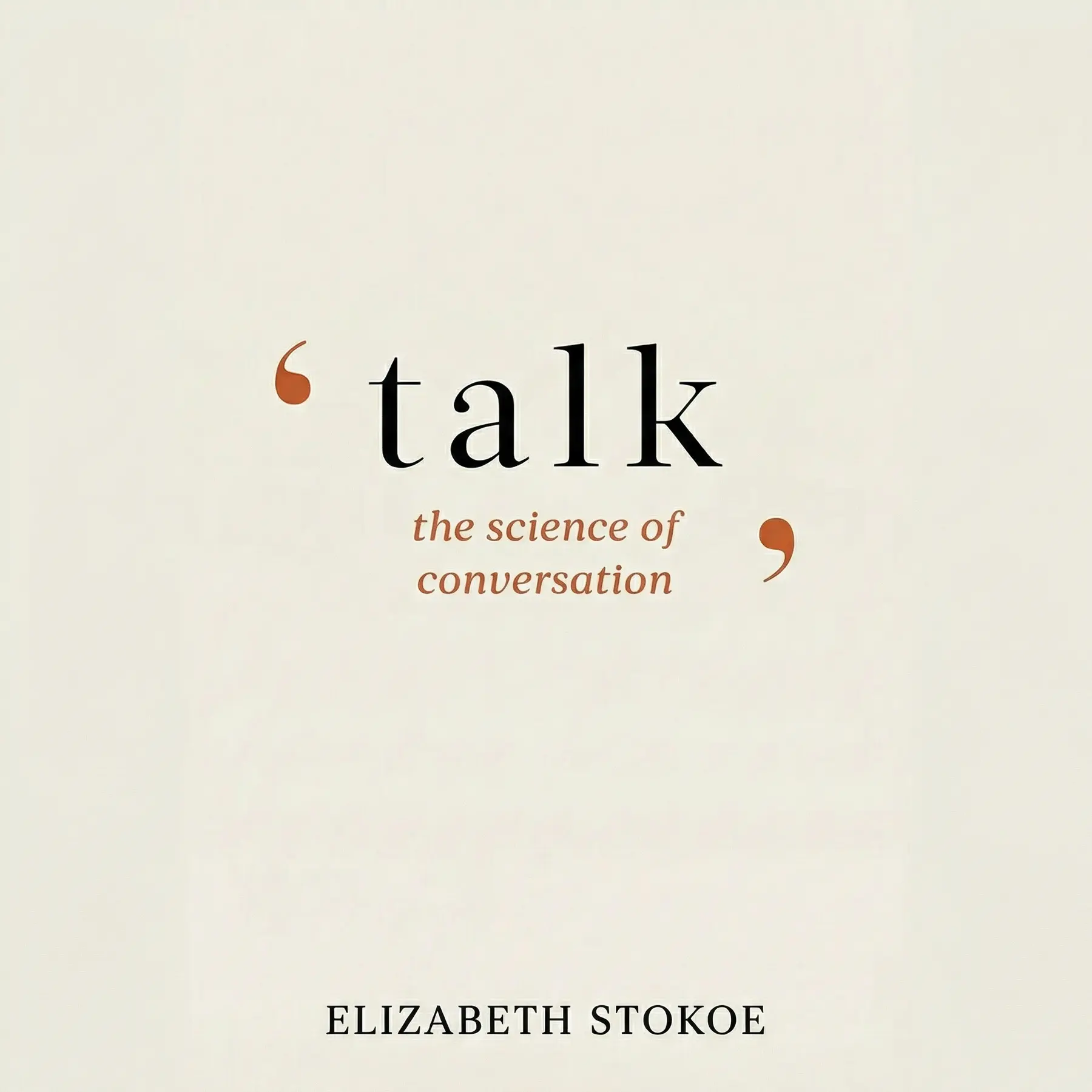
Talk: The Science of Conversation
Discover the hidden mechanics of human interaction. This exploration reveals how small linguistic adjustments can transform your relationships, resolve deep-seated conflicts, and make every conversation more productive and meaningful.
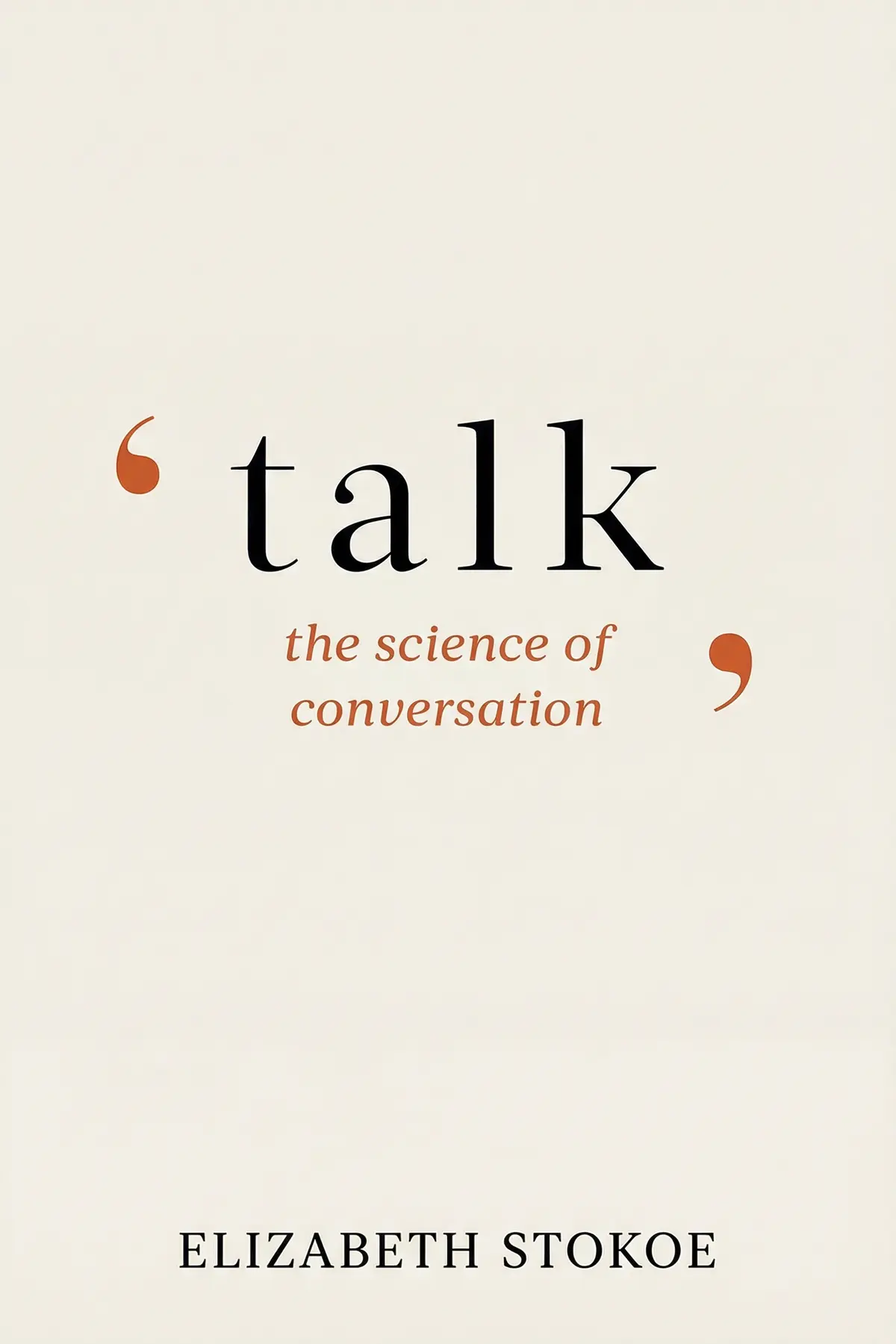
Table of Content
1. Introduction
1 min 45 sec
Have you ever stopped to consider that talk is actually a technology? It is perhaps the most versatile and influential tool we possess, used for everything from building a life with a partner to negotiating a multi-million dollar deal. We use speech to bridge the gap between our internal thoughts and the external world, yet most of us operate this tool on autopilot. We assume that because we’ve been talking since we were toddlers, we naturally understand how it works. But as we are about to discover, there is a profound difference between being able to speak and understanding the science of interaction.
Conversation analysis is a field that treats our verbal exchanges not as random bursts of noise, but as structured, data-driven interactions. When we look at talk through this scientific lens, we start to see that even the most casual chat follows a set of blueprints. By recognizing these patterns, we gain the ability to spot hidden meanings that others miss and predict how a person might react before they even finish their sentence. This isn’t about manipulation; it’s about clarity and effectiveness. It’s about learning how to steer a conversation toward a positive resolution rather than letting it veer into a ditch of misunderstanding.
In this journey through the mechanics of speech, we will explore why certain filler words aren’t actually fillers at all, why most of what you’ve heard about body language is likely wrong, and how a single syllable can be the difference between getting a ‘yes’ or a ‘no.’ We are going to deconstruct the building blocks of human connection to see how we can all become more intentional, more persuasive, and more empathetic speakers. By the end, you’ll see that every ‘um,’ every ‘so,’ and every silence has a story to tell. Let’s dive into the fascinating, hidden architecture of the way we talk.
2. The Structural Logic of Turn-Taking
2 min 16 sec
Every conversation is a collaborative project that depends on a series of timed turns. Discover how misreading these cues can lead to social friction.
3. The Hidden Power of Social Openings
2 min 10 sec
Casual greetings like ‘How are you?’ might seem meaningless, but they play a vital role in building rapport and establishing trust.
4. Decoding the Language of Pauses and Fillers
2 min 31 sec
Words like ‘um’ and ‘so’ are not just linguistic clutter. They are essential signposts that reveal what a speaker is truly feeling.
5. The Truth About Non-Verbal Communication
2 min 27 sec
Is body language really 93% of communication? Learn why this popular statistic is a misunderstanding of science.
6. The Subtle Architecture of Choice
2 min 17 sec
Small changes in how you phrase a question can lead to massive differences in the responses you get.
7. Entitlement and the Art of the Request
2 min 28 sec
The way we ask for help reveals how much we feel we deserve it. Learn how to project confidence and get better service.
8. Navigating the Social Complexity of Offers
2 min 29 sec
Making and accepting offers is a social minefield. Discover how to avoid being ‘recruited’ into tasks you don’t want to do.
9. The Flaw of Simulation and the Power of Real Talk
2 min 54 sec
Role-playing is the standard for communication training, but it’s often a waste of time. Find out why real-world data is the only path to mastery.
10. Conclusion
2 min 02 sec
As we wrap up this exploration of the science of talk, it should be clear that our conversations are far more than just a sequence of words. They are a complex, beautifully structured system of social architecture. We have seen how the simple act of taking turns maintains social order, how filler words and pauses act as vital navigation signals, and how even a single syllable can shift the entire outcome of a request. We have also debunked the myth that our bodies do all the talking, reclaiming the primary power of our spoken words.
The throughline of Elizabeth Stokoe’s work is that talk is a skill that can be studied, measured, and refined. It is not a mysterious ‘vibe’ that some people are born with and others aren’t. It is a series of repeatable patterns. When we start to pay attention to these patterns—when we notice the ‘so’ that pivots a meeting or the ‘um’ that warns of a rejection—we gain a new level of social intelligence. We stop being passive participants in our conversations and start becoming intentional architects of our interactions.
The most important takeaway is that small changes can lead to significant impacts. You don’t need to completely overhaul your personality to become a better communicator. You simply need to be more precise. Start by noticing your openings. Are you building rapport or just following a script? Watch for the ‘first mover’ problem in your disagreements. Are you completing the social pairs or just jumping to your own point? And most importantly, listen to the ‘silence between the lines.’
To truly master this tool, follow the lead of the scientists: look at the data. Pay attention to your real-world interactions. Notice which phrases lead to cooperation and which lead to friction. Talk is the most powerful tool we have for shaping our world and our relationships. By understanding the science behind it, we don’t just speak more clearly; we connect more deeply. It is time to stop talking by accident and start talking with purpose.
About this book
What is this book about?
We spend our lives talking, yet few of us truly understand the structural logic that governs our speech. This summary breaks down the work of social interaction expert Elizabeth Stokoe, who uses conversation analysis to show that talk is far from random. By studying real-world recordings—from hostage negotiations to customer service calls—the text illuminates the predictable patterns we all follow. You will learn the 'choice architecture' of language, such as how swapping a single word can drastically increase the likelihood of a positive response. The summary also deconstructs the myths surrounding body language and explains why traditional communication training, like role-playing, often fails. Ultimately, it provides a scientific lens through which to view every greeting, pause, and offer, turning talk from an intuitive habit into a precise and powerful tool for influence and connection.
Book Information
About the Author
Elizabeth Stokoe
Elizabeth Stokoe is a distinguished professor of social interaction at Loughborough University, where she specializes in the rigorous field of conversation analysis. She is the pioneer behind the Conversational Analytic Role-Play (CARM) method, an innovative approach that utilizes real-life audio and video recordings to identify recurring linguistic hurdles and successful patterns. Her expertise is highly sought after across diverse sectors, leading her to consult on communication strategies for high-stakes environments like hostage negotiation and everyday social settings like speed dating.
Ratings & Reviews
Ratings at a glance
What people think
Listeners note that although views differ on whether the insights are revolutionary or merely intuitive, the work provides a compelling and distinct look at the structures of casual, day-to-day conversation. Audiences value the extensive reliance on actual data and qualitative research, with one listener highlighting the benefit of studying talk within "natural situations" instead of lab-based experiments. Furthermore, they find the analysis of conversational "building blocks" useful for recognizing habits and reducing conflict during routine exchanges. Many also comment that the approachable style and organized format turn intricate linguistic ideas into something very reachable and captivating.
Top reviews
Hassan
Wow, I will never listen to a simple phone call the same way again. Elizabeth Stokoe has a way of making you realize that every 'um,' 'ah,' and slight hesitation is doing heavy lifting in our social lives. This book encapsulates the wonders of language and psychological insight perfectly. It is packed with take-home points and models that I know I’ll be going back to for years. I loved the heavy use of real-world data—it feels so much more authentic than those sterile laboratory studies you usually see in psychology. The writing is personable and engrossing, making it an easy read despite the depth of the research. It truly did change the way I think about talk. It's a must-read for any logophile out there!
Show moreAmy
After taking a criminology module with Liz at Loughborough University back in 2017, I became obsessed with how language works. This book is the reason I ended up pursuing an MSc in Psychology. It’s absolutely fascinating stuff! Stokoe manages to take the complex structure of discourse—things like overlapping talk and those tiny intakes of breath—and explain why they matter for human connection. The layout is great and the tone is so personable that you feel like you're having a conversation with the author herself. It's totally different from other books on communication because it focuses on the spontaneous stuff, not just formal meetings. I recommend a copy to all my friends who are interested in what makes humans tick. It’s brilliant.
Show moreLucas
The chapter on conversational 'building blocks' is worth the price of the book alone. Honestly, I didn't expect to be so captivated by a book about such a mundane topic, but the way Stokoe analyzes the 'predictable patterns' of talk is masterly. It teaches you the best method for identifying conversational pitfalls before they even happen. Most communication books are about persuasion or negotiation, but this guides you through the techniques of daily life. The qualitative analyses are deep and provide a perspective that is missing from most linguistic texts. If you want to understand the art of conversation as it actually happens in the real world, this is the book. It’s a five-star guide for anyone looking to reduce friction in their daily interactions.
Show moreChatchai
Finally got around to reading 'Talk' and it’s surprisingly practical despite the academic roots. Most books on the art of communication focus on formal settings like boardrooms or negotiations, but Stokoe looks at the messy, spontaneous talk we use every day. Look, understanding that our conversations follow predictable patterns is a game-changer for avoiding friction. The way she breaks down conversational building blocks helps you spot where a simple chat might be going off the rails. I found the layout clear and the tone very accessible, which is rare for this kind of subject matter. It’s not just theory; it’s about identifying those pitfalls that cause misunderstandings in real life. Definitely recommended for anyone who wants to analyze their own verbal habits.
Show moreDimitri
The way Elizabeth Stokoe breaks down the mechanics of human interaction is genuinely eye-opening. I’ve read a lot of self-help books on 'how to talk to anyone,' but this is different because it’s based on actual data rather than just anecdotes. Gotta say, the CARM (Conversational Analytic Role-Play) method is a fascinating way to look at how we fit together the elements of a sentence. The book is full of qualitative analyses and real-world examples that make the concepts stick. While some parts feel slightly repetitive, the personable tone kept me engrossed for the most part. It’s a solid 4 stars for providing a unique lens on the 'spontaneous' talk we usually take for granted. It really highlights how much structure exists in our supposedly random interactions.
Show moreNook
After hearing a brief summary of the CARM method, I had to dive into the full book. In my experience, most people think conversation is just random, but Stokoe proves it’s anything but. By analyzing the predictable patterns in how we respond to each other, we can actually improve how we navigate difficult interactions. The personable tone and clear layout made complex linguistic concepts feel very approachable. My only minor complaint is that the book leans very heavily on qualitative examples. I would have appreciated a bit more statistical depth to round out the conclusions. Regardless, it’s a fascinating look at the 'art' of everyday talk that is far more rigorous than your average communication guide. It changed how I listen to people.
Show moreAubrey
Picked this up because I’ve always been curious about how we interact, and it was... okay. Truth is, the book has the odd interesting take, especially regarding how we manage pauses and overlaps in conversation. However, it’s mostly common sense and becomes very repetitive by the halfway mark. I liked the concept of looking at 'natural' speech instead of laboratory experiments, but I wish there was more quantitative analysis to back up the qualitative observations. It’s a 3-star read because while the insight into conversational 'building blocks' is solid, the delivery is a bit dry. It takes a while to get through, and I’m not sure I learned enough to justify the time spent. It’s decent if you’re a linguistics nerd, but maybe too granular for everyone else.
Show moreNing
As someone coming from a background in philosophy of language, I found the Harvey Sacks-style approach here quite refreshing. Elizabeth Stokoe makes a compelling case for the value of looking at natural, non-experimental speech. We often ignore the 'liminal signs' like intakes of breath or those tiny, meaningful pauses, but this book puts them front and center. Personally, I think there is a lot for philosophers to chew on here, even if it isn't framed within a traditional theory of communication. My main gripe is that it feels a bit light on the data side; I would have loved to see these qualitative findings extended to a fuller corpus with some quantitative rigour. It’s a good introduction to the field, though it lacks the 'final conclusion' feel I was hoping for.
Show moreNaomi
Ever wonder if you can spend hours reading about things you already do instinctively every single day? Not gonna lie, this didn't really hold my attention for long. While it’s nice to get a slightly different perspective on communication, most of the 'findings' here felt like pure common sense wrapped in fancy terminology. The book is incredibly redundant, repeating the same points about predictable patterns until you just want to skip to the end. I appreciate the focus on real data, but it’s hard to stay engaged when the pace is this slow. It feels more like a textbook for a very specific class than a book for a general audience interested in self-improvement. It has its moments, but they are few and far between.
Show moreTern
This book was a massive disappointment, bordering on useless. To be fair, I expected a deep dive into the mechanics of human connection, but what I got was a postmodernist lecture that felt obsessed with shallow taxonomy rather than actual substance. It’s essentially a 300-page admonishment for people who already find speech interesting. I found myself mostly bored, occasionally stumbling upon insights that I probably could have derived from my own thoughts without the academic fluff. The author spends so much time categorizing words that the actual art of 'talk' gets lost in the weeds. If you're looking for depth, look elsewhere. Frankly, it felt like being told 'words are important' over and over again without any real 'how-to' or meaningful theory. It’s a tedious read for anyone not already steeped in this specific academic niche.
Show moreReaders also enjoyed
Acting with Power: Why We Are More Powerful Than We Believe
Deborah Gruenfeld
Age of Propaganda: The Everyday Use and Abuse of Persuasion
Anthony Pratkanis


59 Seconds: Change Your Life in Under a Minute
Richard Wiseman
AUDIO SUMMARY AVAILABLE
Listen to Talk in 15 minutes
Get the key ideas from Talk by Elizabeth Stokoe, plus 5,000+ more titles in English and Thai.
- 5,000+ titles
- Listen as much as you want
- 7-day free trial
- Cancel anytime







