You Are Not a Gadget: A Manifesto
Jaron Lanier
Explore the systemic manipulation behind modern platforms. Discover how the current digital business model erodes free will and learn why reclaiming your independence might require walking away from the feed entirely.
2 min 14 sec
Have you ever wondered why certain animals seem to dominate our digital landscape more than others? Consider the cat. In the vast ocean of the internet, feline companions are everywhere. They are the undisputed monarchs of the meme world, achieving viral status with a sense of total indifference. A cat doesn’t care if you like its photo; it doesn’t perform for the algorithm. It simply exists, often doing something unpredictable or odd. This is a sharp contrast to dogs, who are often portrayed online performing tricks or demonstrating the results of human discipline. This difference isn’t just a matter of cuteness; it’s a matter of autonomy.
Cats, in many ways, domesticated themselves. They choose to be near us on their own terms, maintaining a core of self-determination that is still visible today. In our modern, hyper-connected world, there is a growing concern that we are losing this very quality. We are moving away from the feline model of independent existence and toward a more canine model of dependence and training. We are being conditioned, monitored, and nudged by forces we often don’t even see. We feel the tug of the digital leash every time a notification pings or we find ourselves scrolling through a feed for no particular reason.
This discussion isn’t just about the frustrations of being online; it is a deep dive into the mechanics of why we feel this way. It’s an exploration of how the biggest names in tech have built a machine designed to strip us of our free will. We’re going to look at the specific ways our behavior is being modified for profit and why the current structure of social media is inherently destructive to our souls, our politics, and our relationships. The goal here isn’t to make you hate technology, but to show you how the specific business model currently ruling the web is a direct threat to your personhood. By the end, you’ll understand why walking away from these platforms might be the only way to get your life back and how you can start living like a cat again—independent, unpredictable, and truly free.
2 min 19 sec
Your smartphone might feel like a gateway to the world, but it actually functions as a meticulously designed enclosure where your every action is analyzed.
2 min 03 sec
Uncover why the unpredictability of your social feed is the very thing that keeps you coming back, even when it makes you unhappy.
2 min 28 sec
Explore the six pillars of the digital system that profits by modifying your behavior and renting out your attention to the highest bidder.
2 min 12 sec
Discover why the digital world forces us into a state of constant social combat and how this shifts us away from our best selves.
2 min 06 sec
In a world of bot-driven mobs and manufactured consensus, the truth becomes a casualty of the hunt for engagement.
2 min 13 sec
Learn how the algorithmic tailoring of our worlds makes it nearly impossible to understand or relate to those outside our digital bubbles.
2 min 09 sec
Discover the unsettling reason why digital platforms are more profitable when their users feel inadequate, anxious, and alone.
2 min 13 sec
Understand how your daily digital contributions are being used to build systems that may eventually render your own skills obsolete.
2 min 17 sec
Examine the ways in which the hunt for digital engagement turns healthy debate into tribal warfare and hampers democratic progress.
2 min 13 sec
Question a future where human experience is reduced to a set of data points and discover how to resist the spiritual hacking of our personhood.
1 min 56 sec
In the end, the choice to walk away from social media is not about being anti-technology. It is about being pro-human. We have allowed ourselves to be lured into a system that treats our attention as a resource to be mined and our behavior as a variable to be manipulated. We have accepted a world where being a ‘jerk’ is the most effective way to be seen and where our mental health is a secondary concern to the profits of a few massive corporations. The BUMMER machine—with its surveillance, its fakeness, and its erosion of empathy—is a toxic environment that we have mistaken for an essential part of modern life.
But it doesn’t have to be this way. We can choose to stop participating in a model that strips us of our dignity and our autonomy. The evidence of the damage is all around us: in our polarized politics, our rising levels of anxiety, and the loss of a shared sense of truth. The most powerful thing you can do right now is to step back. You don’t have to disappear from the digital world forever, but you should walk away from the platforms that rely on the BUMMER model. Try it for a month. See how your perspective changes when you aren’t being constantly nudged by an algorithm. Notice the clarity that comes when you are no longer competing for social validation in a digital pack.
By deleting your accounts, you are sending a clear message that you are not a product. You are reclaiming your right to a private life, a focused mind, and a real-world community. You are choosing to live like a cat—independent, unpredictable, and free from the digital leash. Technology should serve us, not the other way around. Until a more humane, transparent, and honest model for online connection emerges, the best way to regain your independence is to simply hit delete. Your soul, your time, and your humanity are worth more than any feed could ever offer.
This exploration dives into the invisible architecture of the digital platforms we use every day. It presents a stark case against the current state of social networking, arguing that the underlying financial models of these giants are fundamentally incompatible with human dignity, political stability, and personal happiness. By examining how algorithms are designed to modify behavior and capture attention, the narrative reveals the hidden costs of our 'free' accounts. The promise of this journey is to provide a clear-eyed understanding of the 'BUMMER' machine—a system that feeds on our data and directs our actions. It offers a path toward regaining autonomy, suggesting that by stepping away from these platforms, we can rediscover our own voices, improve our mental well-being, and contribute to a more honest and empathetic society. It is a call to move toward a more humane version of technology.
Jaron Lanier is a pioneering figure in the world of technology, often cited as one of the founding fathers of virtual reality. Beyond his work as a computer scientist and philosopher, he is a distinguished visual artist and composer. His influence is widely recognized; TIME magazine included him on their list of the 100 most influential people in the world in 2010. Lanier is a frequent contributor to global conversations on the future of tech, having delivered several renowned TED talks. He is also the author of international bestsellers including Who Owns the Future? and You Are Not a Gadget.
Jaron Lanier

Listeners find the book to be a compelling and well-documented resource that acts as an effective primer on social media's flaws. The arguments are powerful, and listeners value the accessible prose. However, the writing style and the author's execution draw varied feedback, with some finding it well-written while others feel differently. Additionally, the content is faulted for having a political bias, leading to a mixed reaction regarding the book's ultimate message.
Finally, we have an insider willing to pull back the curtain on Silicon Valley’s manipulative tactics. This book is a terrifying look at how machine learning is being used to corral human behavior for the sake of advertising revenue. Lanier’s 'BUMMER' acronym is a stroke of genius that perfectly encapsulates the systematic degradation of our souls and our politics. I was particularly struck by the idea that we are losing our free will to a statistical machine that lives in the cloud. The prose is urgent and passionate, making it a very readable guide for anyone ready to quit the 'pack' and become an independent thinker again. After finishing the final chapter, I actually followed the title's advice and deleted my Instagram account. It’s rare for a book to have such an immediate, tangible impact on my life, but this one did. Highly recommended for the digitally exhausted.
Show moreWow, I didn't think a book this short could have such a profound impact on my daily routine. Lanier’s perspective as a pioneer of the web gives him a level of authority that most critics simply don't have. He isn't just an old man yelling at clouds; he’s a creator who sees how his invention has been corrupted by greed. The way he describes the 'pack' mentality vs. the 'lone wolf' approach really changed how I view online interactions. Social media really does rob us of our context and replace it with a sterile, algorithmic version of reality. I finished this book in two sittings and immediately felt the urge to PUT THE DAMN PHONE AWAY, as another reviewer put it. It’s an urgent, well-researched, and ultimately hopeful call to action for anyone who wants to reclaim their soul from the machine. Five stars for the courage to say what needs to be said.
Show moreLanier provides a sharp wake-up call for anyone who feels trapped by their notification bell. This book serves as a compelling primer on how the big tech giants use 'BUMMER' algorithms to modify our behavior without us even noticing. As an insider who helped build these systems, his perspective is uniquely credible, even if his tone gets a little eccentric at times. I found the argument about social media destroying our capacity for empathy particularly haunting because I see it happening every day in my own feeds. The writing is accessible and quick, though some sections feel like they were transcribed directly from a frantic late-night lecture. Despite the occasional rambling, the core message about reclaiming our free will is essential for the modern age. It is a necessary read for anyone questioning their relationship with their smartphone.
Show moreThe chapter on how we lose our free will is absolutely terrifying and worth the price of the book alone. Lanier explains complex algorithmic concepts in a way that feels intuitive, even if you aren't a computer scientist. He argues that we are being watched and judged constantly, which prevents us from being our authentic selves. While I think he oversimplifies the political side of things by focusing too much on specific figures, his broader points about the death of truth are hard to argue with. The book is short enough to finish in a single afternoon, yet the ideas stayed with me for weeks. It’s a strong, well-reasoned argument that doesn't rely on fear-mongering, but rather on a deep understanding of how tech works. I’m not sure I can delete everything yet, but I am certainly more mindful of the 'machine' now.
Show morePicked this up during a digital detox and found the 'BUMMER' acronym surprisingly helpful for understanding my own bad habits. Lanier manages to articulate that hollow feeling you get after scrolling for three hours without actually learning anything. He makes a compelling case that we are essentially paying to be manipulated by third parties who don't have our best interests at heart. I particularly liked his discussion on how we need to move toward a subscription model to regain our economic dignity. Some of his 'arguments' overlap a bit too much, making the ten-point structure feel slightly forced. However, his conversational tone makes the heavy subject matter much easier to digest than a standard academic text. It’s a provocative read that challenged me to rethink my entire digital footprint. Definitely worth a look if you're feeling burnt out by the internet.
Show moreTruth is, the author makes a convincing case that social media is fundamentally incompatible with a healthy democracy. Lanier shows how the current advertising model rewards the loudest, most negative voices, which effectively kills any chance of nuanced political discourse. I appreciated his honesty about how using these platforms turned him into a version of himself he didn't like. It’s not just about privacy; it’s about the spiritual cost of being constantly sorted and stereotyped by an AI. While the book is a bit light on practical alternatives beyond just 'quitting,' it succeeds in making the status quo feel completely unacceptable. The writing is punchy and direct, avoiding the technical jargon that usually plagues books by computer scientists. It won’t win any awards for style, but the message is too important to ignore. I’m much closer to hitting 'deactivate' than I was yesterday.
Show moreAs a former Facebook addict, I really wanted to love this, but the experience was ultimately a bit of a mixed bag. Lanier is absolutely right that social media makes you into an 'asshole,' and his points about the loss of economic dignity are well-researched. However, his writing style is incredibly polarizing; it alternates between being overly simplistic and needlessly dense. Some of the ten arguments are rock solid, while others feel like filler to reach a specific page count for the publisher. I appreciate his 'lone wolf' philosophy, but he doesn't quite explain how we're supposed to maintain community in a world that has moved entirely online. It’s a skimmable book with some great nuggets of wisdom hidden inside a lot of fluff. I’ll keep my accounts for now, but I’m definitely muting more notifications.
Show moreTo be fair, Lanier is a brilliant thinker, but he’s a bit of a rambling writer who needs a stronger editorial hand. I picked this up because I was curious about his perspective as a Microsoft employee, and he definitely delivers some interesting industry secrets. He describes the internet as a 'behavior modification empire' that thrives on negativity and outrage, which feels incredibly accurate in today's climate. But the book is so repetitive that I found myself skipping entire paragraphs just to get to the next point. He often asks questions and then tells you he’ll answer them in a later chapter, which is a frustrating way to structure a manifesto. The arguments about social media making us unhappy and ruining empathy are vital, but the delivery is clunky. It’s a good primer, but it lacks the sophistication of his earlier work.
Show moreFrankly, the layout of this book is a complete mess and it really hindered my ability to take the arguments seriously. While I agree that social media is a toxic presence in our lives, Lanier’s presentation is disorganized and frankly lazy. He includes these incredibly long, unclickable URLs in the text that are impossible to actually use for reference. His footnotes are attached to individual words instead of sentences, making the reading experience feel jerky and amateurish. It reads like a hurried rant from a brilliant person who couldn't be bothered to hire a proper editor to polish his thoughts. I wanted a sophisticated critique of Silicon Valley, but instead, I got a repetitive manifesto that felt much longer than its 146 pages. There are better books out there on digital minimalism that don't feel this puerile in their execution.
Show moreIs this a technical analysis or just a 150-page emotional rant? I was expecting something much more rigorous from a scientist of Lanier's stature, but this felt more like a collection of blog posts. The political bias is quite heavy, and he spends a lot of time complaining about specific social media users rather than analyzing the tech itself. His arguments are often built on personal anecdotes that don't feel representative of the broader population's experience. Furthermore, the formatting of the citations is so abysmal that it’s nearly impossible to verify any of his claims. It’s a very fast read, but that’s mostly because there isn't much depth to the arguments once you get past the catchy headings. I agree with the sentiment that social media is a problem, but this book is too disorganized to be the definitive solution. I felt more frustrated by the writing than inspired by the message.
Show moreAUDIO SUMMARY AVAILABLE
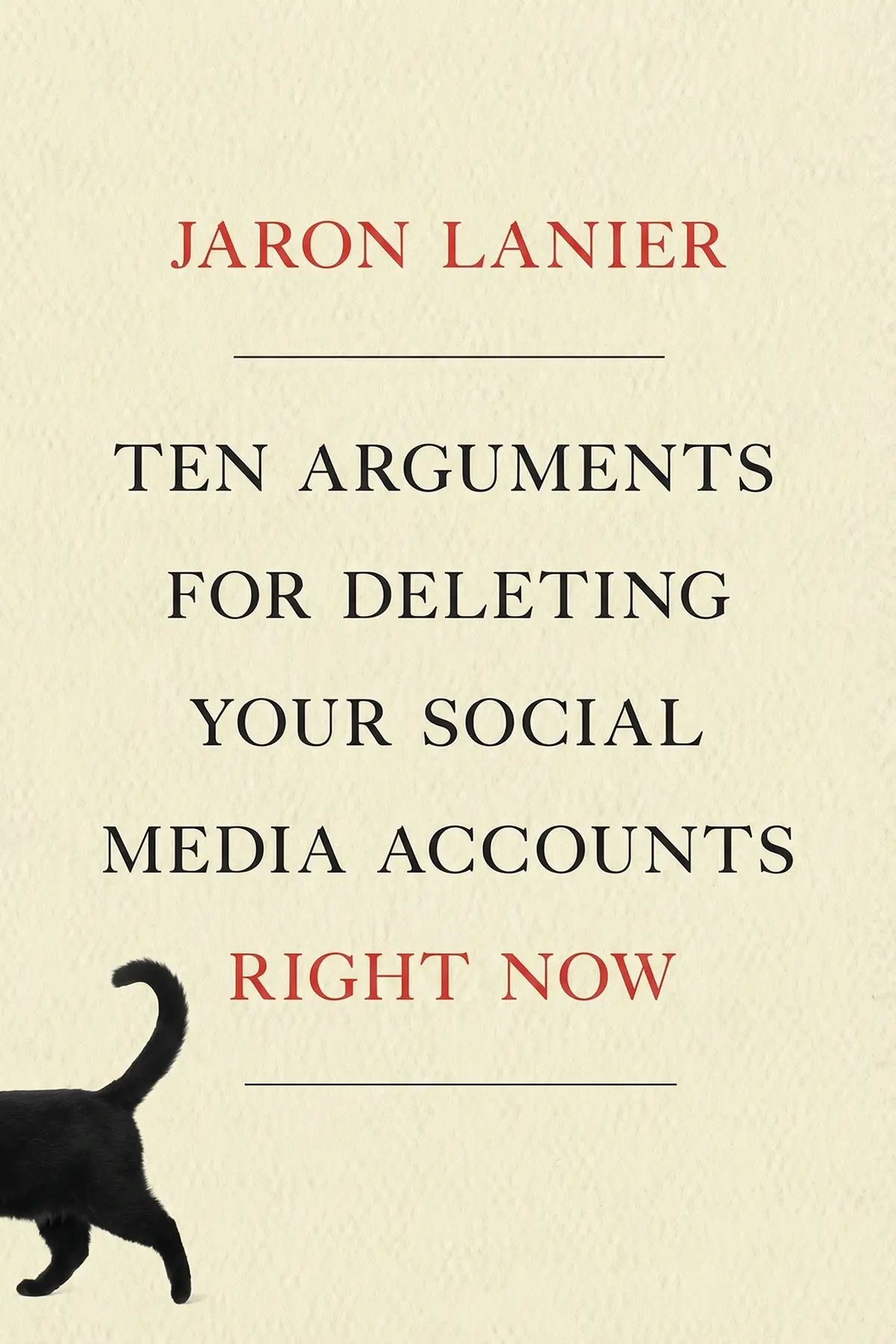
Get the key ideas from Ten Arguments for Deleting your Social Media Accounts Right Now by Jaron Lanier, plus 5,000+ more titles in English and Thai.