
22 min 54 sec
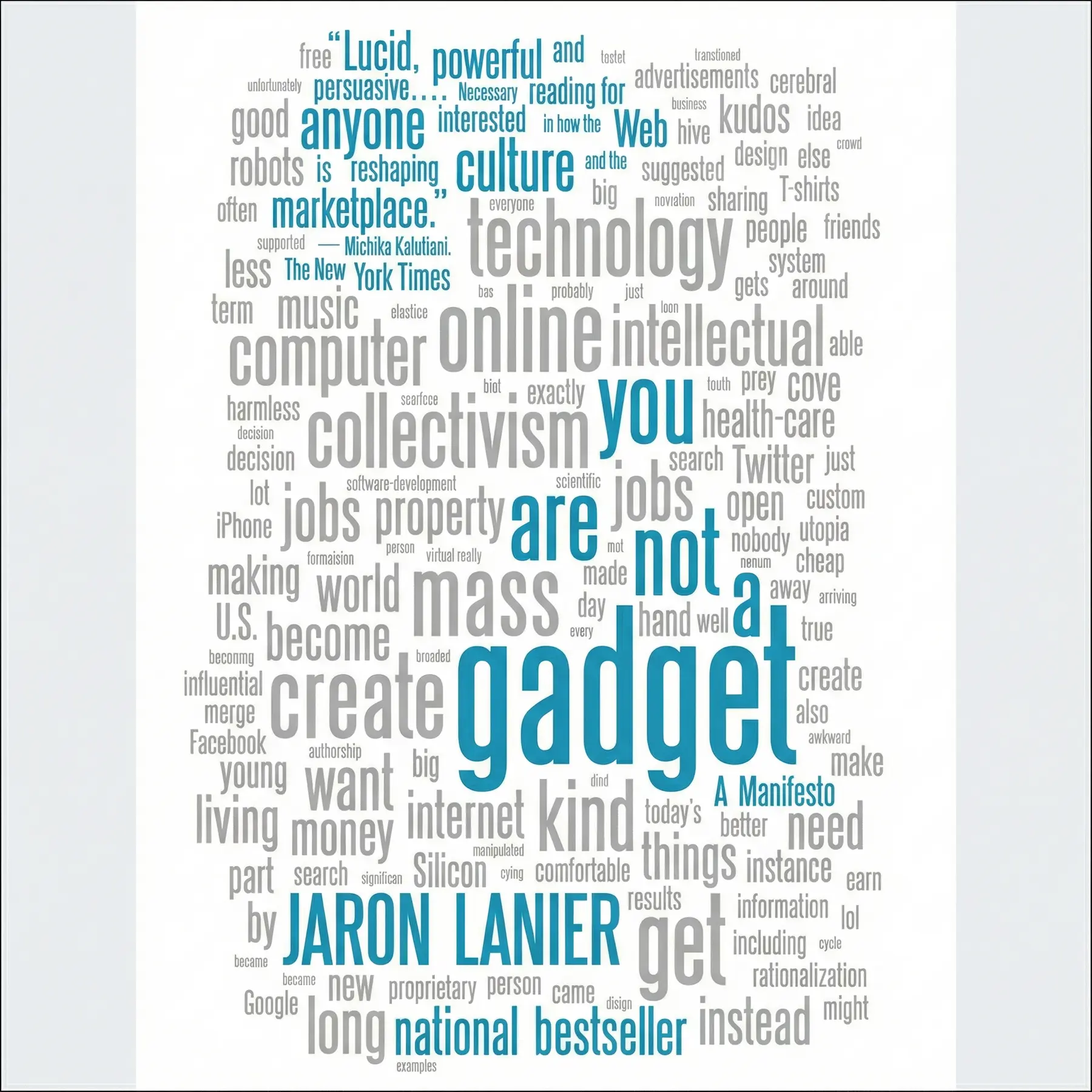
You Are Not a Gadget: A Manifesto
By Jaron Lanier
Jaron Lanier explores the dehumanizing effects of modern digital culture. He argues that we must prioritize individual human creativity and dignity over the rigid structures and collective mentality of today’s internet.
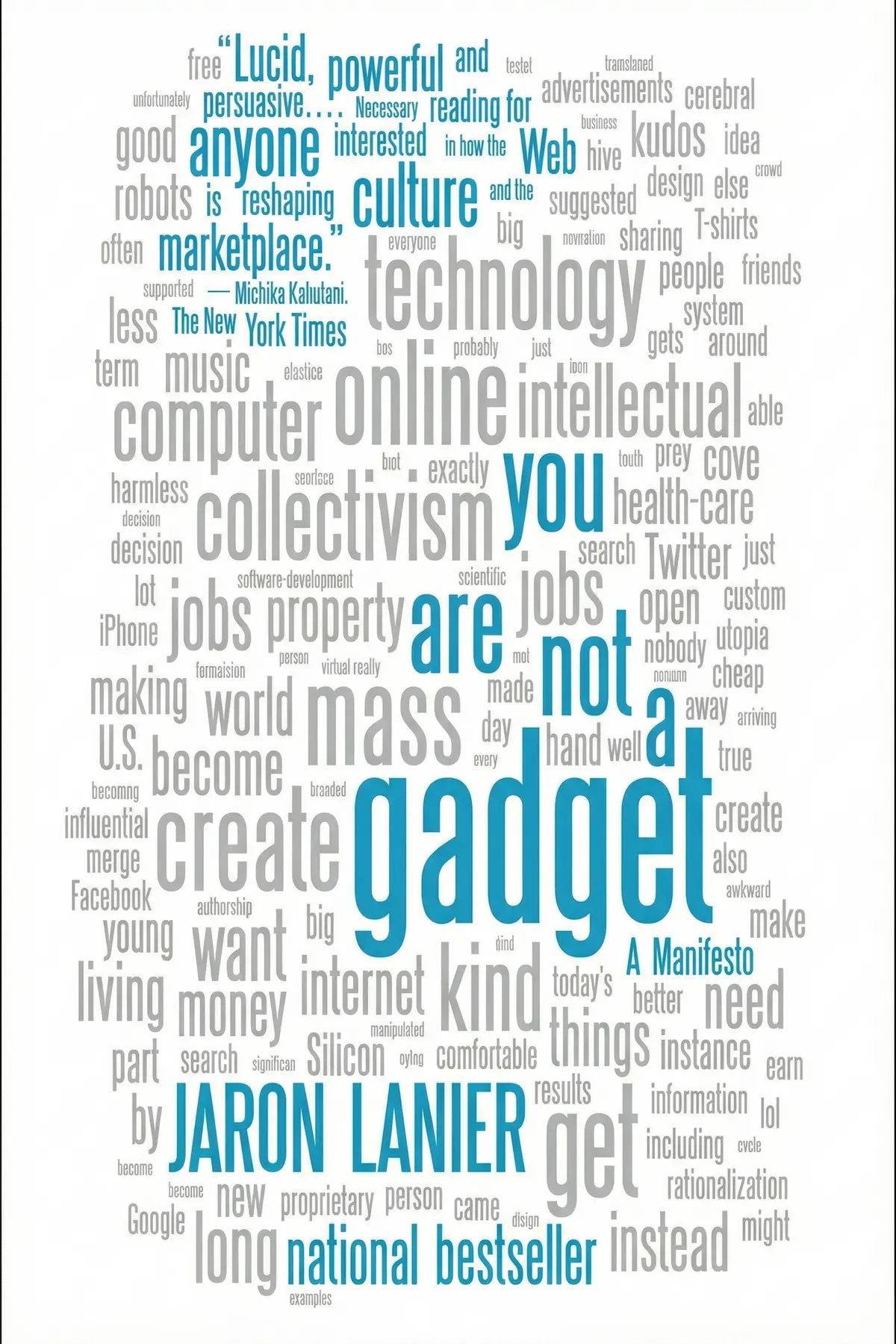
Table of Content
1. Introduction
1 min 45 sec
In our modern era, we often talk about technology as if it were an inevitable, unstoppable force of nature, always trending toward progress. We look at the internet as the ultimate tool for liberation—a vast, borderless ocean of information where everything is available at our fingertips, often for free. We celebrate the collapse of old barriers and the rise of a global conversation. But while we are busy marveling at the speed and convenience of our digital lives, a veteran of the tech world is asking us to pause and look at what we might be losing in the process.
This throughline is about the tension between human uniqueness and the rigid templates of the digital world. The core message is simple but profound: you are not a gadget. You are a complex, creative, and individual human being, yet the systems we use every day are increasingly designed to treat you as a data point, a component, or a fragment of a collective. We have entered a phase where the tools we created to serve us are beginning to dictate how we think, how we create, and how we value one another.
In the following segments, we’ll explore how early technological decisions became permanent traps, why the obsession with ‘crowdsourcing’ might actually be a step backward for human intelligence, and how the economic structure of the web is failing the very people who provide its most valuable content. We are at a crossroads where we must decide if technology will be used to amplify our humanity or if we will allow ourselves to be subsumed by the machine. Let’s take a look at the architecture of our digital lives and see if we can’t find a way to put the human being back at the center of the screen.
2. The Persistence of Lock-In
2 min 30 sec
Discover how early, accidental decisions in technology design can become permanent constraints that stifle innovation and narrow our possibilities for decades.
3. The Illusion of Computer Superiority
2 min 08 sec
While we often celebrate the power of artificial intelligence, we must recognize that computers lack the essential human ability to generate meaning.
4. The Fragmentation of Originality
2 min 12 sec
The internet’s culture of ‘free’ content is breaking original works into tiny pieces, potentially destroying the context and quality of modern creativity.
5. The Myth of the Hive Mind
2 min 14 sec
Crowdsourcing is often praised as the future of intelligence, but relying on the ‘collective’ can actually lead to mediocrity and a loss of expertise.
6. The Danger of Digital Anonymity
2 min 11 sec
Anonymity on the web has fostered an environment of hostility and mob behavior, but there are design-based ways to restore accountability.
7. The Economic Imbalance of the Internet
2 min 08 sec
The ‘free’ internet has created a lopsided economy where a few tech giants thrive while the actual creators of content struggle to survive.
8. The Risk of Algorithmic Dependence
2 min 00 sec
Relying on statistical models and crowd-sourced data can lead to a dangerous disconnect between our decisions and their real-world consequences.
9. The Threat of a New Tech Serfdom
1 min 52 sec
As automation and robots begin to replace human labor, we face a future where wealth is concentrated in the hands of those who own the machines.
10. Reclaiming the Human Element
2 min 01 sec
It is not too late to fix the internet. By rethinking how we value intellectual property, we can create a digital world that serves humanity.
11. Conclusion
1 min 53 sec
As we reach the end of this exploration, the throughline remains clear: the digital world is a reflection of our choices, and currently, those choices are leading us toward a future that devalues the individual. We have allowed ourselves to become enamored with the ‘hive mind’ and ‘free culture’ without fully considering the long-term impact on our creativity, our economy, and our basic human dignity. We are not just gadgets; we are the source of the very meaning that technology attempts to organize. To ignore this is to risk losing the most precious part of our species: our unique, individual spark.
The message isn’t that we should abandon technology, but that we must become more conscious of how we use it. We need to stop viewing the internet as a mysterious, independent force and start seeing it as a set of tools that we are responsible for designing and maintaining. This means supporting the creators whose work enriches our lives, rather than just seeking out the cheapest or fastest option. It means valuing the deep, focused expertise of an individual over the shallow consensus of a crowd.
As an actionable step, the next time you engage with a piece of content online, take a moment to consider the person behind it. If you enjoy a writer’s work or a musician’s song, look for a way to support them directly, whether through a donation, a purchase, or a simple message of appreciation. Additionally, consider your own online presence. Try using your real name more often and taking responsibility for the things you say. By investing in a persistent, honest identity, you contribute to a more respectful and human digital environment. We have the power to shape the future of the internet into something that amplifies our humanity rather than erasing it. Let’s make sure we choose the path that treats people like people.
About this book
What is this book about?
This exploration dives deep into the philosophical and practical pitfalls of our current technological landscape. It questions the assumption that the internet is an inherently liberating force, suggesting instead that many of its design choices have led to a devaluing of the individual. From the 'lock-in' of outdated software designs to the rise of the 'hive mind' and the erasure of authorship, the book provides a sobering look at how we’ve allowed technology to define us rather than the other way around. The promise here is a call to action. By understanding the ways in which digital structures limit our humanity, we can begin to design better systems that reward creativity, protect intellectual property, and foster genuine human connection. It’s a manifesto for reclaiming our unique identity in an era that often treats people as mere components of a vast, algorithmic machine.
Book Information
About the Author
Jaron Lanier
Jaron Lanier is a computer scientist, musician and writer. He was an early innovator in the field of virtual reality and has taught at Columbia University and New York University. His other books include Information Is an Alienated Experience and Who Owns The Future?
Ratings & Reviews
Ratings at a glance
What people think
Listeners find this book both stimulating and clear, with one review highlighting its accessibility in short reading sessions. They characterize the work as a deep, reflective piece that is well worth the time, and one listener notes that it delivers crucial insights into the future of technology. Feedback on the writing quality is varied, with several listeners describing it as subpar. The book’s tone also receives mixed reactions; while one listener values its humanistic perspective, another considers it cynical.
Top reviews
Arjun
Lanier offers a refreshing, if slightly eccentric, defense of the human spirit in an age dominated by what he calls 'cybernetic totalists.' This book is a deep thinking journey that is well worth the time, especially for those worried about the 'hive mind' erasing individual creativity. While he spends a lot of time on cephalopods and the biological origins of metaphor, the core message remains clear: we are more than just data points for a server. His critique of how 'open culture' actually stifles original thought is a necessary wake-up call for the digital age. Frankly, the way he connects virtual reality to human biology is nothing short of brilliant. Even if you disagree with his disdain for MIDI or Linux, you cannot deny his original perspective. It is a humanistic manifesto that prioritizes the person over the machine. I found myself highlighting passages on almost every page because the insights were so startlingly unique.
Show moreUbolwan
Rarely does a book about computer science pivot so beautifully into a meditation on the nature of human experience and the magic of metaphor. Jaron Lanier is a rare breed of technologist who actually dares to ask what we are losing in our rush toward total connectivity and the 'Singularity.' He argues convincingly that the current web rewards the 'hive mind' over the individual, leading to a culture of retreads and retro remixes. Personally, I found his optimism at the end of the book to be a much-needed antidote to the gloom of the earlier chapters. The way he explores how technology could be used to enhance our humanity, rather than replace it, is genuinely inspiring. It is a clear, easy-to-read, and incredibly deep thinking book that everyone should pick up. He reminds us that we are not gadgets, and that the beauty of life lies in our unique, un-recordable experiences. This is essential reading for the 21st century.
Show moreKomsan
Finally got around to reading this classic critique, and it is startling how many of Lanier's warnings about social media have actually come true. He describes a world where we are treated as relays in a global brain, and looking at modern Twitter or Facebook, he hit the nail on the head. The book is remarkably easy to read in short segments, making it accessible even to those who aren't tech-savvy. I loved his focus on the importance of locality and focus in the creative process. He provides vital information about how technology's future is being shaped by designs that ignore our biological needs. Even the weirder parts about cephalopods and 'neoteny' serve to highlight how special and unique human beings really are. This is a brilliant, humanistic piece of work that prioritizes empathy over efficiency. It’s a book that stays with you long after you've finished the last page.
Show moreMind
As a professional working in the tech sector, I found the arguments regarding 'digital serfdom' to be deeply unsettling but entirely necessary. Lanier explains how our current web design choices have funneled wealth away from creators and into the hands of a few secretive cloud-computing elites. This is an important book for understanding the future of technology and its impact on the middle class. His prose can be a bit verbose at times, particularly when he drifts into the aesthetics of indie bands, but the underlying economic theory is solid. It isn't a Luddite rant; it’s a plea for a more intentional, person-centered design. Looking back, many of his predictions about social media's effect on friendship have proven to be quite prophetic. We are being turned into databases, and we are paying for the privilege with our own individuality. It’s a thought-provoking read that will make you reconsider every anonymous comment you post.
Show moreNook
Picked this up after hearing it described as the 'conscience of Silicon Valley,' and I wasn't disappointed by the depth of thought. Lanier successfully argues that we have traded our individuality for the convenience of being part of a 'hive mind' that values data over people. The book is a fascinating blend of technology, biology, and economics, and it challenges the reader to think about what it means to be human in a digital world. I especially enjoyed the critique of open-source software; it’s a perspective you don't often hear in tech circles. Got to say, his writing is a bit all over the place, but the emotional sincerity of his plea for sanity is genuinely moving. It might not change how you use the web, but it will definitely make you feel a little more guilty about being a 'gadget.' A very thought-provoking and original read.
Show moreJun
The structure of this book allows for quick, bite-sized readings, which is lucky because the prose can get incredibly dense and pedantic. To be fair, Lanier is a visionary, but he is also a world-class whiner who seems personally offended by the existence of blogs and mashups. I appreciated the segments on 'lock-in' and how old software decisions like MIDI continue to limit our creative expressions today. However, the author's tone fluctuates between being deeply humanistic and weirdly cynical about 'today's kids' and their digital habits. He makes some excellent points about the pitfalls of anonymity, but then he loses the thread in a sea of half-baked metaphors about octopuses. It’s a mixed bag of a book that provides a few gems of insight buried under layers of self-indulgent rambling. Not a total waste of time, but certainly not the paradigm-shifting experience I was promised. It’s just okay.
Show moreSukit
Ever wonder if the 'wisdom of the crowd' is actually just a race to the bottom for human individuality? Lanier tackles this question with a mix of high-level philosophy and grumbling old-school techie complaints that don't always land. The book is definitely thought-provoking, and I found the sections on the 'digital Maoism' of Wikipedia to be particularly spicy. Still, I can't help but feel like he's over-generalizing when he says that no original culture has been produced since the internet went mainstream. What about the explosion of independent voices and niche communities that didn't exist twenty years ago? He seems to ignore the benefits of accessibility in favor of mourning a lost world of elite gatekeepers. In my experience, the internet has its problems, but it isn't the 'Digital End Times' he portrays. It's a decent read if you want to be challenged, but take his 'facts' with a grain of salt.
Show morePatchara
While I appreciate the humanistic approach, some of the specific technical gripes—like the obsession with MIDI—feel incredibly dated and niche for a general audience. The truth is that Lanier is a brilliant thinker, but he is often his own worst enemy when it comes to clarity. He makes a compelling case for why information shouldn't be 'free,' but then he loses the reader with rambling stories about Laotian mouth organs. I agree that Facebook is a waste of time, but I don't need a lecture on the 'cybernetic totalists' to understand why. The book is well worth the time for its philosophical questions, but the execution is messy and often repetitive. It’s one of those books where the core idea is five stars, but the actual writing is a three at best. If you can filter out the whining, there are some very important lessons here about our digital future.
Show moreCharles
Sitting through this manifesto felt like being cornered by a brilliant but disorganized professor who forgot to bring his notes to the lecture. The truth is that Lanier has a laundry list of grievances—from Wikipedia to the death of the music industry—but he fails to back them up with any hard data or statistics. He complains that the internet is making us dumber, yet provides only anecdotal evidence and vague assertions that 'clearly, there is a connection.' The writing quality is remarkably poor for such a high-profile release; he contradicts his own arguments whenever it serves his immediate point. One minute we need to be more like squids, and the next he is suggesting we write financial contracts in LISP. It is a paranoid, rambling bitchfest that lacks the intellectual rigor required to change anyone's mind. To be fair, the chapter headings are interesting, but the content inside is mostly dope smoke and jism. Save your money.
Show moreMaya
This entire work feels like a collection of late-night blog posts that were rushed to print without the benefit of a firm editor or a fact-checker. Lanier is clearly a smart guy, but he can't seem to link two paragraphs together without jumping to a wildly unrelated assertion. He blames 'free' culture for the decline of the middle class, yet offers no concrete solutions other than suggesting we pay for everything with micro-transactions. The writing quality is poor, filled with jargon and 'jism' that makes the author sound more like a kook than a visionary. It’s cynical and elitist, dismissing the contributions of millions of volunteers as mere 'bitsy' content. I honestly expected more from the man who popularized virtual reality. Instead of a coherent argument, we get a paranoid neoliberal bitchfest that doesn't cite a single reference in the entire index. It’s disappointing and frankly a chore to get through.
Show moreReaders also enjoyed


AUDIO SUMMARY AVAILABLE
Listen to You Are Not a Gadget in 15 minutes
Get the key ideas from You Are Not a Gadget by Jaron Lanier, plus 5,000+ more titles in English and Thai.
- 5,000+ titles
- Listen as much as you want
- 7-day free trial
- Cancel anytime







