
22 min 15 sec
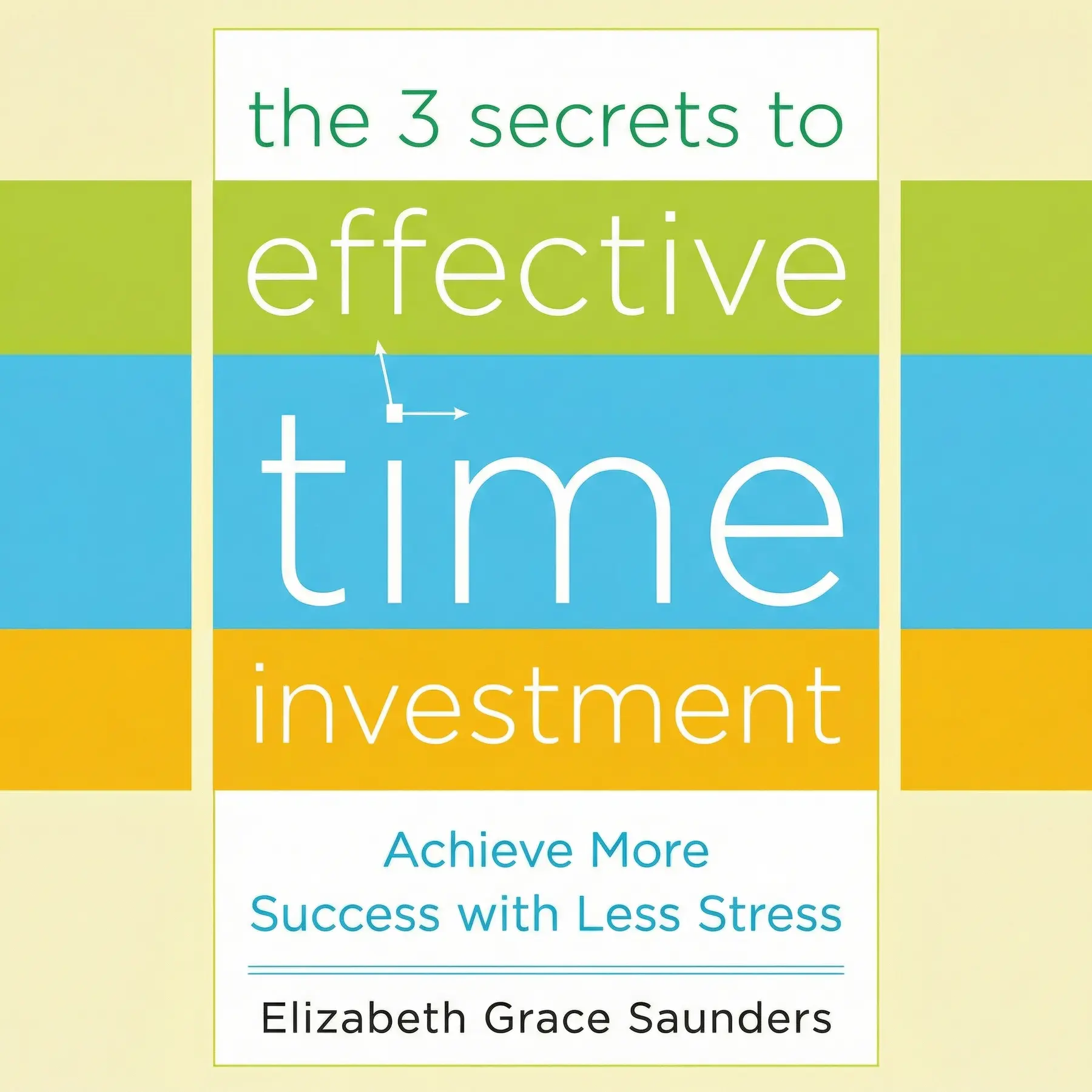
The 3 Secrets to Effective Time Investment: Achieve More Success with Less Stress
Master your schedule and reclaim your life. This guide moves beyond simple hacks to explore the emotional and practical foundations of investing your time for maximum meaning and minimal stress.
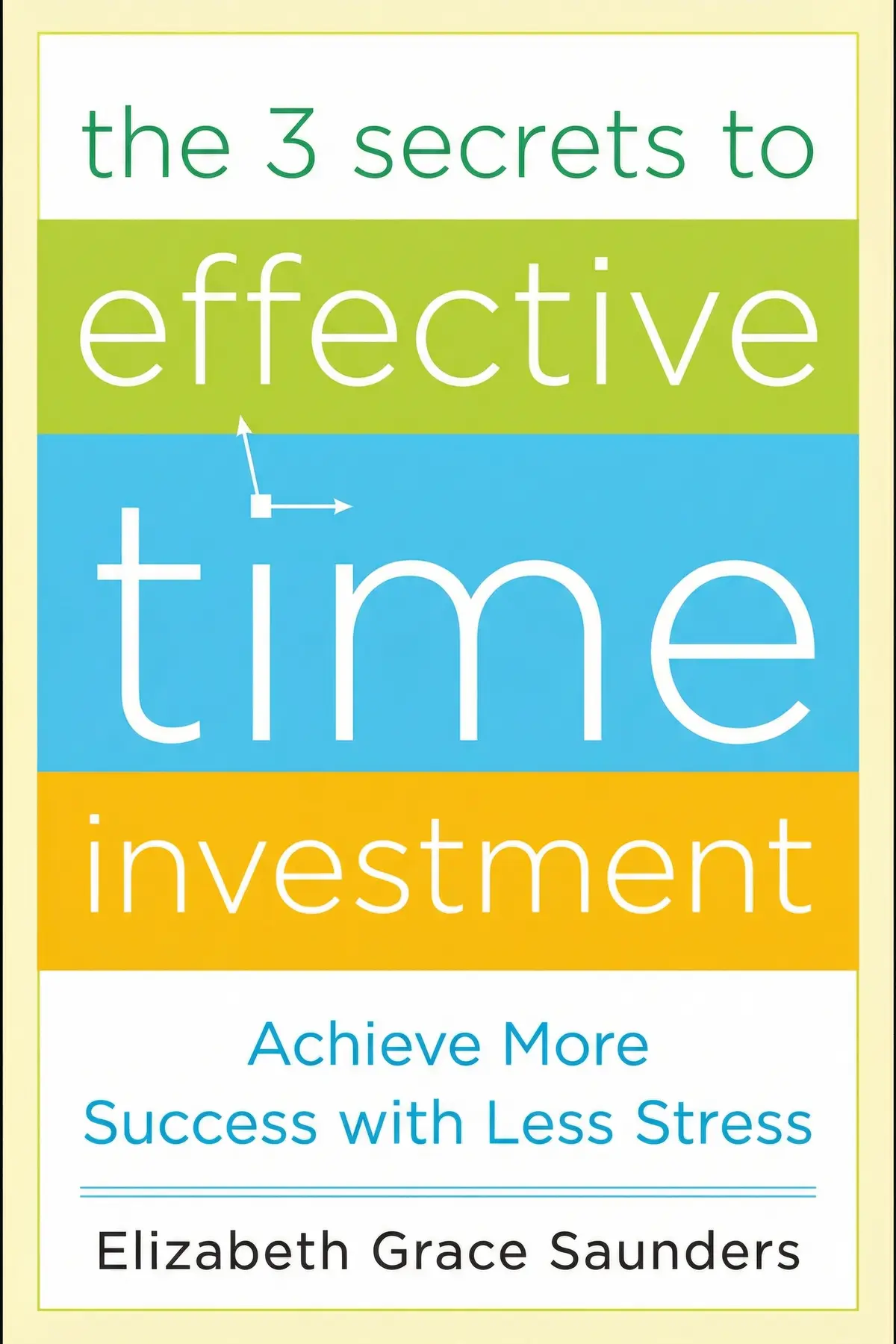
Table of Content
1. Introduction
2 min 19 sec
Imagine your life as a series of investments. When we think of investing, our minds usually jump straight to money—stocks, real estate, or savings accounts. We are often meticulous about where our dollars go because we know they are limited. But there is a much more precious currency that we spend every single day, often without a second thought: our time. No matter your status or your wealth, you are granted exactly twenty-four hours in a day. It is the great equalizer. Yet, many of us live in a state of constant denial about this limitation. We operate under a cloud of magical thinking, convincing ourselves that we can somehow fit twelve hours of work, three hours of family time, an hour of exercise, and a full night’s sleep into a window that simply isn’t big enough. Something always has to give, and usually, it’s our peace of mind.
This is where the shift from ‘time management’ to ‘time investment’ begins. Management is about survival; investment is about growth and intention. In this summary, we are going to explore a framework that moves beyond simple to-do lists. We’ll look at why successful people aren’t just busy—they are deliberate. We will explore how to stop letting other people ‘pickpocket’ your minutes and how to align your daily actions with your deepest values. We’ll uncover the emotional triggers that cause us to sabotage our own schedules and learn how to build routines that act as a safety net rather than a cage. By the end of this journey, you’ll understand the three fundamental secrets that allow you to stop reacting to your life and start designing it. You will learn how to be realistic without losing your ambition, and how to find gratitude in the small moments that make a life feel full. It’s time to stop spending your hours and start investing them.
2. Protecting Your Time Like Your Money
2 min 34 sec
Think of your time as physical currency. Discover why we often let others ‘steal’ our minutes when we would never let them take our cash.
3. Uncovering the Emotional Roots of Sabotage
2 min 22 sec
Scheduling is only half the battle. Explore how hidden emotions like fear, guilt, and shame can derail even the most organized plans.
4. The Role of Mindset and Gratitude
2 min 34 sec
Your internal monologue dictates your productivity. Learn why ‘realistic optimism’ and a habit of gratitude are essential for long-term success.
5. Breaking Free from Time Optimism
2 min 34 sec
Are you always late? You might be a ‘time optimist.’ Learn why perfectionism fuels this delusion and how to set expectations that actually work.
6. The Liberating Power of Simple Routines
2 min 34 sec
Routines aren’t boring; they are the key to mental freedom. Discover how even the busiest people use structure to create more time for what they love.
7. Four Steps to Building a Sustainable Habit
2 min 44 sec
Creating a new routine can feel daunting. Use this four-step method to turn your priorities into automatic behaviors that stick.
8. The Vital Role of Accountability and Support
2 min 36 sec
You don’t have to do it alone. Learn how accountability partners and group dynamics can provide the extra push needed for long-term goals.
9. Conclusion
1 min 58 sec
As we wrap up, it’s important to remember that time investment is a lifelong practice, not a destination you reach and then forget. Most of us spend our lives in a state of ‘reactive living’—responding to the loudest emails, the most urgent requests, and the nagging voices of our own insecurities. But by embracing these three secrets, you have the tools to change that script. You’ve learned to move from vague values to action-based priorities, ensuring that your time is spent on what you truly define as success. You’ve discovered the importance of being a ‘time realist’ rather than a ‘time optimist,’ letting go of the perfectionism that keeps you paralyzed. And you’ve seen how simple, consistent routines and the support of others can provide the structure you need to stay on track.
A great way to jumpstart this change today is to pick one routine you’ve been wanting to start and find a ‘trigger’ for it. Don’t just say you’ll do it; tie it to something you already do every day. If you want to start a habit of daily planning, do it while you drink your first cup of coffee. By tethering the new habit to an existing one, you make the transition seamless.
Life is far too short to spend it feeling overwhelmed and behind. You have the power to stop the leak of your most precious resource and start investing it in a way that brings you joy, fulfillment, and a sense of calm. The twenty-four hours you have today are a gift. Use them wisely, be kind to yourself when you stumble, and keep looking toward that North Star. Your future self will thank you for the investments you start making today.
About this book
What is this book about?
The 3 Secrets to Effective Time Investment offers a refreshing perspective on how we approach our most finite resource. Rather than offering a list of shallow productivity tips, the book dives deep into the psychology of why we over-commit and fail to follow through on our goals. It introduces three core pillars: creating action-based priorities, setting realistic expectations, and building sustainable routines. Listeners will learn how to confront the emotional barriers—like fear and guilt—that often lead to self-sabotage and burnout. By understanding the concept of 'time optimism' and learning how to set firm boundaries, you can stop reacting to the demands of others and start investing your hours in what truly matters. The promise of the book is a life where your schedule aligns with your values, allowing you to achieve professional success without sacrificing your personal well-being or sanity.
Book Information
About the Author
Elizabeth Grace Saunders
Elizabeth Grace Saunders is a prominent time management expert and the founder and CEO of Real Life E, a coaching company. She has provided professional guidance to corporate and private clients across six continents. Her insights on productivity and balance have been featured in major outlets including Harvard Business Review, Forbes, and TIME magazine.
Ratings & Reviews
Ratings at a glance
What people think
Listeners find this time management guide to be impactful and simple to navigate, offering actionable techniques for shifting perspectives and increasing efficiency. They value how accessible and understanding the writing is, with one listener highlighting the recurring emphasis on self-compassion. The book tackles well-known obstacles through a novel lens, and listeners view it as a valuable resource for individuals with demanding schedules.
Top reviews
Patchara
Wow, this was exactly the mindset shift I needed to get past my paralyzing perfectionism. Elizabeth Grace Saunders does a fantastic job explaining how our emotions are often the biggest hurdle to managing our time effectively. I loved the idea that success should be defined personally rather than by what everyone else expects of you. The book is written with such empathy and a genuine desire to help readers reduce their stress levels. By the time I finished, I felt like I had permission to stop trying to do everything and start doing what actually matters. The routines suggested are simple enough to actually maintain, which is usually where I fall off the wagon with these things. This is a must-read if you feel like you’re constantly drowning in tasks but never actually getting ahead.
Show moreOmar
Finally got around to reading this, and I’m honestly surprised by how much the 'realistic optimism' concept resonated with me. I have a habit of over-scheduling myself because I forget that I’m a human being with limited energy. This book forced me to confront that internal monologue that demands impossible levels of productivity every single day. The author's background in coaching really shines through in the way she anticipates common pitfalls and emotional roadblocks. I particularly enjoyed the focus on creating a personal definition of success that isn't tied to societal pressure. It’s an easy, quick read that delivers practical tools you can start using immediately. If you’re tired of the cold, clinical feel of most business books, you will find this very refreshing. It’s been a great investment for my mental health and my productivity.
Show morePalm
Saunders offers a very approachable guide that feels much more like a conversation with a kind mentor than a lecture from a CEO. I really appreciated the heavy emphasis on self-compassion, which is something usually missing from these types of high-performance books. Instead of making you feel guilty for not being a robot, she encourages a realistic form of optimism that accounts for human error. The focus on rewriting your internal monologue is particularly helpful for those of us who struggle with that constant voice of perfectionism. While some of the advice is definitely stuff I’ve heard before, the way it’s framed around your personal values makes it feel more applicable. It’s a great tool for anyone feeling overwhelmed by societal pressures to be constantly 'on.' My only gripe is that it can feel a bit slow-paced in the later chapters.
Show moreLily
Running a small business with my spouse means our schedules are constantly colliding, so we picked this up to find some common ground. We actually found the sections on establishing simple structured routines to be incredibly practical for our specific situation. It isn't just about work; it's about how you value your life as a whole, which was a perspective we really needed to hear. The worksheets are actually doable and didn't feel like busywork, which is a rare feat for this genre of book. I liked how the author addresses the fact that we only have 24 hours and no amount of wishing will change that reality. It helped us lower our stress levels by focusing on what's actually achievable. It’s a very solid, empathetic guide for busy people who need to reclaim their headspace.
Show moreChamlong
Not what I expected from a time management book, as it dives much deeper into the 'why' behind our choices rather than just the 'how.' I’ve been trying to find a balance between being productive and not burning out, and this provided some great insights into that struggle. The focus on realistic optimism was a standout for me because it acknowledges the messiness of real life. To be fair, the tone is a little on the bubbly side, but if you can get past that, the actual tools are quite effective. It’s much less structured than something like Getting Things Done, which might be a relief for some people. I found the section on 'time investment' versus 'time management' to be a helpful linguistic shift. Definitely worth a read if you’re looking for a more holistic approach to your schedule.
Show moreMoon
In my experience, the best self-help books are the ones that remind you of what you already know but in a way that makes you finally act. This book does exactly that by breaking down time investment into manageable, emotional components. It’s not just about calendars; it’s about how you feel when you look at your calendar and how to change that reaction. I appreciated the specific tips on how to handle perfectionism, which has always been my biggest time-waster. Some parts felt a little bit repetitive, but the core message of self-compassion is so important that I didn't mind the reinforcement. It’s a very approachable read for anyone who feels overwhelmed by their to-do list. I'm already seeing a difference in how I plan my weeks using her routine framework.
Show moreFort
The chapter on what the author calls 'time malaise' was probably the most valuable part of the entire experience for me. It’s an interesting psychological look at how our internal reactions signal that our priorities have shifted out of alignment. Look, the book isn't going to change your life overnight, but it does offer a softer, more empathetic approach to productivity than the usual drill-sergeant manuals. I appreciated the focus on routines, even if the writing style felt a bit too simplistic at times. It needs more polish to really stand out in a crowded market of self-help titles. However, the worksheets provided are a nice touch for those who actually want to do the work rather than just reading about it. It’s a solid three-star read that works better as a gentle reminder than a comprehensive system.
Show moreNora
As someone who has always struggled with the rigid nature of traditional productivity systems, I found this approach quite refreshing. It focuses more on the emotional causes of self-sabotage rather than just giving you a bunch of checkboxes to fill out every morning. That said, I did find the presentation a little bit messy, and I wished there were more concrete examples of how to implement the routines. Some of the psychological insights felt a bit repetitive by the middle of the book. I’m going to try using some of the techniques for my daily planning, but I'm not sure if the 'secrets' are truly groundbreaking. It’s a good investment of time if you need a mindset shift, but don't expect a technical manual. It strikes a decent balance between theory and practice, even if it doesn't quite reach greatness.
Show moreJin
Ever wonder why every time management guru sounds like they just drank three shots of espresso? Frankly, the tone of this book was a major hurdle for me, leaning far too heavily into that bubbly, high-school-cheerleader optimism. While the core ideas aren't necessarily bad, the delivery felt a bit juvenile and lacked the professional weight I was looking for in a productivity guide. I wanted practical, down-to-earth advice on turning off the internet and actually working, not a psychological pep talk. To be fair, if you've never read a book on productivity before, you might find some value in the basic concepts. For me, it just felt like a less-polished version of systems I've already seen done better elsewhere. It’s fine as a reminder to value your time, but it certainly didn't feel like 'secrets' were being revealed. I’d suggest looking for something a bit more grounded if you’re a cynic like me.
Show moreBond
After hearing so much about Saunders' coaching, I expected a revolutionary framework, but this mostly felt like a rehash of classic concepts. If you have already read 'Getting Things Done' or any similar management staples, you will likely find this content redundant and a bit too 'new-agey' for comfort. The truth is, the three secrets aren't actually secrets to anyone who has spent more than five minutes thinking about their schedule. It lacks the refined structure of more established systems, making the presentation feel somewhat unconvincing and loose. While there are a few decent pointers on assessing your personal style, the overall package didn't hit that tipping point for me. I struggled to stay engaged when the advice felt so repetitive. It’s a decent starting point for a complete novice, but seasoned planners should probably skip it.
Show moreReaders also enjoyed
AUDIO SUMMARY AVAILABLE
Listen to The 3 Secrets to Effective Time Investment in 15 minutes
Get the key ideas from The 3 Secrets to Effective Time Investment by Elizabeth Grace Saunders, plus 5,000+ more titles in English and Thai.
- 5,000+ titles
- Listen as much as you want
- 7-day free trial
- Cancel anytime







