

A High-Performing Mind: Strengthen Your Mind and Live Your Best Life
Andrew D. Thompson
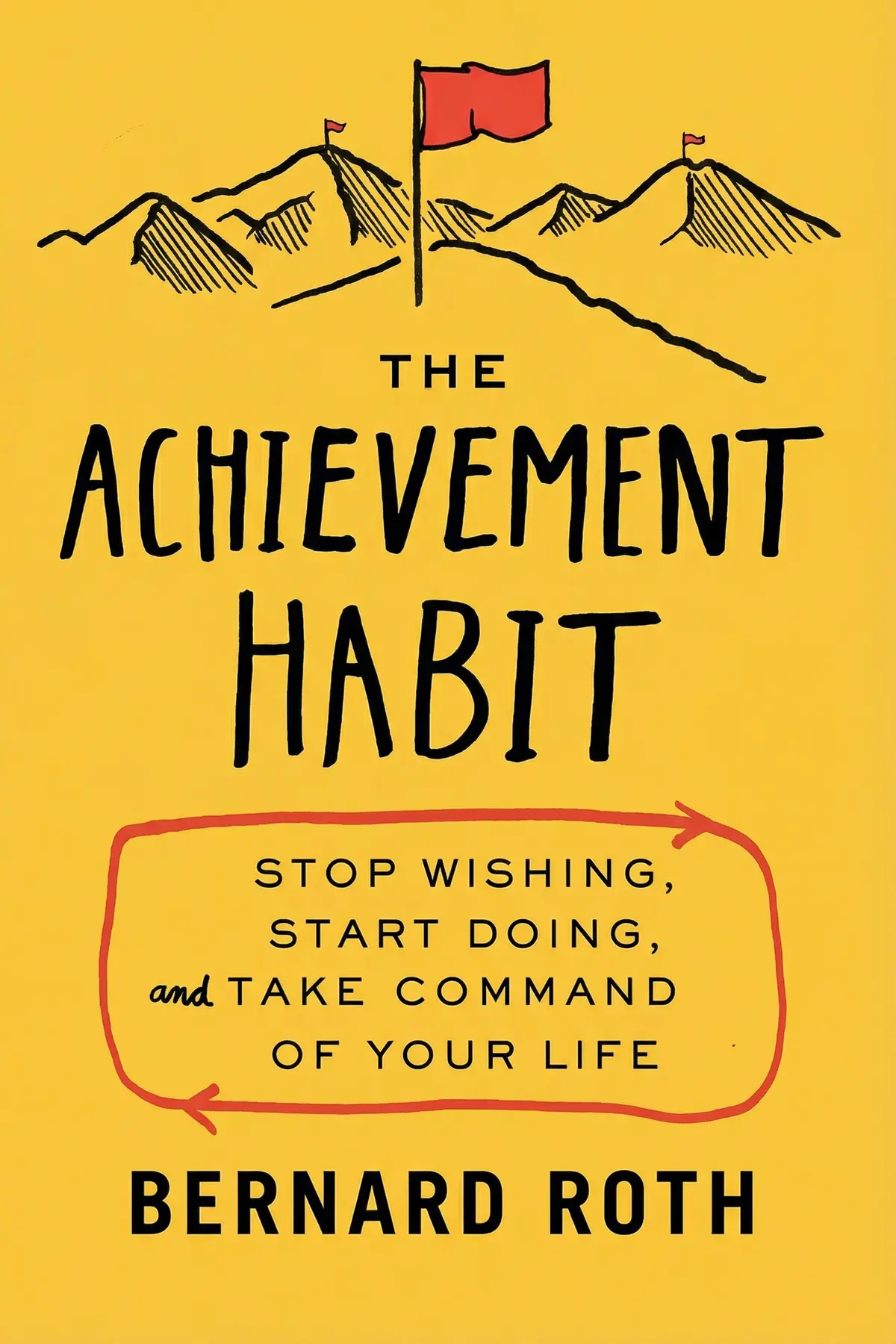
Discover how to transform your life by shifting from a mindset of wishing to a habit of doing. Bernard Roth applies design thinking to help you overcome excuses and achieve meaningful goals.
1 min 40 sec
We have all met those individuals who seem to move through life with an unstoppable momentum. They set goals, they meet them, and then they move on to the next big thing with what looks like effortless grace. It is easy to watch them from a distance and assume they possess some secret ingredient—perhaps a specific gene for success or an upbringing that perfectly prepared them for the world. But what if the reality is much simpler and far more empowering? What if achievement isn’t a gift, but a habit that anyone can cultivate?
In the following pages, we are going to explore the transformative philosophy of Bernard Roth, a man who has spent decades at the intersection of engineering and human-centered design. He suggests that the primary difference between those who succeed and those who stay stuck is a mental shift from ‘wishing’ to ‘doing.’ Most of us are experts at creating elaborate reasons for why we haven’t reached our potential. We blame the economy, our bosses, or our lack of time. However, these are often just stories we tell ourselves to avoid the discomfort of real change.
This journey is about stripping away those illusions. We will look at how the principles of design thinking—usually applied to building products—can be used to build a better life. You will learn how to identify the actual problems you are facing, rather than the symptoms you keep obsessing over. We will also touch on the power of self-image and why the way you describe yourself can either be your greatest asset or your heaviest anchor. By the end of this summary, the goal is for you to see that the path to your dreams isn’t blocked by external walls, but by internal habits that you have the power to rewrite starting right now.
2 min 15 sec
Uncover why your best efforts might be falling short and learn the psychological trick that turns mere attempts into concrete results.
2 min 06 sec
Explore how the labels you place on your experiences dictate your happiness and how to shift your perspective to find opportunity in any situation.
2 min 03 sec
Learn why your logical explanations for failure are actually holding you back and discover a rapid-fire method to make better decisions.
2 min 16 sec
Sometimes the biggest obstacle isn’t the problem itself, but how you’ve defined it. Discover how to ask the right questions to unlock impossible doors.
2 min 07 sec
Achievement is not a solo sport. Learn how to transform your networking into meaningful friendships and create environments where creativity thrives.
2 min 06 sec
Your self-image is the blueprint for your life. Find out how to reclaim your identity and ensure your daily actions align with your ultimate goals.
1 min 55 sec
As we wrap up our exploration of the achievement habit, it is worth reflecting on the core message: your life is a project, and you are its lead designer. We have seen that the difference between success and stagnation often comes down to the stories we tell ourselves. By choosing to ‘do’ rather than ‘try,’ and by stripping away the convenient excuses we label as ‘reasons,’ we clear the clutter that prevents meaningful progress. We’ve learned that problems are rarely as fixed as they seem; with a simple shift in perspective or a change in language, the most daunting obstacles can be reframed into solvable puzzles.
Remember that achievement is not a destination you reach and then stop; it is a way of moving through the world. It involves a commitment to self-honesty and a willingness to embrace the vulnerability of failure. It means building genuine connections with others and fostering environments where everyone’s best ideas can surface. Most importantly, it requires you to take full ownership of your self-image. You are not a static collection of traits; you are a dynamic being capable of constant reinvention.
As a final takeaway, try to stop playing the game of ‘right’ and ‘wrong.’ We often spend incredible amounts of energy trying to prove our point or win an argument, but this rarely leads to achievement. It only leads to resentment and wasted time. ‘Right’ and ‘wrong’ are just more labels we use to feel safe. Instead, ask yourself what is ‘useful’ and what ‘works.’ Focus on the outcomes you want to create and the person you want to become. Take the principles of design thinking—empathy, reframing, and rapid prototyping—and apply them to your own days. The habit of achievement starts with a single, decisive action. Don’t wait for a sign or the perfect moment. Start where you are, use what you have, and do what you can. Your future self is waiting for you to begin.
The Achievement Habit is a deep dive into the psychology of success, viewed through the lens of Stanford’s renowned design school. It argues that achievement is not an innate talent bestowed upon a lucky few, but a muscle that can be strengthened through intentional practice. By examining the mental barriers we construct—such as the tendency to value 'trying' over 'doing' and the reliance on empty excuses—this book provides a roadmap for taking control of one's destiny. Throughout the summary, you will explore how to reframe problems to find hidden solutions, why our personal definitions of failure and success are often the biggest hurdles we face, and how to build a collaborative environment that fosters collective growth. The promise of the book is simple yet profound: by changing your self-image and adopting a bias toward action, you can bridge the gap between where you are and where you want to be. It is a guide for anyone looking to stop making excuses and start creating a life of purpose and accomplishment.
Bernard Roth is a professor of engineering and the academic director of the Hasso Plattner Institute of Design at Stanford University. He is recognized as one of the world’s pioneers in the field of robotics and is a renowned expert in kinematics, the specialized science of motion.
Listeners describe the book as superbly crafted and accessible, valuing the hands-on advice and concrete tips provided. It offers an engaging experience packed with applicable anecdotes that help people regain their bravery to take initiative while offering effective methods for tackling challenges. Many view it as essential, with one listener even remarking that it should be mandatory for university seniors.
Picked this up after a recommendation from a colleague and I was pleasantly surprised by the 'design thinking' approach to life. Roth doesn't just give you vague motivation; he provides a toolkit for dismantling the mental structures that keep us stuck. I especially loved the concept of 'prototyping' your life instead of waiting for perfection. Look, we all know the Yoda quote about 'do or do not,' but seeing it applied through the lens of mechanical engineering is fascinating. It’s an easy read that manages to be both entertaining and deeply practical. My only minor gripe is that it occasionally feels a bit too focused on the Stanford bubble. However, the actionable insights on problem-solving are genuinely top-tier.
Show moreFinally got around to reading this and I can see why it's required reading for some college seniors. The blend of engineering logic and life coaching is unique and provides a fresh perspective on achievement. Roth’s insistence that our excuses are mostly 'bullshit' is a tough pill to swallow, but it’s undeniably effective. I’ve started using the linguistic shifts he suggests, and I’ve noticed a real difference in how I approach difficult tasks. The book is excellently written and avoids the dry, academic tone you might expect from a professor. It’s full of relevant stories that help illustrate his points without feeling too bogged down in theory. It really helps you reclaim your courage.
Show moreThis book is a masterclass in shifting your perspective from passive observer to active participant in your own life. Roth’s wisdom feels earned over decades of teaching, and his voice comes through clearly on every page. I loved the idea that we are the ones giving everything in our lives meaning, which means we have the power to change it. It’s an empowering read that encourages you to stop waiting for permission and start prototyping your goals. While the author’s confidence can occasionally border on hubris, the quality of the insights makes it easy to overlook. I’ve already recommended it to several friends who are struggling with procrastination. Truly an excellent guide for personal growth and practical problem solving.
Show moreBernard Roth’s background in engineering really shines through in the way he deconstructs our habitual excuses. I found the 'but vs. and' linguistic trick surprisingly effective for reframing my daily roadblocks. To be fair, some chapters felt a bit repetitive, yet the core message of a 'bias toward action' is exactly what I needed to hear right now. It reads like a distilled version of a high-end Stanford seminar, making complex psychological shifts feel manageable. While some might find his tone a bit blunt, I appreciated the lack of sugar-coating. If you're tired of overthinking and want a practical framework for doing, this is worth your time. It’s a very fluid, easy-to-absorb read.
Show moreAfter hearing so much about the Stanford d.school, I had high hopes for this one. Roth delivers a high-energy guide that feels like a personal coaching session. The 'Achievement Habit' isn't about some secret formula; it’s about shifting your mindset from a dreamer to a doer through small, iterative changes. I particularly liked the 'Your Turn' exercises because they force you to actually interact with the material rather than just nodding along. Some of the stories felt a little dated, and the author definitely likes to remind you of his credentials. However, the practical guidance on ignoring distractions is worth the price of admission. It's a must-read for anyone feeling stagnant in their career or creative projects.
Show moreThe chapter on reframing problems changed the way I look at my business obstacles entirely. Bernard Roth writes in a very accessible way, making high-level concepts from the d.school feel like common sense. I appreciated how he emphasized that achievement is a muscle you have to train through practice. Not gonna lie, I was skeptical about the 'no reasons' philosophy at first, but it really helps cut through the noise. The book is full of actionable advice that you can implement immediately, which is rare for this genre. It’s entertaining and keeps you engaged with plenty of real-world anecdotes. This is a solid resource for anyone looking to transition from dreaming to actually doing the work.
Show moreEver wonder why some people just seem to get things done while you’re stuck in the planning phase? This book attempts to answer that by stripping away the 'reasons' we give for our failures. Personally, I found the chapter on 'No Meaning' to be the most challenging part of the entire experience. Roth suggests we project meaning onto everything, and by removing it, we can finally see things for what they are. It's a bold take, though it might clash with your personal values or faith. The writing style is conversational and fluid, making it a quick weekend read. It’s a solid book—useful, but not necessarily life-altering for everyone. Sometimes it takes a new perspective for a concept to finally click.
Show moreAs someone who reads a lot of self-development books, most of these concepts weren't exactly revolutionary to me. However, Roth’s specific framing through design thinking adds a layer of practicality that other books often miss. Truth is, the 'achievement habit' is really just about consistency and removing self-imposed barriers. I found the section on 'getting unstuck' to be particularly valuable for my creative projects. My main criticism is that the author’s 'just do it' attitude can feel a bit dismissive of legitimate external challenges. It’s a good book for a quick boost of motivation, even if it doesn't offer a silver bullet. Definitely a worthwhile addition to your shelf, just don't expect a revelation on every page.
Show moreNot what I expected from a Stanford professor, frankly. The book feels like a collection of anecdotal fluff that leans heavily on the 'just do it' mantra without addressing the root causes of procrastination. I felt that Roth's dismissal of personal meaning was a bit too postmodern and nihilistic for my taste. He spends a lot of time talking about his own successes, which occasionally crosses the line into hubris. There are a few decent exercises tucked away at the end of chapters, but you have to slog through a lot of self-congratulatory storytelling to find them. It’s light, fast-reading material, but it ultimately lacks the deep substance of a true psychological study. It's essentially self-development cotton candy.
Show moreWow, this was a massive disappointment for a book with such high ratings. To be honest, it felt like the author was more interested in sharing his resume than providing actual help. Roth’s advice to 'admire your depression' or pretend a boring meeting is amazing felt incredibly tone-deaf and superficial. It’s the kind of 'mind over matter' rhetoric that ignores the complexities of real-world obstacles and mental health. I pushed through it to see if it got better, but it stayed in the realm of empty cheerleading. If you enjoy hearing a professor talk about how wonderful his classes are, you might like it. Otherwise, save your money. There is simply not enough content to handle the hubris.
Show moreAndrew D. Thompson
Deepak Chopra
Richard Wiseman

William B. Irvine
AUDIO SUMMARY AVAILABLE
Get the key ideas from The Achievement Habit by Bernard Roth, plus 5,000+ more titles in English and Thai.







