

21 min 28 sec
The Art of Asking: or How I Learned to Stop Worrying and Let People Help
The Art of Asking explores how vulnerability and community transform the act of requesting help into a powerful tool for connection, using musician Amanda Palmer’s journey from street performer to crowdfunding pioneer.
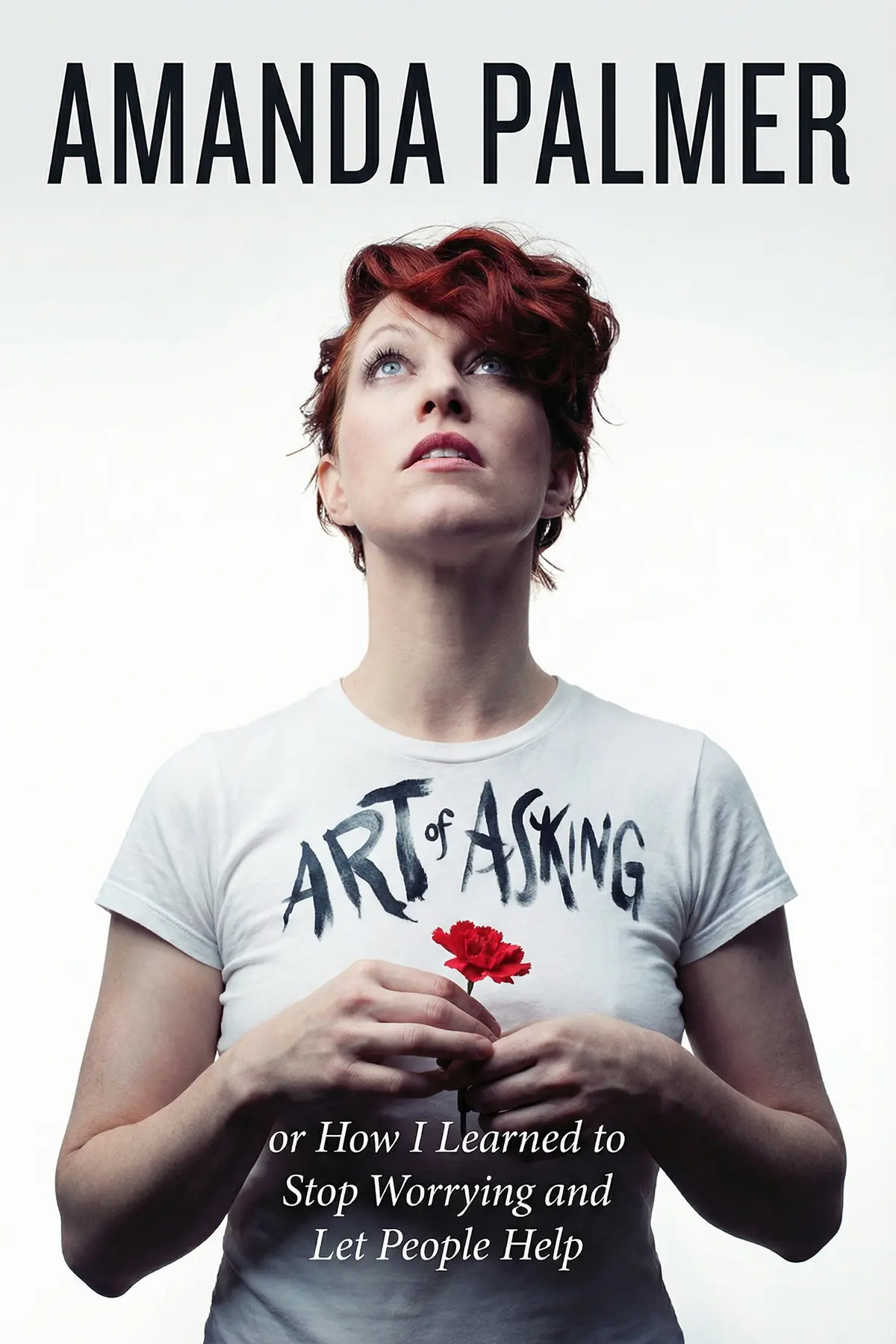
Table of Content
1. Introduction
2 min 01 sec
Imagine standing on a street corner, perfectly still, covered in white paint and a tattered wedding dress. You are a living statue, a silent observer of the bustling world around you. This was Amanda Palmer’s reality long before she became a global music icon. In those hours of stillness, she learned something profound: the world is full of people who want to connect, but they are often waiting for an invitation. This realization became the foundation of a philosophy she calls the art of asking.
Most of us view asking for help as a last resort, a moment of defeat where we admit we aren’t enough on our own. We associate it with weakness, or worse, with the discomfort of being a burden. But Palmer’s journey suggests the exact opposite. She argues that the ability to ask—and more importantly, to accept help—is a radical act of trust. It is the bridge that turns a crowd of strangers into a community and a transactional relationship into a meaningful bond.
In this summary, we are going to explore the throughline of Palmer’s life and work. We’ll look at how her early days as a street performer, her rise in the punk-cabaret scene with The Dresden Dolls, and her eventual move toward independent crowdfunding all point toward the same truth: that human connection is built on a foundation of vulnerability. We will see how she managed to raise over a million dollars not by demanding it, but by cultivating a decade’s worth of trust.
You’ll learn why a simple flower can be more than a prop, how the digital age has changed the way we support one another, and why the most difficult person to ask for help might be the one closest to you. This isn’t just a story about a musician; it’s a manual for anyone who wants to stop worrying about what they owe and start focusing on what they can create together with others. Let’s dive into how leaning on others can actually make you stronger.
2. The Reciprocity of Assistance
2 min 21 sec
Discover why accepting help is often a gift to the person offering it, shifting the dynamic from a one-sided favor to a mutual bond of support.
3. Giving the Gift of Presence
2 min 07 sec
Learn how non-physical gifts, like the simple act of truly seeing another person, can carry more weight than any material object.
4. The Difficulty of Personal Acceptance
2 min 25 sec
Explore why it’s often easier to ask for help on behalf of a group than it is for ourselves, and how we can overcome this barrier.
5. Asking vs. Begging
2 min 14 sec
Understand the fundamental difference between making a request and making a demand, and why the word ‘no’ is essential to a healthy relationship.
6. The Power of the Golden Community
2 min 10 sec
Discover how building a network of ‘pen pals’ rather than ‘customers’ creates a resilient foundation for any creative or personal project.
7. Crowdsourcing as a Tool for Life
2 min 11 sec
See how digital platforms like Twitter can be used for more than just marketing, becoming a vital resource for information and support.
8. The Necessity of Radical Transparency
2 min 18 sec
Learn how being honest about your struggles and imperfections can strengthen your bonds and protect your reputation during difficult times.
9. The Art of Asking as a Life Philosophy
2 min 02 sec
Finalize your understanding of how vulnerability and community create a more fulfilling and connected way of living.
10. Conclusion
1 min 39 sec
As we wrap up this exploration of Amanda Palmer’s journey, the core message is clear: the most important thing we can do as humans is to connect, and the most effective tool for connection is vulnerability. We’ve seen how asking is a collaborative dance that requires trust, respect, and the unconditional acceptance of the word “no.” We’ve learned that community is built through personal, pen-pal-style relationships rather than cold, transactional exchanges. And we’ve seen how transparency can turn a moment of crisis into a moment of shared humanity.
Palmer’s life shows us that when we lower our guard and admit our needs, we aren’t just taking; we are creating a space where others can find meaning through their own generosity. The ice cream shop owner, the fan on Twitter, the husband—everyone who helped her was a part of the story she was telling. By allowing them in, she made her art and her life a collective experience.
The throughline here is that you don’t have to do it alone. In fact, you shouldn’t. The next time you find yourself struggling, or when you have a dream that feels too big for your own two hands, remember the lady in the white dress on the milk crate. Look someone in the eye, offer what you have—even if it’s just your attention—and don’t be afraid to ask. You might be surprised at how many people have been waiting for the chance to say yes. Your call to action is simple: identify one area of your life where you’ve been trying to go it alone, and make one honest, unconditional ask this week. See what happens when you let the world help you.
About this book
What is this book about?
The Art of Asking is an intimate exploration of the barriers we build against receiving help and the freedom found in tearing them down. Amanda Palmer, known for her work with The Dresden Dolls and her record-breaking Kickstarter campaign, shares the lessons she learned while standing on a milk crate as a living statue and later while navigating the complexities of fame and marriage. The book examines why we often feel ashamed to ask for what we need and how that shame prevents us from forming deep, authentic bonds with others. Through a series of personal anecdotes and reflections, Palmer promises to show that asking is not a sign of weakness or a form of begging. Instead, it is a collaborative act that grants others the opportunity to give. By embracing vulnerability, maintaining radical transparency, and nurturing a dedicated community, anyone can learn to foster the kind of trust that sustains both art and life. It is a guide to moving from a transactional mindset to a relational one, proving that when we let ourselves be seen and helped, we empower those around us to do the same.
Book Information
About the Author
Amanda Palmer
Amanda Palmer is a musician, writer and performer. Starting out as a street performer, Palmer later achieved huge musical success as one part of the duo The Dresden Dolls. Her TED Talk from 2013, “The Art of Asking,” has been viewed more than eight million times.
Ratings & Reviews
Ratings at a glance
What people think
Listeners find this work a genuine pleasure to experience, commending its sincere perspectives and expert-level personal anecdotes. Furthermore, the narrative approach is captivating, with one listener pointing out the accessible, chatty delivery, and listeners value the entertainment it provides as a breathtaking masterpiece. The book also offers profound glimpses into the journey of a significant creator, as one review emphasizes its casual examination of the public's perception of artists. Listeners prize the encouraging material, including one who mentions how it instills a sense of modesty, and find it helpful for resolving many of their inquiries.
Top reviews
Nuk
Picked this up after watching her TED talk, and I have to say, the book adds so much more depth to her philosophy. Palmer explores her early days as the Eight-Foot Bride, a street statue in Boston, with such raw honesty that it makes you question your own walls. There’s something beautiful about how she describes looking people in the eye and truly "seeing" them. It’s not just a manual on crowdfunding or how to run a Kickstarter campaign. It is an exploration of human connection and the vulnerability required to let others help you. While the writing is very conversational and a bit jumpy, it feels like sitting across from her at a dive bar. This isn't just for Dresden Dolls fans; it's for anyone who feels ashamed of needing support. She teaches humility in a way that feels empowering rather than patronizing. I finished it in two sittings and felt like I had a new lens on the world.
Show moreRosa
Wow, I didn't expect a memoir about a punk singer to make me rethink my entire relationship with my coworkers and friends. This book is a masterpiece of emotional intelligence, showing how we can transform the act of "begging" into an act of "asking." Amanda’s voice is so distinct and heartfelt that you can almost hear her singing between the lines. I was particularly moved by her stories of connecting with fans who had lost everything, like the woman with the houseboat. It’s an awe-inspiring look at what happens when you stop viewing art as a product and start seeing it as a relationship. The writing is informal and loose, but that only adds to the authenticity of her message. I’ve never been much of a Dresden Dolls follower, but I walked away from this feeling deeply inspired to be more vulnerable in my own life.
Show moreDiego
Every aspiring artist should be required to read this before they even pick up a guitar or a paintbrush. Amanda Palmer has written something truly special here, a book that functions as both a memoir and a manifesto for the digital age. She captures the struggle of the "starving artist" and flips it on its head, suggesting that the starvation is often caused by our own fear of being seen as needy. The way she describes the artist-fan relationship is revolutionary. I loved the bits about her performing in Iceland and how the community showed up for her. It’s a heartfelt, awe-inspiring masterpiece that answers so many questions about how to survive creatively in a world that wants to commodify everything. Her tone is engaging and masterful, making you feel like you're part of her "tribe" from page one. It’s simply brilliant.
Show moreThitima
It’s rare to find an artist who pulls back the curtain quite so aggressively. Amanda Palmer’s journey from street performer to major label musician—and the subsequent fallout with that label—is a fascinating study in creative independence. She doesn't hold back when talking about the "indignant narcissistic drivel" her critics accuse her of, though she frames it through the lens of radical trust. In my experience, her writing style is incredibly stream-of-consciousness, which might grate on some readers looking for a structured business guide. However, her anecdotes about couch-surfing with fans and the sheer terror of asking for money are genuinely insightful. I particularly enjoyed the sections about her marriage to Neil Gaiman and how even two famous people struggle with vulnerability. It’s not a perfect book, and her privilege definitely shows at times, but the core message is something our lonely, digital society desperately needs.
Show moreTantipat
Finally got around to reading this, and while I’m not a Dresden Dolls superfan, I found the chapters about her marriage fascinating. The contrast between her punk-rock, DIY ethos and Neil Gaiman’s more traditional literary world creates a lot of the book's best friction. She asks: "Should I date him, he's older and richer and more famous than me?" It sounds like a silly worry, but she explores it with surprising depth. Gotta say, her style is very "at a bar over wine," which makes the 300+ pages fly by. There are some repetitive parts where she hammers the "I see you" theme a bit too hard, but the sentiment remains strong. It’s an informal analysis of how society views artists as either gods or beggars, with no middle ground. If you can get past the occasional over-sharing, there’s a lot of wisdom here about human connection.
Show moreElla
Not what I expected at all, but in a really good way. I thought this would be a dry business book about crowdfunding, but it’s actually a very intimate look at a woman trying to find her place in the world. Palmer is incredibly brave for sharing some of these stories, even the ones that make her look a little bit like a narcissist. To be fair, she admits she isn't perfect, and that humility is what makes the book work. Her descriptions of the "silver scribbles" on CDs and the long autograph lines feel very authentic to the touring musician experience. The book is a bit of a rambling mess at times, and she definitely loves a good tangent, but the core message about radical trust is something I’ll be thinking about for a long time. It’s a joy to read a book that feels this human.
Show moreChai
Ever wonder why it's so terrifying to just admit you need a hand? Amanda Palmer dives deep into that fear in "The Art of Asking," and the result is a beautifully raw narrative. She takes us on a journey from street performing in a wedding dress to making history with crowdfunding. What I found most impressive was her ability to make the reader feel "seen" through her words. It’s an engaging, conversational read, though it does get a bit repetitive by the final third. While some might find her stream-of-consciousness style a bit much, I found it mostly added to the book's overall authenticity. It’s an inspirational work that teaches us that receiving a gift is just as important as giving one. Truly a great look into the life of a unique artist, even if it runs a little long.
Show moreAstrid
The truth is, Amanda Palmer isn't exactly a literary genius, but she's a hell of a storyteller. I came into this as a casual listener of the Dresden Dolls, expecting a "how-to" on the music industry. Instead, I got a sprawling, messy memoir that repeats itself more than a few times. Palmer is at her best when she's recounting her time on the street corners, but she loses me a bit when the stories become overly self-centered. Look, the "majestic presence" she thinks she’s gifting people can feel a bit much after three hundred pages. That said, the way she deconstructs the shame of asking is powerful. We are taught to be self-sufficient, and she effectively argues that such isolation is killing our creativity. It's a quick read, engaging enough for an evening, but I’d recommend the TED talk if you want the cliff notes without the rambling.
Show moreNew
Does this book actually teach you how to ask for things, or does it just tell you how Amanda does it? That’s the question I kept asking myself while flipping through these pages. Personally, I found her stories about the silver-painted bride statue to be the highlight, as they perfectly illustrate the exchange of energy between artist and audience. However, once she gets into the weeds of the music industry and her Kickstarter success, the advice becomes less universal. Most of us don't have a rabid fanbase to catch us when we fall. The writing is definitely flawed—it’s clear it was written quickly—but it has a certain raw energy that keeps you moving. It’s a decent read for anyone interested in internet culture, but take the "self-help" aspects with a grain of salt. It’s more of a specific blueprint for her life than a guide for yours.
Show moreCamila
Frankly, I found the whole concept of 'radical trust' to be a thin veil for extreme privilege. While Palmer has a few decent points about community, her anecdotes are so remarkably self-centered it becomes hard to bear. She talks about asking people for things as if she’s doing them a favor by letting them into her "majestic" life. If you aren't already an "uber-fan," the rambling, incoherent structure of this book will likely drive you crazy. It feels like reading a long-winded LiveJournal entry from someone who has been told they are a special snowflake since birth. She complains about her label and her "first-world problems" with Neil Gaiman, all while ignoring the fact that most artists can't just tweet for a couch to sleep on. It's pretentious, sentimental, and ultimately adds very little to the conversation about art or economics. Save your money.
Show moreFeatured in
Readers also enjoyed
AUDIO SUMMARY AVAILABLE
Listen to The Art of Asking in 15 minutes
Get the key ideas from The Art of Asking by Amanda Palmer, plus 5,000+ more titles in English and Thai.
- 5,000+ titles
- Listen as much as you want
- 7-day free trial
- Cancel anytime







