
21 min 44 sec
The Art of Impossible: A Peak Performance Primer
Uncover the neuroscience of peak performance. This guide breaks down the four-part formula of motivation, learning, creativity, and flow to help you surpass personal limits and achieve what once seemed impossible.
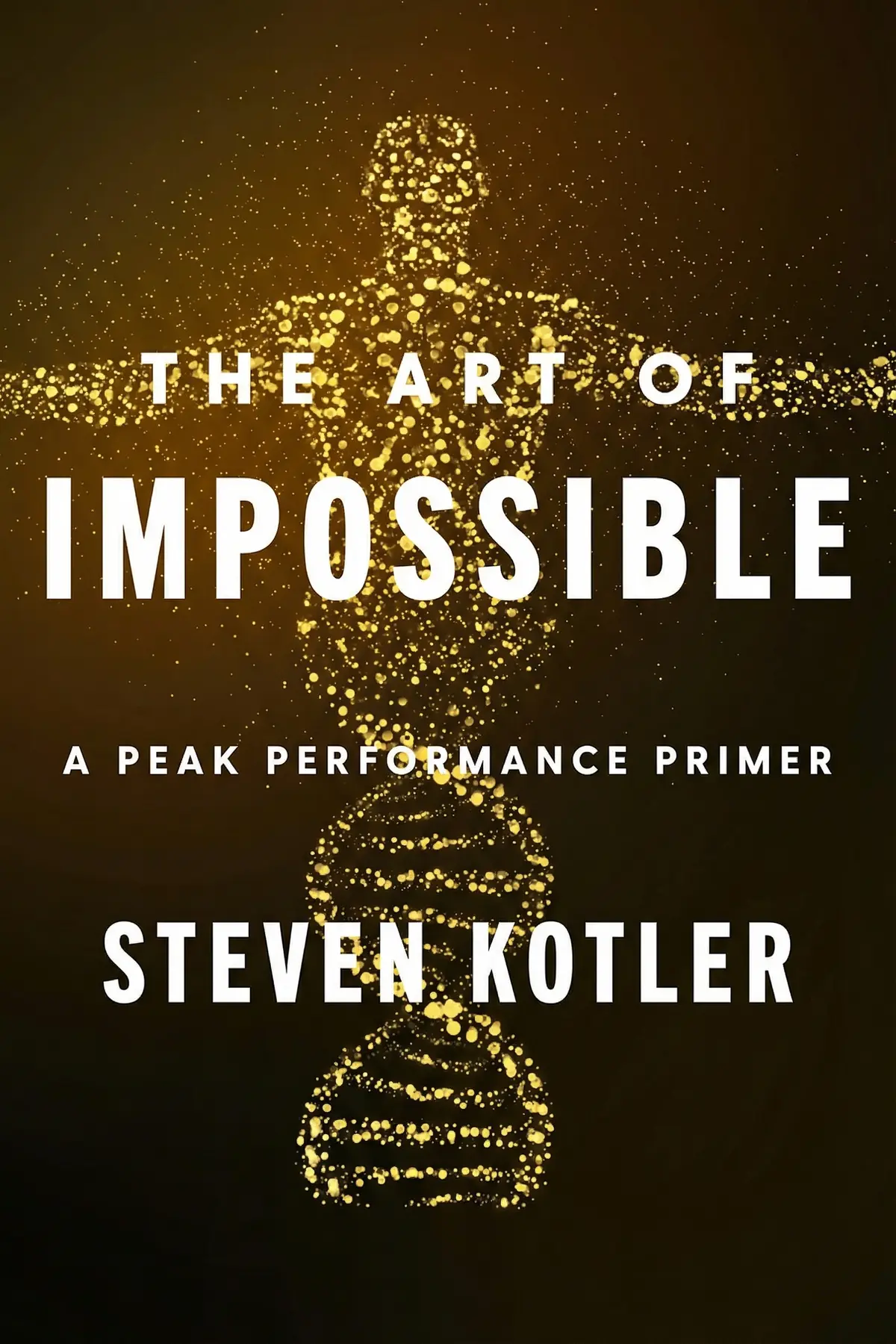
Table of Content
1. Introduction
1 min 40 sec
Have you ever looked at a world-class athlete, a groundbreaking entrepreneur, or a revolutionary artist and wondered how they do it? It’s easy to assume they possess some hidden genetic advantage or a secret well of willpower that the rest of us simply weren’t born with. We tend to categorize their achievements as “Impossible”—with a capital I. These are the feats that redefine what a human being can do, like the first person to walk on the moon or the athlete who first broke the four-minute mile.
But then there is the other kind of impossible—the version with a lowercase i. This is the stuff that feels impossible for *you* right now. Perhaps it’s starting your own business, mastering a complex new skill, or finding a way to make a living doing what you truly love. While these two scales of achievement seem worlds apart, the underlying biological mechanisms required to reach them are exactly the same.
In this primer on peak performance, we are going to explore the idea that the impossible is actually a formula. It isn’t magic; it’s a sequence of four distinct skills: motivation, learning, creativity, and flow. When you understand how these four pillars work together, you can stop relying on fleeting bursts of inspiration and start using a reliable system to push past your perceived limitations.
In the following minutes, we’ll explore how to find your true purpose, the surprising neurological roots of creativity, and the specific cycle that leads to massive leaps in productivity. By the end of this journey, you’ll see that your maximum potential isn’t a fixed point on a map—it’s a horizon you can keep expanding. Let’s dive into the science of the impossible.
2. The Power of Internal Drive
2 min 15 sec
Discover why external rewards like money and fame eventually fail to motivate us, and how our evolutionary history shaped the way we pursue goals.
3. Stacking Your Motivators
2 min 29 sec
Learn a practical method for turning simple curiosities into a lifelong passion and a meaningful purpose that benefits the world.
4. Mapping the Journey with Goals
2 min 25 sec
Understand the vital difference between long-term ambitions and daily targets, and how to use grit to navigate the inevitable challenges.
5. The Art of Accelerated Learning
2 min 09 sec
Explore why believing in your ability to grow is the first step to mastery and how to filter out bad information in an age of distraction.
6. A Systematic Path to Expertise
2 min 17 sec
Learn a five-step process to demystify any complex subject, turning frustration into a fuel for understanding.
7. The Biological Blueprint of Creativity
2 min 20 sec
Understand how your brain’s internal networks collaborate to produce ‘aha’ moments and how you can train them to work together.
8. Fueling Insight with Emotion and Environment
2 min 14 sec
See how a positive mood and time spent in nature can dramatically increase your creative output and problem-solving abilities.
9. The Four Stages of Flow
2 min 26 sec
Learn the mechanics of the ultimate peak performance state and the necessary cycle of struggle and recovery required to sustain it.
10. Conclusion
1 min 29 sec
As we conclude this exploration of the formula for the impossible, it’s important to remember that peak performance is a marathon, not a sprint. The journey begins with your internal biology. By stacking your curiosities into passion and pointing that passion toward a purpose, you create the sustainable fuel needed to go the distance. By setting High, Hard Goals and breaking them down into clear, daily targets, you build the roadmap that keeps you on track when things get difficult.
We’ve seen that learning is a systematic process of expanding your mindset and following a structured path to expertise. We’ve explored how creativity isn’t a mystery, but a result of a well-rested, positive brain working in harmony with its environment. And finally, we’ve looked at the flow cycle—the ultimate tool for turning effort into effortless brilliance.
If there is one final piece of advice to take away, it is to follow the 80/20 rule. In any endeavor, eighty percent of your progress will come from just twenty percent of your efforts. Don’t try to do everything at once. Focus on the core skills and the most important tasks that move the needle. Master the basics of your craft, find the intersections that excite you, and give yourself the grace to rest and recover.
The path to the impossible is open to anyone willing to align their habits with their biology. It isn’t reserved for the elite; it’s a set of tools that you can start using today. Your ‘impossible’ is waiting to be dismantled and rebuilt into your new reality. Now, go out there and take the first step.
About this book
What is this book about?
The Art of Impossible is a comprehensive blueprint for high-performance living, grounded in the rigorous study of neuroscience and human psychology. It moves beyond simple inspiration to provide a practical, evidence-based system for expanding the boundaries of human potential. The book identifies a specific sequence of mental states and habits—collectively known as the performance stack—that allows individuals to accomplish extraordinary feats. By exploring the mechanics of how our brains process drive, information, and creative insight, the book reveals that peak performance isn't a rare gift but a repeatable process. You will learn how to align your internal chemistry to boost productivity, how to acquire expertise at an accelerated pace, and how to harness the elusive state of flow to perform at your absolute best. Whether your goals are professional, creative, or personal, this primer offers the tools to transform your biggest ambitions from distant dreams into reachable milestones. It promises to demystify the path to excellence, showing that achieving the impossible is simply a matter of understanding and utilizing the biology of your own mind.
Book Information
About the Author
Steven Kotler
Steven Kotler is a renowned journalist, entrepreneur, and author with a diverse portfolio spanning fiction and nonfiction. He serves as the cofounder and executive director of the Flow Research Collective, an organization dedicated to investigating the science of optimal human performance and training individuals in these advanced techniques. Kotler’s insights have been featured in over 70 major publications, reflecting his influence in the field of human potential. His previous works include the best-selling book Abundance, which explored the intersection of technology and global challenges.
Ratings & Reviews
Ratings at a glance
What people think
Listeners find the work thought-provoking, as one person remarks on how it begins with identifying vision and purpose, while another highlights its useful strategies for increasing productivity. Beyond that, the content is scientifically grounded, well-composed, and exceptionally practical, with one listener praising its thorough examination of what humans are capable of achieving. Furthermore, listeners value the emphasis on peak performance, creativity, and flow states, with one even calling it a master's degree in Flow.
Top reviews
Pornpimon
Finally got around to reading Kotler’s latest, and it’s basically a masterclass in human potential. The way he breaks down the ROI of reading—comparing a few minutes of a blog post to fifteen years of an author's life distilled into a book—was a total lightbulb moment for me. Personally, I found the formula of motivation, learning, creativity, and flow to be incredibly well-structured and grounded in actual science rather than just empty platitudes. While some might find the heavy focus on neurobiology a bit daunting, it provides a level of depth that many performance books lack. This isn't just about 'hustle' culture; it’s about understanding the biological triggers that allow us to achieve those 'small i' impossible goals in our own lives. If you are serious about peak performance, this is a meatier read than most.
Show morePakinee
Ever wonder why some people seem to achieve the unthinkable while the rest of us stay stuck in our routines? This book provides the neurobiological answer to that question. I loved the distinction between 'Big I' Impossible feats, like landing on the moon, and 'small i' personal goals that feel out of reach. The chapter on learning alone is worth the price of admission, especially the part about creating a historical narrative to act as a memory palace. It’s a dense read, but the payoff is a literal roadmap for hacking your own limitations. I’ve already started implementing the 'curiosity intersections' and noticed a massive spike in my daily focus levels. Kotler writes with an infectious energy that makes you feel like you’re finally being let in on a secret formula for success.
Show moreBun
Picked this up during a period of total burnout and it really helped shift my perspective on what I’m capable of. The science-based approach to motivation and purpose is refreshing because it doesn't rely on 'positive vibes' or manifestation. Instead, it explains how a less reactive amygdala and a larger right insular cortex contribute to resilience and well-being. Look, I know some people find the author’s tone a bit aggressive or 'Type-A,' but I appreciated the directness. The concept of 'stacking motivations' to reduce effort while increasing drive is a game-changer for anyone struggling with long-term projects. It’s rare to find a book that is both deeply practical and intellectually stimulating. It definitely felt like getting a master's degree in Flow mechanics over the course of a weekend.
Show morePetch
After hearing the author on a few podcasts, I wasn't sure if the book would offer anything new, but I was pleasantly surprised by the depth. The book starts with finding vision and purpose, which sounds fluffy, but Kotler anchors it in biology. He explains how our internal software is designed to do the heavy lifting for us if we just learn how to trigger it correctly. The 'Christmas tree' metaphor for building knowledge structures was a standout for me. By constructing a narrative first, you can slot new details into place without having to work nearly as hard to remember them. This is the kind of book you keep on your desk and reference whenever you hit a plateau. It is solidly science-based and provides a comprehensive exploration of human potential that feels both authentic and achievable.
Show moreCharles
This book is a radical condensation of life’s knowledge regarding performance. Kotler manages to take the nebulous concept of 'impossible' and turn it into a repeatable process based on our evolutionary biology. I loved the emphasis on 'incubation' for creativity and the idea that our brains need time to process pattern recognition. The writing style is fast-paced and engaging, though some of the neuro-jargon can be a bit much for a casual reader. Personally, I found the section on 'small i' impossible to be the most impactful, as it makes the lofty goals feel much more attainable. It’s a deeply practical guide for anyone looking to push their boundaries. This is easily one of the most comprehensive books on peak performance I have read in years, and I’ll definitely be revisiting my highlighted sections.
Show moreAnthony
As a fan of Mihaly Csikszentmihalyi’s work on flow, I found this to be a worthy, if somewhat intense, successor. Kotler takes the abstract concept of optimal experience and bridges it with modern neurochemistry in a way that feels actionable. The 'passion recipe' where you stack your curiosities to find your purpose was particularly helpful for my current career transition. To be fair, there is a lot of talk about high-stakes athletes and extreme feats which can feel a little unrelatable for us 'regular folks' working in cubicles. However, the underlying principles of focus and grit are universal. I docked one star because the prose can get a bit repetitive when he starts name-dropping his elite inner circle. Still, the practical ideas for productivity and learning make it a solid addition to any self-improvement shelf.
Show moreNing
Look, Kotler definitely moves in some high-flying circles, and the name-dropping can get a bit exhausting after a while. There is an undeniable flavor of white male privilege throughout the text that might make it less relatable for some readers. That being said, the actual content is surprisingly robust. I particularly liked his breakdown of the four skills needed to achieve the impossible: motivation, learning, creativity, and flow. The section on creativity and how dopamine drives pattern recognition helped me understand my own work habits much better. It is a pretty easy read despite the long neuroscientific bits, which I’ll admit I skimmed through occasionally. Even if you aren't trying to break world records, the advice on finding autonomy and mastery in your career is universally applicable and very well-researched.
Show moreBella
Gotta say, the title is a bit of click-bait, but the substance inside actually delivers. It’s less of a 'self-help' book and more of a performance manual for people who want to understand the 'why' behind their focus. The author's background as a journalist shines through in the way he synthesizes complex studies into readable narratives. I found the 'Learning' section especially useful, specifically his take on the importance of technical language and historical context. My only real gripe is that he plugs his institute quite a bit toward the end, which felt a little salesy. Regardless, the practical ideas for maximizing creativity through flow triggers are too good to ignore. It’s a great pick if you want something more evidence-based than your typical motivational fluff.
Show moreOm
Truth is, the content here is solid, but the presentation just wasn't my cup of tea. It feels very much targeted at 'biohacker bros' who want to optimize every single neurochemical in their brain. While I appreciated the science-based formula, the tone can be a bit grandiose and over-the-top at times. I did find the 'passion recipe' interesting, and the list of twenty-five curiosities is a great exercise for anyone feeling stuck. However, I often felt like I was reading a very long advertisement for the author’s other work. It’s a decent read if you’re looking for high-performance tips, but I wouldn’t call it revolutionary. If you want something meatier and more actionable, you might be better off with Anders Ericsson’s 'Peak' or Hutchinson’s 'Endure' instead.
Show moreTaw
Not what I expected based on the hype. Frankly, it felt like a smorgasbord of skin-deep ideas borrowed from better authors like Cal Newport or David Epstein. While Kotler is clearly knowledgeable, the book reads more like an extended advertisement for his Flow Research Collective than a standalone guide. He spends way too much time talking about optimizing neurochemicals without giving enough tangible, day-to-day exercises that don't involve being a pro surfer or an astronaut. If you have already read 'Deep Work' or 'The Sports Gene,' you likely won't find much new information here. It’s a lot of grandiose talk about 'changing the world' that lacks the meat I was looking for. You could probably just listen to a two-hour podcast with the author and save yourself the time of reading the whole book.
Show more
Readers also enjoyed
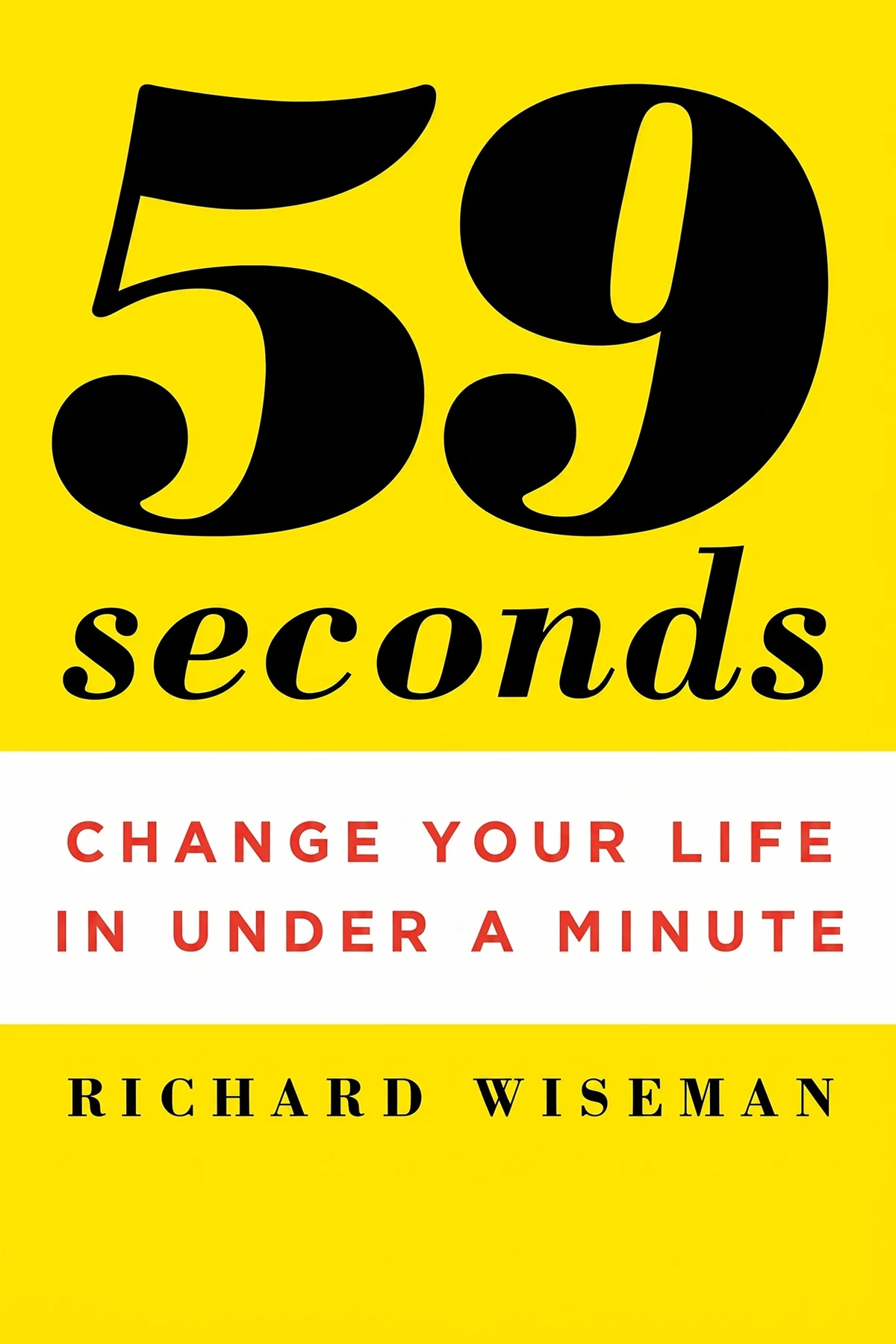
59 Seconds: Change Your Life in Under a Minute
Richard Wiseman
A Guide to the Good Life: The Ancient Art of Stoic Joy
William B. Irvine
A High-Performing Mind: Strengthen Your Mind and Live Your Best Life
Andrew D. Thompson
Abundance: The Inner Path to Wealth
Deepak Chopra
AUDIO SUMMARY AVAILABLE
Listen to The Art of Impossible in 15 minutes
Get the key ideas from The Art of Impossible by Steven Kotler, plus 5,000+ more titles in English and Thai.
- 5,000+ titles
- Listen as much as you want
- 7-day free trial
- Cancel anytime







