

Agent Sonya: The Spy Next Door
Ben Macintyre
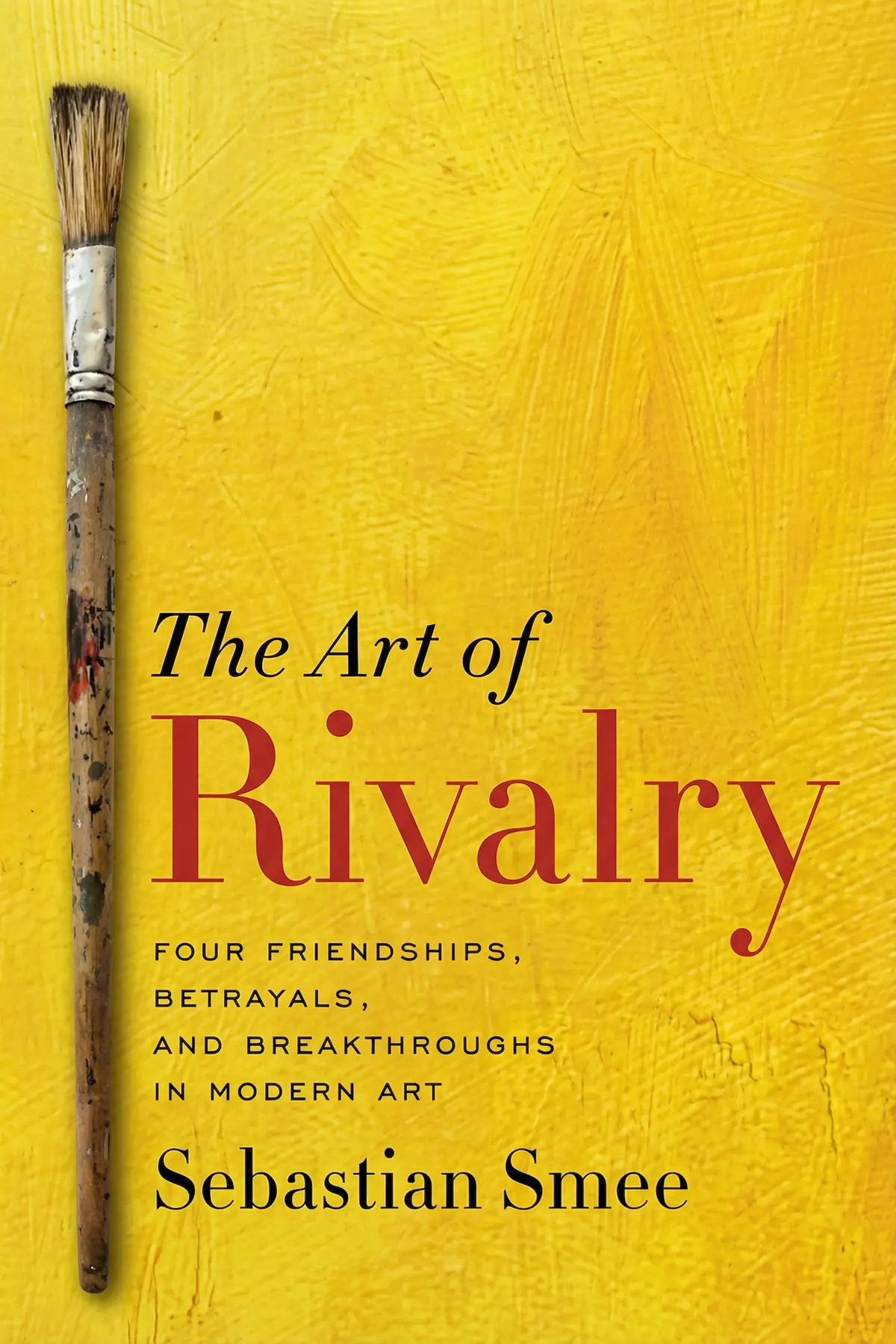
Explore the intense, transformative relationships between history’s most famous modern artists. Discover how rivalries between pairs like Picasso and Matisse or Pollock and de Kooning fueled the breakthroughs that redefined art history.
1 min 47 sec
When we think about the great masters of modern art, we often picture them as solitary figures—geniuses working in lonely studios, fueled entirely by their own internal visions. We imagine their breakthroughs as lightning strikes of individual inspiration. But if you look closer at the history of the twentieth century’s most significant movements, a different pattern emerges. Greatness, it seems, is rarely a solo sport. It is much more often a collaborative, if sometimes combative, endeavor.
In this exploration of The Art of Rivalry, we are going to pull back the curtain on the intense psychological and creative relationships that shaped the world of painting. We are looking at four specific pairs of artists whose lives were inextricably linked. These weren’t just colleagues; they were mirrors for one another. They were rivals who pushed each other to take risks they never would have dared on their own. We will follow the journeys of Edouard Manet and Edgar Degas as they navigated the birth of Impressionism; Henri Matisse and Pablo Picasso as they dismantled the traditional view of the world; Lucian Freud and Francis Bacon as they explored the grit of the human condition; and Willem de Kooning and Jackson Pollock as they brought a new, chaotic energy to the American canvas.
Through their stories, we’ll see that a rivalry isn’t always a bitter feud. Often, it’s a deep, productive respect that allows one artist to see the possibilities in another’s work and use those insights to reinvent themselves. We’ll learn how extroverted personalities provided the spark for their more reserved peers, and how the drive to emerge from a friend’s shadow can lead to the birth of entirely new artistic movements. By the end of this journey, you’ll understand that the masterpieces hanging in museums today aren’t just displays of color and form—they are the physical remnants of powerful human connections, betrayals, and breakthroughs.
2 min 22 sec
Explore why the public’s obsession with artistic feuds often misses the mark. Discover how deep mutual respect, rather than malice, often fueled the greatest breakthroughs in modern art.
2 min 26 sec
Consider how the balance of power shifts when a charismatic mentor meets a reserved protege. We look at how personality traits can be just as influential as brushstrokes.
2 min 31 sec
Witness the high-stakes chess match between two titans of the twentieth century. Learn how a single African statue and a sense of insecurity sparked a visual revolution.
2 min 22 sec
What happens when a master of technical precision meets a reckless “ambusher” of the canvas? Delve into the transformative power of spontaneity over traditional skill.
2 min 24 sec
Step into the volatile world of a man who changed the very definition of a painting’s focus. See how a chaotic lifestyle gave birth to a new global language.
2 min 32 sec
Trace the sentimental threads that remained long after the rivalries ended. From cherished portraits to shared history, discover why these artists could never truly leave each other behind.
1 min 40 sec
The history of modern art is often presented as a timeline of isolated genius, but as we’ve seen, the truth is far more collaborative. The breakthroughs of men like Picasso, Matisse, Pollock, and Freud were not individual achievements; they were the results of a series of intense, often difficult, but ultimately transformative rivalries. These artists needed one another. They needed someone who could match their ambition, someone who could see what they were trying to do and push them to go even further.
Through these relationships, we see a recurring pattern: an older, more confident artist often provides the social and professional blueprint for a younger peer, while that younger artist eventually finds a way to disrupt the status quo and move the entire field forward. We see how the struggle between technical skill and raw spontaneity creates a friction that sparks new movements like Cubism and Abstract Expressionism. And we see how the emotional weight of these connections lingers for a lifetime, manifesting in the art they kept and the places they chose to live.
The throughline of these stories is that rivalry, when channeled correctly, is an act of deep respect. It is an acknowledgment that your peer is worth competing with, and that their vision is significant enough to change your own. Without these friendly and sometimes fierce competitions, the landscape of modern art would be much less vibrant and much less human. The next time you stand in front of a modern masterpiece, remember that you aren’t just looking at the work of one person—you are looking at the result of a powerful, productive, and life-changing encounter between two creative minds who refused to let each other settle for anything less than greatness.
The Art of Rivalry takes listeners into the private studios and volatile personal lives of eight legendary painters. By pairing them into four distinct duos—Manet and Degas, Matisse and Picasso, Freud and Bacon, and de Kooning and Pollock—the narrative reveals that the greatest leaps in artistic innovation rarely happen in isolation. Instead, they are the result of a complex chemistry of admiration, envy, and mutual influence. This summary provides a deep dive into the psychological and creative exchanges that birthed movements like Cubism and Abstract Expressionism. It promises to reshape your understanding of the lone genius, illustrating how the presence of a formidable peer can push an artist to abandon their comfort zone and embrace revolutionary new techniques. Through stories of betrayal and breakthrough, you will see how the history of modern art is essentially a history of intense human connection.
Sebastian Smee is a distinguished art critic for the Washington Post and a recipient of the prestigious Pulitzer Prize, which he won at the Boston Globe. His expertise has been featured in prominent publications such as the Guardian and the Daily Telegraph. Beyond his journalistic work, he is the author of the 2015 book Freud.
Listeners consider the work captivating and expertly composed, highlighting the high-quality research and academic depth used to examine various eras of art. It provides an engaging perspective on four significant historical friendships, illustrating the ways in which these creators shaped one another's work. Opinions on the style of writing vary; one listener characterizes the language as dazzling prose, whereas another considers it to be overly verbose.
Sebastian Smee has a way of making art history feel like a high-stakes thriller. This book offers a scintillating, entertaining look at four historic relationships that redefined the twentieth century. I was particularly gripped by the psychological symbiosis between Matisse and Picasso. Smee avoids the dry, academic traps of many art texts, opting instead for a narrative that feels both intimate and scholarly. Truth is, I never realized how much these icons leaned on one another for creative validation. The writing is tight and packed with detail about their social circles, including the influence of the Steins. It is rare to find an art critic who can evoke the way pictures strike the eye while also capturing the messy, human drama behind the canvas. This is a brilliant study of how competition fuels genius.
Show moreFinally got around to this Pulitzer-winner’s deep dive into the 'frenemy' dynamics of modern art and I am impressed. Smee takes readers deep into the beginnings of various movements by showing how intimacy breeds innovation. The way he connects the dots between Pollock’s anger and de Kooning’s rise is revelatory. It is a magnifique study of the fine line between friendship and competition. I appreciated how the book gives a wide scope of the times, including the roles of critics like Clement Greenberg and patrons like Peggy Guggenheim. The writing is exuberant and brings great works to life with genuine love. It made me think about my own professional relationships in a new light. If you want to understand the enigma of artists’ personalities, this is the book to grab. It is an utterly absorbing read that I couldn't put down.
Show moreTruth is, the symbiotic relationship between Matisse and Picasso has never been explained with such human warmth and clarity. Sebastian Smee avoids the overly masculine tropes of 'macho competition' and instead explores a much more complex emotional landscape. These double portraits are deeply moving and often haunting in their investigation of how these men shaped one another. I loved the details about the Steins' influence and how the different pairs worked at different tempos. The writing is vivid, informed, and provocative throughout. It's a cracker of a book that builds a stronger appreciation for the environment that fostered modernism. Smee has a remarkable capacity for getting down the enigma of personality. This is easily one of the best books on art I have read in years. It’s a magnificent achievement that manages to be both educational and deeply entertaining.
Show moreEver wonder what actually happens when two massive egos collide in a single studio? This book explores that tension with a vividness that most textbooks simply can't match. The pairings—Manet and Degas, Matisse and Picasso, Pollock and de Kooning, and Freud and Bacon—are expertly chosen to illustrate how rivalry acts as a catalyst. Smee's prose is often dazzling, though he does occasionally get bogged down in the salacious details of their personal lives. To be fair, the stories of their drinking, carousing, and affairs are fascinating, but sometimes they distract from the art itself. I loved the insight into how Freud’s obsession with Bacon pushed him to rethink his entire approach to painting. It challenges the romantic notion of the solitary genius working in a vacuum. A very solid, engaging read for anyone interested in the human side of modern art.
Show moreAs someone who usually finds art criticism a bit too academic and dry, I found Smee’s prose remarkably accessible and engaging. He manages to pack an incredible amount of detail into just over 400 pages without it feeling like a slog. Not gonna lie, the story about Degas returning the plums to Manet made me laugh out loud. The book does a great job of showing how these artists weren't just icons, but flawed, competitive, and often destructive human beings. Some might find the focus on their personal lives a bit much, but I think it provides necessary context for their creative shifts. My only minor quibble is that I wish there were more images of the specific works being discussed. I had to keep my phone nearby to look up the paintings he was describing. Overall, it’s a riveting study that offers a very human lens into the art world.
Show moreThis book provides a fascinating, if somewhat speculative, look at the psychological underpinnings of creativity through the lens of four famous pairings. Smee is an excellent writer who knows how to evoke the atmosphere of a Parisian studio or a New York bar. His research into the social history surrounding these artists is clearly extensive and well-presented. Personally, I found the section on Pollock and de Kooning to be the strongest, as it captured their struggle with sudden fame. The book moves at a good pace and the connections between the artists’ personal dramas and their stylistic evolutions are mostly convincing. There are moments where the prose becomes a bit wordy, but the insights into the 'who' of art make it worth the effort. It is a hybrid of biography and history that mostly succeeds in its ambitious goals.
Show morePicked this up on a whim after seeing it on a 'best of' list and was pleasantly surprised by the depth of research involved. The author does a great job of illustrating how 'genius' is rarely a solo act, but rather something built on competition and shared ideas. While some reviews mention the 'gossipy' nature of the text, I think those personal details are essential to understanding the rivalries. You see how Freud’s obsession or Pollock’s drinking directly impacted the art they produced. To be fair, some of the descriptions of the paintings can get a bit flowery, but the narrative drive keeps you turning the pages. It's a fun read that offers a lot of 'behind the scenes' information that you won't find in standard textbooks. A very solid 4-star experience for any art lover.
Show moreThe chapter on Manet and Degas was easily the highlight for me, especially the bizarre mystery of the slashed portrait. However, the rest of the book struggled to maintain that same level of insight. Frankly, the author’s attempt to focus solely on male-male rivalries felt a bit forced and overlooked the female artists of the era. He mentions that his choice stems from a desire to focus on unromantic relationships, yet he spends half the book speculating on sexual tensions anyway. The descriptions of the artwork are beautifully rendered, but the actual "rivalry" often feels contrived. None of these men seemed to be competing for the same commissions or truly pushing each other's technical boundaries. It is an interesting, gossipy collection of biographical sketches, but it lacks the analytical meat on the bone I was hoping for. It's fine for a casual read, just don't expect a deep art history lecture.
Show moreNot what I expected from a book titled 'The Art of Rivalry,' as it reads more like a collection of celebrity gossip columns than art criticism. While the information regarding the artists' escapades with wives and mistresses is entertaining, it often overshadows the discussion of their work. I found the writing to be a bit of a mixed bag; some sections are quite vivid, while others feel like they were written at a high school level. There’s a lot of filler—little chatty asides that don't really add weight to the central idea of professional influence. The author also relies heavily on surmising what the artists were thinking without providing specific references. It’s an okay introduction to these eight men, but it lacks the scholarly depth I usually look for in art history. It feels a bit like celebrity tabloid fodder dressed up in fancy prose.
Show moreLook, I really wanted to love this, but the writing style felt completely disjointed and frustrating. My primary issue was the language; at times, the author leans into a ridiculous grandiloquence that obscures the actual art. By the second chapter, I was exhausted by 50-word sentences filled with obscure jargon. There is also a massive amount of conjecture here that isn't backed up by solid references or footnotes. Smee frequently uses phrases like "he must have felt" or "one can only assume," which feels more like historical fiction than art history. While the stories about Manet and Degas are interesting, the lack of substance regarding their actual professional rivalry left me cold. It felt like reading high-end celebrity gossip rather than a serious exploration of artistic influence. For a Pulitzer winner, the lack of validation for these theories was a major letdown.
Show moreBen Macintyre

Jacinda Ardern
Ron Chernow
James Comey
Philip Freeman
Jonathan Eig

J. Craig Venter
AUDIO SUMMARY AVAILABLE
Get the key ideas from The Art of Rivalry by Sebastian Smee, plus 5,000+ more titles in English and Thai.







