

21 min 27 sec
The Art of Simple Living: 100 Daily Practices from a Japanese Zen Monk for a Lifetime of Calm and Joy
Shunmyo Masuno offers a serene guide to finding peace through Zen principles. Discover how simple shifts in your daily routine, diet, and perspective can eliminate stress and foster a life of mindful joy.
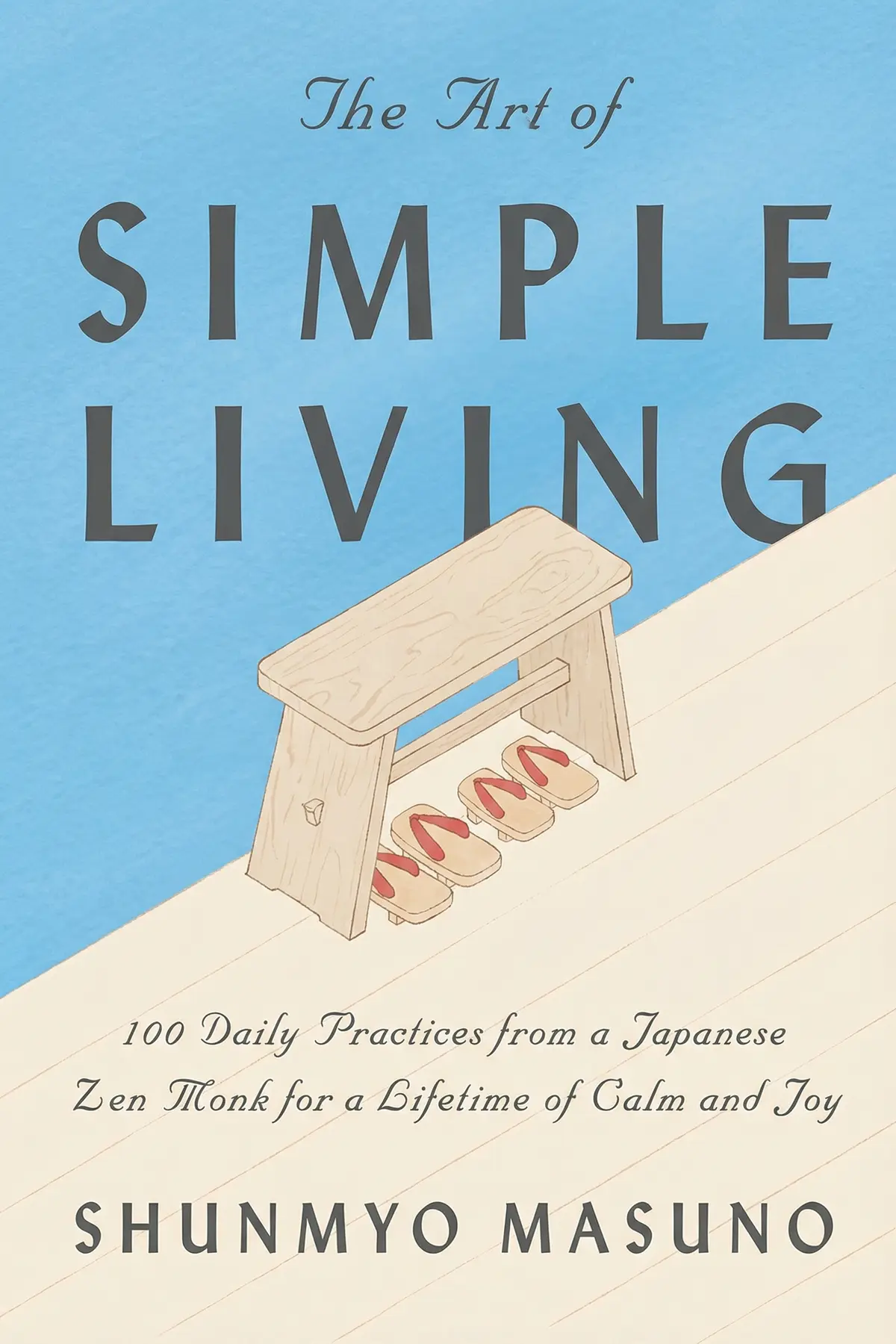
Table of Content
1. Introduction
1 min 21 sec
We live in an era that worships the concept of ‘more.’ We are constantly pushed to achieve more, buy more, and be more productive than ever before. This relentless drive creates a background noise of anxiety, a feeling that no matter how much we do, we are always falling slightly behind. But what if the secret to a fulfilling life isn’t about adding things at all? What if happiness is actually found in the art of subtraction?
In this exploration of ancient wisdom applied to modern chaos, we are going to look at how the principles of Zen Buddhism can transform a hectic existence into one of profound calm. These aren’t abstract theories meant for monks on a mountain top; they are practical, everyday habits that anyone can adopt. Whether it’s how you arrange your shoes at the door or how you view a difficult colleague, every moment of your day offers an opportunity to practice simplicity.
The throughline here is the radical idea that our external environment and our internal state are mirrors of one another. When we simplify our surroundings, we settle our minds. When we slow down our movements, we quiet our thoughts. By the end of this journey, you’ll see how a few intentional shifts in your morning routine, your diet, and your perspective can open up a vast space of peace in your heart. Let’s begin by looking at how we can navigate the most complex part of our lives: our relationships with other people.
2. Cultivating Harmony in Relationships
2 min 49 sec
How can we find peace with difficult people? Learn how a Zen gardener’s perspective on trees can help you appreciate the unique beauty in every person you meet.
3. The Freedom of Having Enough
2 min 18 sec
In a world of constant consumption, discover the Buddhist antidote to greed and how embracing the concept of ‘enough’ can lead to true contentment.
4. Vitality Through Mindful Movement and Diet
2 min 13 sec
Small physical changes, like going barefoot or shifting your diet, can have a profound impact on your mental energy and clarity.
5. The Power of a Zen Morning
2 min 16 sec
Discover why waking up just fifteen minutes earlier and a simple cleaning ritual can eliminate the feeling of ‘busyness’ from your life.
6. Finding Your Essence Through Art
2 min 10 sec
Art isn’t just for museums. Learn how simple calligraphy and the use of monochrome ink can help you explore your imagination and true character.
7. Living in Sync with Nature’s Flux
2 min 05 sec
Nature is never stuck in a rut. Learn how integrating the cycles of the natural world into your daily life can help you release the past.
8. The Urgency of the Present Moment
2 min 15 sec
Life is a finite gift. Through the parable of the plum tree, discover why we must prepare for our opportunities before they arrive.
9. Finding Zen in the Ordinary
2 min 23 sec
Peace isn’t found in a distant temple; it’s found in how you treat your dinner and your surroundings right now.
10. Conclusion
1 min 37 sec
In the end, the path to a life of calm and joy is paved with the small choices we make every single day. We’ve explored how shifting our focus from ‘more’ to ‘enough’ can heal our relationship with our possessions and ourselves. We’ve seen how physical habits—like morning cleaning, barefoot walking, and mindful eating—can ground us in the reality of the present moment. And we’ve learned from the Zen gardener that every individual and every moment is unique and worthy of our full attention.
The throughline of this entire practice is the rejection of the myth of ‘busyness.’ When we stop saying we are too busy, we stop losing our hearts to the chaos. We start to reclaim our time as a precious gift, recognizing that our days are finite and our opportunities for growth are now. The Art of Simple Living is not a destination you reach; it is a way of walking through the world with grace, intention, and a quiet spirit.
As you move back into your daily routine, try to take one small piece of this wisdom with you. Perhaps tomorrow morning, you will wake up fifteen minutes early to sit in the silence of the dawn. Or perhaps tonight, you will turn off the television and eat your dinner with your whole heart, savoring every flavor and every breath. These small acts are the seeds of a transformation that can lead to a lifetime of peace. Remember, the world is as simple or as complicated as you choose to make it. Choose simplicity, and you will find your joy.
About this book
What is this book about?
Modern life often feels like an endless race, leaving us drained and disconnected. The Art of Simple Living provides an alternative path, rooted in centuries of Zen tradition. Written by a practicing monk and garden designer, the book explains how the physical world—our homes, our movements, and our schedules—directly impacts our spiritual well-being. The promise of this guide is not found in complex philosophy, but in small, actionable changes. By adjusting how we wake up, how we interact with others, and how we view our possessions, we can reclaim our inner tranquility. It is a roadmap for anyone looking to declutter their mind and find profound happiness in the present moment.
Book Information
About the Author
Shunmyo Masuno
Shunmyo Masuno is a Japanese Zen monk and a celebrated garden designer. Not only is Masuno the head priest of the Zen Buddhist temple Kenko-ji, he is also a professor of Environmental Design at Tokyo’s Tama Art University.
Ratings & Reviews
Ratings at a glance
What people think
Listeners find this work both accessible and full of insight, as one listener notes it acts as an ideal partner for everyday meditation. They value the book’s straightforward nature, with one individual observing that it assists in decelerating daily routines, and another pointing out the set of 100 meaningful daily practices. The pacing of the book is well-received; one listener describes the way it removes mental clutter, while another mentions that reading just a single page each day has the power to transform a life.
Top reviews
Wipada
Picked this up during a particularly chaotic month at work. It turned out to be the exact mental reset I needed. Masuno, a Zen priest, offers 100 bite-sized lessons that emphasize the beauty of mundane tasks like cleaning or breathing with intention. Some might find the advice too basic, but frankly, that is the entire point. I loved the section on Zen gardens and how the author’s background as a designer shines through. It’s not just a book; it’s a manual for decluttering your brain. The illustrations are a beautiful touch that makes the physical copy feel special. Truly, reading a page a day could change your perspective on what is truly necessary.
Show moreParichat
Masuno’s background as an environmental design professor really informs the structure of these lessons. He treats the soul like a Zen garden, requiring constant, gentle maintenance. This isn't just a self-help book; it's a light introduction to Zen history, covering things like the use of koans and the significance of black ink in traditional paintings. Each of the 100 chapters is short—usually only a page or two—making it the perfect companion for daily meditation. Personally, I found the advice on cultivating a right attitude toward nature to be deeply moving. It’s rare to find a book that feels both practical and profoundly spiritual without being preachy. Truly a gem for my permanent collection.
Show moreDavid
After hearing so much about this book, I finally see why it’s a bestseller. It’s remarkably easy to read, yet the wisdom within is profound if you actually take the time to apply it. Masuno helps you slow down your daily processes, turning mundane tasks like washing dishes into a form of meditation. The 100 practices are organized perfectly into four parts that flow together beautifully. Not gonna lie, I was skeptical about how much a book on 'simple living' could offer, but it truly helps clear the mind clutter. The illustrations throughout the chapters add a layer of calm that complements the text perfectly. It has quickly become one of my favorite companions for my morning routine.
Show moreThanit
Ever wonder why we hold onto worries that haven't even happened yet? This book addresses that head-on with a wonderful retelling of the Bodhidharma and Huike story regarding the intangibility of anxiety. Masuno’s tone is incredibly calm, though a few chapters felt a bit specific to Japanese cultural norms which might not translate perfectly for everyone. To be fair, most of the 100 practices are universally applicable and encourage a slower pace of life. I particularly enjoyed the insights into why Zen paintings use only black ink. It's a quick read but one you'll want to revisit. My only real gripe is that some advice feels repetitive after the first fifty pages.
Show moreAnawin
Finally got around to finishing this, and I feel noticeably lighter. Masuno has a way of stripping away the noise of modern life until only the essentials remain. The way he describes the act of 'not-thinking' meditation was much easier to grasp than other manuals I've tried. Truth is, our lives are filled with so much digital clutter that these 100 practices act like a cooling breeze. I did find the repetition of certain themes a bit tiresome toward the end of the four parts. Still, the overall sentiment is beautiful and the illustrations are gorgeous. It's a solid read for anyone needing to hit the pause button.
Show moreOlivia
As someone who struggles with a million tabs open in my brain, this was a relief. Masuno doesn't ask for much, just small shifts in how we eat, move, and think. I loved the suggestion of taking a moment to appreciate nature every single day. The book is divided into four distinct parts, and while some of the advice on owning less felt familiar, the Zen perspective added a fresh layer. Gotta say, the chapter on 'not-thinking' was a bit of a paradox, but that’s the nature of Zen, right? It’s an easy, insightful read that manages to clear a lot of the mental clutter we carry around.
Show moreGun
The chapter on the intangibility of anxiety really hit home for me. Realizing that our fears are often just inventions of the mind is a simple concept, yet so hard to practice. This book gives you 100 ways to try. To be fair, some of the lessons clearly target a Japanese audience—like specific ways to arrange a home—but the core message remains universal. The author's voice is gentle, like a teacher guiding you through a garden. I appreciated the brevity of each section, though it did make the book feel a bit fragmented at times. It’s definitely a title I’ll keep on my nightstand to read a page of every morning.
Show moreChamnong
The title doesn't lie, but maybe it's a bit too simple for some readers. Look, I appreciate the Zen philosophy and the author's credentials as a priest and garden designer. However, many of the 100 tips felt like common sense repackaged with a spiritual bow. Do I really need a book to tell me that cleaning my room will make me feel better? On the other hand, the pacing is excellent for those with short attention spans. The short chapters make it a decent companion for morning coffee. It’s a nice enough collection, though it lacks the depth I was hoping for after reading more rigorous Buddhist texts.
Show moreLaor
Wow, this was much more minimalist than I even anticipated. The book is structured into 100 very short lessons, which is great for busy people but left me wanting more depth. The truth is, I read the whole thing in about ninety minutes. While the insights on breathing and minimalism are solid, they don't exactly break new ground in the world of mindfulness. I did enjoy the sections on Zen paintings and the history of Bodhidharma, but those felt like brief glimpses into a much bigger world. It’s a decent introductory text, but seasoned readers of Buddhist philosophy might find it a bit repetitive and overly simplistic for their needs.
Show moreOrawan
Not what I expected from a Zen master. I struggled with the tone here, particularly the anecdote about a monk living 'happily' with terminal cancer. To be blunt, that brand of extreme detachment feels less like peace and more like a lack of reality. The advice on cleaning and breathing is fine, but it’s stuff you can find on any lifestyle blog for free. The 100 lessons are so short that they never dive deep into the 'why' behind the practices. If you want a decorative book for your coffee table, this is great because the illustrations are pretty. But if you want actual substance, you might want to look elsewhere.
Show moreFeatured in
Readers also enjoyed
A New Earth: Awakening to Your Life’s Purpose
Eckhart Tolle
59 Seconds: Change Your Life in Under a Minute
Richard Wiseman
Aflame: Learning from Silence
Pico Iyer
AUDIO SUMMARY AVAILABLE
Listen to The Art of Simple Living in 15 minutes
Get the key ideas from The Art of Simple Living by Shunmyo Masuno, plus 5,000+ more titles in English and Thai.
- 5,000+ titles
- Listen as much as you want
- 7-day free trial
- Cancel anytime







