
23 min 26 sec
The Art of Statistics: How to Learn from Data
The Art of Statistics offers a clear-eyed guide to navigating the modern world of data. It reveals how statistics are constructed, where they falter, and how to spot hidden agendas in everyday numbers.
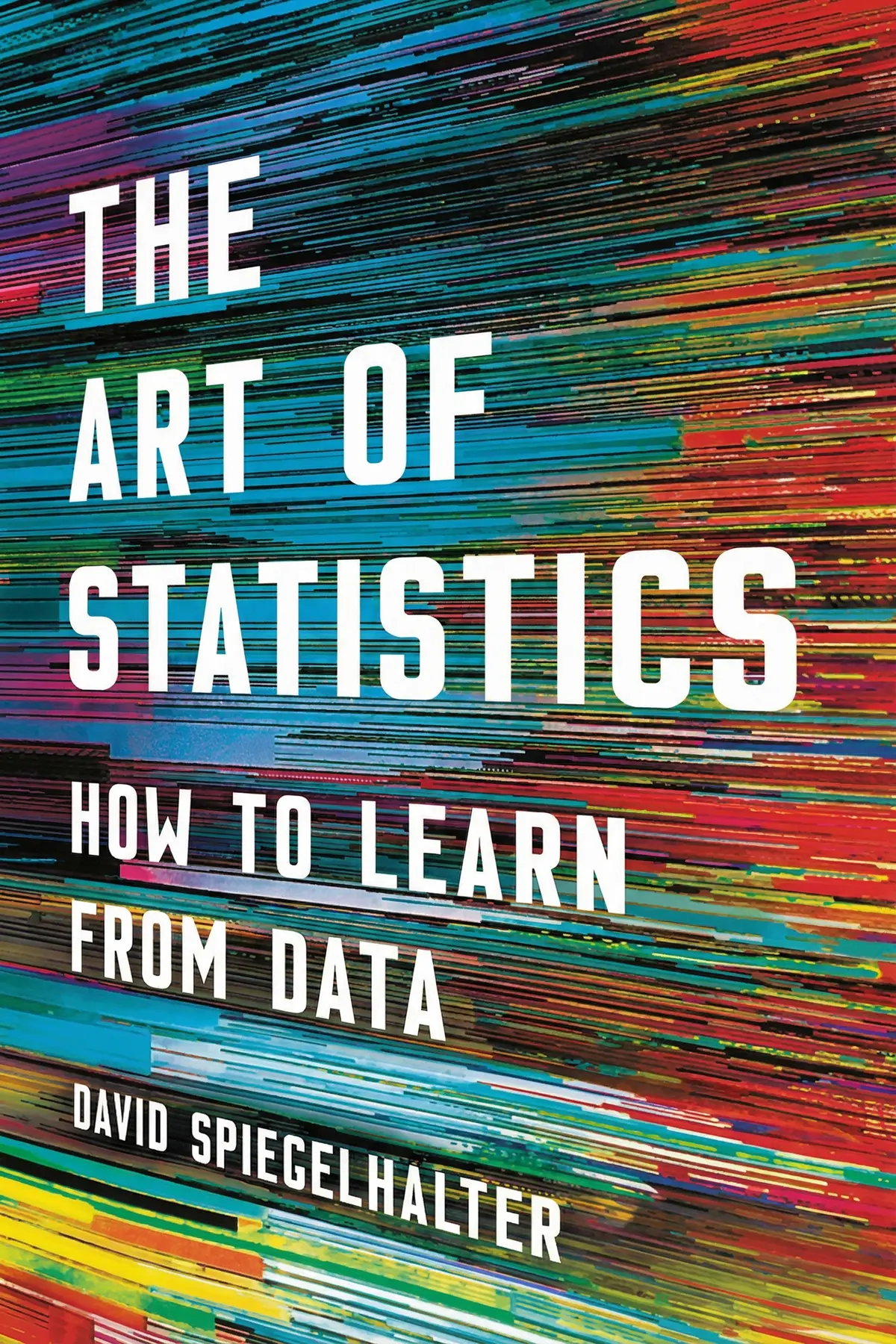
Table of Content
1. Introduction
1 min 53 sec
In our modern world, data is everywhere. We are constantly bombarded with percentages, graphs, and statistical claims that are presented as hard, objective evidence. Whether it is a political campaign trying to sway your vote, an advertiser wanting your money, or a news outlet seeking more clicks, numbers are the tools of persuasion. We often assume that because statistics are rooted in mathematics, they must be neutral. But as you will soon discover, statistics is not just a branch of math—it is an art. It is the art of extracting meaning from the messy, complex reality of life, and like any art, it is subject to human choice, interpretation, and error.
With the rise of user-friendly software and the explosion of digital information, it has never been easier to generate a chart or calculate a mean. Yet, this ease of access has created a paradox: while we have more data than ever, our collective data literacy hasn’t necessarily kept pace. Many of the people sharing these figures aren’t trained in statistical methods, and even those who are may fall into traps of bias or selective reporting. This isn’t just an academic problem; it’s a practical one. Understanding statistics is about understanding the world. It’s about knowing how to tell if a new medical study is actually a breakthrough or just a statistical fluke.
In this summary, we are going to explore the lifecycle of data and the many ways it can be distorted before it reaches your eyes. We will look at how human judgment enters the process at the very beginning and how the media can turn a minor finding into a terrifying headline. You’ll learn how to distinguish between correlation and causation, why the “average” person doesn’t always exist, and how a dead salmon once provided a masterclass in why we should be skeptical of scientific results. By the end of this journey, you’ll have a new lens through which to view the world—one that values critical thinking over blind acceptance of the numbers.
2. The Lifecycle of Investigation
2 min 37 sec
Explore the structured process statisticians use to solve real-world mysteries, from identifying a problem to reaching a lifesaving conclusion.
3. The Subjectivity of Data
2 min 33 sec
Discover why data is never truly objective and how the way we define and collect information can radically change the results.
4. The Influence of Design
2 min 25 sec
Learn how the visual presentation of statistics can be used to either clarify the truth or manipulate your emotions.
5. The Flaws in Research
2 min 33 sec
Uncover why many published scientific findings are actually false, and how the pressure to succeed can lead to accidental distortions.
6. Media and the Risk Narrative
2 min 14 sec
Explore the ways journalists translate data into stories, and why you should be wary of headlines about your health and safety.
7. The Trap of the Average
2 min 27 sec
Unmask the three types of averages and learn why the ‘mean’ can sometimes lead to absurd and nonsensical conclusions.
8. Correlation and Hidden Links
2 min 23 sec
Understand the vital difference between things that happen together and things that cause each other, avoiding common logic traps.
9. The Logic of Chance
2 min 28 sec
Grasp why probability is so counterintuitive and how the chaos of individual random events leads to a surprising global order.
10. Conclusion
1 min 53 sec
As we have seen, the art of statistics is a journey from curiosity to clarity, but it is a path filled with potential pitfalls. We’ve explored how the lifecycle of an investigation starts with a problem and ends with a conclusion, but also how human judgment can color every step in between. We’ve learned that data is not an objective mirror of reality, but a selective one, shaped by definitions, survey wording, and the way it is presented to us. From the “dead salmon” that warned us about the dangers of multiple testing to the bacon headlines that obscured the reality of absolute risk, it’s clear that numbers can be used to tell almost any story if you’re creative enough.
The most important takeaway is that statistics should be treated with a healthy dose of skepticism. This doesn’t mean you should ignore data or assume that everything is a lie. Instead, you should view statistical claims the same way you view a story told by a friend: it might be based on truth, and it might be very entertaining, but there’s likely an agenda or a perspective behind it. Always look for the source. Ask yourself how the data was collected, how it was framed, and whether a correlation is being mistaken for a cause.
Improving your data literacy is one of the most valuable skills you can develop in the twenty-first century. It allows you to see through the hype of advertisements, the bias of political campaigns, and the sensationalism of the news. By understanding the difference between a mean and a median, or a relative risk and an absolute one, you gain a superpower: the ability to see the world as it truly is, rather than how someone else wants you to see it. Statistics, when used with integrity and understood with care, is our best tool for making sense of the complex, beautiful, and often unpredictable world we live in. So, the next time you see a shocking headline or a persuasive chart, don’t just accept it. Stop, think, and look for the art behind the numbers.
About this book
What is this book about?
In an era saturated with data, numbers are often treated as absolute truths. However, The Art of Statistics pulls back the curtain on this mathematical field, showing that data literacy is less about complex formulas and more about critical thinking. The book explores the entire lifecycle of data—from the initial question to the final headline—highlighting how human judgment, bias, and creative presentation can shape the stories that numbers tell. Listeners will learn why scientific studies often fail to replicate, how the media exaggerates risks to grab attention, and why common concepts like the average can be so misleading. Through real-world examples ranging from catching serial killers to interpreting health risks, the book promises to equip you with the tools to see through the fog of statistics and understand the reality behind the digits.
Book Information
About the Author
David Spiegelhalter
David Spiegelhalter is a renowned British statistician and communicator. He holds the position of Winton Professor for the Public Understanding of Risk in the Statistical Laboratory at the University of Cambridge. Recognized as one of the most influential researchers in his field, he also served as the president of the Royal Statistical Society for 2017 and 2018.
Ratings & Reviews
Ratings at a glance
What people think
Listeners find this book valuable for deepening their knowledge of statistical methods, featuring transparent descriptions of a diverse array of topics. The prose is commended, and one listener observes that it is obviously tailored for a general readership. They enjoy the book's visual elements, with one individual noting that it provides good diagrams.
Top reviews
Nam
Ever wonder how a serial killer like Harold Shipman managed to evade detection for so long? Spiegelhalter uses this chilling case to show how data—if properly monitored—could have saved hundreds of lives. The book is a masterclass in statistical reasoning for the layperson, avoiding the typical swamp of complex formulas. I particularly loved the visualisations; they turn abstract concepts into something you can actually see and grasp. While some chapters on probability get a bit dense, the narrative remains engaging throughout. It’s rare to find a professor who can communicate this effectively without condescension. This isn't just a textbook; it’s a guide to thinking more clearly about the world around us. A must-read for anyone who feels intimidated by numbers.
Show morePrayoon
The Art of Statistics makes a potentially dry subject feel incredibly alive and urgent. Spiegelhalter doesn’t just teach you math; he teaches you how to spot when you're being lied to by the media. I found the section on the 'Prosecutor’s Fallacy' absolutely fascinating and it completely changed how I look at court cases. The graphics are decent and actually help illustrate the points rather than just being filler. Frankly, I think this should be required reading in schools given how much data we consume daily. Even the more complex parts, like supervised learning, are handled with a gentle touch. It feels like a conversation with a very smart, very patient friend.
Show moreCharlotte
Spiegelhalter has a real gift for taking obscure academic theories and rooting them in things people actually care about. From the survival rates of the Titanic to the likelihood of finding Richard III in a parking lot, the examples are top-notch. I appreciated that he didn't shy away from the ethics of data science, especially the discussion on the replication crisis. The book is beautifully packaged and the tone is incredibly welcoming. It’s refreshing to see a statistician admit when things are complicated or when a simple answer doesn't exist. This isn't just about numbers; it's about the stories we tell with them. Highly recommended for the curious mind.
Show moreKomsan
Wow, a statistics book that actually prioritizes intuition over memorizing grueling formulas. The way Spiegelhalter dismantles sensationalist headlines about health risks is both brilliant and necessary. He shows us how a simple change in framing can turn a reassuring stat into a terrifying one. I’ve been recommending this to everyone in my office because it helps clarify how to present data ethically. The sections on probability theory were particularly eye-opening for me. Even though I’m fairly comfortable with numbers, I still learned plenty of new ways to think about risk. It’s a masterfully written piece of science communication that deserves all the praise it gets.
Show moreAhmed
Gotta say, this is probably the most readable book on statistics I’ve ever encountered. The author’s passion for the subject shines through on every page, especially when discussing how stats can improve public policy. I loved the quirky questions, like why old men have big ears, which serve as perfect entry points into more serious discussions about correlation and causation. The graphs are clear and help bridge the gap where the math is omitted. It’s a very human look at a field often dismissed as cold or robotic. If you’ve ever felt like statistics were a foreign language, Spiegelhalter is the perfect translator. It’s a brilliant achievement in science writing.
Show moreMarco
Finally got around to reading this after seeing Spiegelhalter’s lecture online. He writes with a clarity that is quite rare in the field of mathematics. The chapter on Bayesian statistics was the highlight for me, as it’s usually presented in such a confusing way elsewhere. Truth is, I did feel a bit of 'intellectual whiplash' at times when the text jumped from casual anecdotes to very dense sections. One minute you're learning why old men have big ears, and the next you're navigating the replication crisis. However, the inclusion of a technical glossary at the end allows the main text to flow much better. It’s a solid 4 stars for being both informative and genuinely entertaining.
Show moreDivya
As someone who struggled through college stats, I found this refreshing yet occasionally challenging. The author avoids the 'gotcha' problems found in most textbooks and focuses instead on real-world applications. Personally, I found the chapter on regression models particularly useful for my own work. My only gripe is that it sometimes tries to be all things to all people, which results in some shallow sections. For instance, the definition of supervised learning felt a bit off and lacked the depth needed for a proper understanding. Still, the overall message about statistical literacy is vital. It’s a great companion to more technical books if you need the 'why' behind the 'how'.
Show moreKatya
Look, we live in a world drowning in data, and this book acts as a much-needed life jacket. Spiegelhalter explains complex ideas like p-values and confidence intervals without making my head spin too much. I loved the breakdown of Simpson’s Paradox; it’s one of those 'aha!' moments that stays with you. The writing style is conversational, though some sections definitely require a pen and paper to fully digest. It’s not exactly a beach read, but it’s far more accessible than your average university tome. I wish there were more examples related to digital analytics, but that’s a minor personal preference. It's an insightful look at a misunderstood field.
Show moreAroon
The physical dimensions of this book are surprisingly small, but the content varies wildly in difficulty. One moment you're reading a light anecdote about coin flips, and the next you're plunged into the depths of Bayesian inference. I found myself frequently losing the thread because the structure felt a bit haphazard. While the examples—like the Harold Shipman case—are genuinely interesting, the transition between topics can be jarring. I also felt the author sometimes gave up on explaining the harder bits, essentially telling the reader to just move on. It’s an okay introduction, but I think it needed to be longer to really do these topics justice. Not bad, just inconsistent.
Show moreSarocha
To be fair, I expected a much more structured approach to statistical techniques. Instead, the book feels scattered, hopping from data science to machine learning with no apparent logical flow. The author tends to hand-wave the actual mechanics of the math by saying 'software handles it,' which left me feeling like I didn't actually learn how things work. If you want a deep dive into the nitty-gritty, you won't find it here. The physical book is also tiny, making it feel like it's trying to be a 'pop science' hit rather than a comprehensive guide. I found Charles Wheelan’s Naked Statistics much more intuitive and better organized for a beginner. Quite disappointing.
Show moreReaders also enjoyed

Alien Earths: The New Science of Planet Hunting in the Cosmos
Lisa Kaltenegger

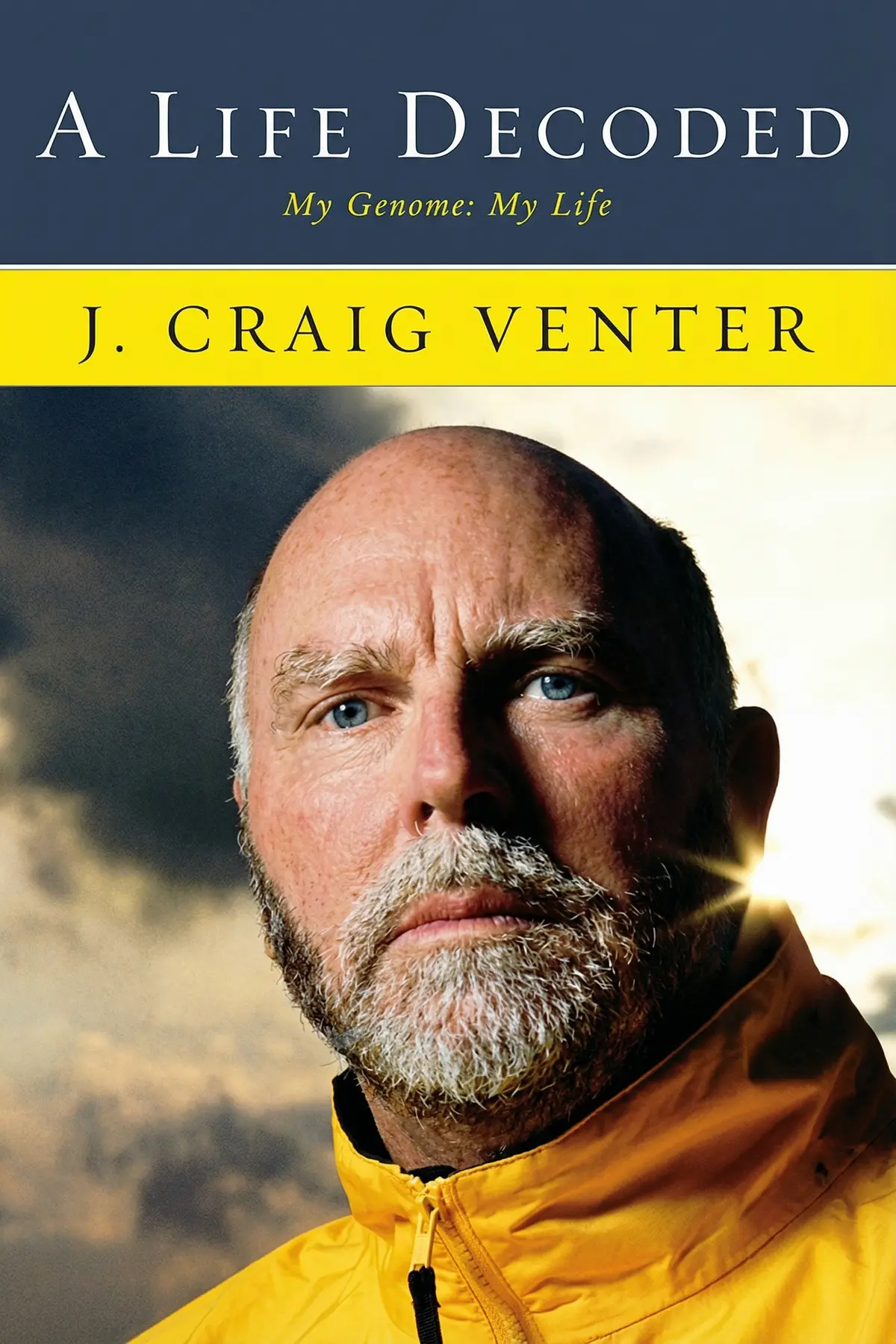
A Life Decoded: My Genome: My Life
J. Craig Venter
A Planet of Viruses
Carl Zimmer
A Short History of Nearly Everything
Bill Bryson
AUDIO SUMMARY AVAILABLE
Listen to The Art of Statistics in 15 minutes
Get the key ideas from The Art of Statistics by David Spiegelhalter, plus 5,000+ more titles in English and Thai.
- 5,000+ titles
- Listen as much as you want
- 7-day free trial
- Cancel anytime







