
17 min 49 sec
The Big Leap: Conquer Your Hidden Fear and Take Life to the Next Level
The Big Leap explores the internal barriers that prevent us from reaching our full potential. It introduces the concept of the Upper Limit Problem and provides tools to operate in your Zone of Genius.
Table of Content
1. Introduction
1 min 37 sec
Have you ever felt like there is an invisible ceiling pressing down on your life? You might be experiencing a streak of incredible luck or hard-earned success, and then, almost out of nowhere, you find yourself picking a fight with a loved one, getting sick, or worrying about a problem that doesn’t actually exist. It feels like the universe is balancing the scales, but the truth is far more internal. We are often our own most effective obstacles.
The Big Leap is an exploration of the psychological mechanisms that keep us tethered to a certain level of success and happiness. It’s based on the idea that each of us has an internal setting—a thermostat of sorts—that dictates how much goodness we can handle. When we surpass that setting, we get uncomfortable. We feel like we’ve gone too far or achieved too much, and we subconsciously act out to bring ourselves back down to a level that feels safe and familiar. This is what is known as the Upper Limit Problem.
Throughout this discussion, we are going to look at why we resist the very things we claim to want. We will delve into the specific behaviors we use to sabotage our progress and, more importantly, how we can stop. We’ll look at the transition from doing what we are merely good at to doing what we were born to do. This isn’t just about professional achievement; it’s about a total shift in how you perceive time, relationships, and your own capacity for joy. By the end, the goal is to show you how to take that definitive leap into a life where you no longer hold yourself back, allowing you to reside permanently in what is called the Zone of Genius. It is a journey from being a victim of your own success to being a master of your own potential.
2. The Upper Limit Problem
2 min 12 sec
Discover why we unconsciously sabotage ourselves when things are going well and how our internal thermostat limits our capacity for joy.
3. Fear as Breathless Excitement
2 min 29 sec
Learn a simple physiological technique to transform paralyzing anxiety into the high-octane energy needed for your next breakthrough.
4. The Four Zones of Activity
2 min 34 sec
Analyze your daily tasks to identify the ‘Excellence Trap’ and find your way to the Zone of Genius where you thrive most.
5. The Power of the Success Mantra
2 min 24 sec
Unlock a mental programming tool and the ‘Enlightened No’ to protect your focus and invite abundance into your life.
6. Mastering Time and Responsibility
2 min 27 sec
Shift from being a victim of your schedule to being the creator of your time by adopting ‘Einstein Time’ principles.
7. Relationships and Radical Responsibility
2 min 25 sec
Stop the cycle of blame and projection in your personal life to create a supportive foundation for your professional success.
8. Conclusion
1 min 41 sec
As we come to the end of this journey, the throughline is clear: your potential is not limited by external circumstances, but by your own internal thermostat. The Upper Limit Problem is a natural, human response to growth, but it is not a permanent state. By learning to recognize the signs of self-sabotage—the needless worrying, the petty arguments, the sudden illnesses—you can begin to move past them.
Taking the big leap means having the courage to leave the comfortable safety of your Zone of Excellence. It means trusting that your unique talents, your Zone of Genius, are where you are meant to be. This path requires you to change how you breathe through fear, how you speak to yourself through mantras, and how you perceive the very nature of time itself. It asks you to stop being a victim of your schedule and start being the creator of your reality.
Furthermore, this leap isn’t one you have to take at the expense of your loved ones. By taking radical responsibility for your own happiness and refusing to project your fears onto others, you can build relationships that empower rather than hinder.
The actionable takeaway here is to start small but be consistent. Monitor your ‘complaint diet’ and notice the moments you feel the urge to pull back just as things are getting good. When that happens, take a deep breath, repeat your success mantra, and consciously choose to expand. You are the only person who can raise your upper limit. The ceiling you feel above you isn’t made of stone; it’s made of habits and old stories. It’s time to break through, step into your genius, and see just how far you can go when you finally stop standing in your own way.
About this book
What is this book about?
Have you ever wondered why, just as things are going well in your life or career, something suddenly goes wrong? The Big Leap suggests this isn't a coincidence but a form of self-sabotage known as the Upper Limit Problem. We each have an internal thermostat for how much success and joy we believe we deserve, and when we exceed that level, we unconsciously pull ourselves back down. This book provides a roadmap for identifying these self-imposed ceilings and breaking through them. It guides you away from the trap of mere excellence and toward your Zone of Genius—that unique space where your greatest talents and passions intersect. By mastering your internal narrative, taking responsibility for your time, and using specific techniques to manage fear, you can achieve a state of continuous growth and fulfillment. The promise of this work is a life lived without the brakes on, where success and happiness are no longer feared but embraced as your natural state.
Book Information
About the Author
Gay Hendricks
Gay Hendricks is a psychologist who has long specialized in couple’s therapy and promoting the use of conscious breathing as a tool to save relationships. He’s also the best-selling author of many self-help books, including Five Wishes and Conscious Living.
Ratings & Reviews
Ratings at a glance
What people think
Listeners find this work absorbing and fast-paced, offering useful strategies for leading a more satisfying life. They value its deep perspectives, especially regarding the discovery of underlying beliefs, and its reflective method that inspires a new outlook on every minute of one’s day. Listeners commend the outstanding principles and creative concepts, with one listener mentioning its ability to help dismantle generational barriers.
Top reviews
Eye
Wow, this was exactly what I needed to hear right now. The concept of the 'Upper Limit Problem' hit me like a ton of bricks because I've spent years sabotaging my own success whenever things started going too well. Frankly, I didn't realize how much I was holding myself back based on old, hidden beliefs from my childhood. Hendricks explains that we have an internal thermostat for how much happiness we can handle, and once we hit that limit, we manufacture drama to bring ourselves back down. It’s a quick read but the insights into the 'Zone of Genius' are genuinely transformative if you're willing to do the work. I’ve already started using the mantra to expand my capacity for abundance. While some parts felt a bit like a corporate pitch, the core message about being allowed to thrive is powerful.
Show moreGoy
Picked this up on a whim after a friend mentioned 'upper limiting' and it’s changed my entire outlook on work. It’s a very fast, engaging read that cuts straight to why we stop ourselves from reaching our full potential. I loved the section on identifying the four different zones of activity. I realized I was spending way too much time in my 'Zone of Incompetence' just because I felt obligated to do everything myself. Personally, the most impactful part was the realization that I don't have to limit my success just because my parents didn't have the same opportunities. It’s a thought-provoking guide to breaking through those internal ceilings and moving toward a life of genuine satisfaction.
Show moreMats
I wasn't expecting a business book to make me confront the 'ghosts' of my family's financial history. Hendricks talks about how we carry generational blocks—this idea that we shouldn't 'shine too bright' because it might make others feel bad. Growing up in a culture where people were suspicious of success, I found this deeply emotional and relevant. I am finally giving myself permission to thrive without guilt. The mantra 'I expand in abundance, success, and love every day' might sound cheesy to some, but it’s been a helpful tool for reframing my mindset. Some of the anecdotes about famous friends were a bit much, but the psychological breakthroughs I had while reading made it a 5-star experience for me. It’s about more than career growth; it’s about wholeness and integrity.
Show moreAroon
This is a book I’ll be keeping an e-copy of to dip back into whenever I feel myself contracting. The 'Upper Limit Problem' is the most accurate description of the success/crash cycle I have ever encountered. Hendricks’ writing is engaging and the book moves at a brisk pace, making it perfect for a weekend read. I particularly appreciated the focus on 'microscopic truth' in relationships and how that ties into our overall capacity for success. Not gonna lie, I cringed at a few of the sports metaphors, but the central thesis is so strong that I can overlook the occasional hokey terminology. It’s about taking ownership of your time and your potential. This book helps you identify those invisible barriers that you didn’t even know you were building. Truly a gift for anyone looking to level up.
Show moreOm
The core philosophy here is brilliant, even if the delivery feels a bit dated at times. Hendricks has a very specific 'California life coach' tone that can be a bit grating for those of us who prefer data and hard science over spiritual anecdotes. To be fair, he doesn't include many studies or statistics, which might turn off more academic readers. However, once you look past the prosperity-gospel-adjacent language, the distinction between the Zone of Excellence and the Zone of Genius is incredibly helpful for anyone feeling stuck in a career they are good at but don't love. It’s about more than just money; it’s about aligning your daily activities with your unique talents. It’s an engaging read that forces you to rethink every moment of your day-to-day life. I’d recommend it with the caveat to take what works and leave the rest.
Show moreEli
As someone who has struggled with hitting a glass ceiling in my own business, Hendricks' insights into self-sabotage were a revelation. He identifies how we use worry, criticism, and even physical illness as tools to stay within our comfort zones. The idea that we are actually afraid of our own greatness is a hard pill to swallow, but it rings true. I found the questions designed to help find your 'unique ability' very practical and easy to apply immediately. My only gripe is that the book feels a bit repetitive, and the definition of success feels heavily weighted toward wealth and power without much regard for social impact. Still, if you want to understand your own psychological barriers, this is a fantastic starting point. It definitely makes you look at your faults in a new, more curious way.
Show moreSurasit
Finally got around to finishing this, and while I had to filter out some of the 'life coach' jargon, the practical applications are undeniable. The book is at its best when it identifies the specific ways we 'upper limit' ourselves through deflection and bickering. I never realized that picking a fight with my partner after a big win was actually a way to dampen my own happiness. That insight alone was worth the read. Hendricks writes in a way that is quick and easy to digest, though the lack of data-driven evidence is a bit of a letdown. In my experience, the concepts of Newtonian time versus Einsteinian time are a bit too abstract, but the core message about living in your genius is vital. It’s a solid 4-star read for anyone looking to stop getting in their own way.
Show moreMind
Ever wonder why self-help books are always 200 pages when they could be 20? Hendricks has some truly innovative ideas here, particularly the 'Upper Limit Problem,' but they are buried under a mountain of celebrity name-dropping and stories about his own accomplishments. One minute you're learning about self-sabotage, and the next you're reading about how he helped a famous musician move from rock to jazz. Also, the chapter on 'Einstein Time' was completely useless to me—it felt way too vague and hokey to be applicable in a modern, fast-paced work environment. Truth is, there is about a chapter’s worth of gold here, and the rest is just filler. If you can skim through the fluff, you'll find some great prompts for identifying your unique abilities, but it requires some patience to get there.
Show moreAnchalee
Look, the ideas regarding the 'Zone of Genius' are worth the price of admission alone. Most people spend their lives in the 'Zone of Excellence,' doing things they are good at but that drain their energy. Learning to say an 'enlightened no' to those tasks is a game-changer. However, the book is incredibly heavy on the anecdotes. Whether it’s Bonnie Raitt or some high-powered CEO, the author seems very intent on showing us his impressive Rolodex. I also found the section on physical injuries being a form of self-sabotage to be a bit of a stretch. But if you can look past the name-dropping and some of the more 'woo-woo' elements, the actual strategies for breaking through your upper limit are excellent. It’s a very thought-provoking piece that I think most ambitious people would benefit from.
Show morePor
To be fair, I can see why people like this, but the tone was an absolute dealbreaker for me. The writing feels incredibly arrogant, with the author constantly talking himself up and using these bizarre, corporate-sounding metaphors like the 'Zone of Genius.' It reads like a transcript from a high-priced seminar for billionaires, which makes it feel hopelessly out of touch for normal people with actual family responsibilities. Hendricks makes these broad claims about how we 'choose' our illnesses to prevent success, which feels borderline dangerous and totally lacks any scientific backing. I pushed through it because of the hype, but I found the 'Einstein Time' concepts to be nothing more than pseudo-spiritual nonsense. There are better books out there on mindset that don't come with this much ego.
Show moreFeatured in
Readers also enjoyed
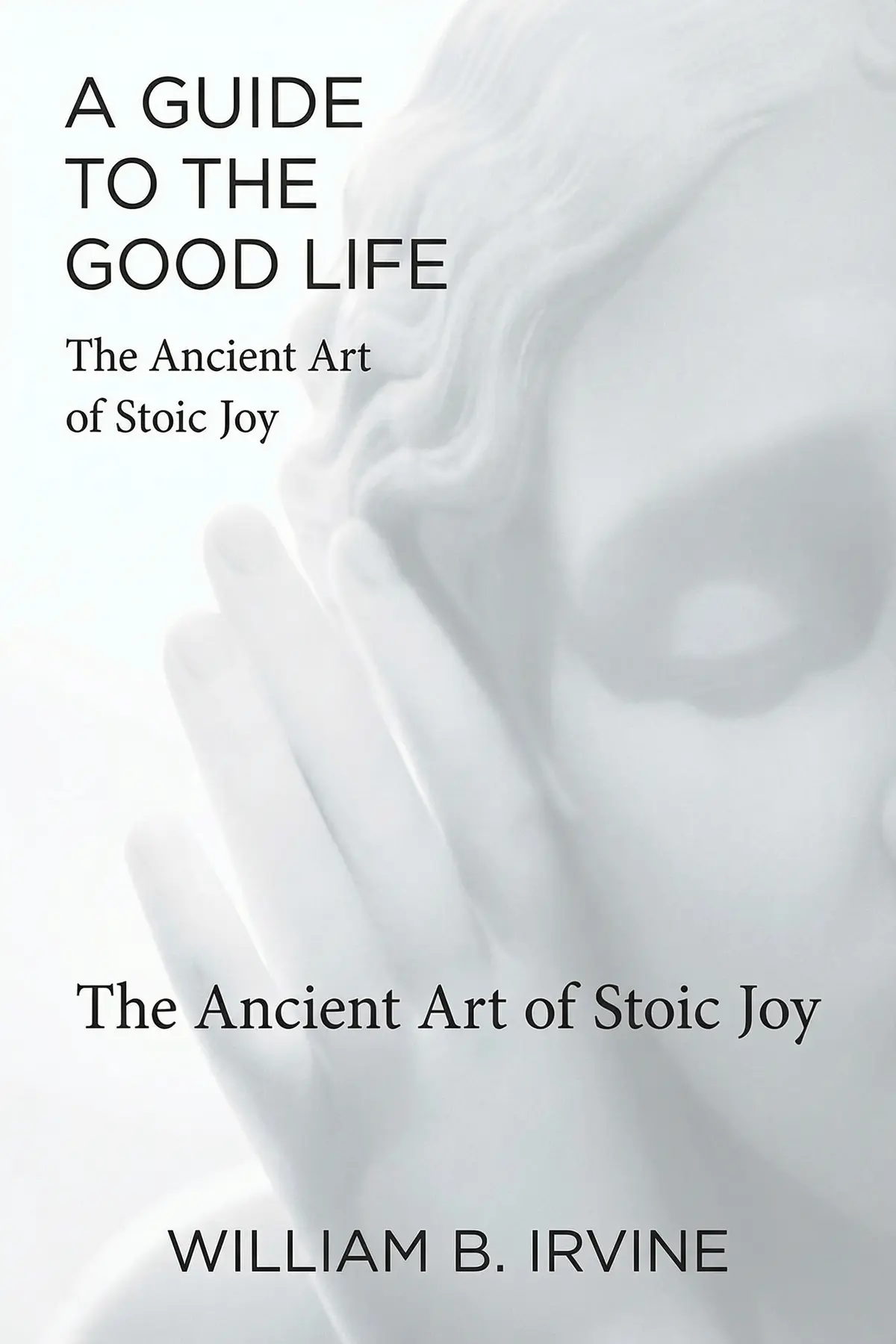
A Guide to the Good Life: The Ancient Art of Stoic Joy
William B. Irvine
A High-Performing Mind: Strengthen Your Mind and Live Your Best Life
Andrew D. Thompson
Abundance: The Inner Path to Wealth
Deepak Chopra

59 Seconds: Change Your Life in Under a Minute
Richard Wiseman
AUDIO SUMMARY AVAILABLE
Listen to The Big Leap in 15 minutes
Get the key ideas from The Big Leap by Gay Hendricks, plus 5,000+ more titles in English and Thai.
- 5,000+ titles
- Listen as much as you want
- 7-day free trial
- Cancel anytime







