

17 min 05 sec
The Brand Gap: How to Bridge the Distance Between Business Strategy and Design
Discover how to bridge the divide between business strategy and creative design. This guide explores the five essential disciplines required to build a charismatic brand that resonates deeply with modern customers.
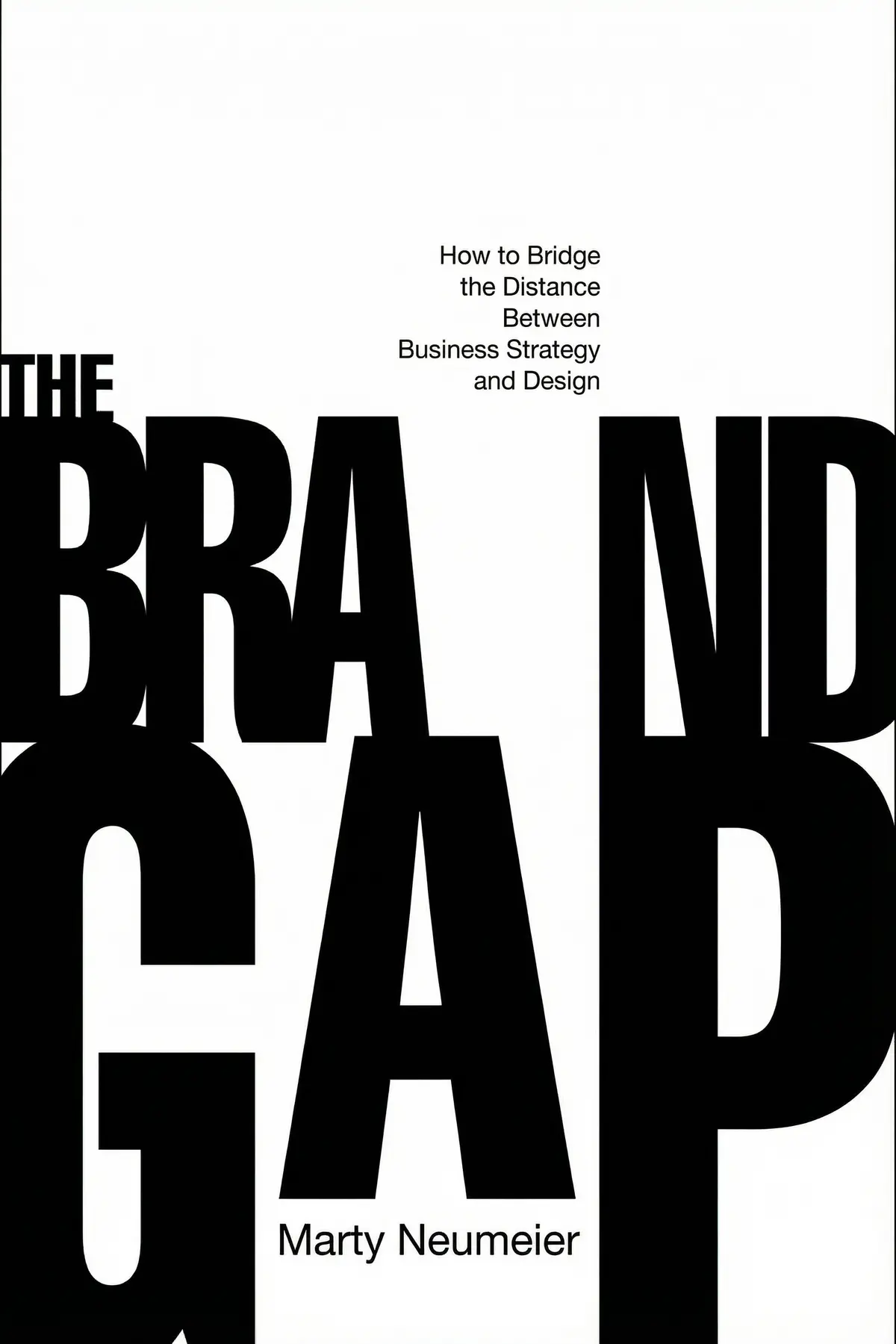
Table of Content
1. Introduction
2 min 03 sec
Imagine for a moment that you are walking down a busy city street. You are surrounded by thousands of messages, logos, and advertisements, all screaming for a second of your time. Most of them fade into the background, a gray blur of corporate noise. But then, you see a specific icon or hear a certain name, and you feel something—a sense of trust, a spark of excitement, or a feeling of belonging. That sensation is not an accident. It is the result of a meticulously bridged gap between business logic and creative magic.
In the world of commerce, there is often a massive disconnect. On one side, you have the strategists: the analytical, verbal, and logical minds who live in spreadsheets and quarterly reports. On the other side, you have the creatives: the intuitive, visual, and spatial thinkers who live in the world of aesthetics and emotion. When these two sides don’t talk to each other, the result is a brand gap. This gap is the distance between what a company thinks it is and what the customer actually experiences.
To build a truly great brand, you have to understand that a brand is not what you say it is; it’s what they say it is. It’s a gut feeling. You can’t control it directly, but you can influence it by mastering specific disciplines. We are going to walk through the five pillars of modern branding: differentiation, collaboration, innovation, validation, and cultivation. Through these, we will see how companies like Coca-Cola and Apple have turned their names into assets worth billions of dollars.
By the time we finish, you’ll see why having a focused identity is better than being everything to everyone, and how you can ensure your company isn’t just another face in the crowd, but a charismatic leader that people actually care about. Let’s dive into how we can close that gap once and for all.
2. Closing the Divide Between Logic and Emotion
2 min 33 sec
Discover why the clash between analytical strategists and intuitive creatives often dooms a brand and how to unify these forces for market success.
3. The Power of Differentiation and Focus
2 min 46 sec
Learn why the most successful brands stop trying to please everyone and instead focus on a single, powerful reason why they matter.
4. Building the Collaborative Superteam
2 min 38 sec
Discover the different ways companies manage their brands and why the future belongs to integrated, collaborative ‘superteams.’
5. The Art of the 'Zag' and Radical Innovation
2 min 41 sec
Uncover why safe ideas are dangerous and how the MAYA principle can help you introduce groundbreaking concepts without alienating your audience.
6. Validation and the Living Brand
2 min 33 sec
Learn how to use feedback loops to test your brand’s resonance and why a brand must evolve like a living person to remain authentic.
7. Conclusion
1 min 51 sec
We have traveled through the landscape of modern branding, moving from the realization that a brand is a ‘gut feeling’ to the practical steps required to build one. The journey to closing the brand gap is not a one-time fix; it is a continuous commitment to excellence across the five disciplines we’ve explored.
By focusing on differentiation, you ensure that you aren’t just another option, but the only option for your specific audience. Through collaboration, you tear down the walls between strategy and design, creating a unified ‘superteam’ that speaks with one voice. With innovation, you find the courage to ‘zag’ when the rest of the world ‘zigs,’ using the MAYA principle to lead your customers into the future. By validating your ideas, you replace guesswork with feedback, and by cultivating your brand, you treat it as a living, breathing entity that grows and adapts alongside your community.
The throughline of all these efforts is authenticity. When your internal culture matches your external promise, you create a charismatic brand that people don’t just buy, but join.
As you move forward, keep one practical piece of advice in mind: avoid ‘featuritis.’ In a world obsessed with adding more—more buttons, more pages, more options—the most successful brands are often the ones that subtract. Clarity is your greatest asset. Whether you are designing a website or a business model, ask yourself if each new addition strengthens your core message or just adds clutter. If it doesn’t help bridge the gap between your strategy and your customer’s heart, let it go. Build your brand with focus, and the world will respond with loyalty.
About this book
What is this book about?
Have you ever wondered why some companies seem to have a magnetic pull on their customers while others struggle to be noticed? The secret lies in bridging the gap between the logical world of business strategy and the intuitive world of design. In this exploration of brand building, you will learn that a brand is far more than a logo or a product; it is the collective gut feeling that people have about your business. This summary breaks down the five core disciplines—differentiation, collaboration, innovation, validation, and cultivation—that transform a standard company into a charismatic brand. You will discover how to focus your message, why a unified team is better than siloed departments, and how to test your ideas in the real world. By the end, you will understand how to create a brand that is not just a corporate identity, but a living, breathing entity that commands loyalty and value in a crowded marketplace.
Book Information
About the Author
Marty Neumeier
Marty Neumeier is a renowned expert in the field of branding and identity. Over his distinguished career, he has provided strategic guidance and creative insight to some of the world’s most iconic and successful corporations, including Apple, Netscape, and Eastman Kodak.
Ratings & Reviews
Ratings at a glance

What people think
Listeners find this book an essential read for anyone in the workforce, commending the outstanding framework it offers for connecting business strategy with design. The material is accessible through the use of straightforward examples, and listeners value the thorough introduction to branding fundamentals. Additionally, the visual components are described as revelatory, making the overall content both stimulating and reflective. On the other hand, the aesthetic presentation gets varied feedback; while some find the layout ingenious, others believe it isn't particularly well-designed.
Top reviews
Wanida
This book is a masterclass in distilling complex branding concepts into something that fits in your pocket but hits like a sledgehammer. Neumeier moves beyond the outdated idea that a brand is just a logo or a slick typeface, instead focusing on the 'gut feeling' a customer has about a product. The framework he provides—Differentiate, Collaborate, Innovate, Validate, and Cultivate—is incredibly helpful for anyone trying to bridge the gap between creative magic and cold, hard logic. I especially appreciated the section on the 'fear of stupid,' which reminds us that taking risks is the only way to build a truly charismatic brand. While some might find the heavy use of white space and large fonts a bit excessive, I found it allowed the core messages to breathe. It’s an essential read for designers and CEOs alike who want to understand why trust is the ultimate shortcut in a crowded marketplace.
Show moreRungrat
Ever wonder why some brands seem to have a 'cult' following while others just sell products? Neumeier answers this by explaining that charismatic brands project a '3D' personality, complete with deep humanity and even flaws, which allows customers to connect on a visceral level. The book is brilliant at explaining how to move from selling features and benefits to selling identity. I was particularly fascinated by the distinction between low-imagery names like 'Accenture' and high-imagery names like 'Apple Computer.' The seven criteria for a good name provided in the back of the book are worth the price of admission alone. Truly, it’s an eye-opening look at how aesthetics function as the language of feeling. My only complaint is that the examples are a bit dated now, but the core principles remain timeless. Every business owner needs to understand the 'logic vs. magic' bridge described here.
Show moreLuckana
Personally, I found it refreshing to find a business book that actually practices what it preaches regarding design and impact. Most branding books look like they were designed in a basement in 1995, but this one is a visual treat that uses its layout to reinforce its message about innovation. The focus on Anglo-Saxon naming conventions and the importance of 'mouth feel' in a brand name was a specific insight I hadn't considered before reading this. It’s clear that Neumeier understands the magic of creative execution just as well as he understands the cold logic of business strategy. While some readers might be worried about the lack of dense text, I’d be proud to show this to my clients because it makes the concepts accessible. It simplifies the complex without being condescending or overly academic. It’s ultimately about building a tribe, not just a customer base, and that is a lesson every modern entrepreneur needs to learn before they launch.
Show moreSamira
Finally got around to reading this classic and it definitely lives up to the hype as a concise, powerful framework for business strategy. The Brand Gap manages to articulate exactly why so many companies fail: they treat branding as a superficial veneer instead of a foundational discipline. Neumeier’s focus on the 'Collaboration' aspect of branding—the idea that it takes a village to build a brand—is a great reminder for those of us who tend to work in silos. I was also struck by the advice to project a '3D' personality, inconsistencies and all, because customers today are looking for authenticity over polished perfection. It’s an inspiring, thought-provoking read that can be finished in a single sitting, making it perfect for a quick mental reset. If you want to understand how to move your product from a commodity to a charismatic brand, start here. It’s simple, direct, and remarkably effective.
Show moreLena
After hearing my creative director rave about this for months, I finally dove into Neumeier's world and found it incredibly enlightening. The book functions as a high-level overview of how strategy and design must dance together to create a lasting competitive advantage. I loved the emphasis on finding unambiguous answers to the big questions: Who are you? What do you do? Why does it matter? It sounds simple, but you would be shocked at how many companies struggle to define their own existence. The visual layout is striking, though I can see why some critics call it superficial due to the low word count and simplistic examples. However, for a busy professional, this kind of '30,000-foot view' is exactly what is needed to reset your perspective. It’s less of a textbook and more of a manifesto for the modern age of communication.
Show moreApichat
Picked this up during a commute and finished it before I reached my destination. The Brand Gap is essentially a 'picture book' for adults in the corporate world, using visual metaphors to explain why companies must 'zag' when everyone else 'zigs.' It provides a fantastic introduction to branding for those who might be new to the field, stripping away the jargon and focusing on the relationship between a company and its tribe. I found the 'Validate' section particularly useful, specifically the advice on real-world prototypes. Truth is, the design might be polarizing for some, but it forces you to focus on one big idea at a time.
Show moreSawit
As someone who has been in the marketing trenches for a decade, I found this to be a refreshing, albeit light, summary of what makes a brand 'sticky.' The core philosophy is that brands are built on trust, which is the ultimate shortcut for a consumer who is information-rich but time-poor. Neumeier’s writing style is punchy and authoritative, which makes for an engaging read even if you disagree with some of his broader assertions. I liked the focus on 'heroes with flaws'—the idea that a brand doesn't need to be perfect or stiff to be successful. In fact, appearing too dignified can actually alienate your audience by making the brand seem inhuman. My copy is already full of highlights and notes, despite its brevity. It’s the kind of book you keep on your shelf just to remind yourself to stay creative and avoid the 'fear of stupid' in your next campaign.
Show moreCee
Not what I expected, to be fair. While the book is undeniably beautiful and looks great on a coffee table, the content felt a bit like a series of marketing clichés dressed up in fancy typography. Neumeier makes several excellent points—like the idea that brands are what the customers say they are, not what the company says—but it often lacks the depth I was hoping for. He tosses out bold statements like 'logos are dead' to replace them with icons and avatars, which feels a bit like semantics meant to sound revolutionary. If you have already read a lot of Kotler or modern marketing newsletters, much of this will feel like old news or 'old hat.' It’s a very quick read, taking maybe an hour at most, but for the price point, I wanted more case studies and fewer vague generalities.
Show moreOrawan
The chapter on the five disciplines of branding is definitely the highlight. Neumeier argues convincingly that the 'gap' exists between a company’s strategy and its creative execution. As someone who works on the business side, I appreciated the breakdown of 'UBS' (Unique Buying State) over the traditional 'USP.' It shifts the focus to what the customer needs to feel. However, I’ve got to say the book feels quite expensive for such a quick read. It relies heavily on its own aesthetic to prove its point about branding, which works, but leaves you wanting a bit more meat. It’s a solid starting point for team discussions.
Show moreTariq
To be fair, I found the book's reputation to be slightly overblown compared to the actual utility of the content provided. It feels very much like a product of the early 2000s, where 'zigging and zagging' felt more revolutionary than it does in our current hyper-saturated digital landscape. The author leans heavily on vague generalities and short, snappy sentences that sound great in a keynote speech but don’t always translate to a workable strategy for a small business. I struggled with the idea that 'logos are dead' because it feels like a provocative statement made just for the sake of being provocative. While the visual elements are eye-opening and the book is certainly well-designed, I felt like I was reading a very expensive brochure rather than a deep exploration of brand theory. It’s a decent enough intro for a student, but it lacks the meat for anyone working at a professional level.
Show moreFeatured in
Readers also enjoyed

AUDIO SUMMARY AVAILABLE
Listen to The Brand Gap in 15 minutes
Get the key ideas from The Brand Gap by Marty Neumeier, plus 5,000+ more titles in English and Thai.
- 5,000+ titles
- Listen as much as you want
- 7-day free trial
- Cancel anytime







