
23 min 39 sec
The Bullet Journal Method: Track the Past, Order the Present, Design the Future
Discover a transformative analog system that blends productivity with mindfulness. This guide teaches you how to organize your life, track your past, and design a purposeful future using just a notebook and pen.
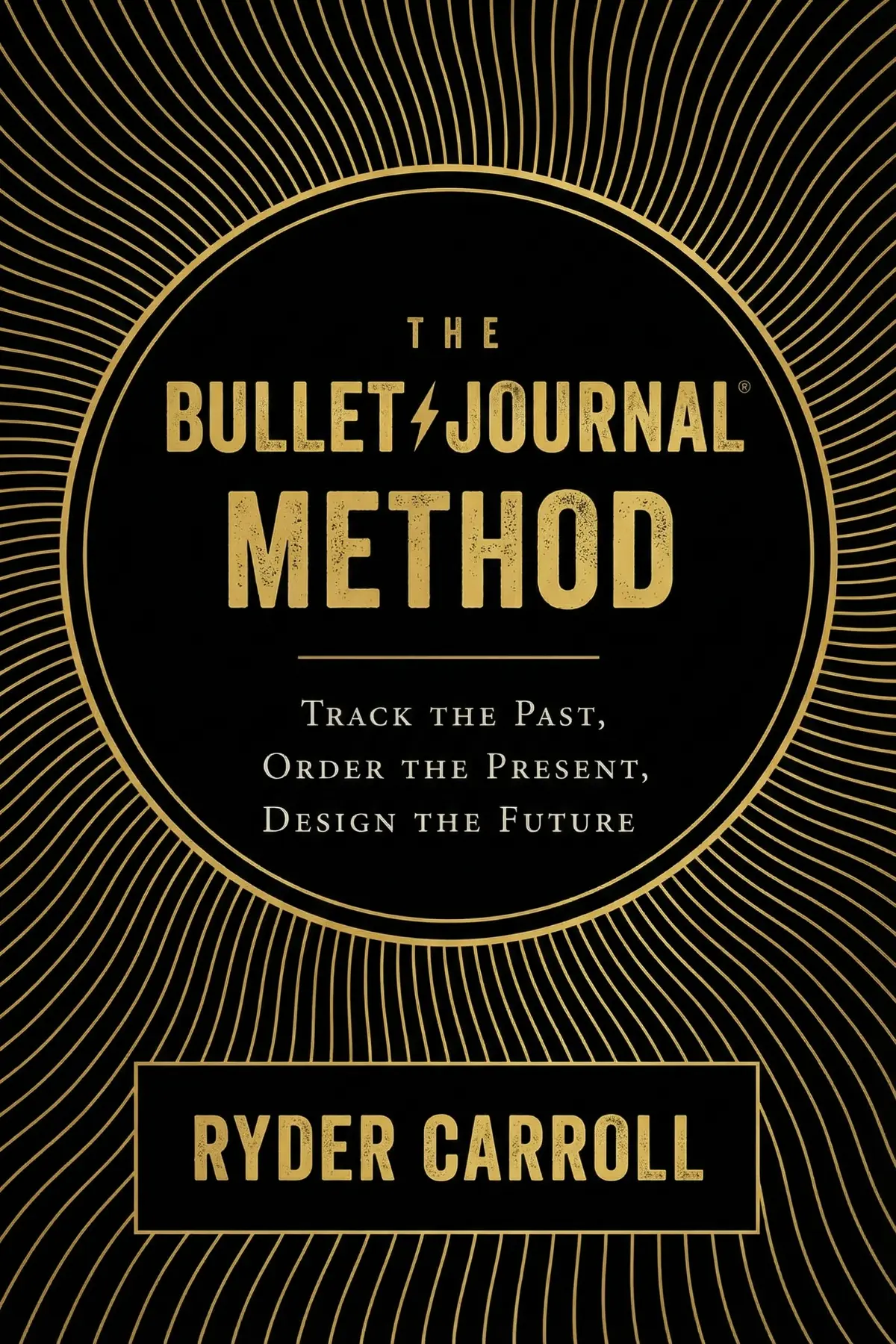
Table of Content
1. Introduction
1 min 51 sec
In an era where our attention is constantly auctioned off to the highest bidder—whether it is an app notification, an urgent email, or the endless scroll of social media—the simple act of picking up a pen can feel like a revolutionary gesture. Many of us feel like we are constantly running just to stay in place, managing a chaotic stream of information that never seems to stop. We have apps for our calendars, apps for our notes, and apps for our reminders, yet we still feel overwhelmed and disconnected from our actual priorities. This is where the wisdom of Ryder Carroll becomes essential. He offers a way to step back from the digital noise and reclaim our mental space.
The Bullet Journal Method is not just a way to keep a calendar; it is a ‘mindfulness practice disguised as a productivity system.’ The throughline of this approach is intentionality. It is about moving away from the reactive state of ‘getting things done’ and moving toward the proactive state of ‘doing what matters.’ Over the course of this summary, we will explore how a humble notebook can become a powerful tool for self-discovery and efficiency. We will see how to declutter the mind before even touching the page, how to use a simple shorthand to capture the essence of our days, and how to build a flexible structure that accommodates the messiness of real life. This is a journey from the scattered present to a designed future, and it all begins with the understanding that our time and energy are our most precious resources. By the end of this exploration, you will understand not just the ‘how’ of this famous journaling technique, but the ‘why’ that makes it a life-changing habit for millions around the world.
2. Decluttering the Mind Before Starting
2 min 35 sec
Before you ever put pen to paper, you must clear the mental fog. Learn why a mental inventory is the vital first step toward true focus.
3. The Power of the Analog Approach
2 min 33 sec
In a digital world, the simple act of writing by hand offers unique cognitive benefits. Explore why paper remains the ultimate tool for clarity.
4. The Grammar of Rapid Logging
2 min 34 sec
Efficiency meets insight through a specialized shorthand. Discover how signifiers transform a simple list into a powerful data stream.
5. A Modular Structure for Every Need
2 min 23 sec
Rigid planners often fail because life is unpredictable. Learn how to use a modular system that expands and contracts with your day.
6. The Essential Practice of Migration
2 min 24 sec
Rewriting tasks might seem tedious, but it is the secret to intentionality. Explore why migration is the heartbeat of the method.
7. Transforming Dreams into Tangible Goals
2 min 39 sec
Vague aspirations often lead to frustration. Learn a systematic way to break down your biggest ambitions into manageable steps.
8. Strategies for Mastering Time
2 min 15 sec
Time is finite, but our experience of it is flexible. Discover how to use time-boxing and scheduling to reclaim your day.
9. Evolving Your Personal Practice
2 min 27 sec
The basics are just the beginning. Explore how to customize your journal with habit trackers and long-form reflection.
10. Conclusion
1 min 58 sec
As we wrap up our journey through The Bullet Journal Method, it is clear that this system is far more than a way to organize a notebook; it is a way to organize a life. By moving away from the frantic speed of digital tools and embracing the deliberate pace of pen and paper, we give ourselves the gift of clarity. We have seen how the mental inventory helps us shed the weight of unnecessary commitments, and how the grammar of rapid logging allows us to capture the essence of our days with efficiency. We explored the modular nature of collections that flex to meet our needs, and the vital practice of migration that ensures we are always moving toward what matters most.
The throughline of everything Ryder Carroll teaches is the pursuit of intentionality. It is about closing the gap between who we are and who we want to be. The most important takeaway is that productivity is not about doing more; it is about doing more of what adds value to your life and the lives of others. It is about becoming the author of your own story rather than a character in someone else’s.
If you are ready to start, the best advice is to keep it simple. Do not worry about making it beautiful or perfect. Focus on the habit. Commit to using your journal every day for at least one month. It is through that consistent daily engagement—the morning planning and the evening reflection—that the magic truly happens. You will likely find that the first time you perform a monthly migration, the entire system will click into place. You will see the progress you have made and the distractions you have avoided. Start today, with whatever notebook you have on hand, and begin the process of tracking your past, ordering your present, and designing the future you truly want to live.
About this book
What is this book about?
The Bullet Journal Method is much more than a simple organizational tool; it is a comprehensive philosophy designed to help you live a more intentional life. Created by Ryder Carroll, this system addresses the modern problem of digital overwhelm and fragmented attention. By using a specialized but flexible method of note-taking known as rapid logging, practitioners can distill their daily experiences into a structured, manageable format. This summary explores the core components of the method, from the initial mental inventory to the long-term practice of migration. You will learn how to create a custom organizational system that evolves with your needs, combining your to-do lists, calendar, and personal journal into a single, cohesive volume. Beyond the mechanics of pen and paper, the book promises a pathway to greater self-awareness, helping you distinguish between mere busyness and meaningful progress toward your most important goals.
Book Information
About the Author
Ryder Carroll
Ryder Carroll is a digital designer and entrepreneur based in New York. Having been diagnosed with an attention disorder at a young age, he spent years developing a unique system to help him focus and stay organized. His personal method eventually evolved into the Bullet Journal, a global movement that has helped millions. Today, Carroll is a sought-after speaker and productivity expert who continues to refine and share his techniques for intentional living.
Ratings & Reviews
Ratings at a glance
What people think
Listeners find this guide to bullet journaling highly effective, with one listener describing it as a potent resource for managing day-to-day existence. Furthermore, the work acts as an excellent primer for the system, offering useful details that clarify the technique for newcomers. Listeners also enjoy the uncomplicated, accessible style and the way it promotes self-reflection and staying present. They hold the core principles in high regard—especially the advice on establishing objectives—and consider the content transformative for fostering a more intentional lifestyle.
Top reviews
Jai
Ever wonder why you're constantly busy but never actually productive? This book answers that by shifting the focus from mindless logging to intentional reflection. I appreciated how Carroll differentiates between being "busy" and being "purposeful," using the notebook as a tool for mental decluttering. The analogue approach is a breath of fresh air in our hyper-digital age; handwriting forces a certain slowness that helps you process thoughts more deeply. To be fair, some sections on goal-setting felt a bit repetitive, but the overall message about mindfulness is life-changing. It’s a straightforward, beginner-friendly guide that helps you cull the extraneous tasks that eat up your day. If you’re looking to become more intentional with your time, this is a powerful starting point. I found the sections on daily and monthly migration to be the most practical parts of the entire system.
Show moreMint
Ryder Carroll has managed to turn a simple task list into a philosophy for intentional living. I picked this up as a total beginner and found the step-by-step instructions incredibly easy to follow. The system doesn't require expensive planners, which I love—just any old notebook will do. The core concept of "migration" is where the magic happens; it forces you to confront the tasks you keep putting off and ask if they even matter anymore. Personally, I found the chapters on setting goals and defining your "why" to be the most impactful. It’s a very practical book that doesn't just teach you where to put your dots, but how to reclaim your focus. Some might find the tone a bit grand, but the results in my daily organization speak for themselves. This is a must-read for anyone feeling scattered in the digital noise.
Show moreChiw
Picked this up during a chaotic career shift and the practical focus on "project sprints" was exactly what I required. Carroll adapts Agile-style thinking into an analogue format that feels remarkably intuitive for professional use. I’ve been using the system for a few months now and my ability to track long-term goals has improved drastically. To be fair, the book is much more than a "how-to" manual; it’s almost a UX design guide for your own life. I particularly valued the advice on "collections" and knowing when to cull the information that no longer serves your growth. It’s a powerful tool for anyone who needs to manage complex projects without getting lost in a sea of digital notifications. While it can be a bit slow in the middle, the "why" behind the method is what makes it stick. This is a solid, 5-star recommendation for the modern professional.
Show moreBua
After hearing people rave about the "BuJo" craze for years, I finally decided to go to the source. I’m so glad I did because I was definitely doing it "wrong" by focusing only on the visuals. This book is a great reminder that the method is meant to be a tool for reflection, not just a place for pretty calligraphy. The analogue approach really helps with mental clarity; the act of handwriting creates a "slower speed" that encourages you to actually think about your day. I’m planning on restarting my journal in 2019 with this new perspective on intentionality and goal-setting. It’s one of those staple books that I can see myself rereading whenever I feel my life getting a bit too cluttered. Carroll’s writing is straightforward and the structure of the book makes it very easy to reference later. Truly a life-changing perspective on how we spend our time.
Show morePornthip
Finally got around to reading the actual method after lurking on subreddits like /r/basicbulletjournals for months. I’m already a fairly organized person, but the "mental inventory" exercise in the beginning was a total game-changer. It helped me realize how many "low-value" tasks were sucking up my energy. To be honest, I was skeptical about the mindfulness aspect, but the daily reflection habit has genuinely made me more purposeful. I love the minimalist philosophy that Carroll preaches—it’s the perfect antidote to the over-complicated spreads you see on Pinterest. The chapter on "impermanence" and "control" really opened my eyes to how I was using my journal as a way to hide from my goals rather than achieve them. It’s a practical, effective guide that I would recommend to anyone, regardless of how "organized" they think they are.
Show moreSuvannee
This isn't just a book about notebooks; it’s a deep dive into mindfulness disguised as a productivity manual. I’ve been using the system for about a year, but reading Carroll’s own words gave me a completely new toolkit to work with. The explanation of "sprints" and "migration" helped me bridge the gap between my daily to-dos and my long-term dreams. Got to say, the "analogue approach" is exactly what I needed to combat my digital fatigue. The book is very beginner-friendly, but even "expert" users will find value in the sections on reflection and the "why" behind the symbols. It’s helped me become much more intentional with my energy and less focused on just checking off boxes. If you want to move from being reactive to being proactive, this is the book to read. It's a fantastic introduction to a more mindful way of living.
Show morePranee
As a recovering perfectionist who spent more time buying washi tape than actually planning, this was the intervention I needed. I used to follow YouTubers like Boho Berry and felt like my journal was a failure because it wasn’t a work of art. Ryder Carroll makes it clear that the "aesthetic" is optional and often a distraction from the actual utility of the method. The book emphasizes functionality over folk art floral motifs, which was a huge relief for my messy handwriting. Not gonna lie, I still struggle with the shorthand symbols occasionally, but the "rapid logging" technique has revolutionized how I handle meetings. It’s a great introduction for anyone who feels overwhelmed by the elaborate "spreads" they see on Instagram. This is about the "why" of your life, not just the "how" of your notebook. I’m finally using my journal for organization instead of just another creative chore.
Show moreRyan
While the core system is brilliant, this book feels like a massive expansion of a 10-minute YouTube video. Frankly, if you have already seen Ryder Carroll’s basic tutorial online, you might find the "paja" or fluff here a bit overwhelming. The author pulls from an exhaustive index of sources—from Marcus Aurelius to Steve Jobs—which can feel a bit like a freshman philosophy essay at times. It’s a bit sagacious for what is essentially a way to organize a to-do list. However, for those who need a deep dive into the "why" rather than just the "how," there are some gems hidden in the mindfulness sections. I just think most people would be better off sticking to the free resources instead of wading through 300 pages of inspirational quotes and anecdotes. It’s effective, but perhaps unnecessarily long for the average user who just wants to track their habits.
Show moreAria
The truth is, I’m apparently just not a "dot grid" person. I tried to follow the method exactly as described, but staring at a page of dots without lines felt deeply unsettling for my brain. I even tried ruling my own lines halfway through, but then I realized how ridiculous that was. That being said, the actual symbols and the "index" strategy are brilliant. I’ve started applying the rapid logging bullets to my standard lined planner and it’s working wonders for my productivity. The book itself is a bit long-winded—I agree with others that there’s a lot of "fluff"—but the concepts are solid. It’s a 3-star read for me because I think the "system" is a 5-star idea trapped in a slightly pretentious 2-star book. If you can get past the constant quotes from Dalai Lama and Einstein, there’s a useful toolkit here.
Show moreYulia
Look, the system is great if you want to spend your entire existence managing the process of existing. I tried this for three months and ended up feeling like I was married to a notebook. My days were "organized," sure, but only because I spent two hours a day indexing, migrating, and drawing symbols. You start speaking in dots and checks and suddenly you’ve traded real life for a library of journals. In my experience, it’s just a way to feel productive without actually doing the work. The book is filled with "sagacious" nonsense and grand statements about "memento mori" that feel totally out of place for a planner guide. If you need a hundred quotes from Mother Teresa to help you remember to buy milk, then this is the book for you. For me, it was a complete despropósito that turned a simple task into a cult-like obsession.
Show moreFeatured in
Readers also enjoyed
AUDIO SUMMARY AVAILABLE
Listen to The Bullet Journal Method in 15 minutes
Get the key ideas from The Bullet Journal Method by Ryder Carroll, plus 5,000+ more titles in English and Thai.
- 5,000+ titles
- Listen as much as you want
- 7-day free trial
- Cancel anytime







