
15 min 53 sec
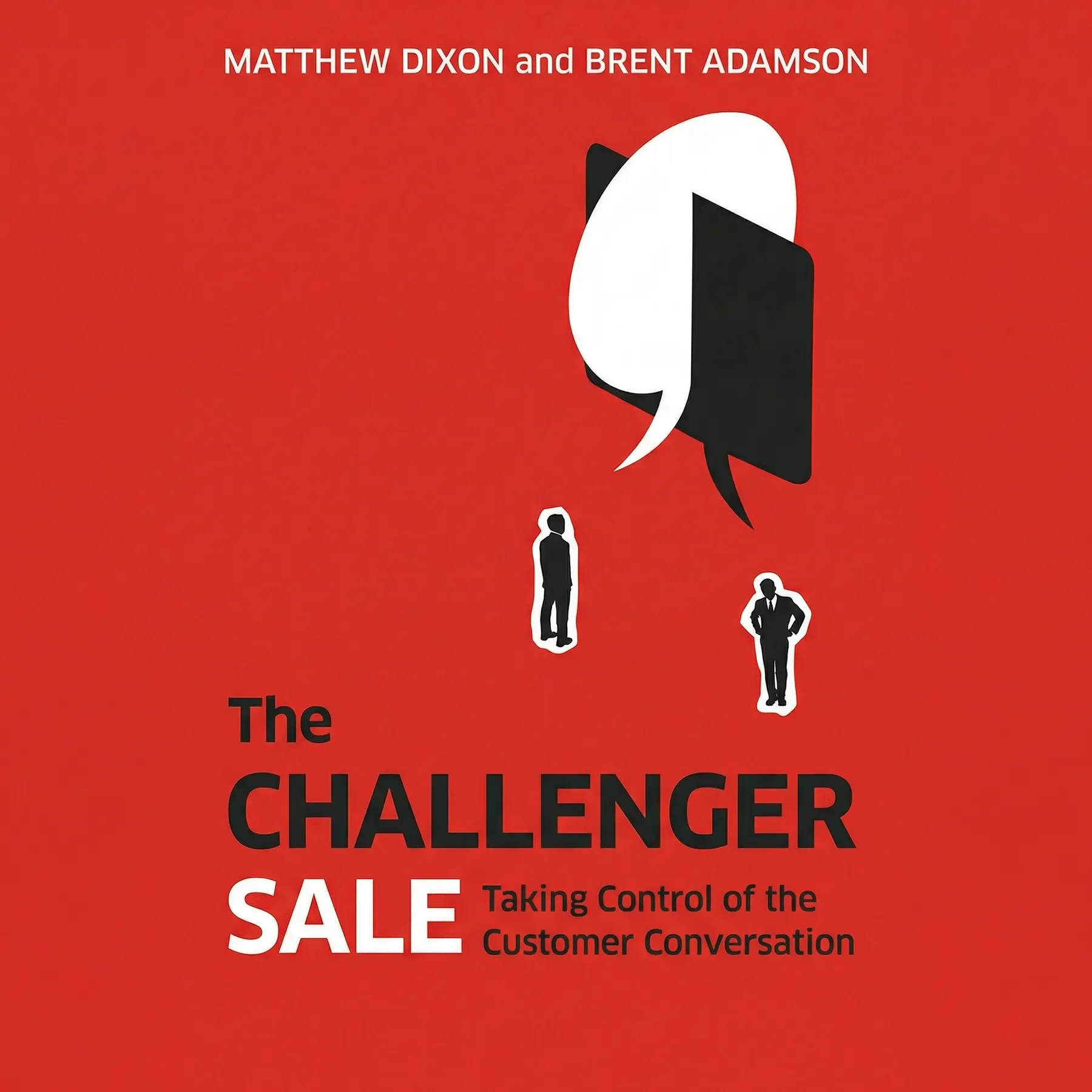
The Challenger Sale: Taking Control of the Customer Conversation
The Challenger Sale reveals why the most successful sales professionals don't just build relationships—they challenge them. Learn how to drive growth by asserting control and delivering unexpected insights to your customers.
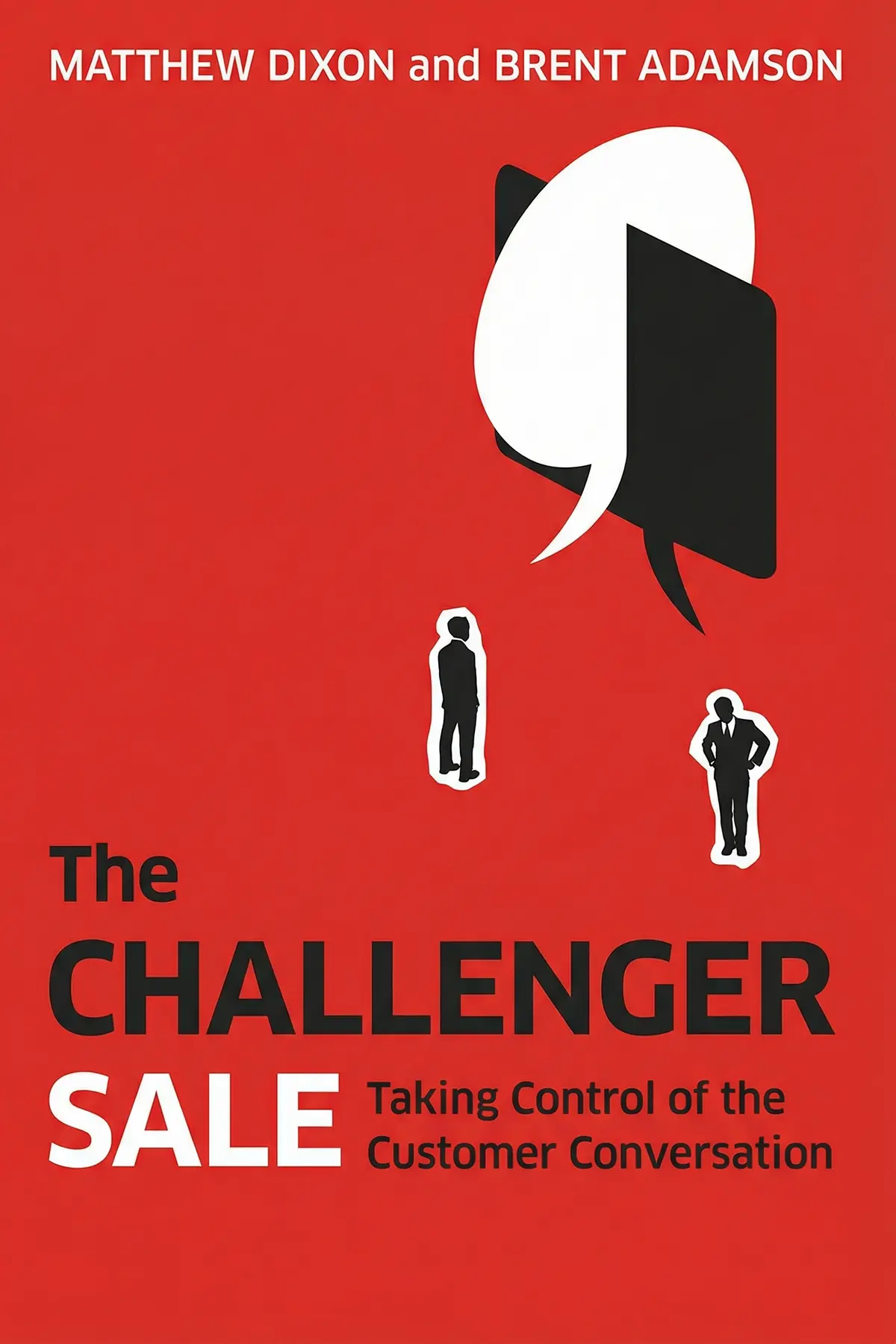
Table of Content
1. Introduction
1 min 50 sec
In the iconic film Glengarry Glen Ross, there’s a famous scene where a character delivers the legendary line: ‘Always Be Closing.’ For decades, that was the mantra of the sales world. It suggested that success was all about the hustle, the silver tongue, and the relentless pursuit of the signature. But if you look at the modern landscape of commerce, that Hollywood image feels like an antique. The world has changed. Customers are smarter, information is everywhere, and the old-school tactics of persuasion are losing their edge.
What actually separates a high-performing sales rep from an average one today? This is the question Matthew Dixon and Brent Adamson set out to answer. Their research didn’t just look at a few anecdotes; they studied thousands of salespeople across nearly a hundred companies. What they found was a total paradigm shift. It turns out that the ‘Relationship Builder’—the person we often think of as the ideal salesperson—is actually the least likely to be a top performer in complex sales environments.
Instead, the winners are those who do something most reps are afraid to do: they challenge the customer. They don’t just listen to what the customer wants; they tell the customer what they actually need. This summary will take you through the ‘Challenger’ model, showing you how to move from being a vendor to being a vital teacher. We will explore why teaching is more powerful than pitching, how to navigate the complicated world of consensus-based buying, and why taking control of the conversation is the only way to escape the trap of competing on price alone. By the end of this journey, you’ll see why the best sellers aren’t just selling products—they are selling a new way of seeing the world.
2. The Shift Toward Solution Selling
2 min 10 sec
Discover why traditional product-based sales are failing and how providing unique, customized solutions allows you to escape the commodity trap and justify higher prices.
3. The Five Sales Profiles
2 min 22 sec
Research identifies five distinct types of sales professionals, but only one consistently outperforms the rest in today’s complex and demanding business environment.
4. Teaching for Differentiation
2 min 02 sec
Learn why the sales experience itself is the biggest driver of customer loyalty and how to use ‘Commercial Teaching’ to provide unexpected value.
5. Mastering the Art of the Narrative
1 min 59 sec
Follow a six-step process to structure your sales conversations so that you build credibility and lead customers to your solution without ever sounding like a traditional pitchman.
6. Navigating Stakeholders and Consensus
1 min 53 sec
In a world of consensus-based buying, success depends on your ability to tailor your message so that every stakeholder sees the personal and professional value of your solution.
7. Taking Control of the Conversation
1 min 54 sec
Stop being afraid of tension. Learn why asserting yourself during price negotiations and decision-making phases is the key to closing high-value deals.
8. Conclusion
1 min 43 sec
The transition from a traditional salesperson to a Challenger is not just a change in technique; it’s a change in mindset. It requires moving away from the safety of being a ‘Relationship Builder’ who seeks to minimize friction, and instead embracing the role of a strategic teacher who uses friction to spark growth. The data is clear: in the complex world of modern business, the reps who win are those who offer a unique perspective, tailor their message for broad consensus, and have the courage to take control of the conversation.
But this isn’t just a burden for the individual salesperson. For a company to truly thrive, the entire organization must support this model. Managers must move from being mere administrators to being active coaches who help their teams navigate the difficult waters of Commercial Teaching. They must provide the resources and the ‘cheat sheets’ that allow even junior reps to speak with the authority of a seasoned consultant.
As you move forward, remember the actionable core of this philosophy: focus on the things your product does that the customer doesn’t yet value. Find those hidden strengths—the ones that are unique to you but currently overlooked by the market—and figure out how to reframe them. If you can show a customer that a feature they ignored is actually the key to solving their biggest problem, you’ve done more than made a sale. You’ve changed their business, and in doing so, you’ve made yourself irreplaceable. The age of the ‘always closing’ salesman is over. The age of the Challenger has arrived. Go out and start teaching.
About this book
What is this book about?
The Challenger Sale disrupts traditional notions of sales success. Based on extensive research involving thousands of sales professionals across various industries, Matthew Dixon and Brent Adamson identify five distinct sales profiles. Surprisingly, the most common top performer is not the friendly 'Relationship Builder,' but the assertive 'Challenger.' This book explains that in a world where customers are more informed than ever, simply being a likable partner isn't enough. To win, you must be a teacher. You will learn how to lead customers to a solution by reframing their problems, tailoring your message to different stakeholders, and taking control of the entire sales process. It’s a roadmap for moving beyond price wars and commodity selling to become a high-value consultant who changes the way customers think about their own businesses.
Book Information
About the Author
Matthew Dixon
Matthew Dixon is the executive director at CEB, a premier member-based consulting firm known for its data-driven insights. Brent Adamson serves as the firm’s managing director and is a celebrated storyteller, specializing in translating complex research into actionable strategies for sales and marketing leaders.
Ratings & Reviews
Ratings at a glance
What people think
Listeners describe this sales guide as perceptive and articulate, featuring straightforward descriptions and examples that ensure the material is accessible. Additionally, the work provides superior tactics and a revolutionary method for boosting sales performance, establishing it as essential reading for those in sales management. They value the stimulating subject matter, with one listener mentioning that it offers a dependable framework for building the abilities needed to handle difficult dialogues.
Top reviews
Mind
After hearing so many colleagues rave about this, I finally dove in and it completely reshaped my perspective on client interactions. Most of us are taught to be 'Relationship Builders' from day one, but the authors use data to show that this archetype often fails when things get tough. The core idea is simple: you have to challenge the customer with new insights that make them rethink their business. By using the 'Teach, Tailor, Take Control' framework, sales reps can actually provide value rather than just being another vendor. Personally, I found the breakdown of the five sales profiles to be the most enlightening part of the research. It isn’t just a theory; you can see these personalities in any office. While it gets a bit repetitive in the middle sections, the transformational approach is undeniable. It’s a must-read for anyone looking to evolve from a basic pitch-man into a truly strategic advisor.
Show moreGai
The chapter on 'Commercial Teaching' alone is worth the price of admission for any serious sales professional. I’ve been in the game for a decade, and this is one of the few books that actually provides a new paradigm rather than just recycling old SPIN techniques. The authors argue that loyalty isn't found in your product or your brand, but in the sales experience itself. That is a massive shift. By taking control of the conversation and bringing a unique perspective to the table, you differentiate yourself from the 'Lone Wolf' and the 'Hard Worker.' Truth is, customers are tired of being asked 'what keeps you up at night?' They want you to tell them what *should* be keeping them up. This book gives you the toolkit to do exactly that. It's a game-changer for high-stakes deal-making.
Show moreTar
Wow, I finally understand why our top reps are successful and it’s not because they are the friendliest people in the room. This book validates the 'misfits'—the reps who aren't afraid to push back and handle hot potatoes. I’ve read probably dozens of sales books, and this one stands out because it’s based on actual data rather than just anecdotes from a retired guy. The concept that 53% of loyalty comes from the sales experience itself is a total wake-up call for our marketing team. We’ve spent so much time on brand awareness when we should have been focusing on how we sell. It’s thought-provoking, well-researched, and provides a clear roadmap for organizational change. This is absolutely essential reading for anyone managing a B2B sales force in the modern era.
Show moreLeila
Is the 'Relationship Builder' really dead? According to the data presented here, they definitely aren't the top performers in complex sales environments anymore. I appreciated the emphasis on 'Commercial Teaching,' which suggests you should lead TO your solution rather than WITH it. This means teaching customers about problems they didn't even know they had. The book provides a very solid methodology for developing skills to conduct these challenging conversations without appearing overbearing. My only gripe is that it feels a bit like a corporate manifesto at times, and the writing can be quite dry. However, the strategies for 'Rational Drowning' and creating emotional impact through storytelling are gold. If you manage a team, the section on coaching the 'core performers' is probably the most practical advice you will find all year.
Show moreNong
As someone who came up through the SPIN selling era, I was skeptical of yet another 'new' paradigm, but Dixon and Adamson make a compelling case. They argue that the most effective reps are those who can navigate constructive tension rather than just trying to be everyone’s friend. The logic is sound: if you aren't teaching your customer something new, you aren't adding value. I especially liked the 'Six Steps of a World-Class Pitch,' starting with the Warmer and moving into the Reframe. It’s a very tactical way to build a presentation that actually moves the needle. To be fair, some of the graphs are a bit convoluted, and I think they underestimate the importance of basic rapport. But if you want to win in a post-recession economy, you need to be a Challenger. It’s a dense read, but highly rewarding.
Show moreLucia
Look, the methodology here is solid, especially the emphasis on 'Rational Drowning' to show the customer the true cost of their status quo. This isn't just a book about being aggressive; it’s about being smarter than the person on the other side of the table. You have to tailor your message to different stakeholders, from the CEO down to the technical specialist. I found the case studies to be very well-written and easy to follow, which helped bridge the gap between theory and practice. My team has started using the 'Teach, Tailor, Take Control' model and we’ve already seen a shift in how prospects engage with us. It’s not an easy transition, but it’s a necessary one. Some of the middle chapters drag a bit, but the overall strategy is transformational.
Show moreErn
Picked this up during a team reorganization and found the distinction between the five sales profiles incredibly useful for coaching. We realized we had a department full of 'Relationship Builders' who were great at getting coffee but terrible at closing complex deals. The Challenger model gives us a vocabulary to talk about what’s actually working. I particularly appreciated the section on how managers should spend their time coaching the middle 60% of the team rather than the top or bottom performers. That’s a very counter-intuitive insight that saved me a lot of wasted effort. It’s a bit of a dry read, and you definitely have to be in the right headspace to digest all the data, but it’s worth the struggle. A very solid four stars for the sheer depth of the research.
Show moreDarius
This book provides a rigorous framework for what many of us have been doing instinctively: leading with insights rather than product features. The authors explain that to truly win, you have to be comfortable with a bit of friction in the room. Not everyone will like being challenged, but they will respect the value you bring to their business. I enjoyed the 'Warmer' concept as a way to build credibility without the usual 'tell me what keeps you up at night' cliché. While it can be a little repetitive—they really love to beat a dead horse with their definitions—the core message is incredibly powerful. It changes sales from a game of persuasion into a game of education. If you want to stop competing on price and start competing on value, read this.
Show moreViolet
Frankly, this felt like an over-inflated McKinsey white paper that should have been a ninety-page pamphlet at most. The authors take a few decent ideas about 'Challengers' and stretch them across nine chapters of repetitive corporate jargon. It feels very Americanised and geared toward massive tech giants rather than real-world businesses. While the research into the five sales types is interesting, the actual implementation seems almost impossible for a standard sales force. You can’t just turn a 'Reactive Problem Solver' into a world-class teacher overnight by handing them a book. Also, the tone is a bit smug, acting as if they’ve discovered fire when they’re really just rebranding consultative selling. It’s not total crap, but definitely skip the fluff and just read a summary online.
Show moreLuckana
Not what I expected for my small business, where every sales call is actually a stealth market research session. This book assumes you are working in a massive organization with an R&D department and a marketing team to build your 'insights' for you. In the real world, if I start 'challenging' my customers all day, I’m going to lose the chance to hear what they actually need. The research is compelling, sure, but it feels disconnected from the reality of being an entrepreneur. Most of the 'Challenger' moves just felt like being a pushy know-it-all. Plus, the audiobook narrator's pronunciation of certain brand names was incredibly distracting. It’s okay if you’re a sales manager at UPS, but if you’re running a lean startup, this approach might actually blow up in your face.
Show moreFeatured in
Readers also enjoyed

AUDIO SUMMARY AVAILABLE
Listen to The Challenger Sale in 15 minutes
Get the key ideas from The Challenger Sale by Matthew Dixon, plus 5,000+ more titles in English and Thai.
- 5,000+ titles
- Listen as much as you want
- 7-day free trial
- Cancel anytime







