
16 min 29 sec
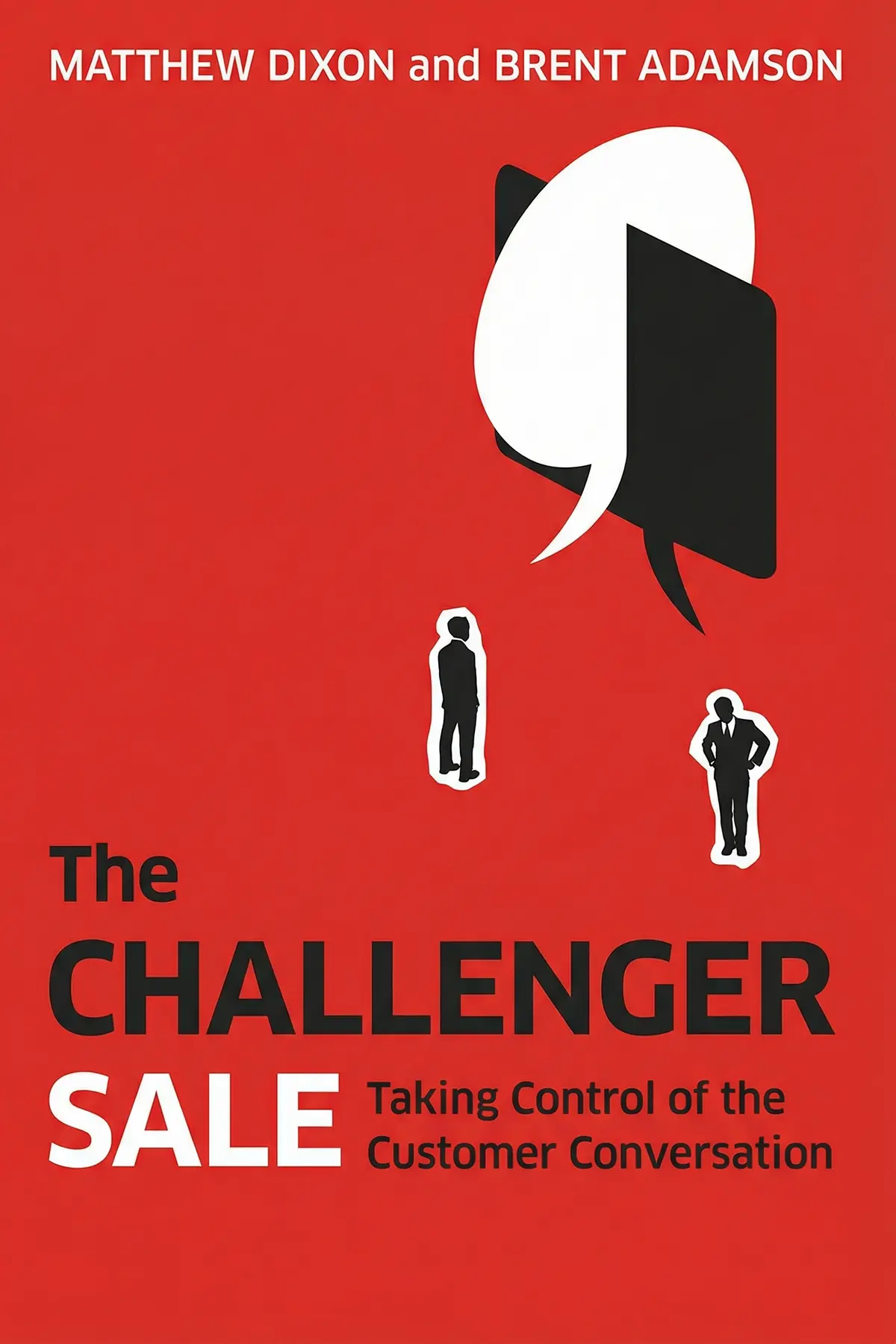
The JOLT Effect: How High Performers Overcome Customer Indecision
Discover why traditional sales tactics fail and how the JOLT framework helps high performers overcome customer indecision to close deals that would otherwise end in a frustrating stalemate.
Table of Content
1. Introduction
2 min 03 sec
Imagine you’ve done everything right. You’ve identified a client’s pain points, you’ve demonstrated exactly how your product solves their problems, and you’ve even built a solid personal rapport. The customer agrees that your solution is superior to what they are currently using. But then, at the very last moment, everything goes quiet. The deal stalls, the emails go unanswered, and eventually, the prospect decides to do nothing at all. If this sounds familiar, you aren’t alone. For decades, the sales industry has been taught that the primary goal is to beat the status quo—to prove that the current way of doing things is worse than the proposed change. But as it turns out, that logic is fundamentally flawed.
In this summary of The JOLT Effect, we are going to explore a groundbreaking perspective on why deals die. Authors Matthew Dixon and Ted McKenna conducted a massive study, analyzing over two and a half million sales interactions using sophisticated AI tools. Their goal was to find out what high-performing salespeople do differently. What they discovered was a massive blind spot in the industry. The real enemy isn’t the status quo; it’s indecision. Most customers actually want to change, but they are paralyzed by the fear of making the wrong choice.
We’ll walk through the four core pillars of the JOLT framework—Judging the indecision, Offering a recommendation, Limiting exploration, and Taking risk off the table. Through this journey, you’ll see how a shift in mindset from ‘pushing’ to ‘guiding’ can dramatically increase your success rate. We’ll look at the psychology of loss aversion and why the fear of a bad purchase often outweighs the potential benefits of a good one. By the time we’re finished, you’ll have a completely new toolkit for navigating the complex emotional landscape of the modern buyer.
2. The Hidden Enemy of the Sale
2 min 27 sec
Traditional sales training focuses on attacking the status quo, but research reveals that a much more subtle and pervasive force is responsible for the majority of lost opportunities.
3. Identifying the Root of Hesitation
2 min 45 sec
Not all indecision is created equal, and high performers know how to diagnose the specific fears holding a customer back before they attempt to fix them.
4. The Power of Direct Guidance
2 min 24 sec
In a world of infinite choices, the most valuable thing a salesperson can provide is not more options, but a clear, personal recommendation.
5. Taking Control of the Information Flow
2 min 42 sec
More information isn’t always the answer to uncertainty; learn how to limit the search and build trust through radical transparency.
6. De-risking the Final Decision
2 min 41 sec
The final hurdle is the fear of failure; by providing safety nets and starting small, you can remove the emotional weight of the purchase.
7. Conclusion
1 min 27 sec
The world of sales has changed, but our tactics haven’t always kept pace. As we’ve seen, the primary obstacle to closing a deal in today’s environment isn’t a competitor or a customer who is happy with their current situation. It is the invisible wall of indecision. When buyers are faced with complex choices and high stakes, their natural instinct is to protect themselves by doing nothing. The JOLT effect provides a clear roadmap for dismantling that wall. By judging the source of the fear, offering a clear path forward, controlling the information overload, and providing a safety net, you stop being a source of pressure and start being a source of confidence.
To put these ideas into practice, start by listening for the subtle signs of indecision in your next meeting. Stop trying to convince the customer why their current situation is bad, and start helping them understand why your recommended path is safe. Practice the ‘pre-buttal’ and don’t be afraid to give a firm, personal recommendation. Remember, your job isn’t just to sell a product; it’s to guide a human being through a difficult choice. When you focus on making the decision easier rather than making the ‘ask’ harder, you won’t just close more deals—you’ll build lasting relationships based on trust and expertise. The JOLT effect isn’t just a sales strategy; it’s a way to become the indispensable advisor your customers are looking for.
About this book
What is this book about?
The JOLT Effect shifts the focus of the sales conversation away from the traditional battle against the status quo. Instead of trying to convince customers why they should change, Matthew Dixon and Ted McKenna reveal that the modern salesperson's greatest enemy is actually customer indecision. Based on an extensive study of over two million sales calls, the book explains that most lost deals don't go to a competitor; they simply evaporate into a 'no decision' void because customers are too afraid of making a mistake. This summary provides a deep dive into the four-step JOLT framework: Judging the indecision, Offering your recommendation, Limiting the exploration, and Taking risk off the table. You will learn the psychological triggers behind buyer hesitation, such as omission bias and the paradox of choice, and acquire practical tools to guide customers through their fears. By the end, you'll understand how to transform from a high-pressure seller into a trusted advisor who helps customers overcome the paralysis of choice and confidently move forward.
Book Information
About the Author
Matthew Dixon
Matthew Dixon and Ted McKenna have each held executive leadership positions in product and research at the Austin-based startup Tethr. Dixon’s previous books include The Challenger Sale, The Effortless Experience, and The Challenger Customer, while McKenna is a frequent contributor to the Harvard Business Review.
Ratings & Reviews
Ratings at a glance
What people think
Listeners find the shared observations on decision making valuable. They view the text as a high-quality book for sales.
Top reviews
Jiraporn
Finally, a sales book that addresses the actual monster in the room: customer indecision. While most trainers focus on beating the status quo, Dixon and McKenna highlight that the real enemy is often the fear of making a mistake. The research-backed approach is refreshing because it moves away from gut-feeling tactics and toward data-driven psychology. I found the JOLT framework particularly helpful for categorizing those 'dead air' moments in a pipeline. It's not just about selling harder; it's about helping the buyer navigate their own internal mess of options. Even if you aren't in a traditional sales role, the logic here applies to any situation where you need to drive a decision. Truly an essential follow-up to their previous work.
Show moreArnav
The JOLT Effect is a total game-changer for those of us tired of the same old 'overcoming objections' advice. Dixon and McKenna prove that the biggest hurdle isn't convincing a client that your product is better than their current setup. Instead, it’s about managing the 'messy middle' where the buyer is paralyzed by the possibility of looking stupid to their boss. The JOLT method—Judging, Offering, Limiting, and Taking—provides a concrete roadmap to guide them through. I loved the breakdown of how to proactively handle information overload. It’s a rare business book that actually offers a new lens rather than just rewarming old concepts. Essential reading for every account executive.
Show morePhimwan
Look, we’ve all been there: the prospect agrees with everything you say, loves the demo, but then goes silent. This book finally explains that 'silence' as a psychological safety mechanism. The distinction between 'no decision' and 'status quo' is a breakthrough that most sales training completely ignores. I found the section on 'Taking the risk off the table' to be incredibly practical for high-stakes enterprise deals. It’s less about being a pushy closer and more about being a helpful consultant who removes the fear of failure. The data is compelling, and the tone is authoritative without being arrogant. This should be mandatory for any sales team dealing with complex decisions.
Show moreTern
After hearing Matt Dixon speak on a podcast, I knew I needed to grab a copy of this for my team. Most sales books are full of 'hustle' culture nonsense, but this is grounded in actual behavioral science and data. The way it breaks down the fear of 'doing' versus the fear of 'choosing' is a masterclass in buyer psychology. We often think we need to push harder on the pain of the status quo, but the authors prove that often backfires. Providing a 'safety net' for the buyer is the missing link in my sales process. If you want to stop losing deals to 'no decision,' you need to read this immediately.
Show moreTuck
Ever wonder why a deal that looked like a 'sure thing' suddenly goes cold for six months? This book provides the most comprehensive answer I’ve seen yet by distinguishing between the status quo and the fear of messing up. It turns out our standard 'FOMO' playbook actually makes things worse when a client is scared of a bad outcome. I appreciated how the authors gave specific scripts for moving past the 'we're still analyzing' phase. The writing is professional and clean, though it can feel a bit clinical at times. Still, it's a necessary tool for anyone struggling with stalled pipelines. It’s changed how I qualify leads in the later stages.
Show moreKavya
As someone who swore by The Challenger Sale, I was skeptical about whether this would offer anything new or just be a sequel for the sake of it. Thankfully, it bridges a massive gap by focusing on what happens after you've challenged the customer’s status quo. Truth is, once you convince them they need to change, they often freeze up from the weight of the decision. The authors do a great job explaining why more information is actually the enemy at this stage. I’ve already started applying the 'limiting the options' tactic with my current prospects. It’s a solid, research-heavy addition to any professional's shelf, even if it's a bit wordy in places.
Show moreWichai
Picked this up during a dry spell when I felt like my deals were just drifting into the abyss. It helped me realize that I was actually overwhelming my clients with too much data instead of helping them choose. The JOLT framework is easy to remember and even easier to apply once you recognize the signs of buyer cold feet. I particularly liked the advice on how to advocate for a specific path forward rather than just being a 'neutral' provider. My only gripe is that the last few chapters felt like they were padding the page count. Overall, it’s a very helpful insight to put towards your daily selling activities.
Show moreAkosua
To be fair, the research presented here is top-notch, but the book feels like a long-form white paper that was stretched into a full volume. By the halfway point, the authors start to repeat the same core themes about omission bias and buyer paralysis over and over. You get the 'JOLT' acronym early on, and while the breakdown is logical, the middle chapters drag significantly. I think this could have been much punchier as a hundred-page manifesto rather than a traditional business book. That said, the insights on how to limit choices for a customer are genuinely useful. It just requires some patience to dig through the repetitive anecdotes to find the gold.
Show moreTalia
The core findings here are brilliant, but the book itself is a bit of a slog. It’s based on some really fascinating research into millions of sales calls, which I deeply respect. However, I felt like I was reading the same three points rewritten in different ways for three hundred pages. It's a bit repetitive, and the 'JOLT' acronym feels slightly forced to fit the branding. That said, I can’t deny that the logic is sound. If you can get past the slow pacing, there are some genuine gems about how to handle the fear of a bad purchase. It’s just okay—great information, but probably could have been a long article.
Show moreLars
Not what I expected based on the hype surrounding the authors' previous titles. While the premise—that buyer indecision is the primary cause of lost sales—is valid, the delivery is incredibly dry and tedious. I found myself checking how many pages were left every ten minutes because the prose just doesn't move. Frankly, you could probably read the first chapter and a summary online and get 90% of the value. There’s a lot of fluff and academic-sounding jargon that makes a simple concept feel unnecessarily complex. If you have a high tolerance for repetitive business jargon, you might like it, but I struggled to stay engaged. Great research, poor execution.
Show moreFeatured in
Readers also enjoyed
AUDIO SUMMARY AVAILABLE
Listen to The JOLT Effect in 15 minutes
Get the key ideas from The JOLT Effect by Matthew Dixon, plus 5,000+ more titles in English and Thai.
- 5,000+ titles
- Listen as much as you want
- 7-day free trial
- Cancel anytime







